in the frame
Oh, I Do Like to Be Beside the Seaside
Brighton doesn't do things quietly. That's partly why I moved here.
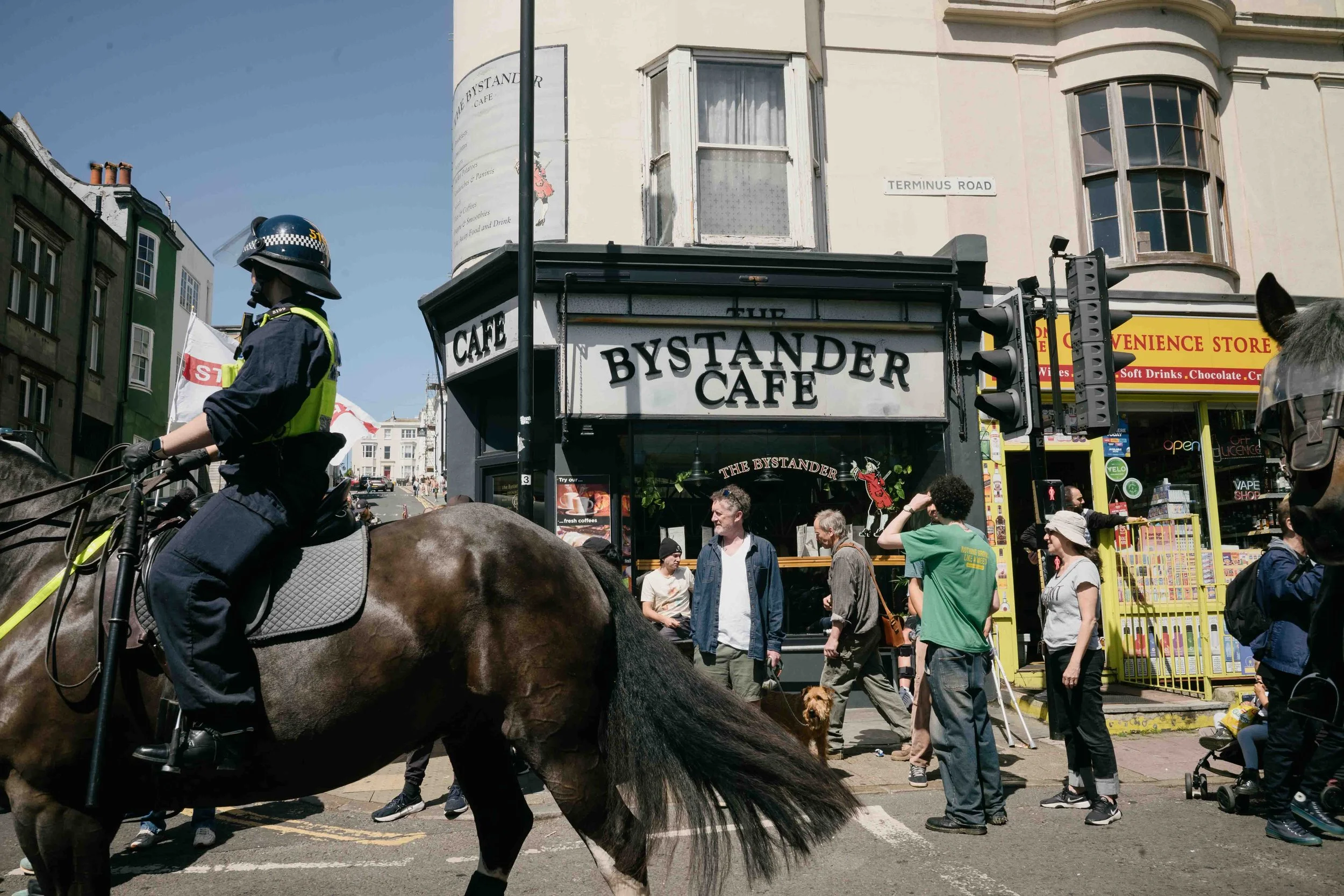
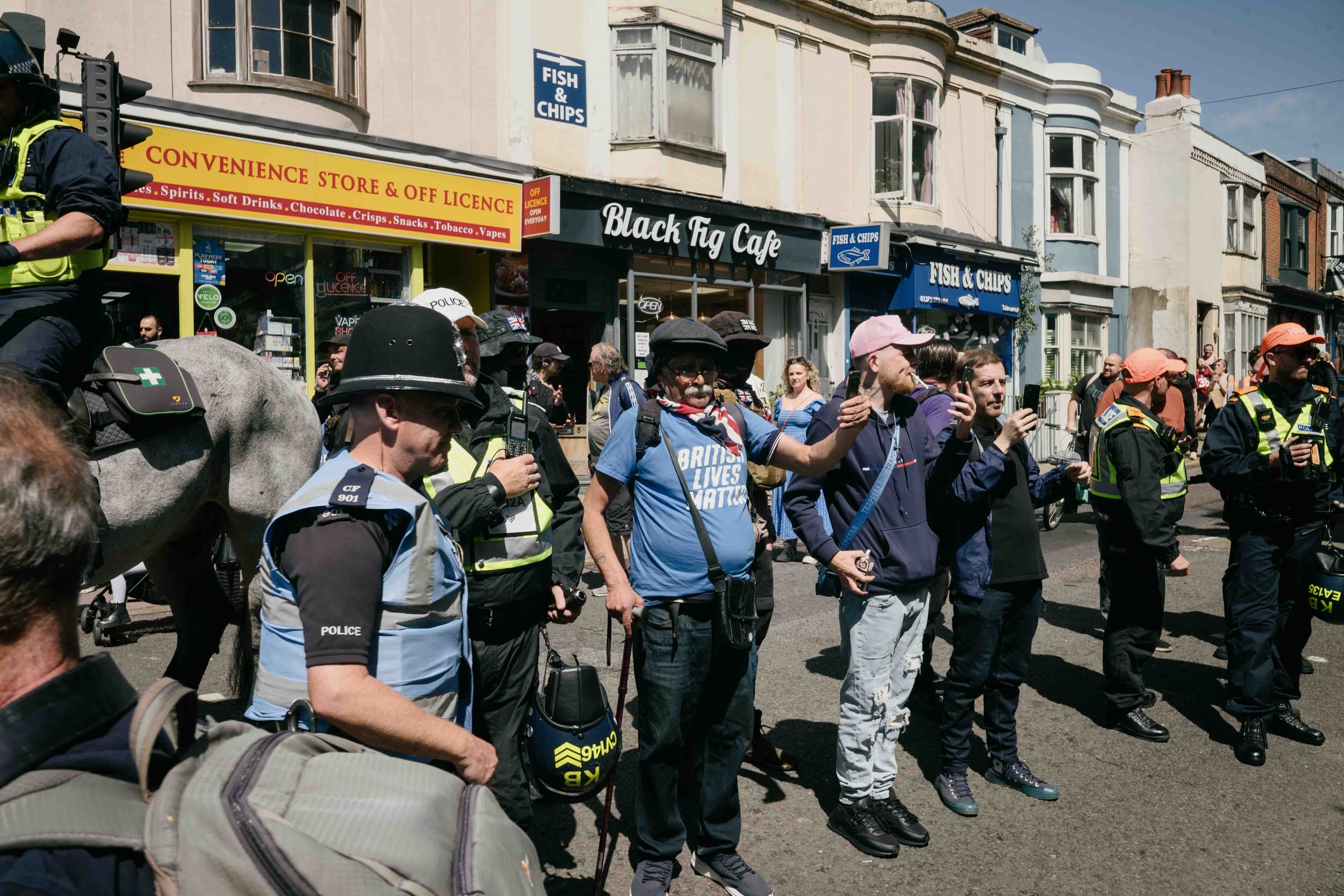
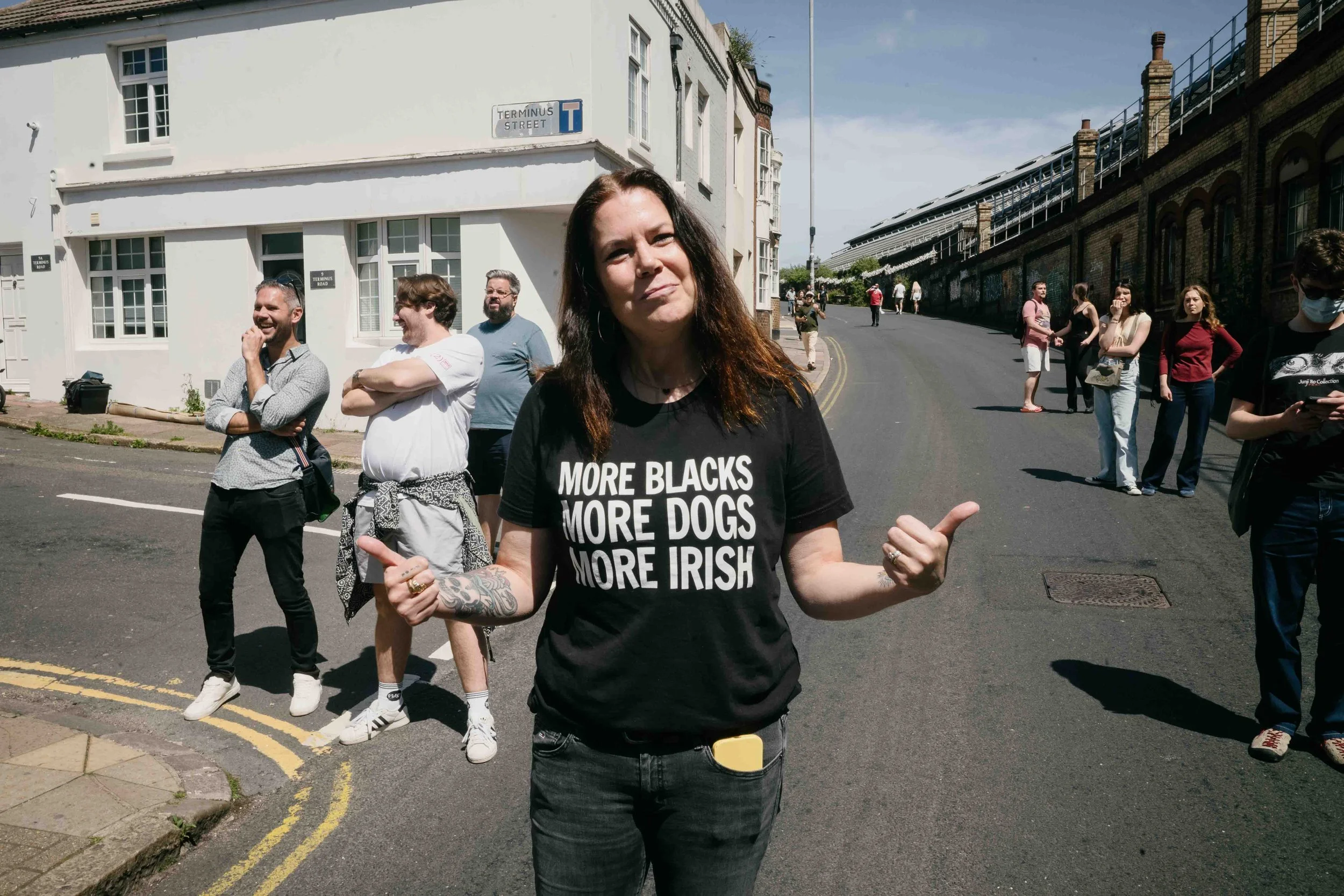
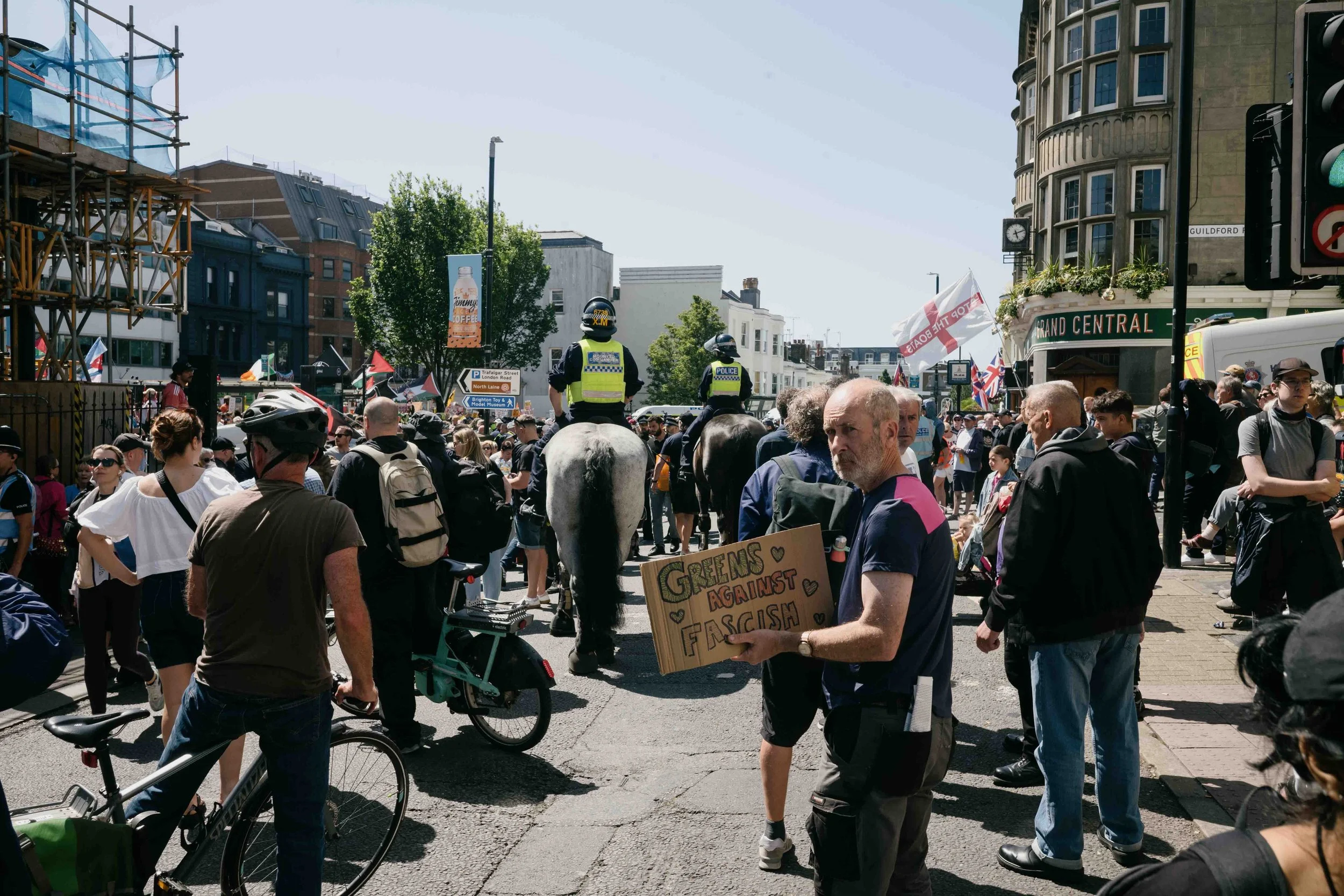
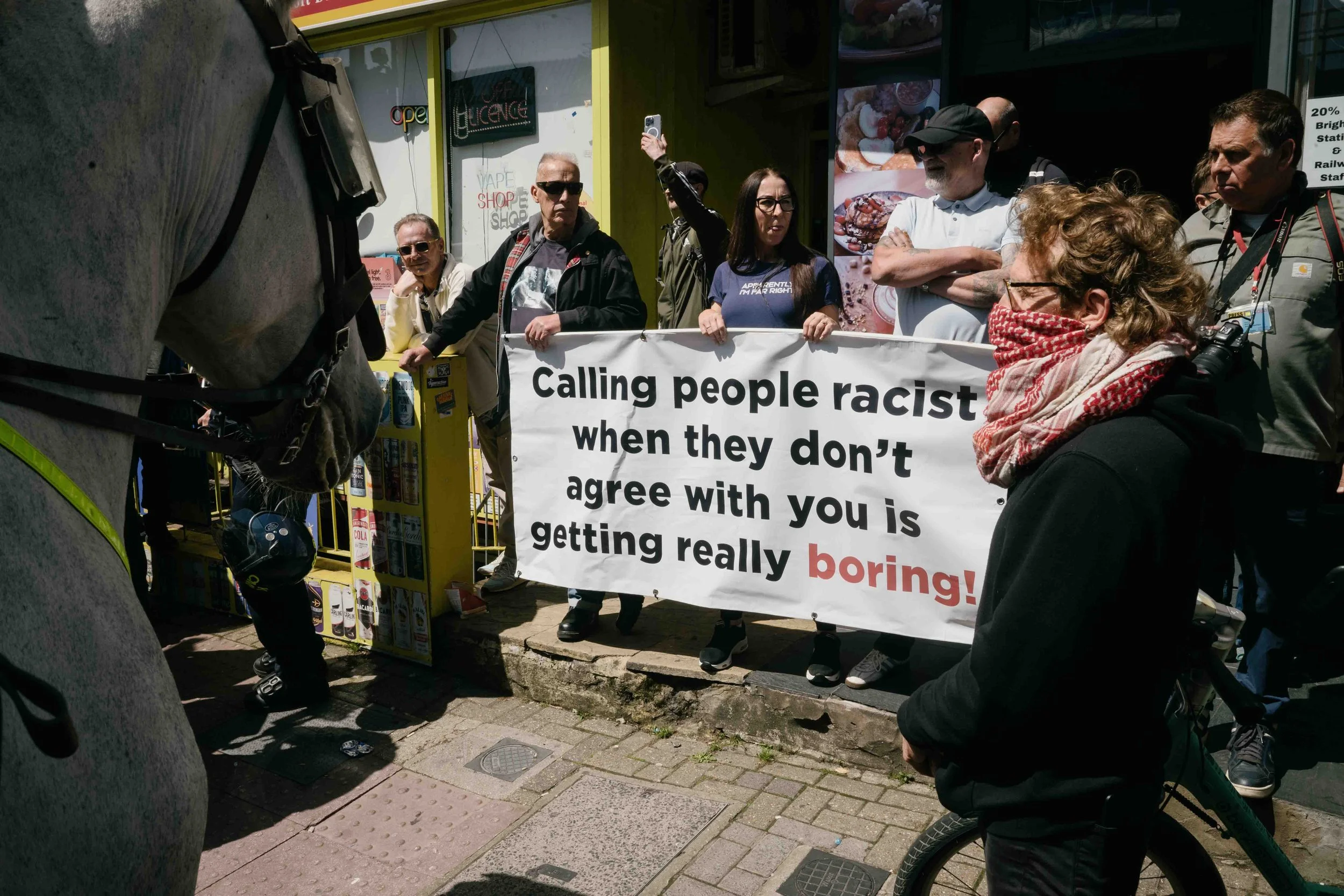
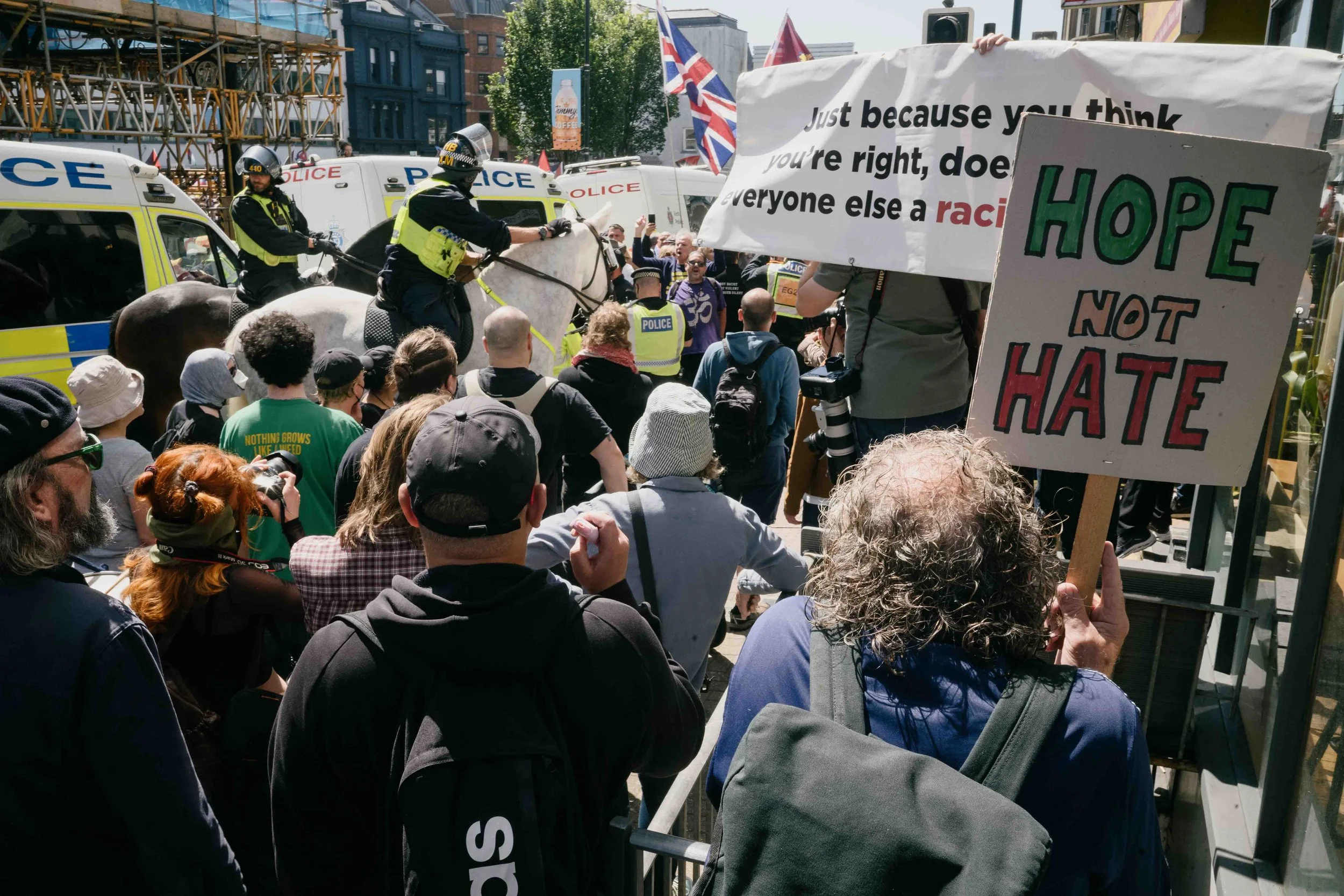
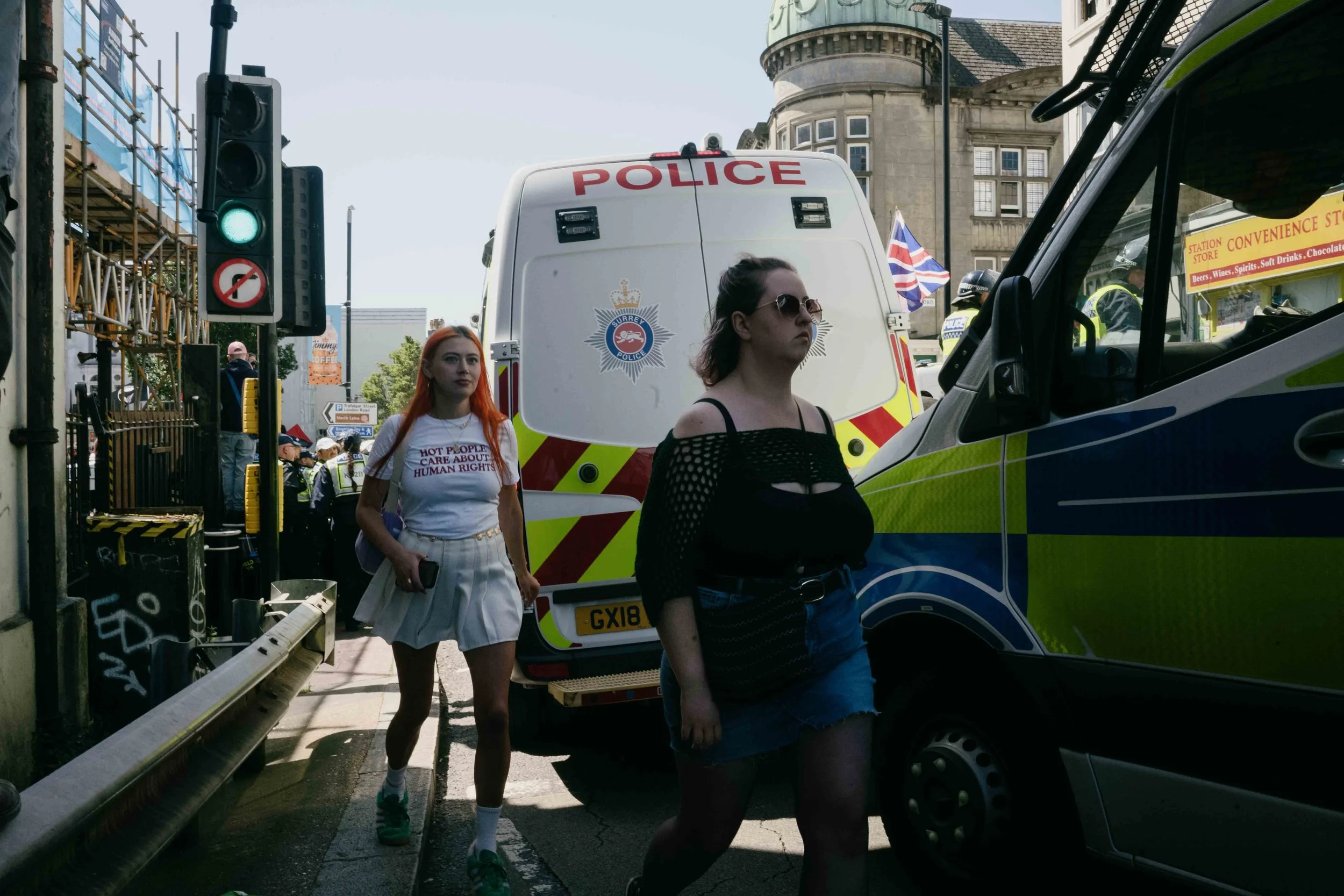
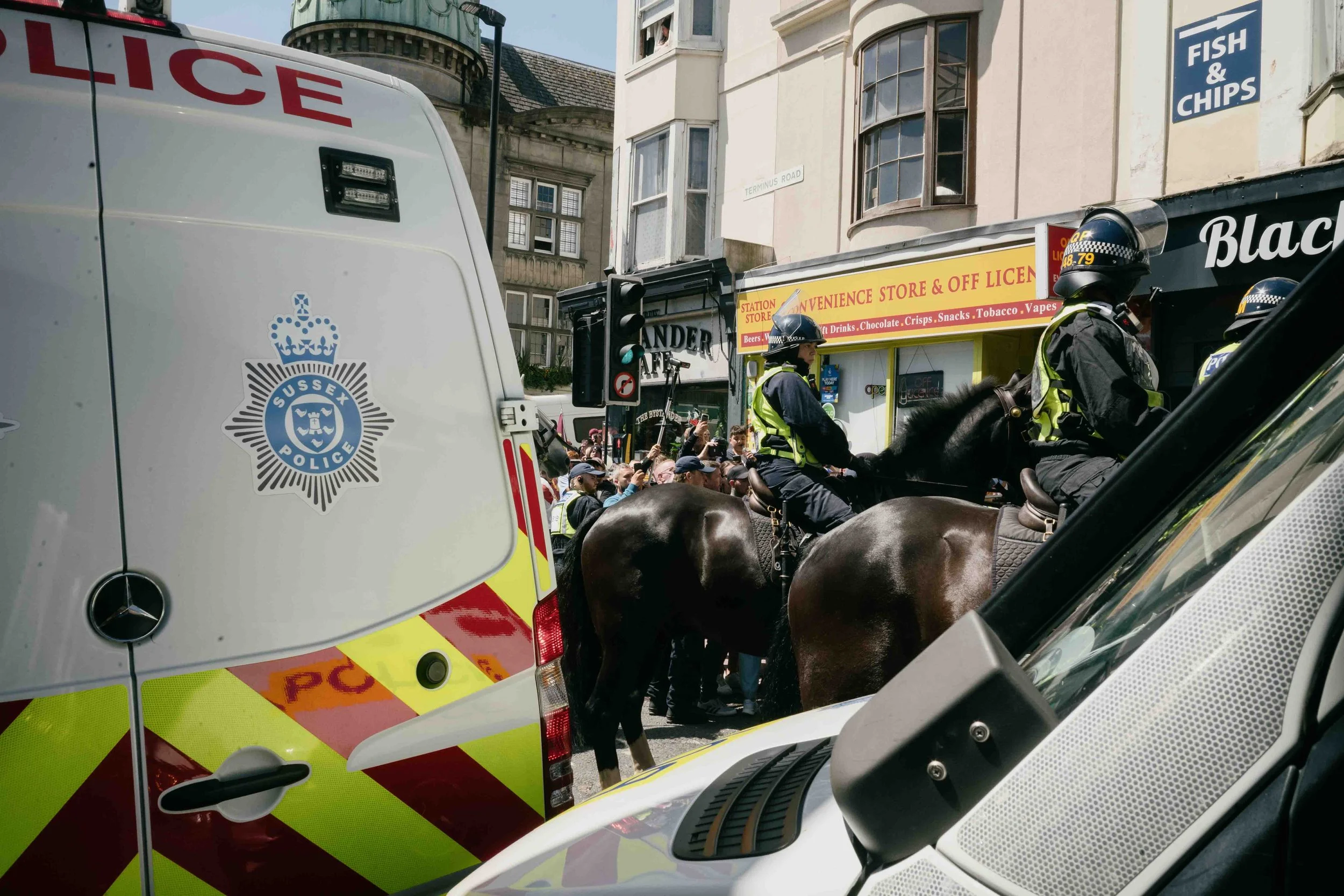
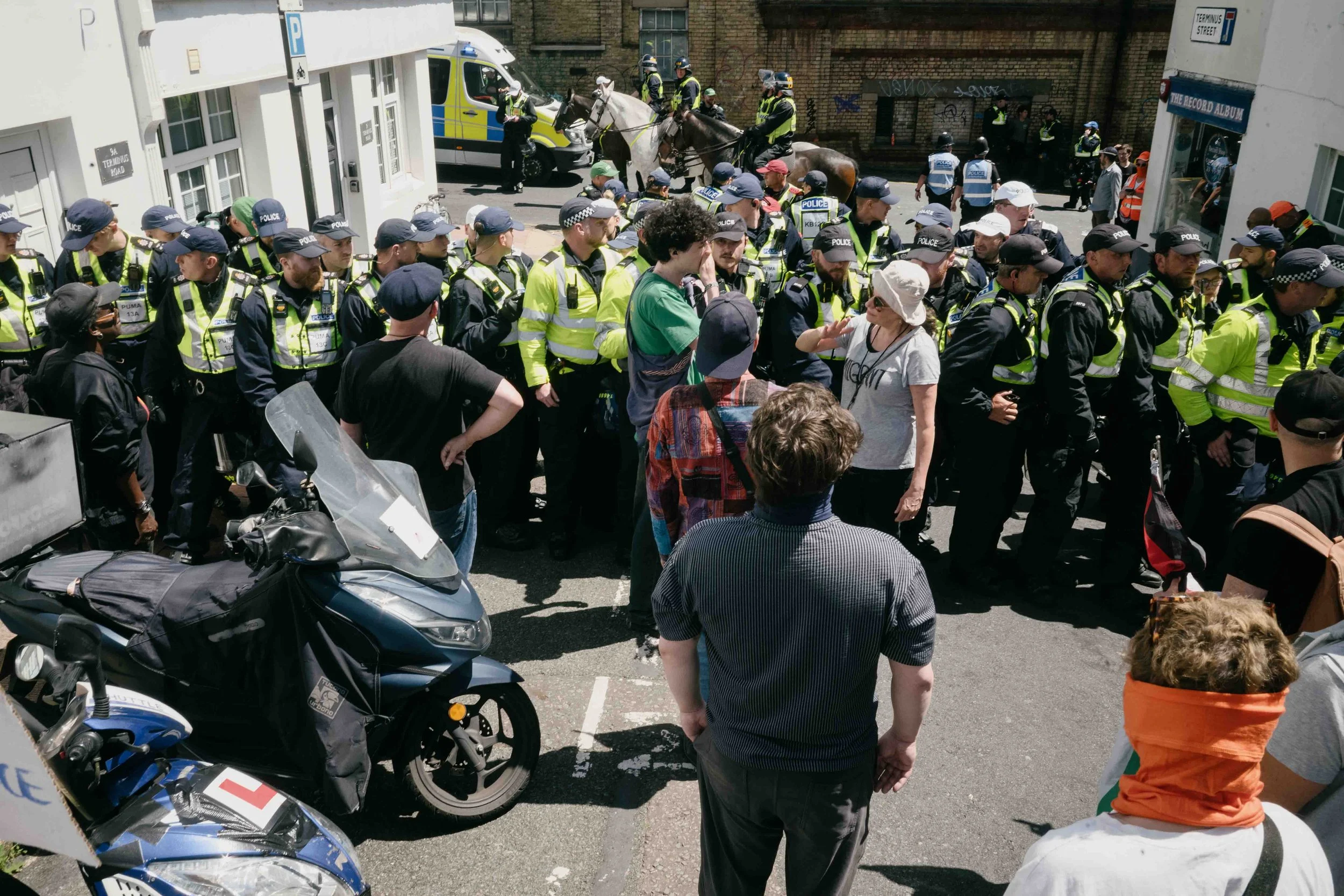
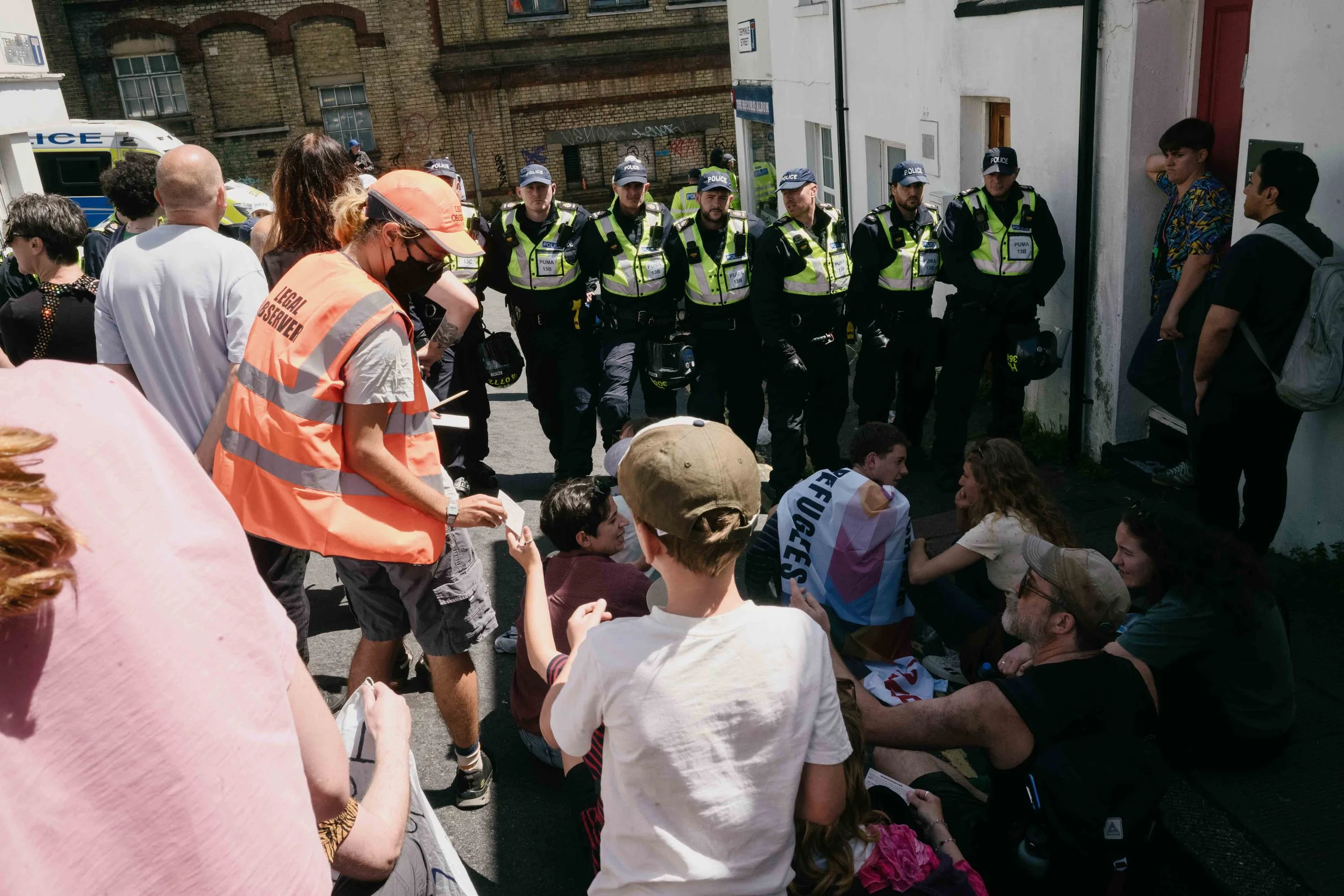
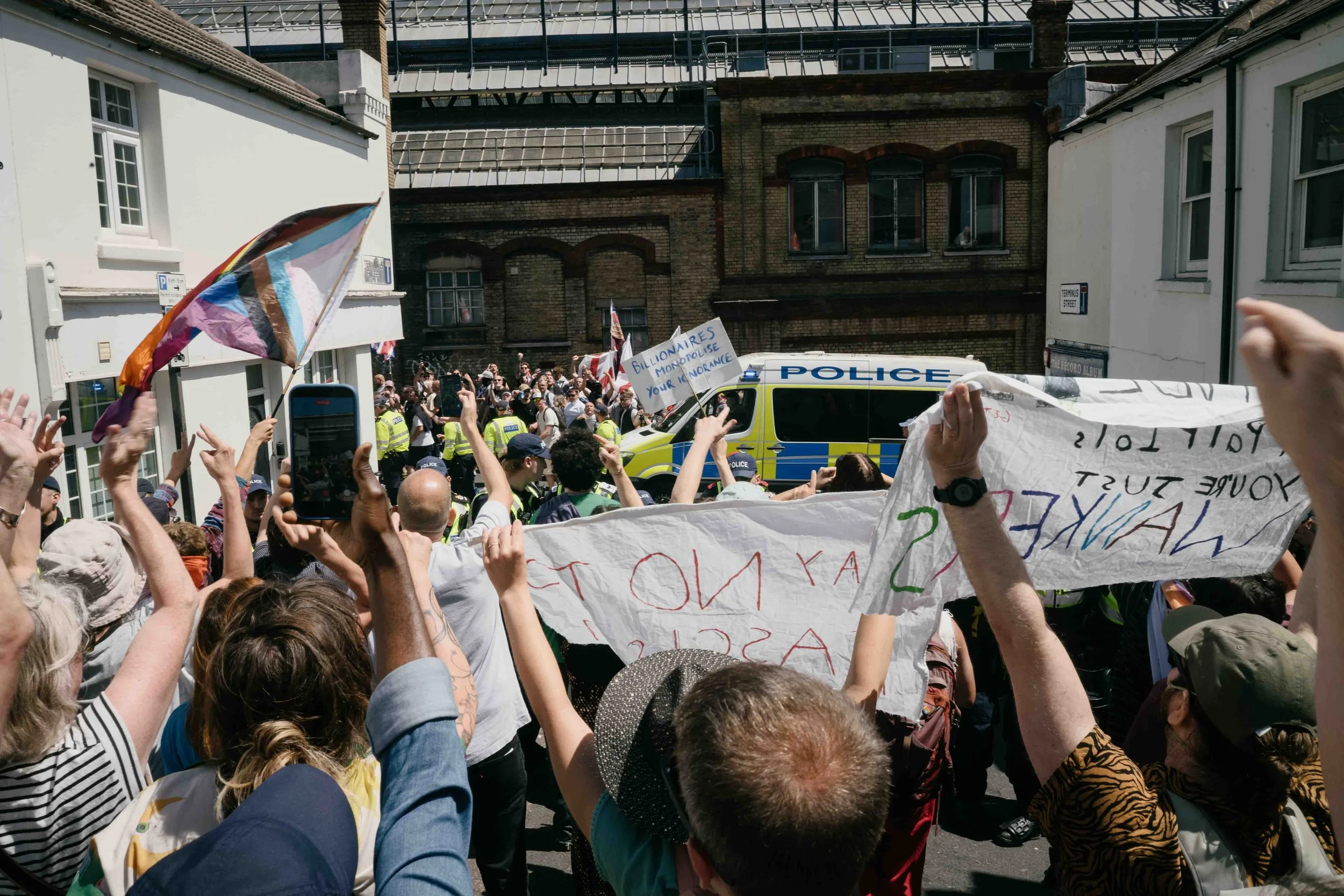
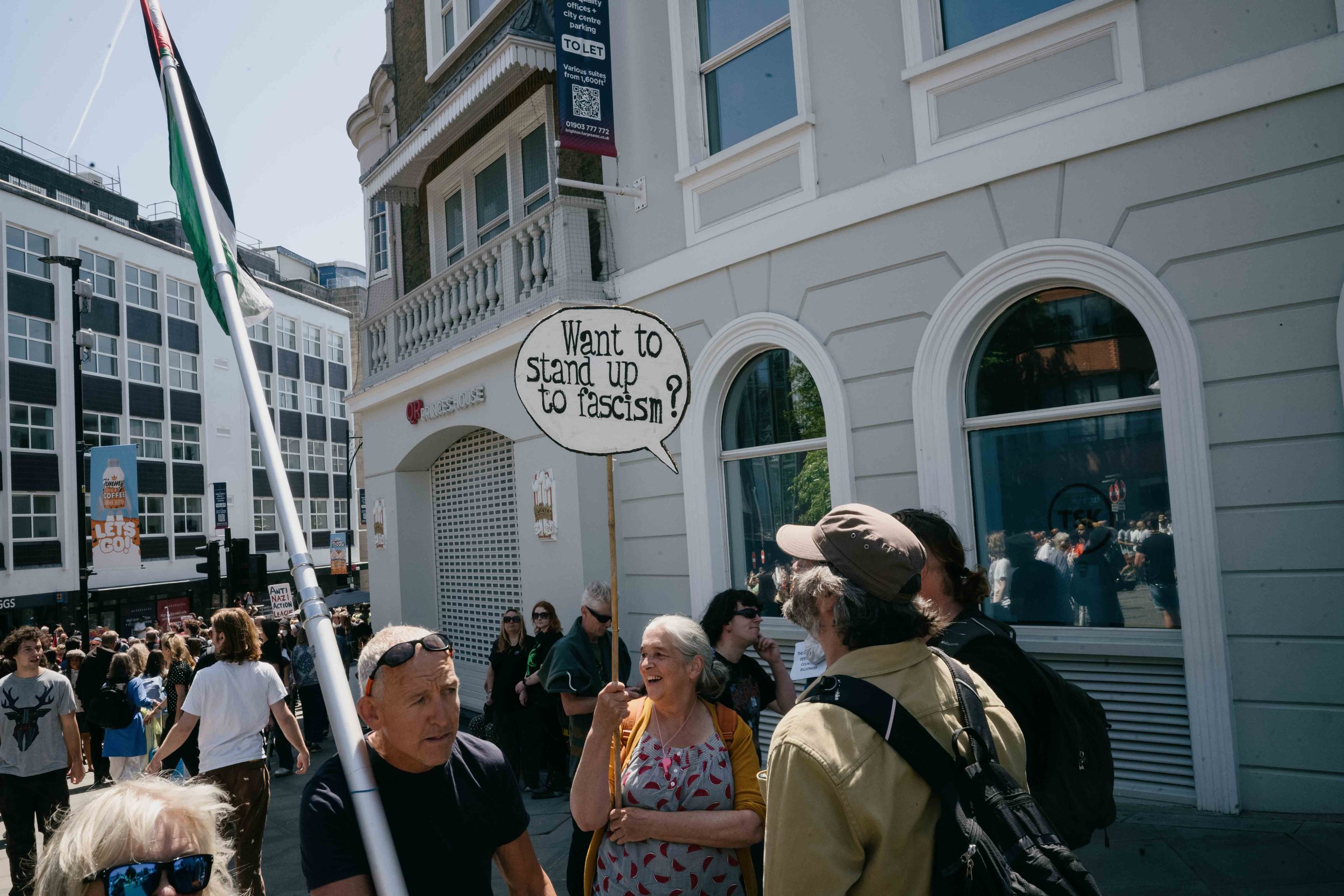
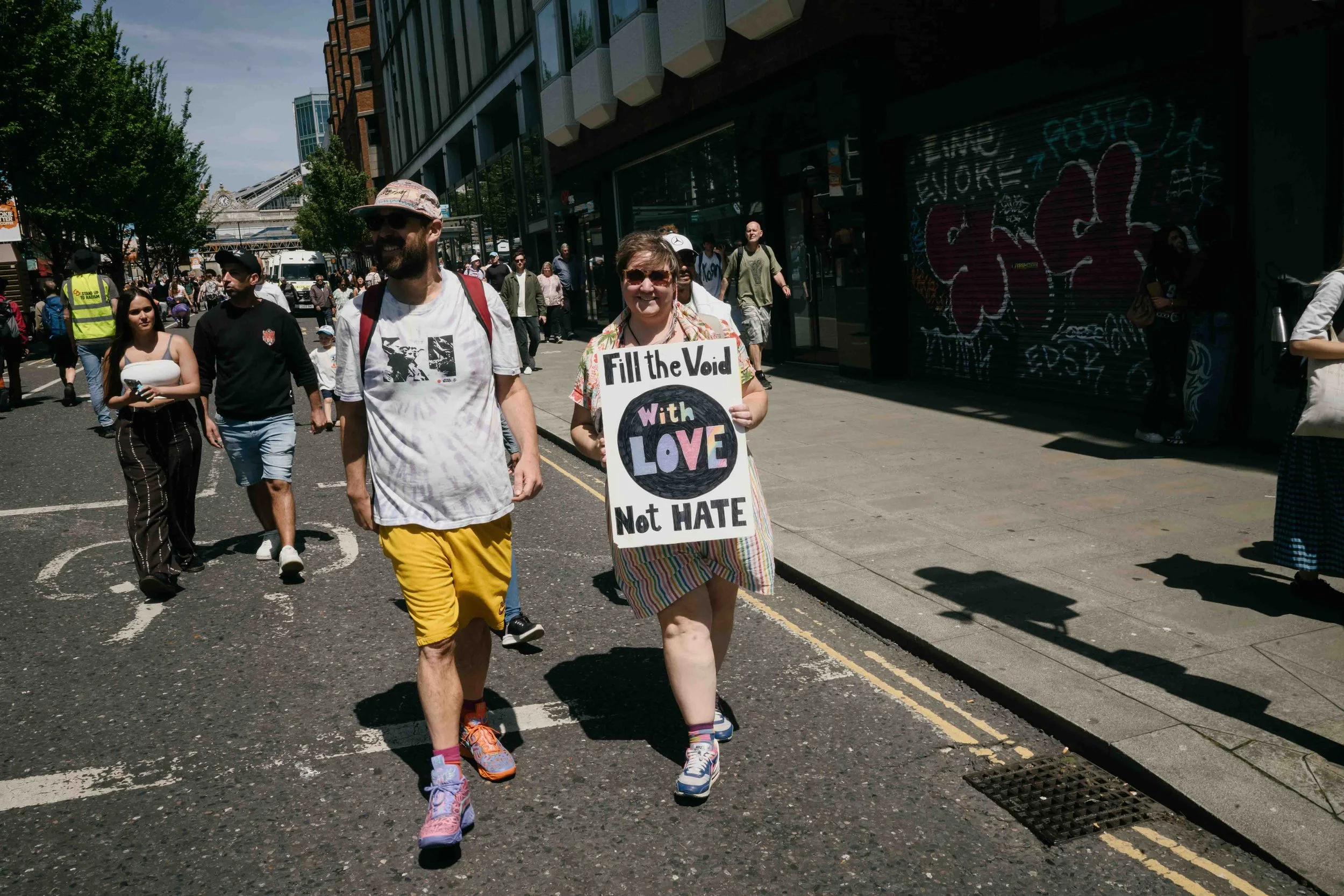
Today the city had two sets of visitors — the Carnival Against Fascism and the South East Patriots — and for a few hours the streets held both of them, pressed together by police lines and competing chants, while the rest of us tried to work out what we were watching.
Brighton doesn't do things quietly. That's partly why I moved here.
Today the city had two sets of visitors — the Carnival Against Fascism and the South East Patriots — and for a few hours the streets held both of them, pressed together by police lines and competing chants, while the rest of us tried to work out what we were watching.
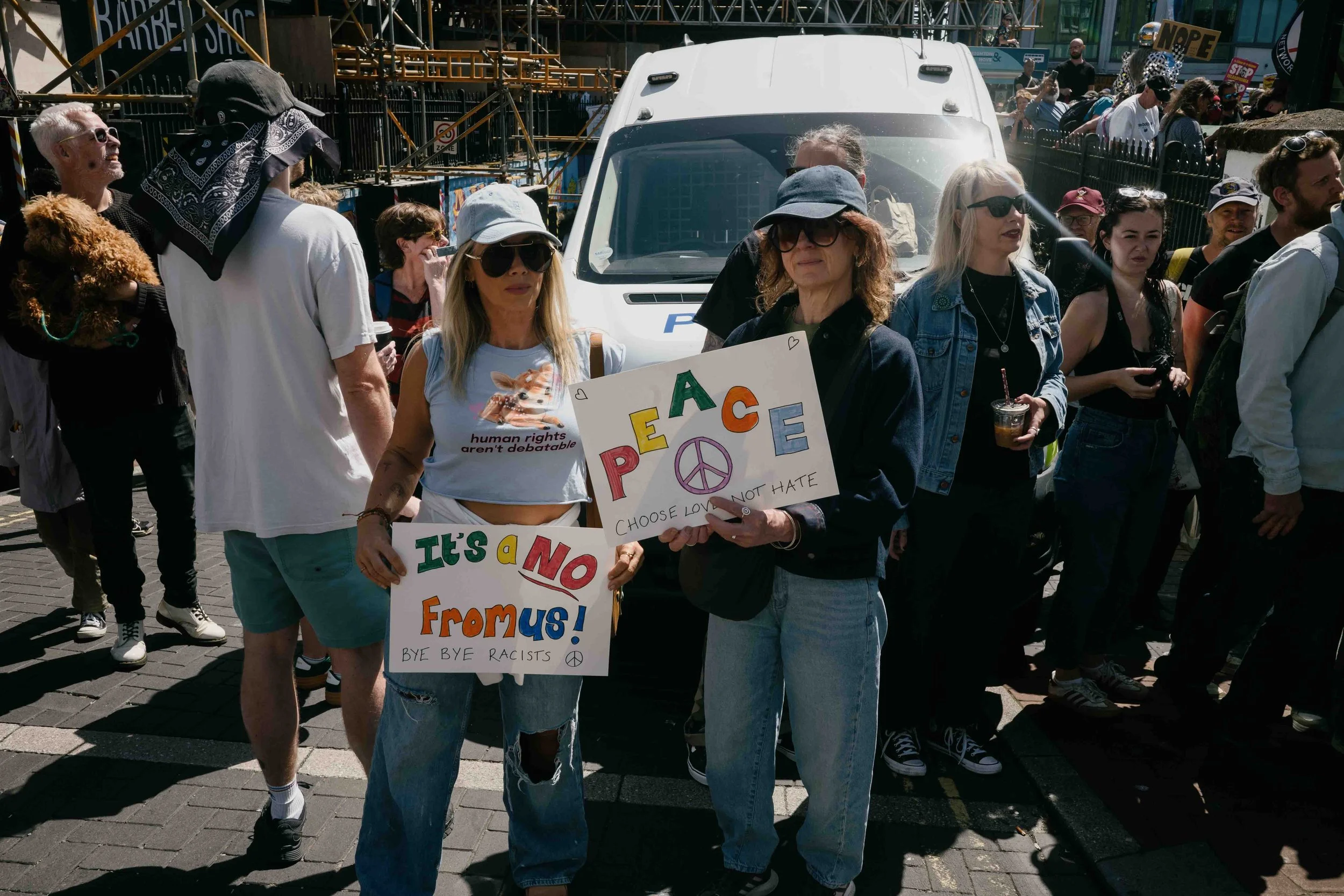
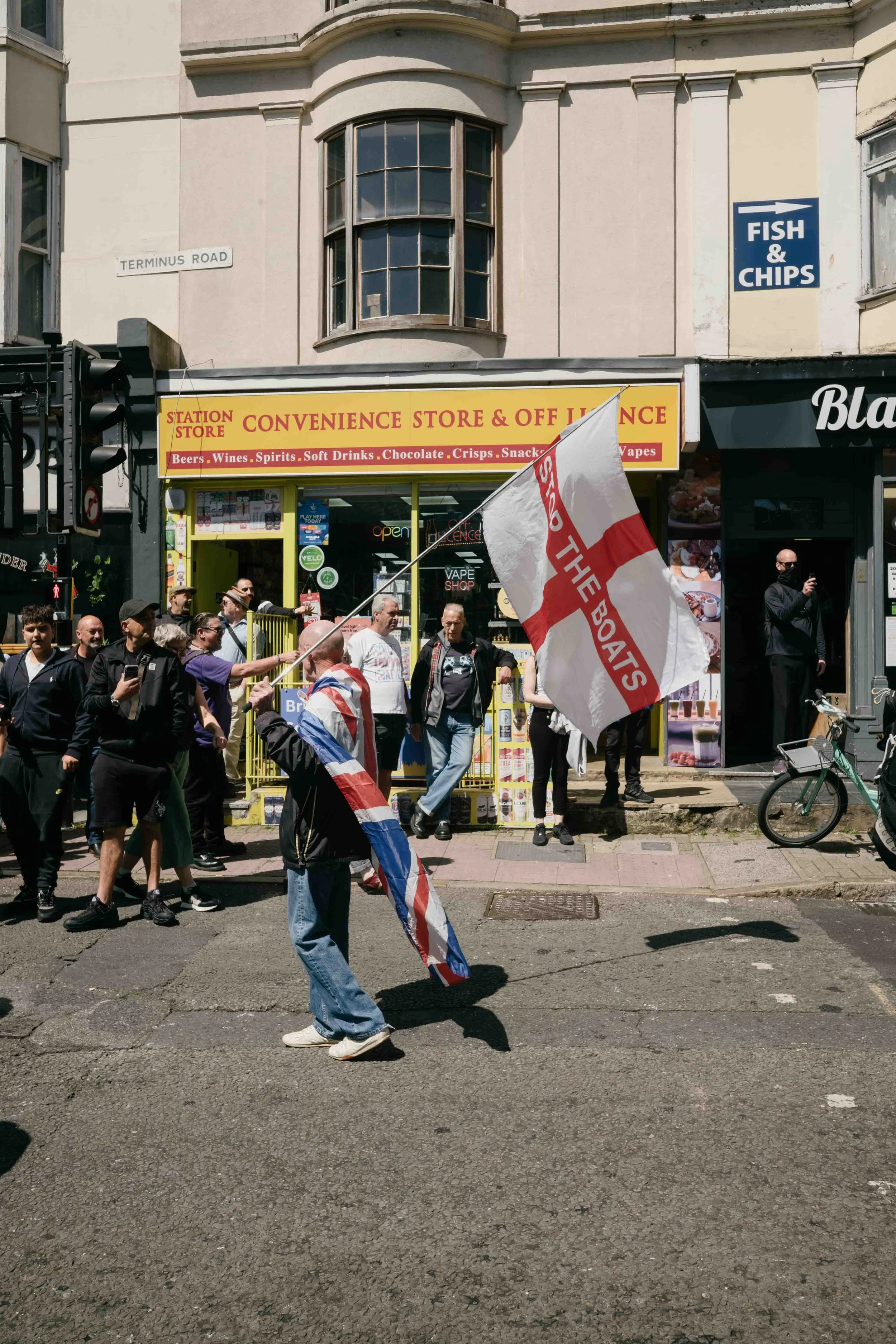
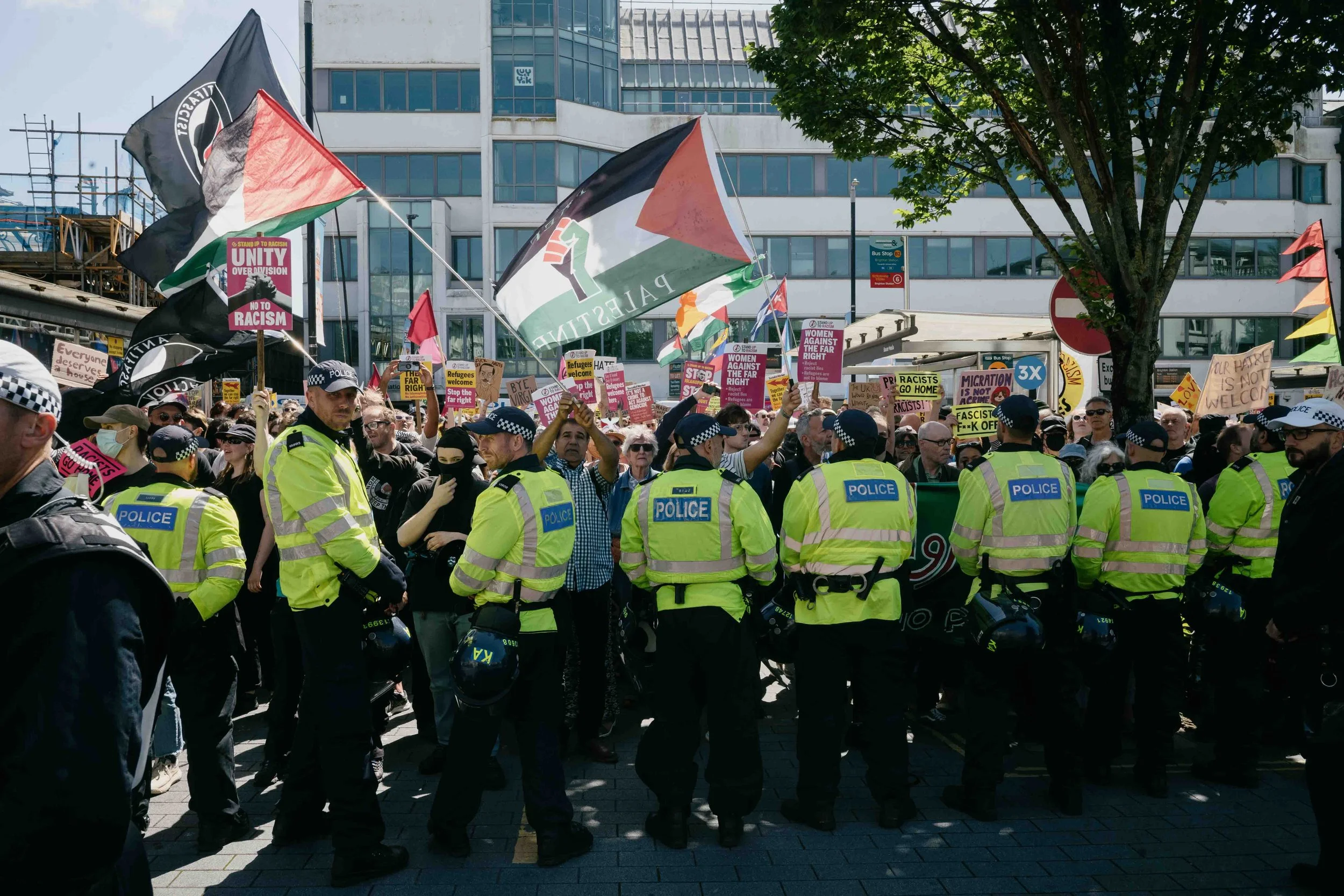
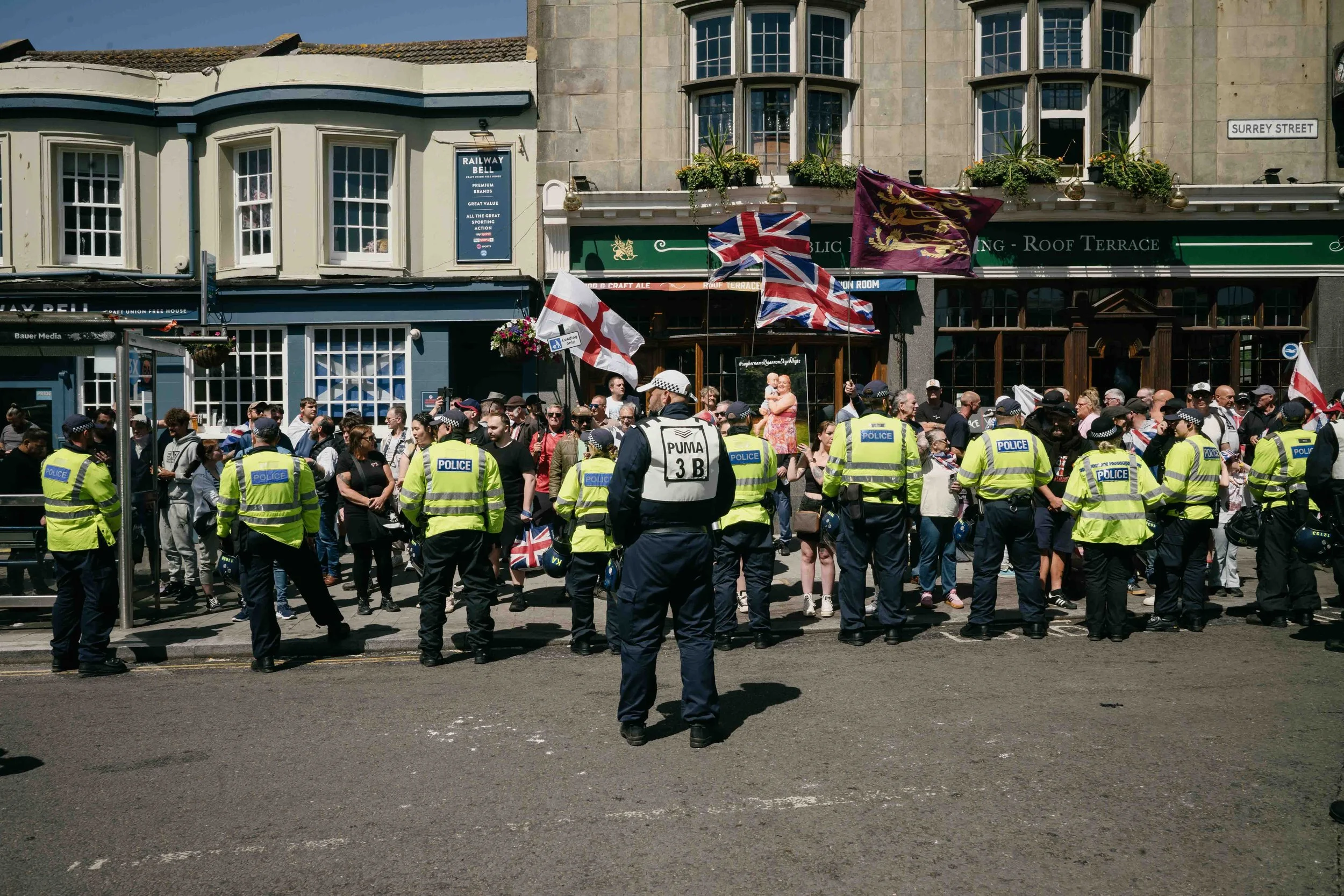
Not a Brightonian by Birth
I've lived here since 2014. Long enough to feel like home, not long enough to claim it as mine by right. I came for the community, for the sea, for the kind of place I wanted to bring my children up in. Brighton gave me all of that.
It hasn't always been the most multicultural city — I say that honestly, not as criticism. But it's changing, and the change is good. New food, new voices, new texture. A city finding more of itself.
"It's great for the community, great for cuisine, and great for culture."
I mean that. So when I saw far-right flags moving through these streets, something in me reacted. Not just politically — personally.
Heart is where the home is.
My dad was Yugoslav and my mum was Catholic Northern Irish. They met in Australia and settled in the Midlands, which meant I grew up knowing all corners of a community — accents, faiths, kitchens, stories. That background didn't make me tolerant in some abstract, theoretical way. It made me know people. Knowing people makes abstraction harder.
I'm immigrant stock. When I see flags that say otherwise, I don't see politics. I see a mirror held up the wrong way.
The Man on the Pavement
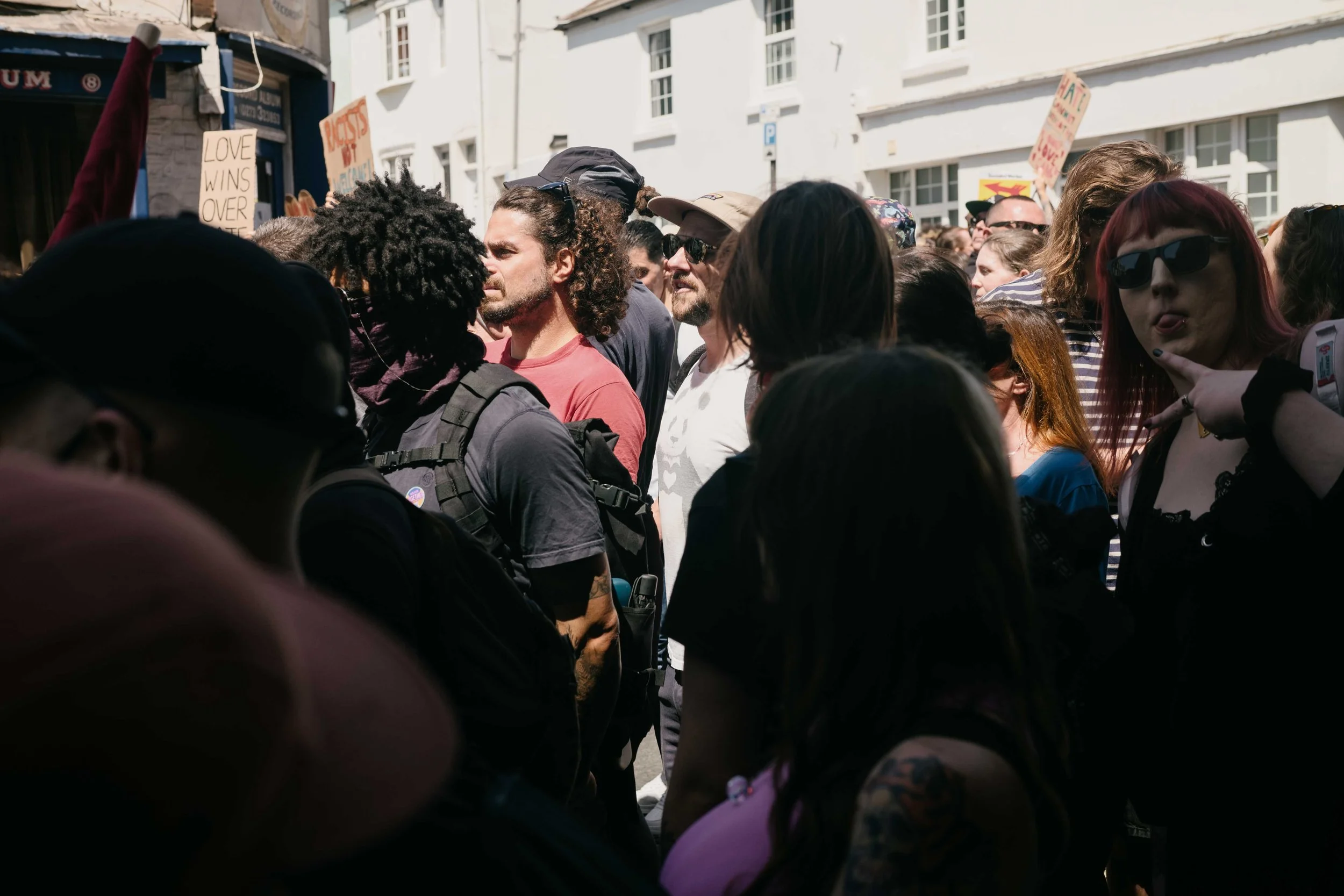
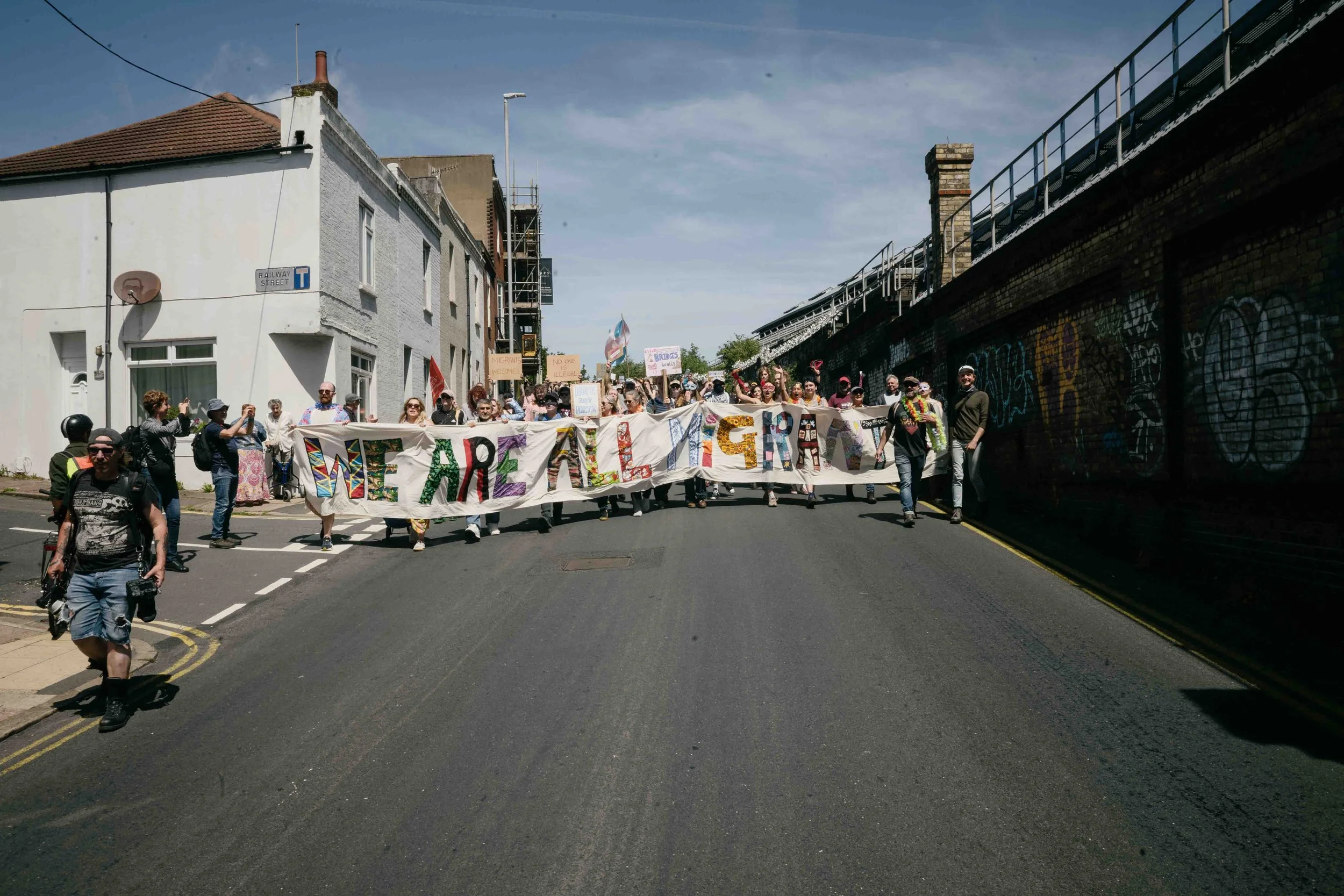
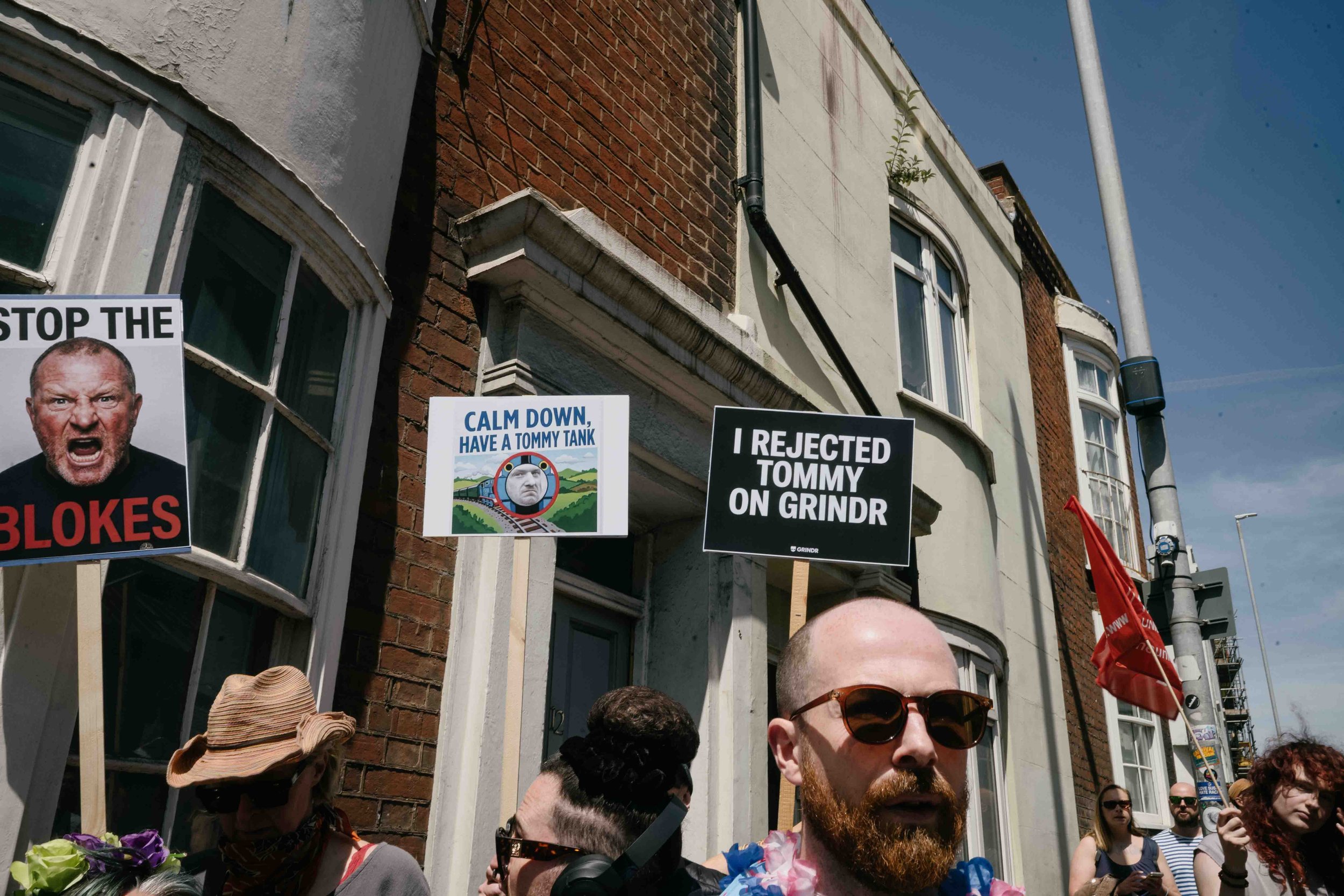
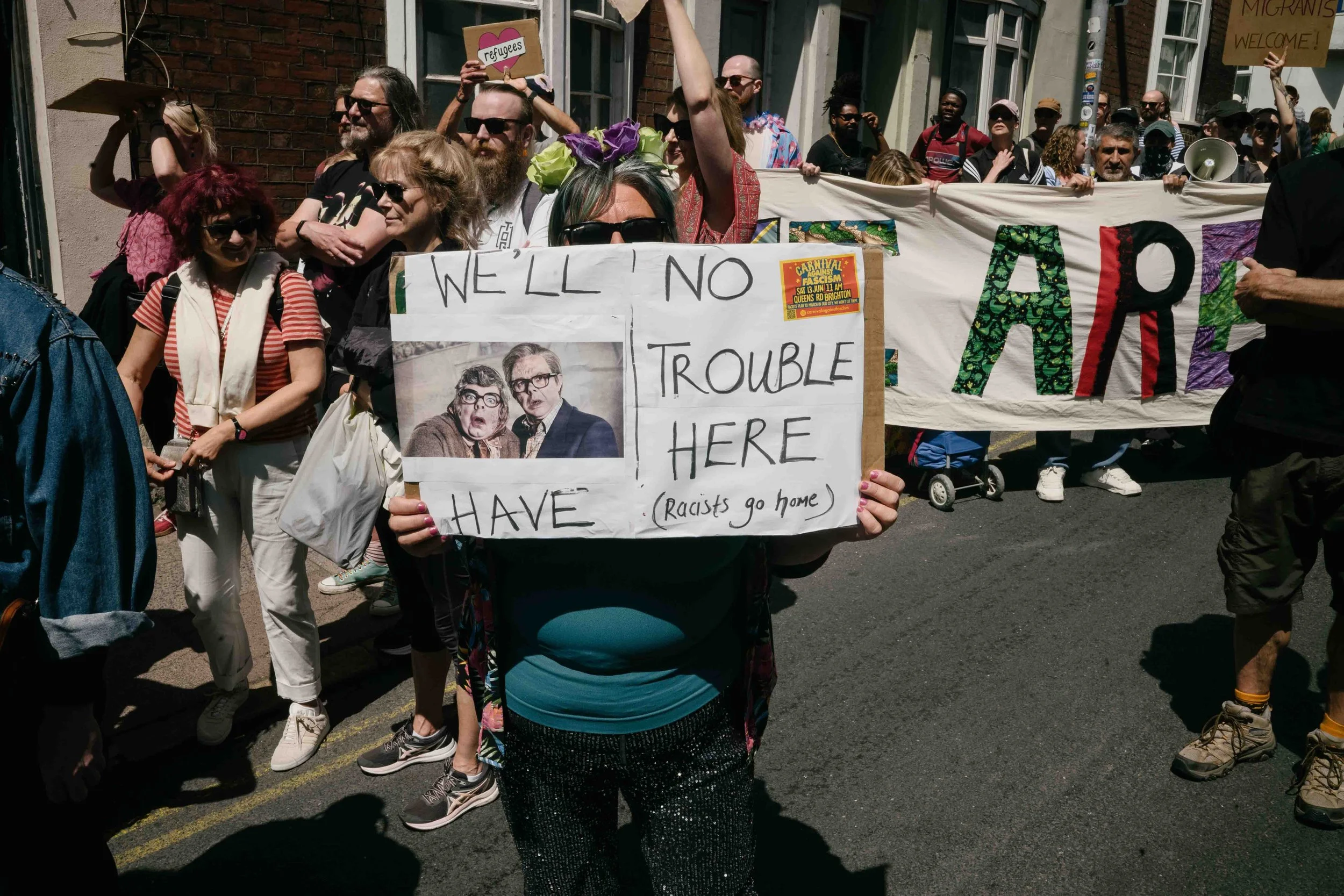
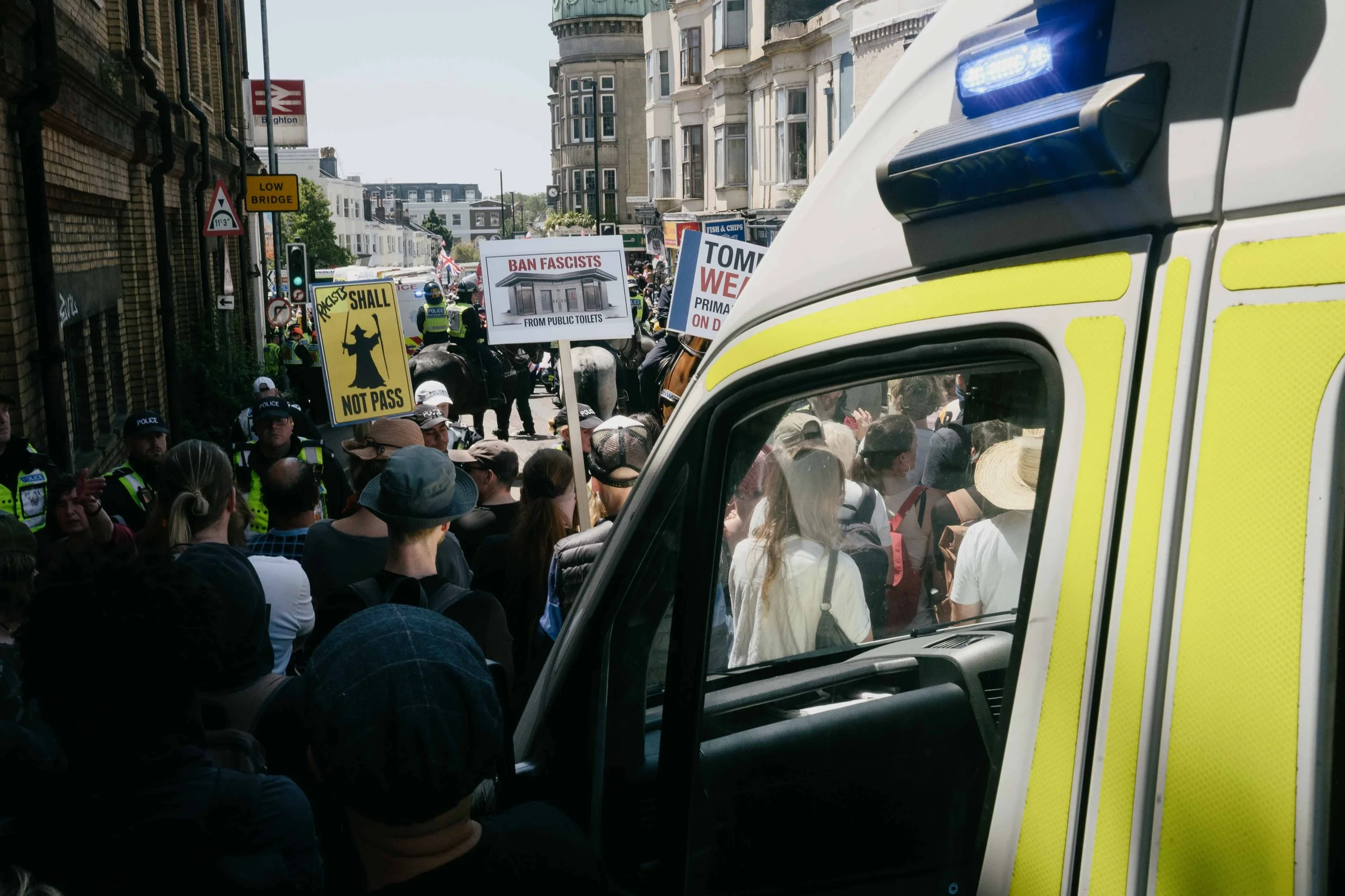
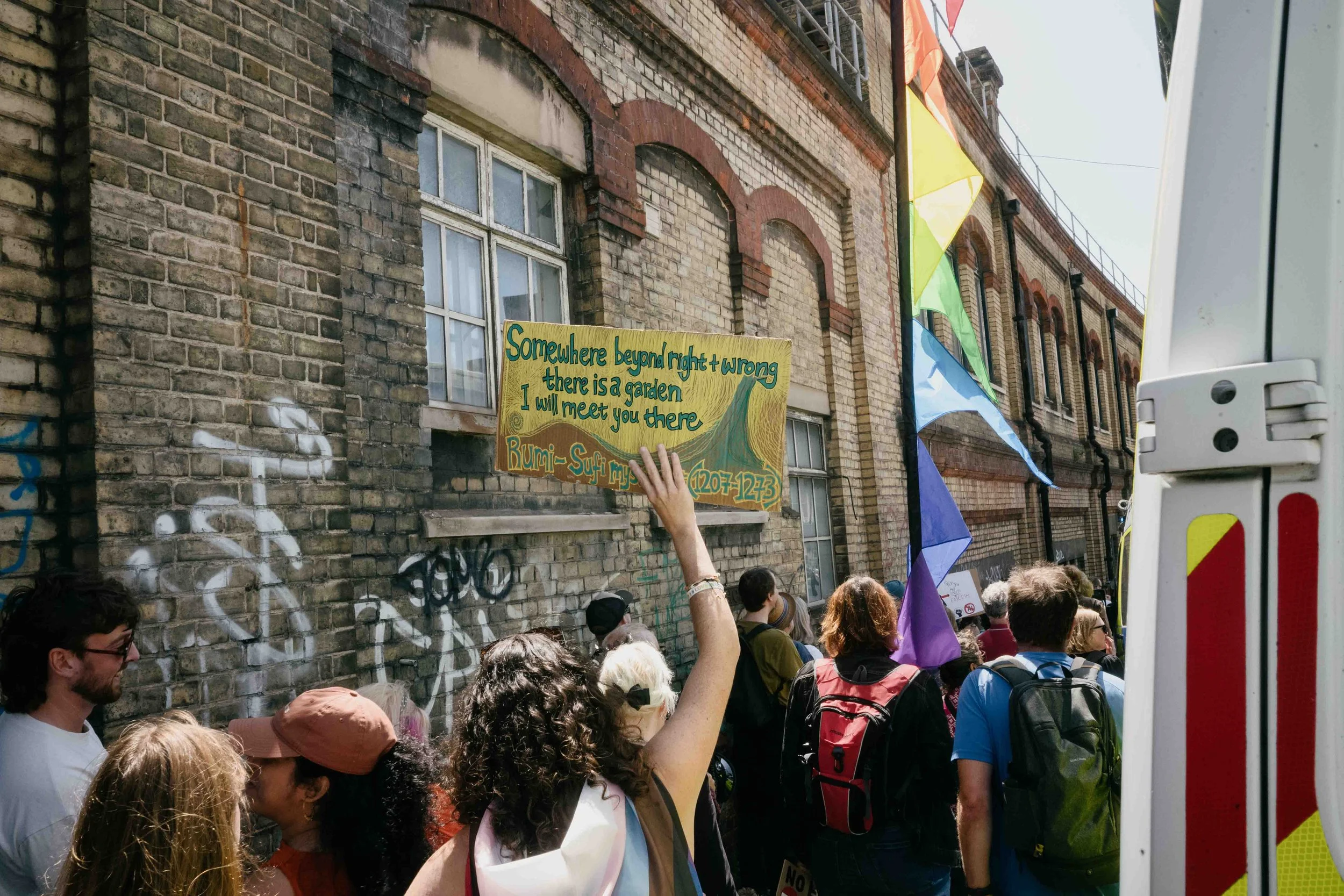
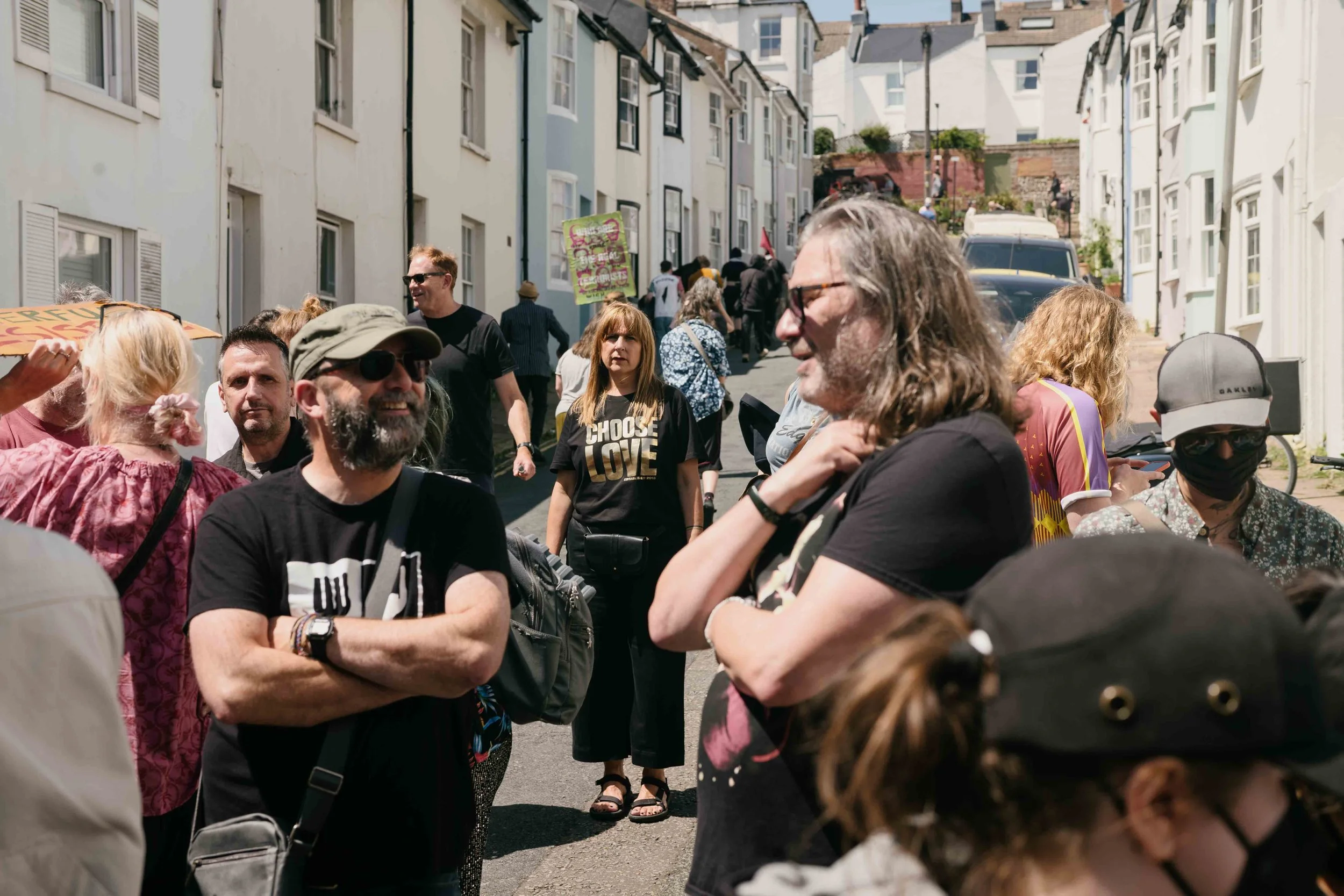
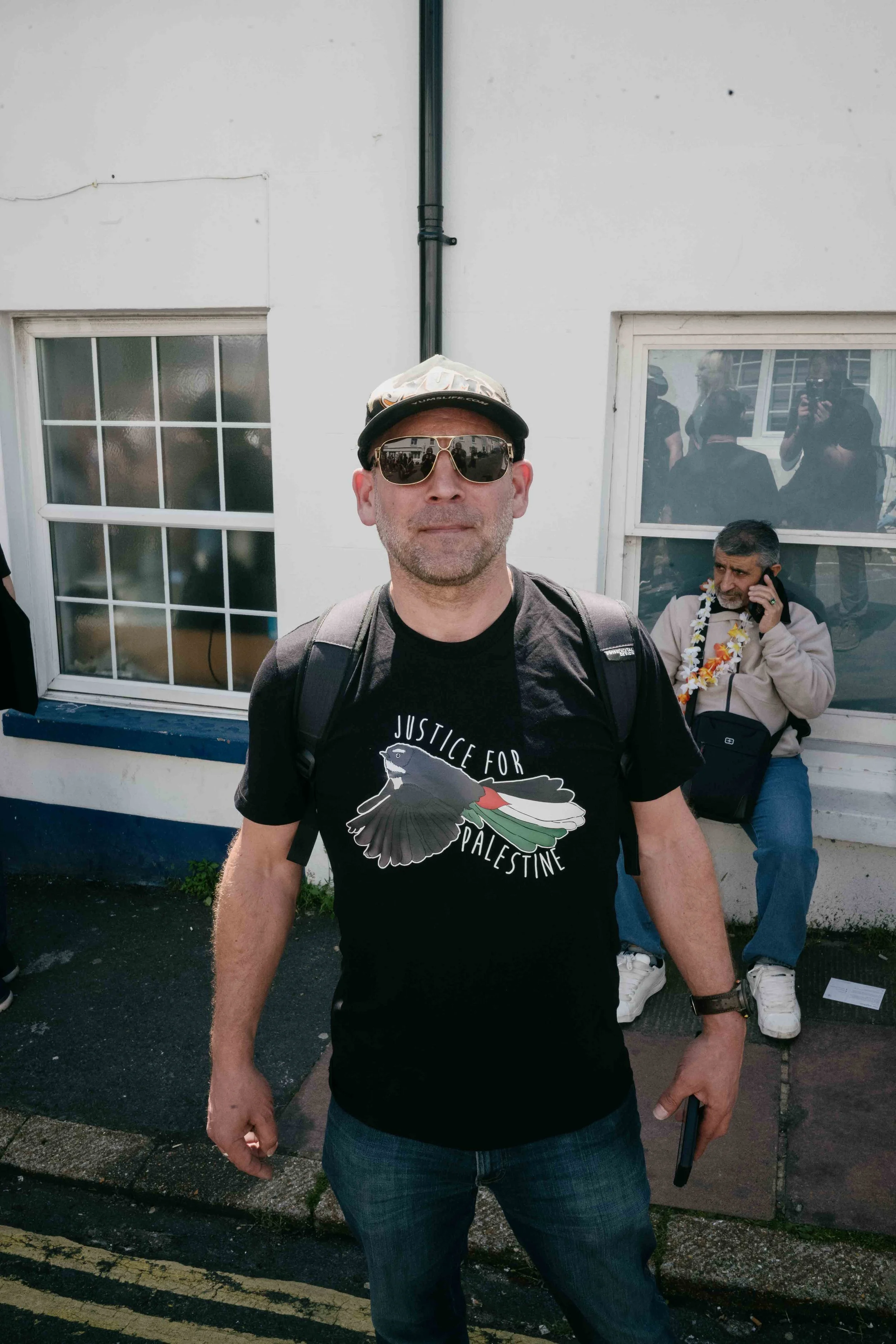
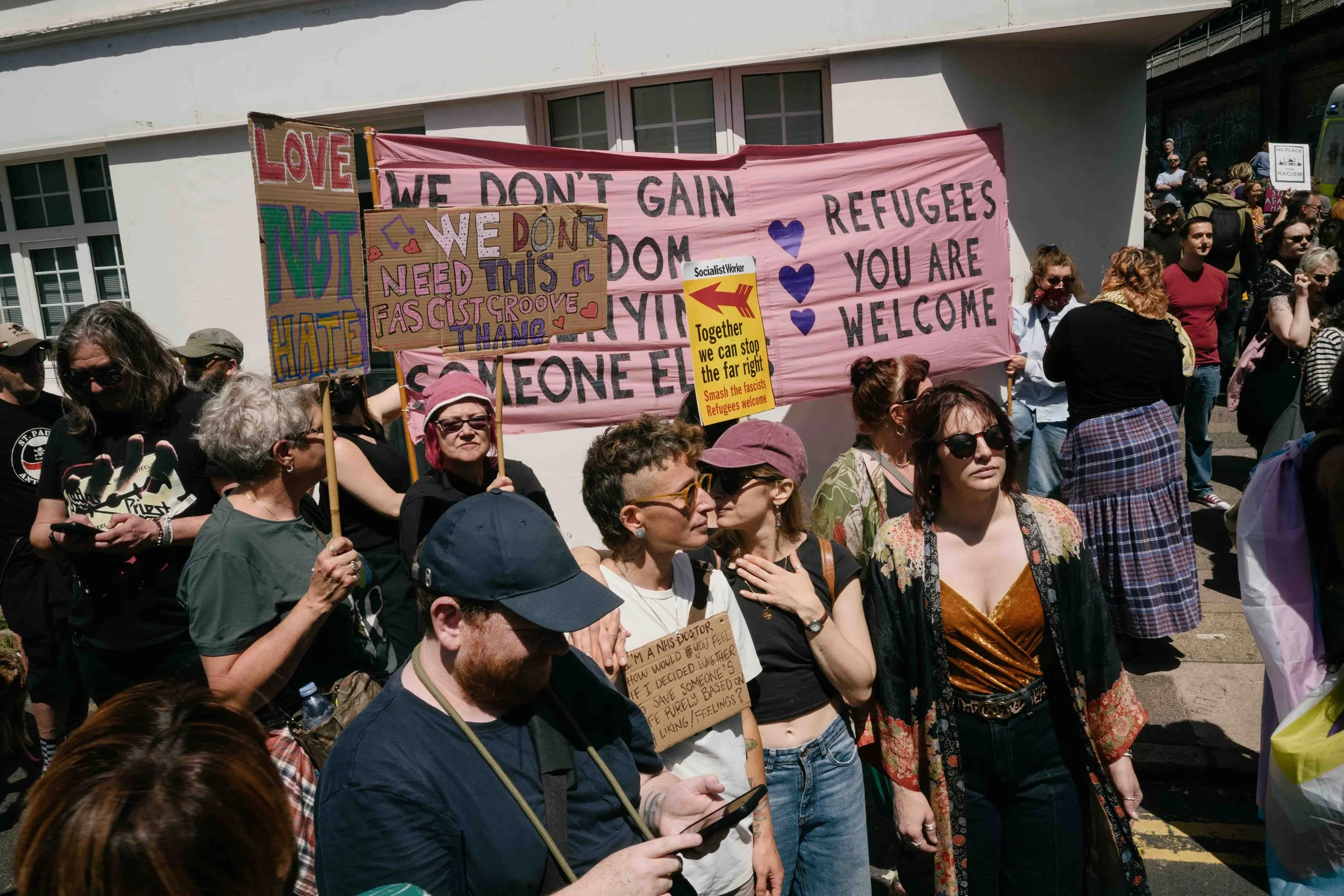
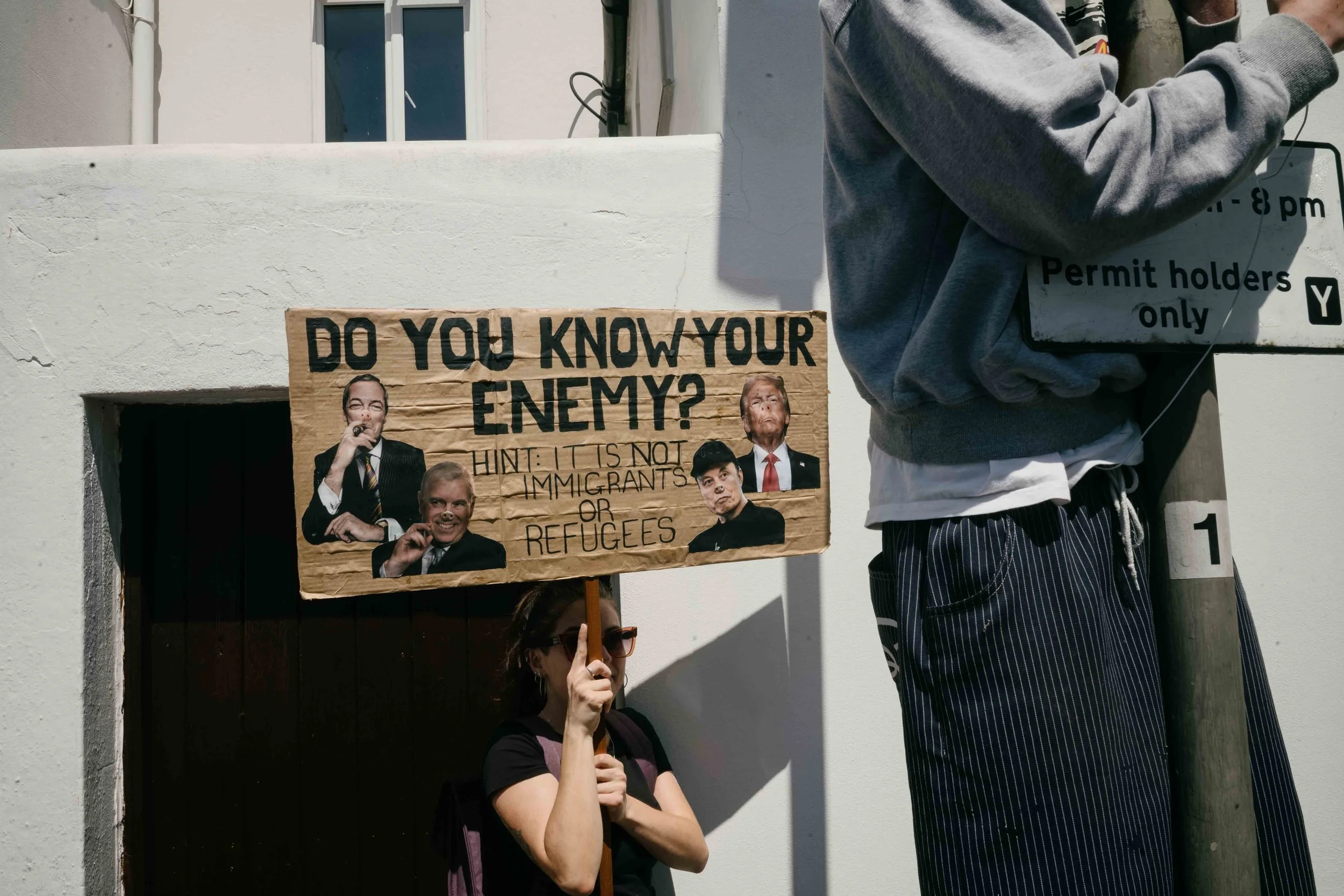
I was genuinely unsettled seeing those flags here. Brighton felt like it shouldn't be on that particular map.
Then a local stopped and talked to me. Born and bred Brightonian. He'd seen it before — thirty years of it, he said.
"They've been coming here for thirty years. The only reason they come to Brighton is to stir up the local community. And it hasn't changed in the twelve years you've been here. I can assure you it hasn't changed in the twenty years before that either."
It should have been deflating. Instead it was clarifying. This wasn't an incursion. It was a pattern, and Brighton had been absorbing it, unchanged, for decades. The city knew what it was. The city had already decided.
That conversation was worth more than anything I photographed.
The Police
I was at the far-left / far-right march in London not long ago, so I had a comparison to make.
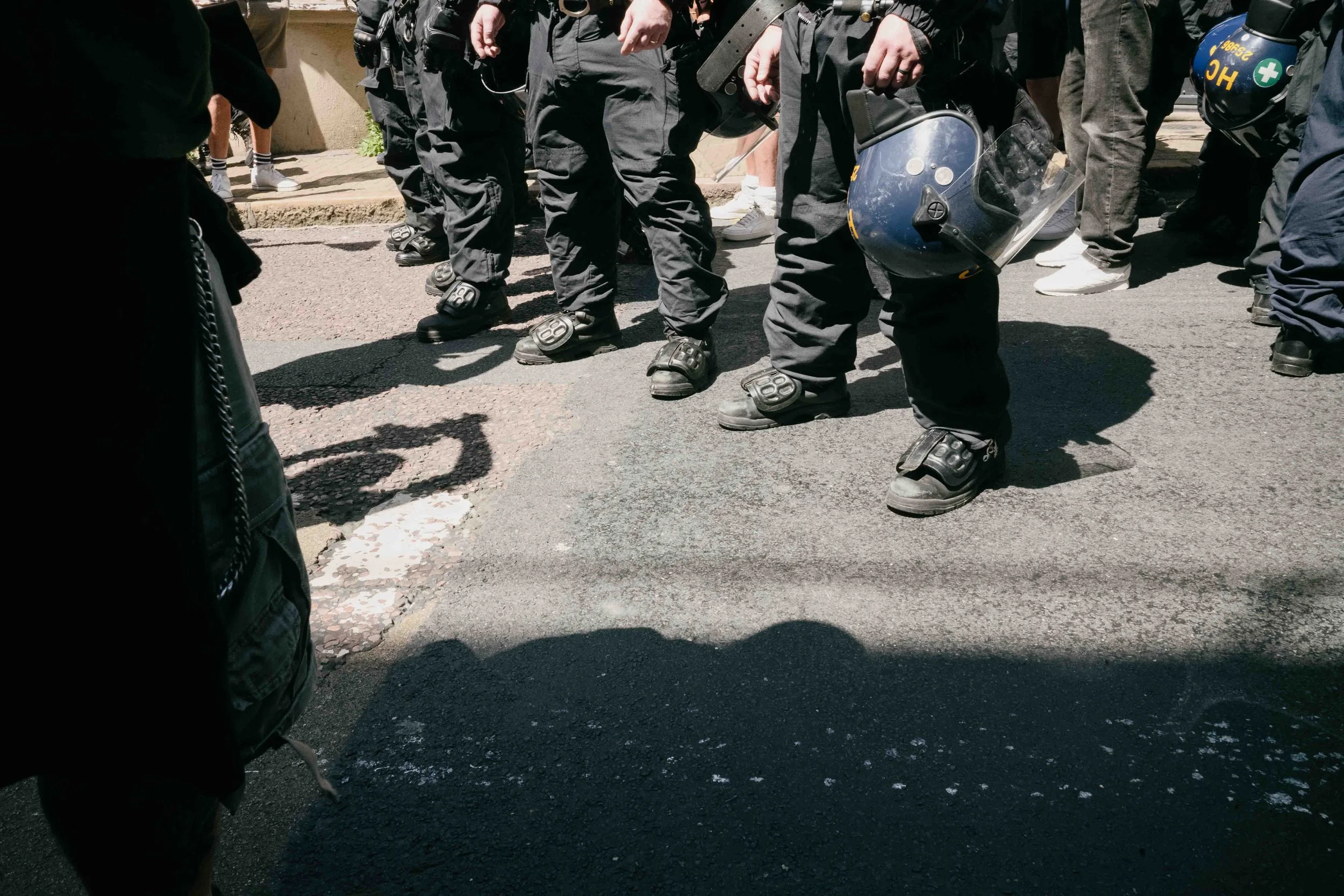
Brighton's police today were also exceptional.
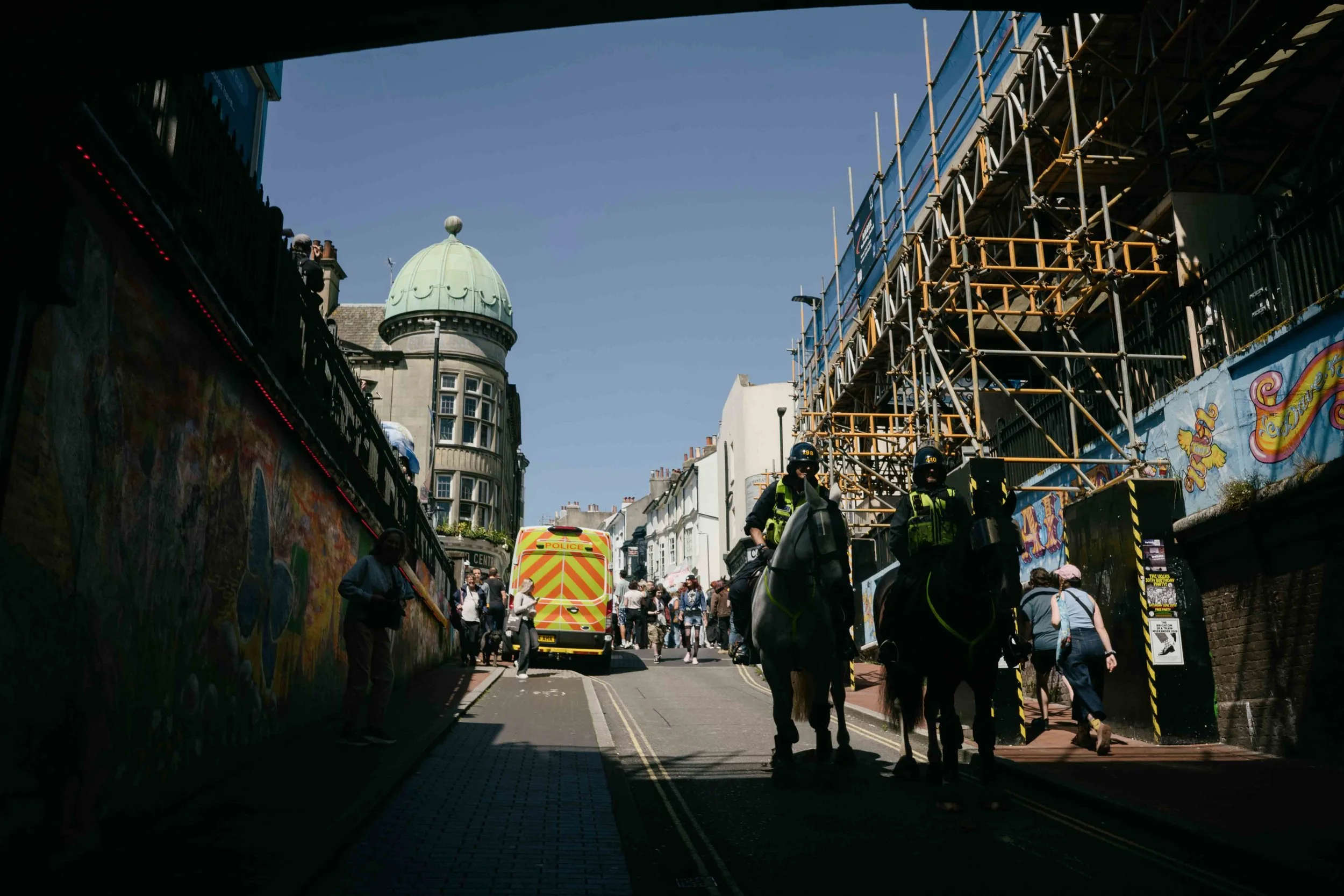
Young officers — some looked barely into their twenties — holding a difficult line between two groups that weren't there to listen to each other. A handful of people tried to goad them, to find the edge that would make them react. They didn't find it. The officers I watched were calm, present, and professional in a way that the situation didn't make easy.
It matters. It doesn't always go that way.
What I Brought Home
A camera gets you close to things. Sometimes that's a privilege, sometimes it's a responsibility, and occasionally it's both at once.
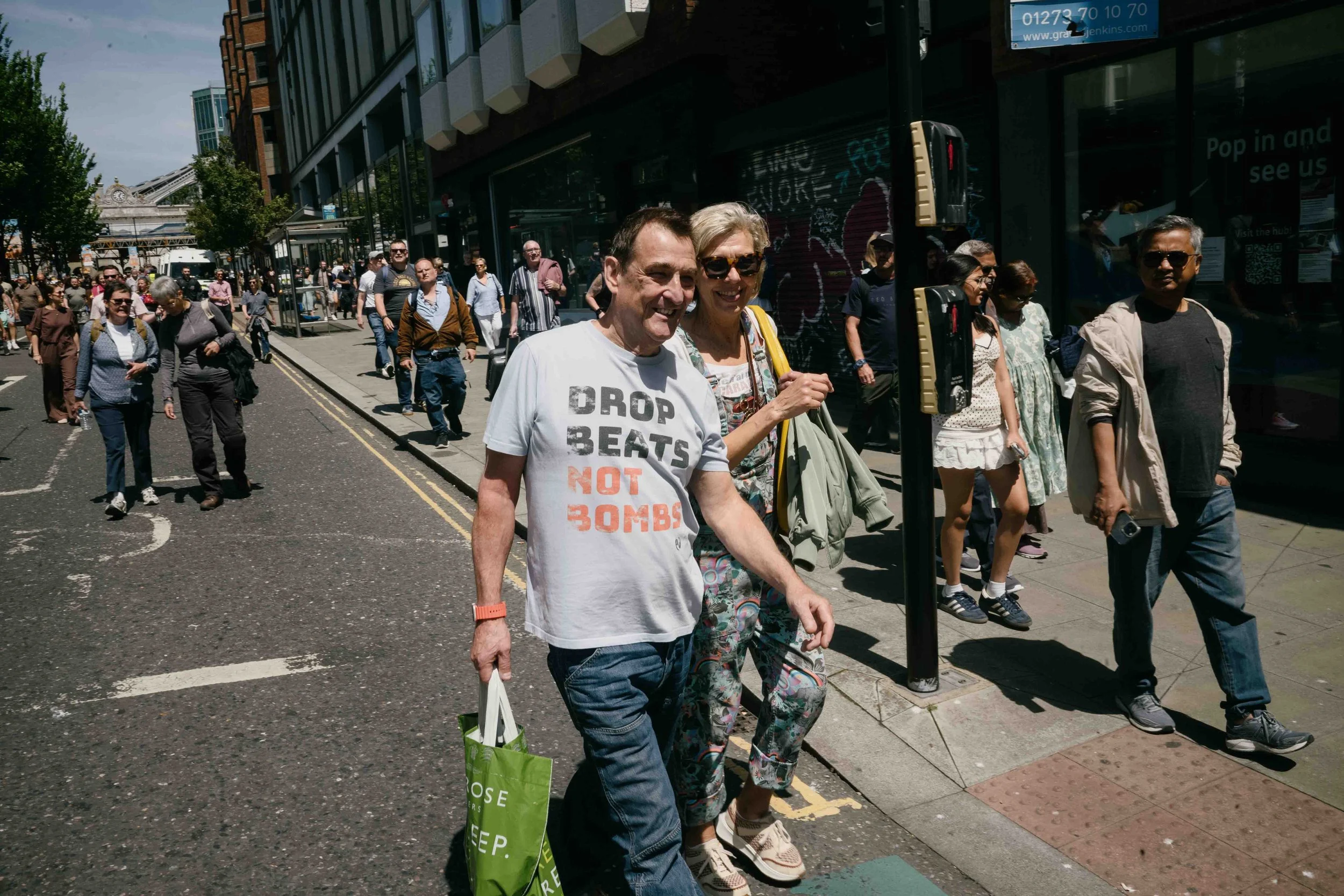
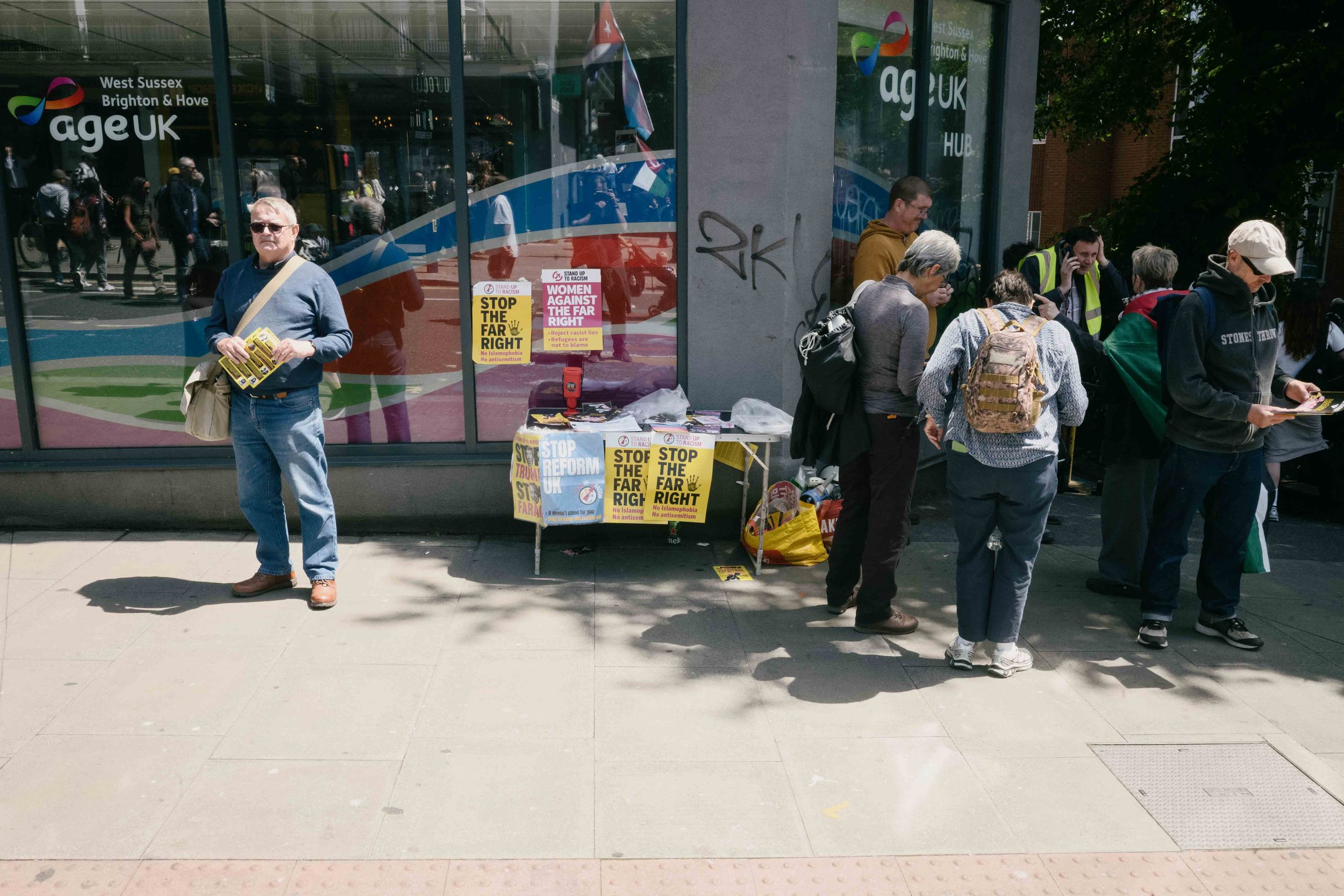
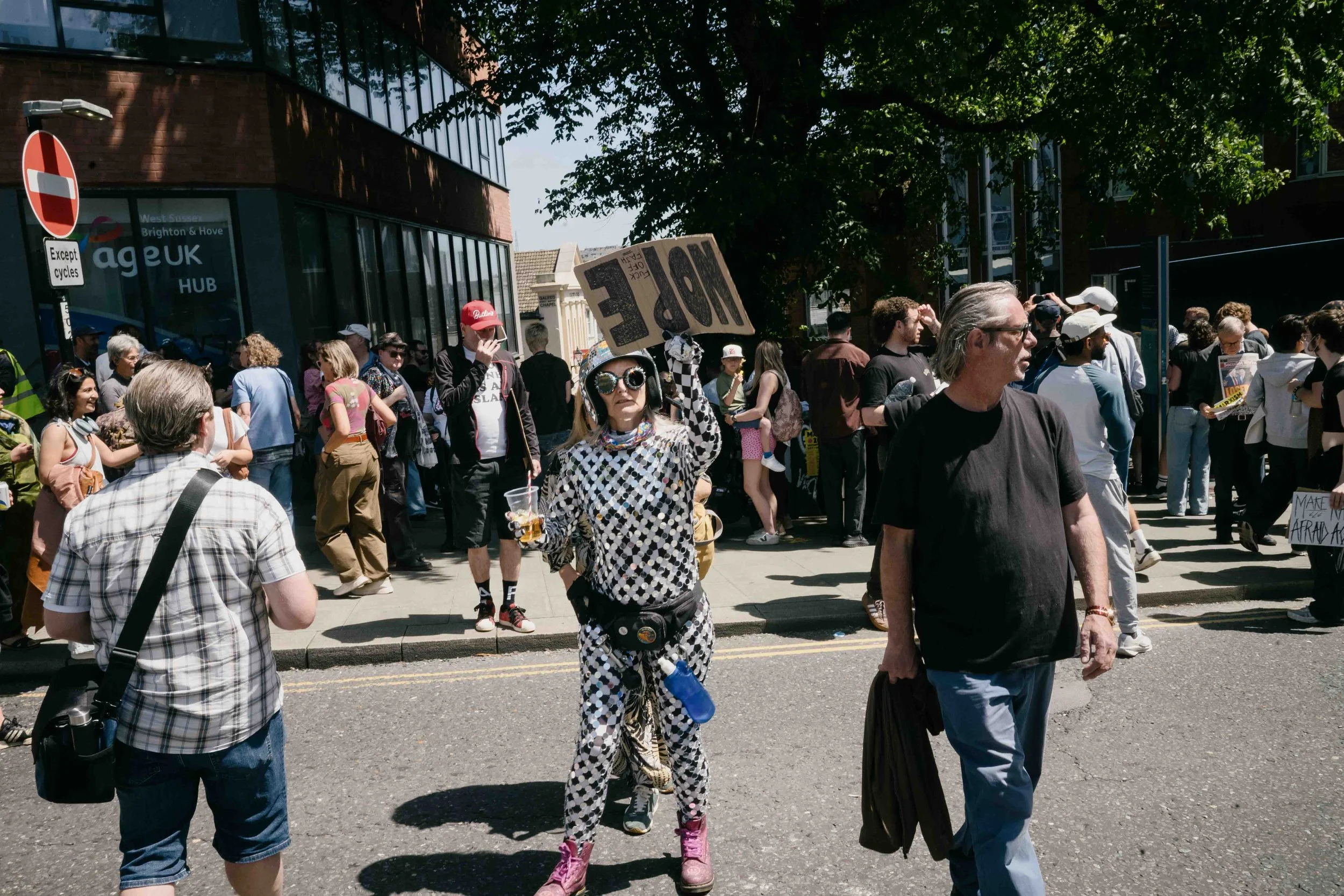
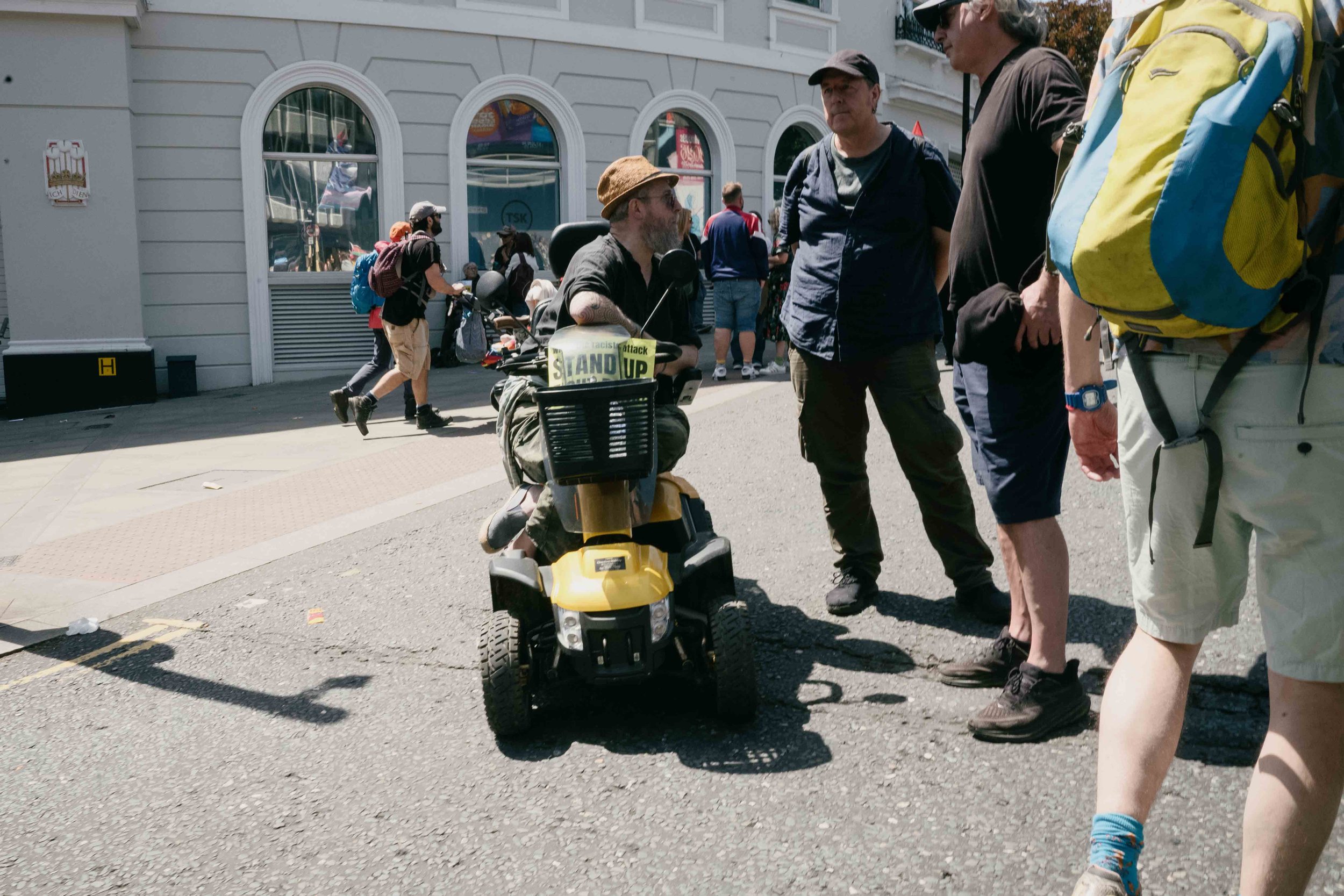
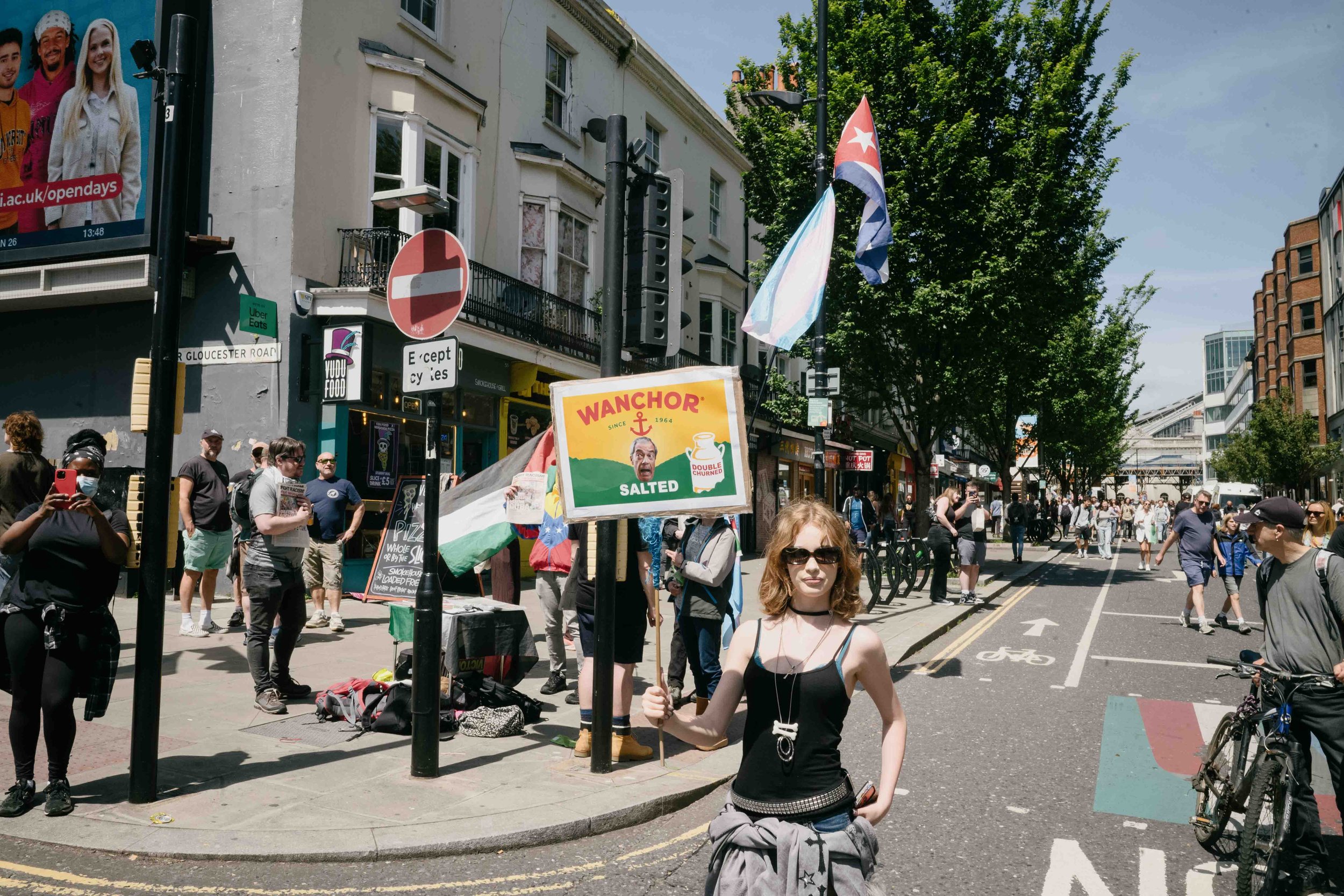
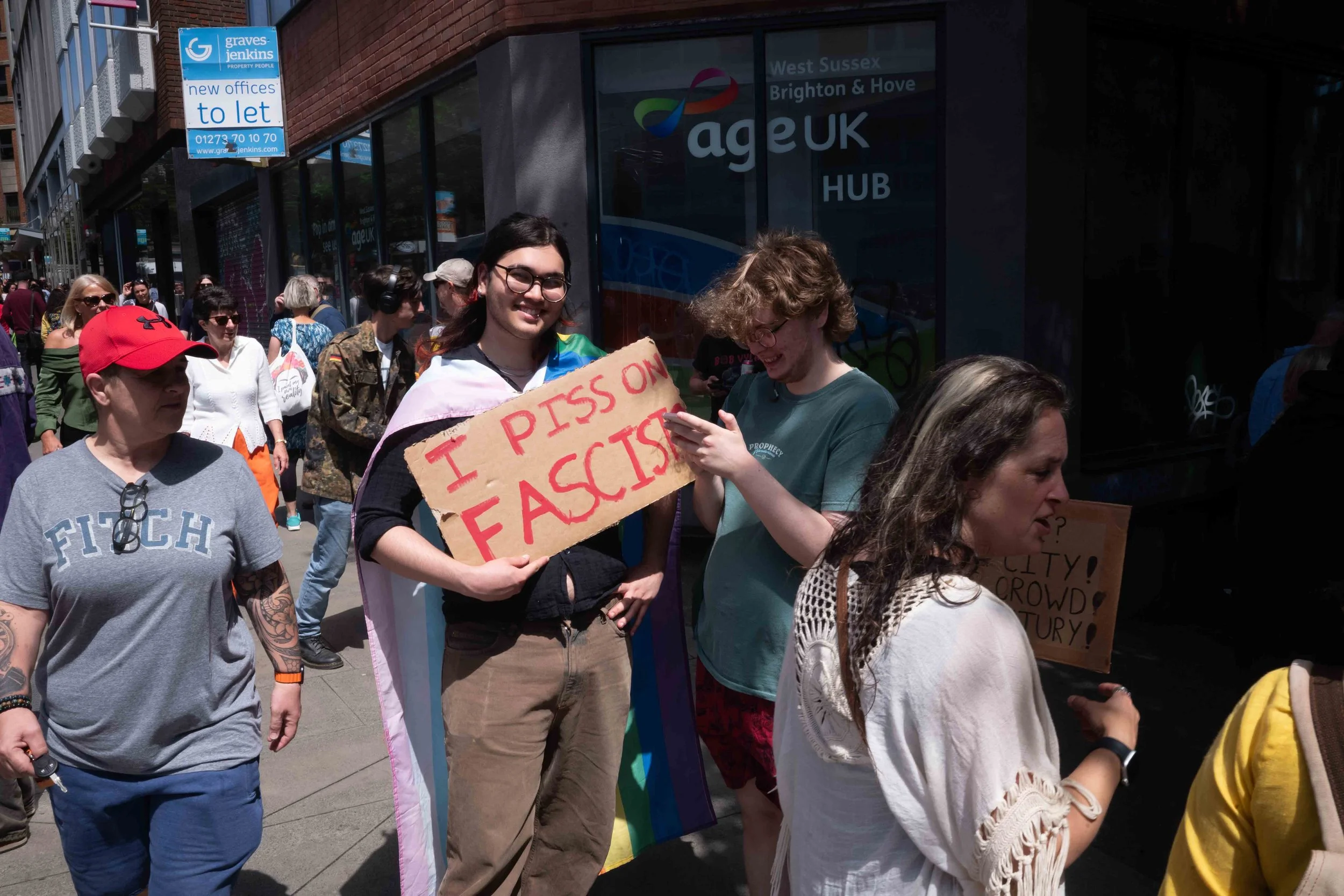
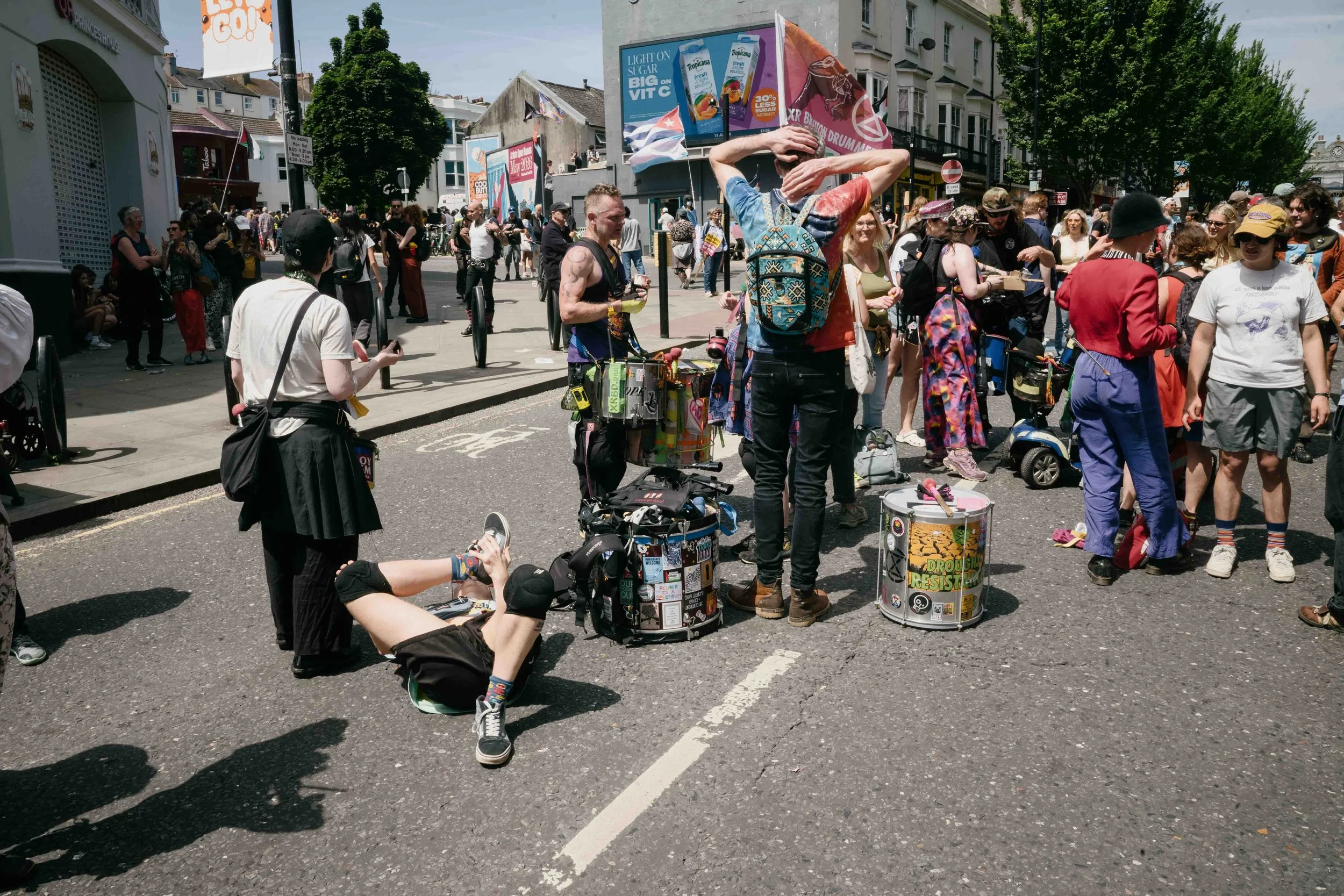
Today felt like both. Two sides of something old, playing out again by the sea. A city that's seen it before and knows its own mind. A stranger who gave me thirty years of context in two minutes. Young officers doing a hard job with quiet dignity.
Brighton doesn't do things quietly — but it does do them with a kind of stubborn confidence that I've come to love. Today was a reminder of why.
Until next time, keep snapping
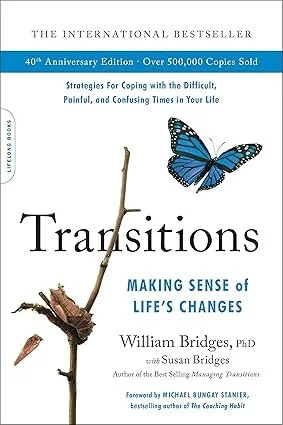
The Latent Image: On Redundancy, Film Photography, and Transitions by William Bridges
I was made redundant at the end of May 2026, after nearly eighteen years in financial services. I didn't see it coming with any particular clarity, even though the restructuring had been visible on the horizon for a while. One day I had a role, a portfolio, a set of relationships built over nearly two decades. The next I didn't. The strange thing wasn't the shock — it was the silence that followed it.
I went looking for something useful. I typed "reset" and "transition" into an AI search and Transitions: Making Sense of Life's Changes by William Bridges came back at me. I bought it the same day.
Books · June 2026
I was made redundant at the end of May 2026, after nearly eighteen years in financial services. I didn't see it coming with any particular clarity, even though the restructuring had been visible on the horizon for a while. One day I had a role, a portfolio, a set of relationships built over nearly two decades. The next I didn't. The strange thing wasn't the shock — it was the silence that followed it.
I went looking for something useful. I typed "reset" and "transition" into an AI search and Transitions: Making Sense of Life's Changes by William Bridges came back at me. I bought it the same day.
Change and Transition Are Not the Same Thing
This is Bridges' foundational move, and it's worth sitting with. Change, he argues, is situational and external — a job ending, a relationship breaking, a bereavement, a diagnosis, a move. Transition is something else entirely: the internal, psychological process of reorientation that any change demands. Most of us treat upheaval as a logistics problem to be solved as quickly as possible. Get the new job. Find the new rhythm. Stop feeling odd. Bridges quietly dismantles that impulse.
He maps every transition across three stages — The Ending, The Neutral Zone, and The New Beginning — and the insight that hits hardest is that endings come first, not last. You don't begin a transition by starting something new. You begin it by fully experiencing what has stopped.
The Darkroom Analogy Nobody Asked For (But I'm Making Anyway)
I shoot film. Mostly street, some documentary, always analogue when I want the work to matter. And the more I read Bridges, the more his framework started to look like a description of the developing process.
When you shoot a roll of film, the image exists the moment the shutter fires. Light has hit silver halide crystals, chemical bonds have shifted, a latent image is there — invisible, but real. The exposure has happened. You just can't see it yet.
The Neutral Zone — Bridges' most important and most misunderstood concept — is that darkroom. It is the place between what has ended and what has not yet begun. It is uncomfortable. It can feel like nothing is happening. Most people try to rush it, flooding the room with light too early, overexposing the print, destroying what was forming.
Bridges argues this is a mistake. The Neutral Zone, when honoured rather than fled, is where the actual psychological work happens. "It is not merely the pace of change that leaves us disoriented," he writes, "but the loss of faith that the transition is actually taking us somewhere meaningful." That's the feeling. Not confusion exactly — more like standing in the dark, hands in chemicals, waiting for something to resolve.
In the darkroom, you don't rush the developer. You keep the temperature right, you agitate correctly, you wait. The image comes up when it's ready.
Who This Book Is For……
I'd push this into the hands of anyone navigating what Bridges calls a genuine rupture in identity. Not just redundancy — though God knows that qualifies. Divorce. Bereavement. The children leaving. The diagnosis. The relationship that ended before you understood it had. Any moment where the external change has happened and the internal geography hasn't caught up yet.
The framework is almost too clean. Three stages, neatly labelled, with the implication that you move through them sequentially. Real experience is messier than that. And the additional workplace chapter bolted onto later editions sits a little uneasily alongside the more existential register of the original material — it's a different gear, and the shift is audible.
But these are minor complaints against a book that does something genuinely rare in this genre. It doesn't try to accelerate you. It doesn't offer a shortcut. Before entering the field of transitional management, Bridges was a professor of English, and that background is visible in the quality of his prose — in his habit of reaching for myth and story rather than bullet points. The book reads like someone who has actually thought about this, and has had the generosity not to simplify it more than necessary.
For anyone navigating the end of a long chapter — Bridges offers something rarer than advice.
He offers permission to be lost for a while.
The Print, Eventually
I'm in the Neutral Zone right now. I know that because I've read the map. The latent image is there. I trust that much. What it will look like when it comes up — what the next chapter is, what the new beginning actually consists of — I genuinely don't know yet.
But I'm keeping the temperature right, and I'm not turning the lights on too early.
Until next time, keep reading.
William Bridges, Transitions: Making Sense of Life's Changes (revised 25th anniversary edition). Perseus Books, 2004.
Sun, Shadows, and Strangers: A Pixel 8 Pro Walk Through Brighton
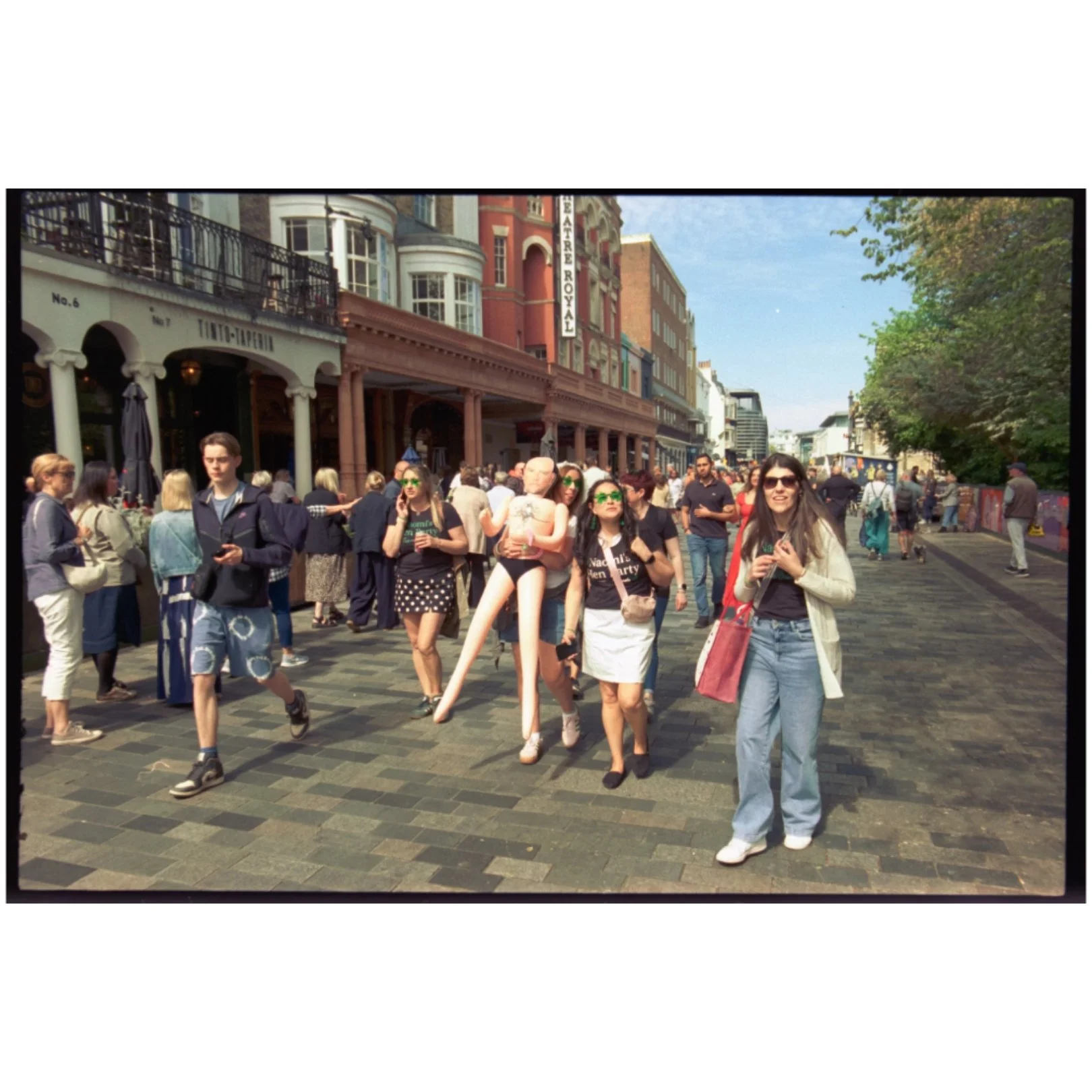
There is no place quite like Brighton on a bright, sun-drenched afternoon. It’s a city that breathes character—a vibrant melting pot of style, coastal grit, and unvarnished humanity. Armed with just my Google Pixel 8 Pro, I spent the day doing my favorite thing: getting lost in the crowd and capturing the fleeting, unposed moments that make this city tick.
There is no place quite like Brighton on a bright, sun-drenched afternoon. It’s a city that breathes character—a vibrant melting pot of style, coastal grit, and unvarnished humanity. Armed with just my Google Pixel 8 Pro, I spent the day doing my favorite thing: getting lost in the crowd and capturing the fleeting, unposed moments that make this city tick. Leaving the heavy DSLR gear at home and relying entirely on a phone allowed me to blend seamlessly into the scenery, capturing genuine slices of life without disrupting the natural flow of the street.
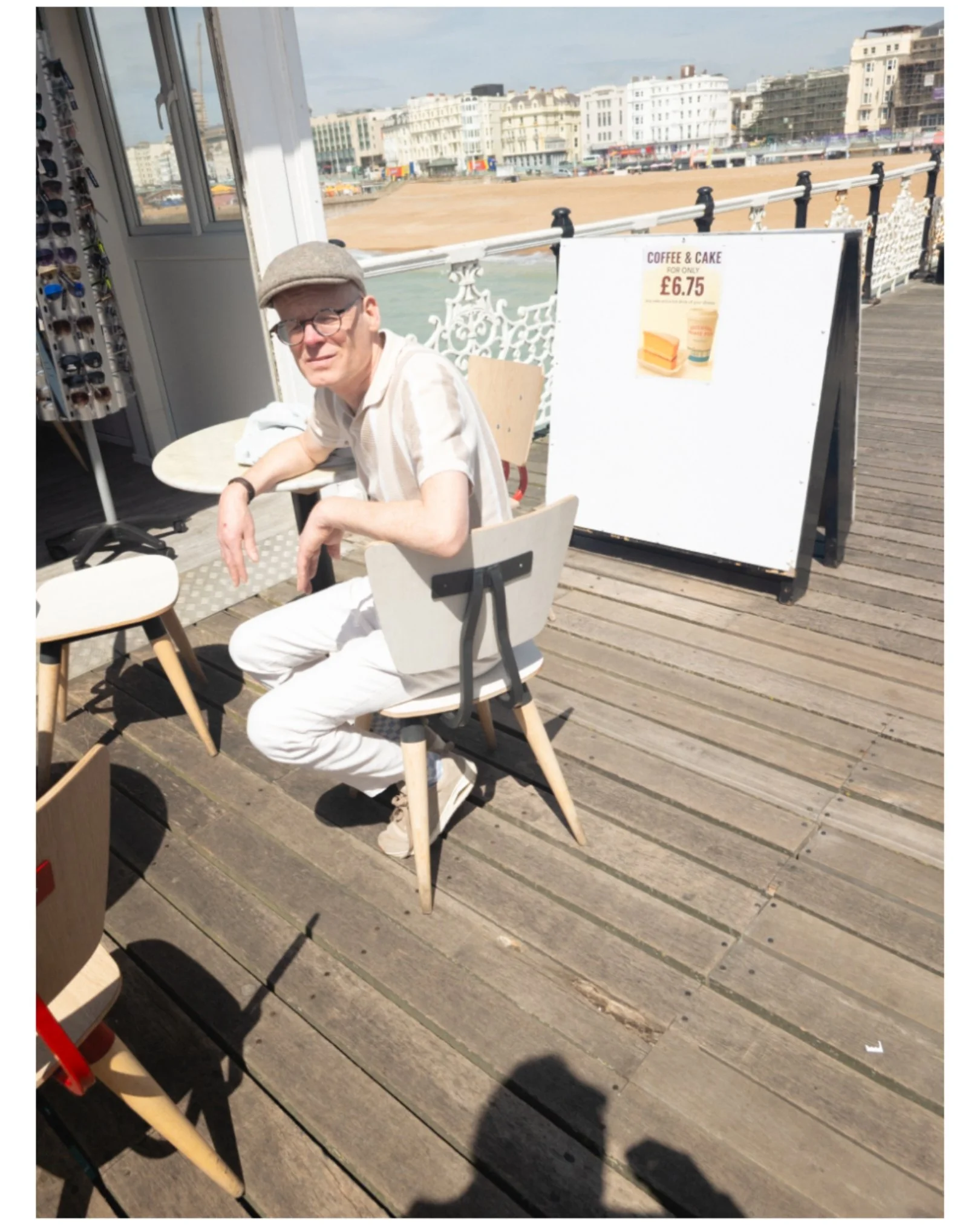
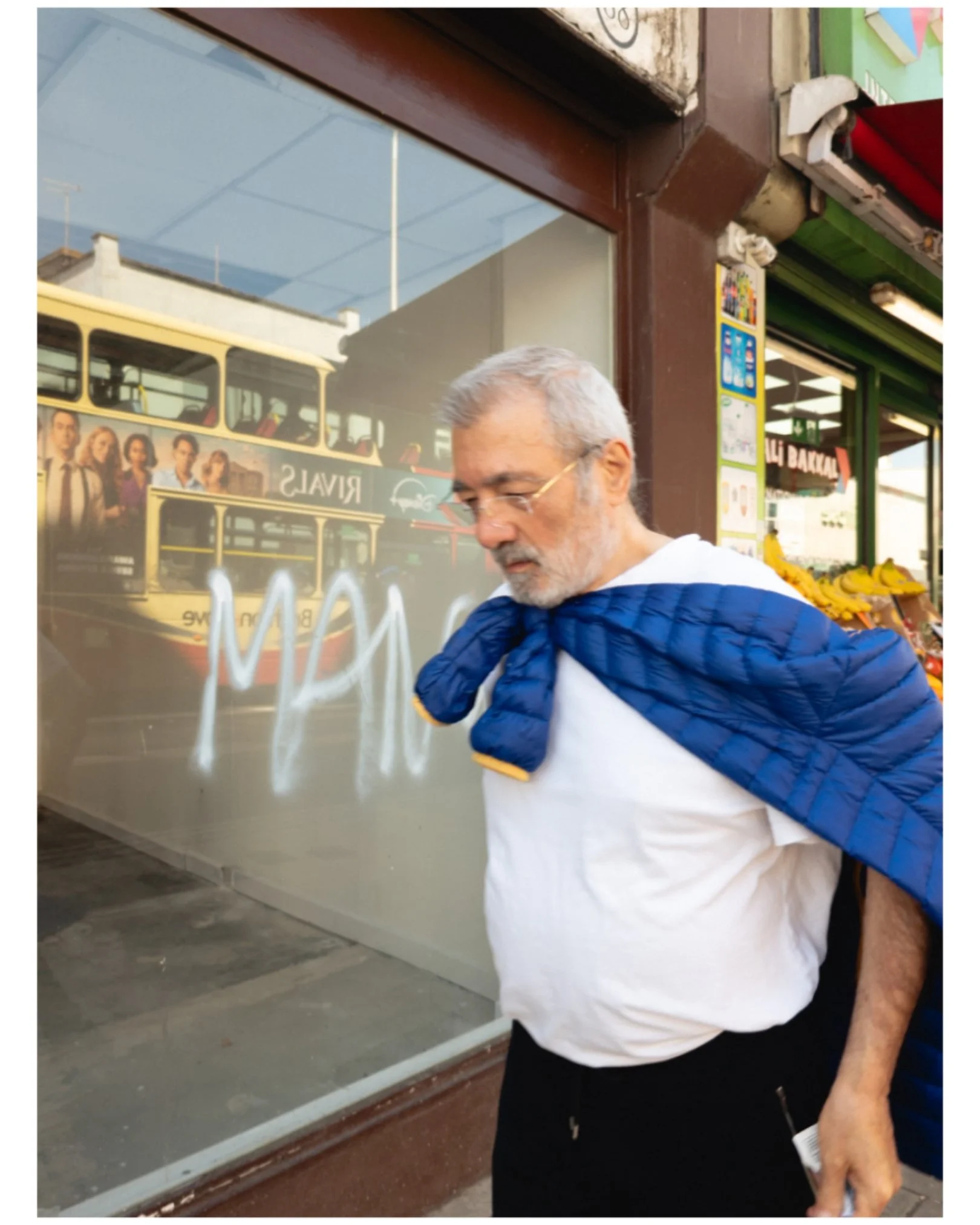
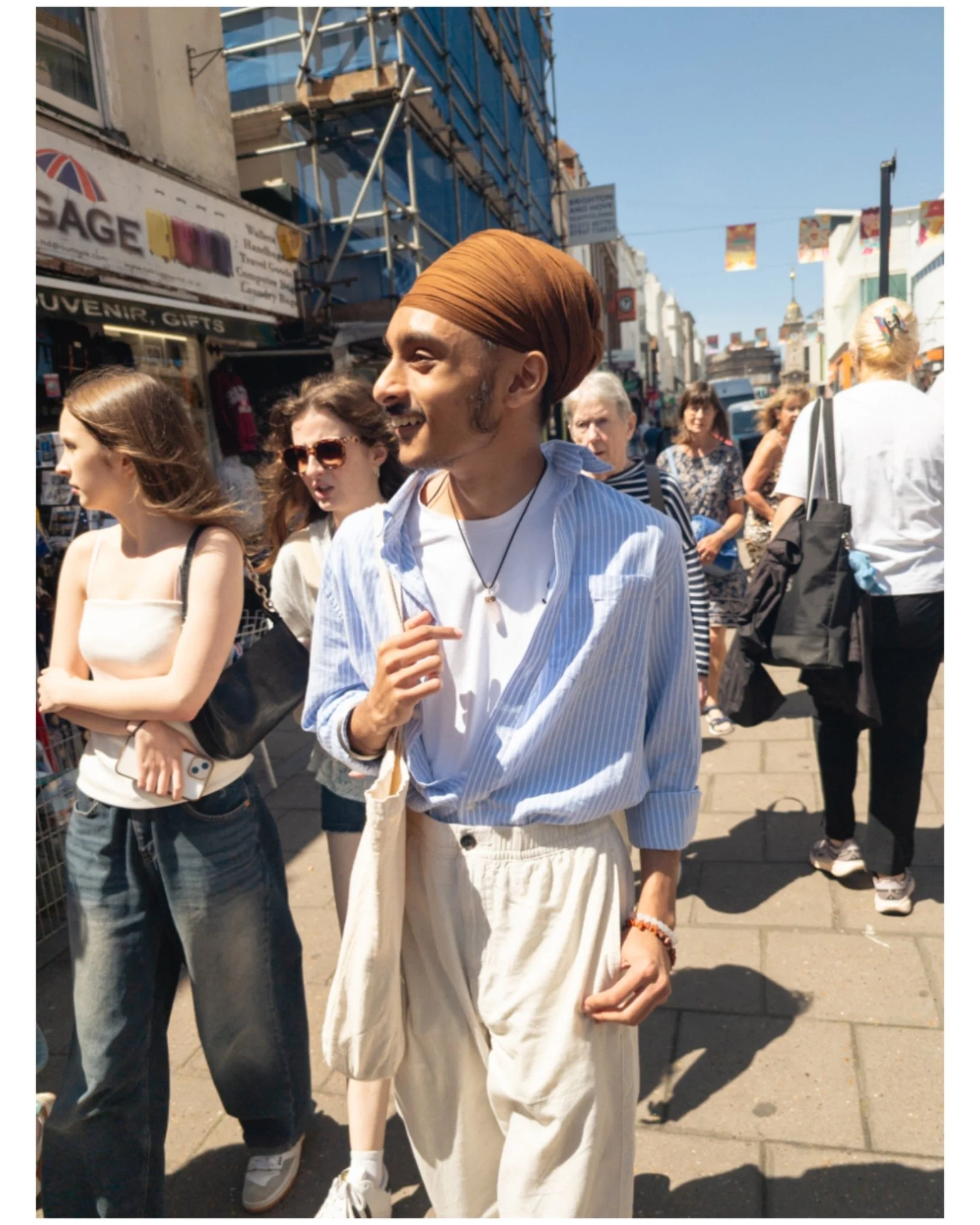
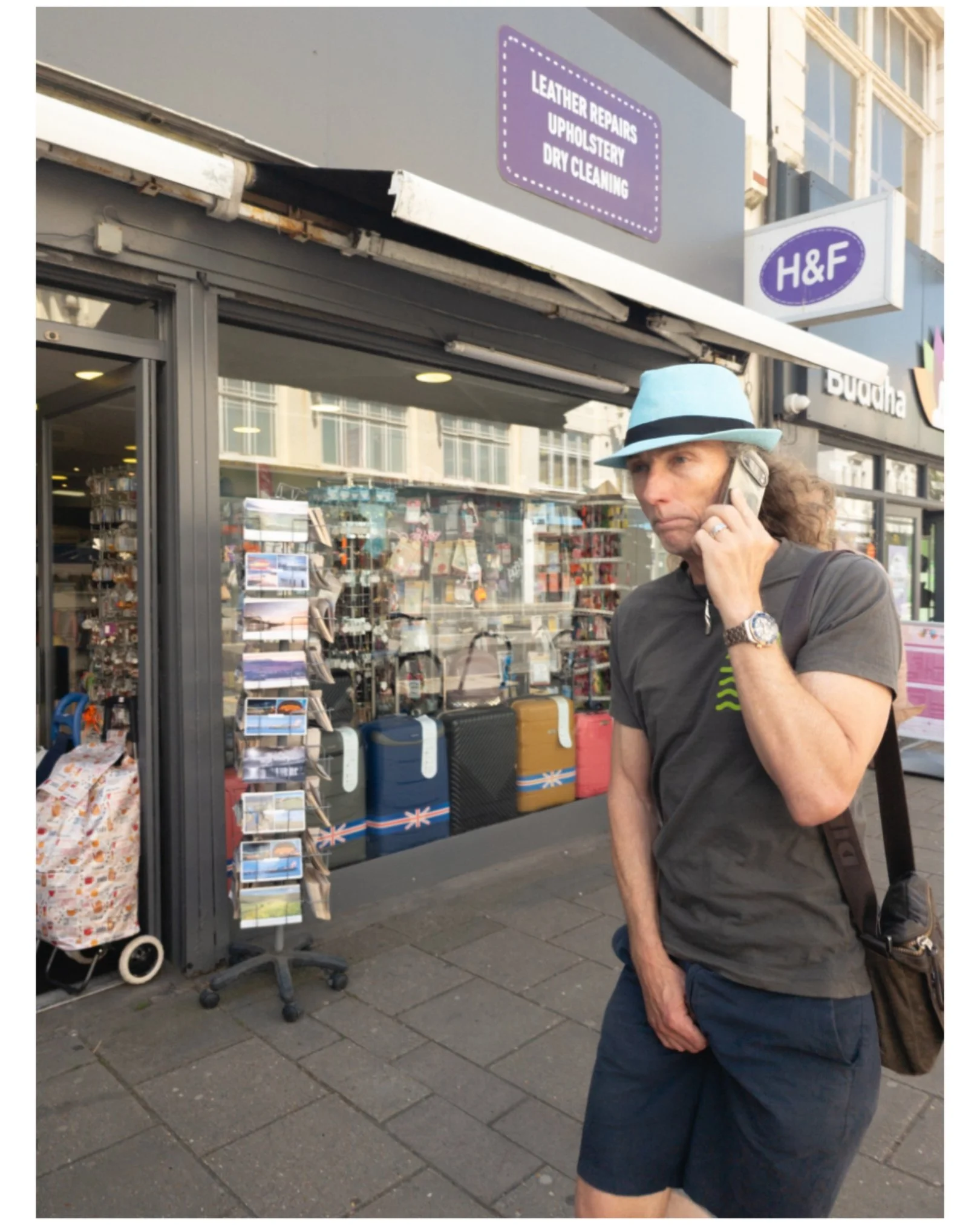
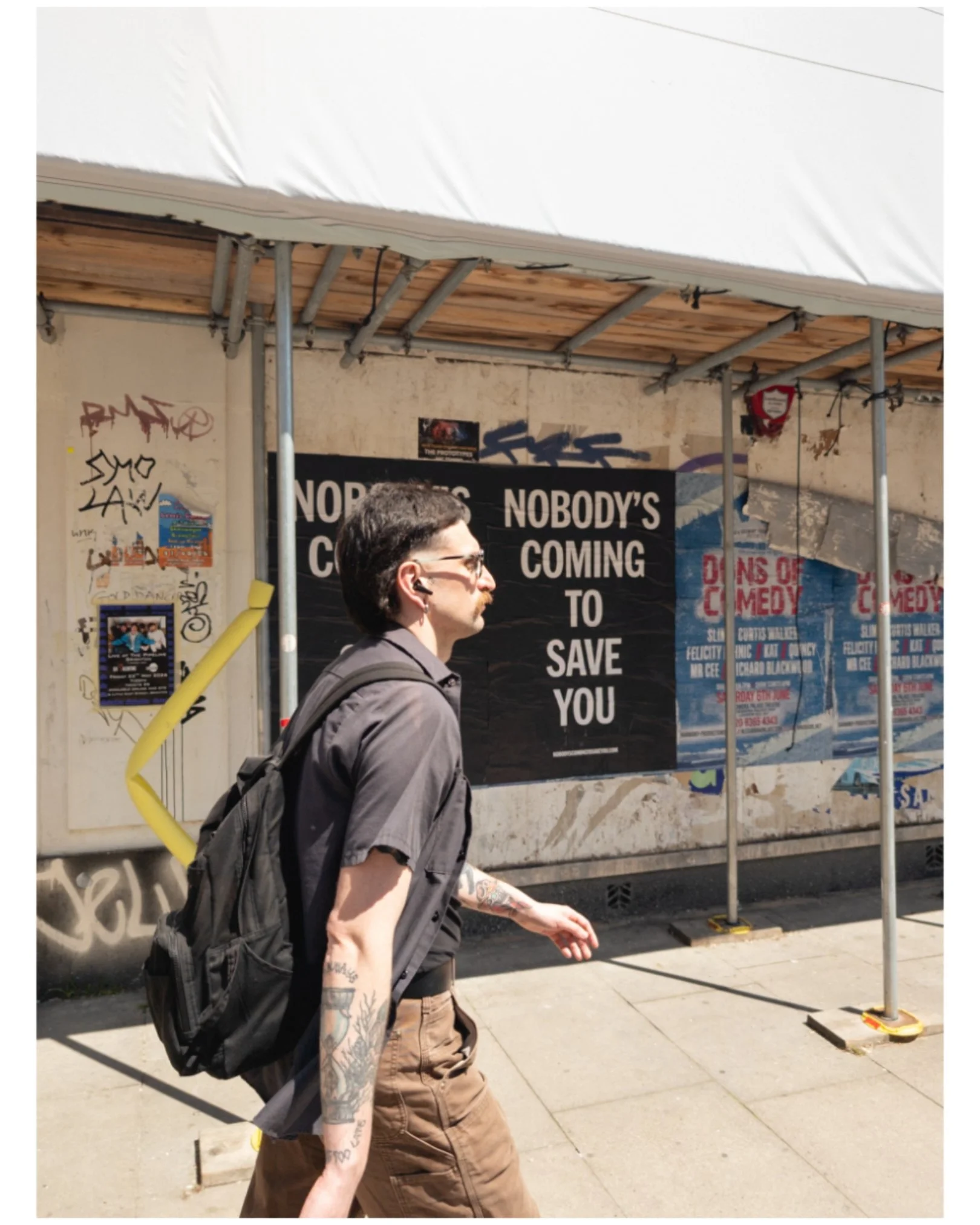
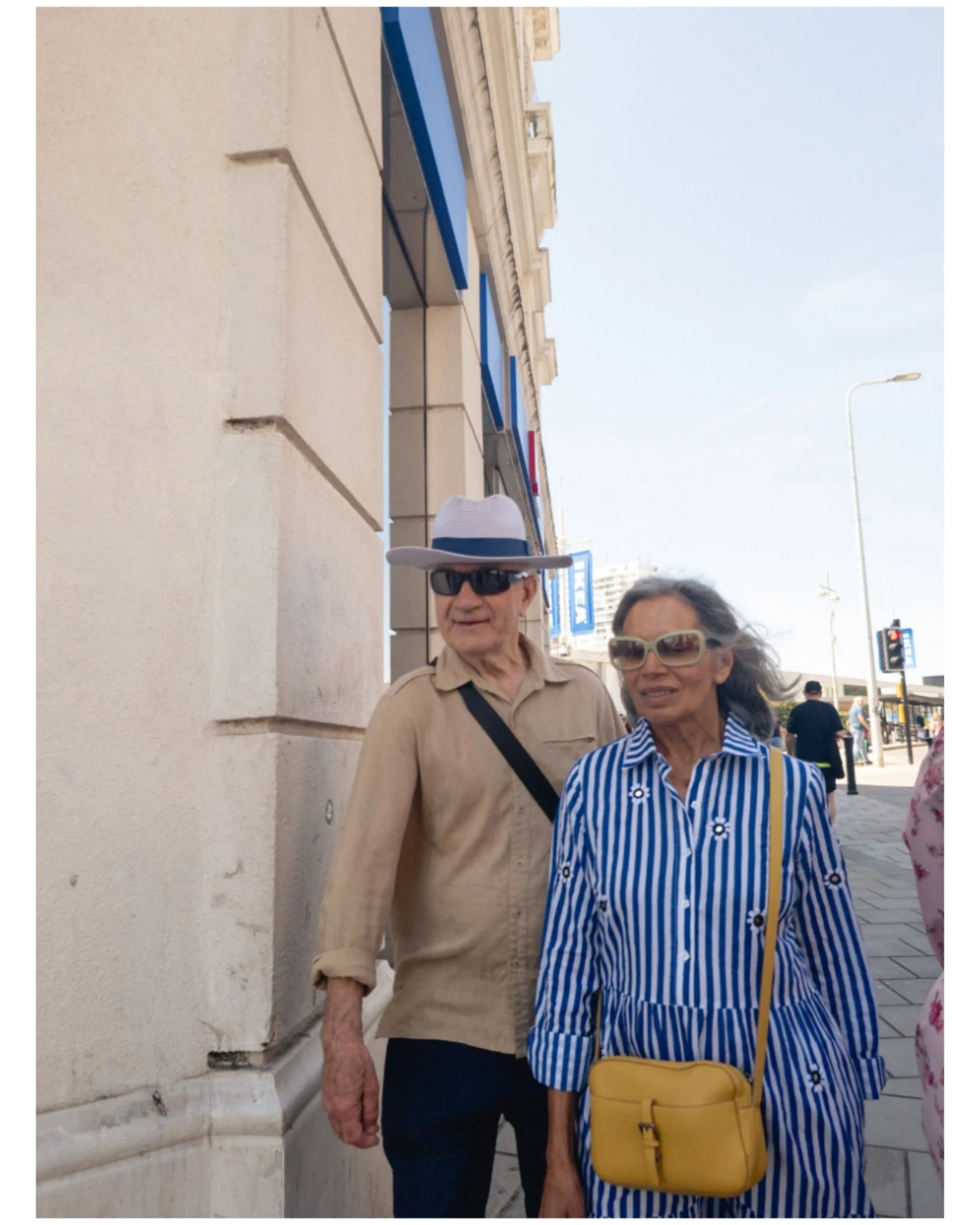
Walking through the bustling town center down toward the seafront, the city offered up an endless stream of visual stories. The Pixel’s quick responsiveness and superb HDR handling allowed me to seamlessly capture the stark contrasts of the day—from the sharp geometry of classic architecture framing a stylishly dressed couple, to the graphic punch of gritty, flyer-covered walls under scaffolding that perfectly timed a passerby's stride. Turning down the crowded shopping lanes, the camera beautifully rendered the rich textures of the urban landscape: a mix of colorful storefronts, postcard racks, and striking fashion choices like sky-blue fedoras and striped shirts, all while maintaining natural skin tones and rich shadow details. Even up on the wooden decking of the seafront, where the light softens against the historic cream-colored hotels, the phone effortlessly caught quiet, contemplative moments of people enjoying a coffee by the water.
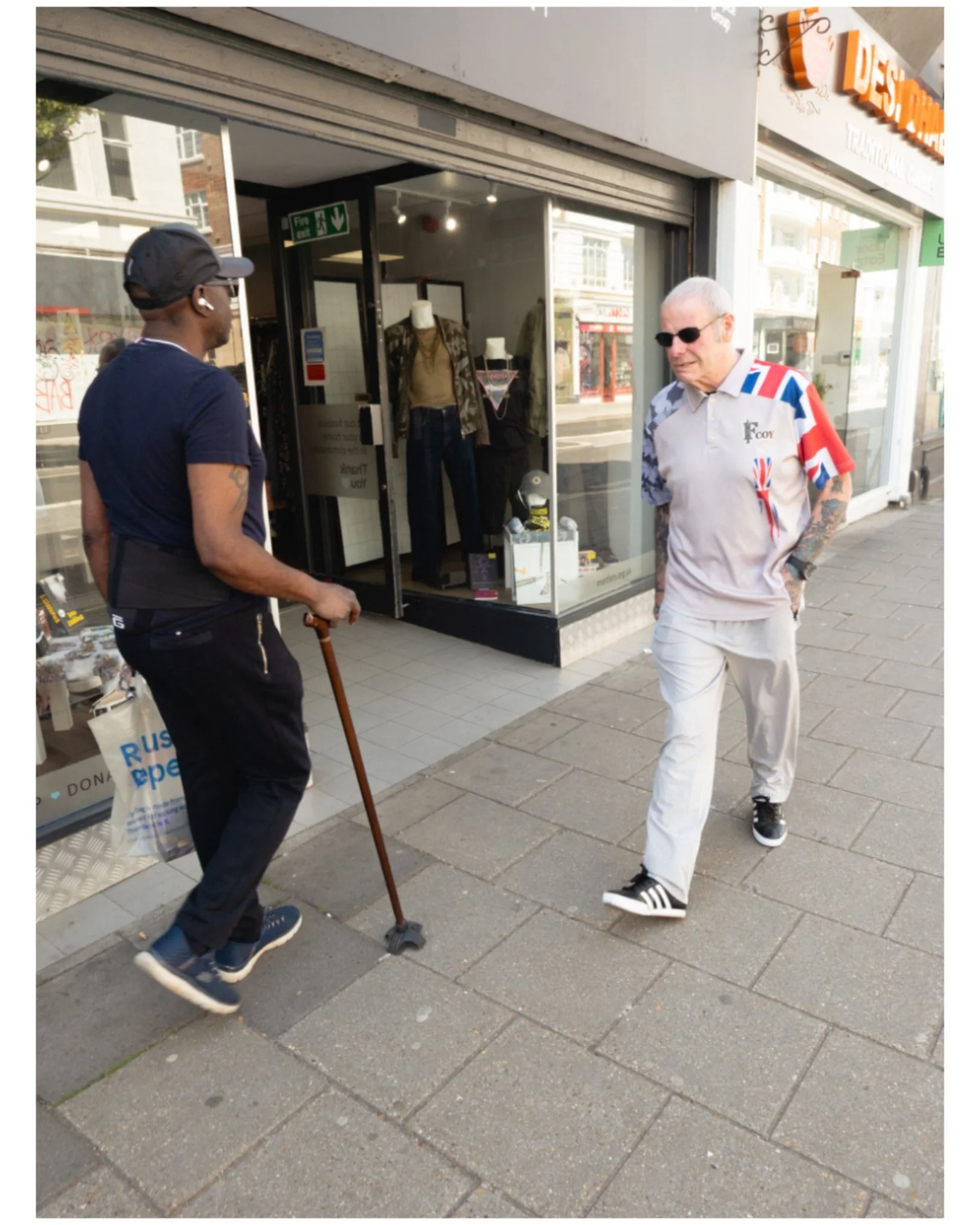
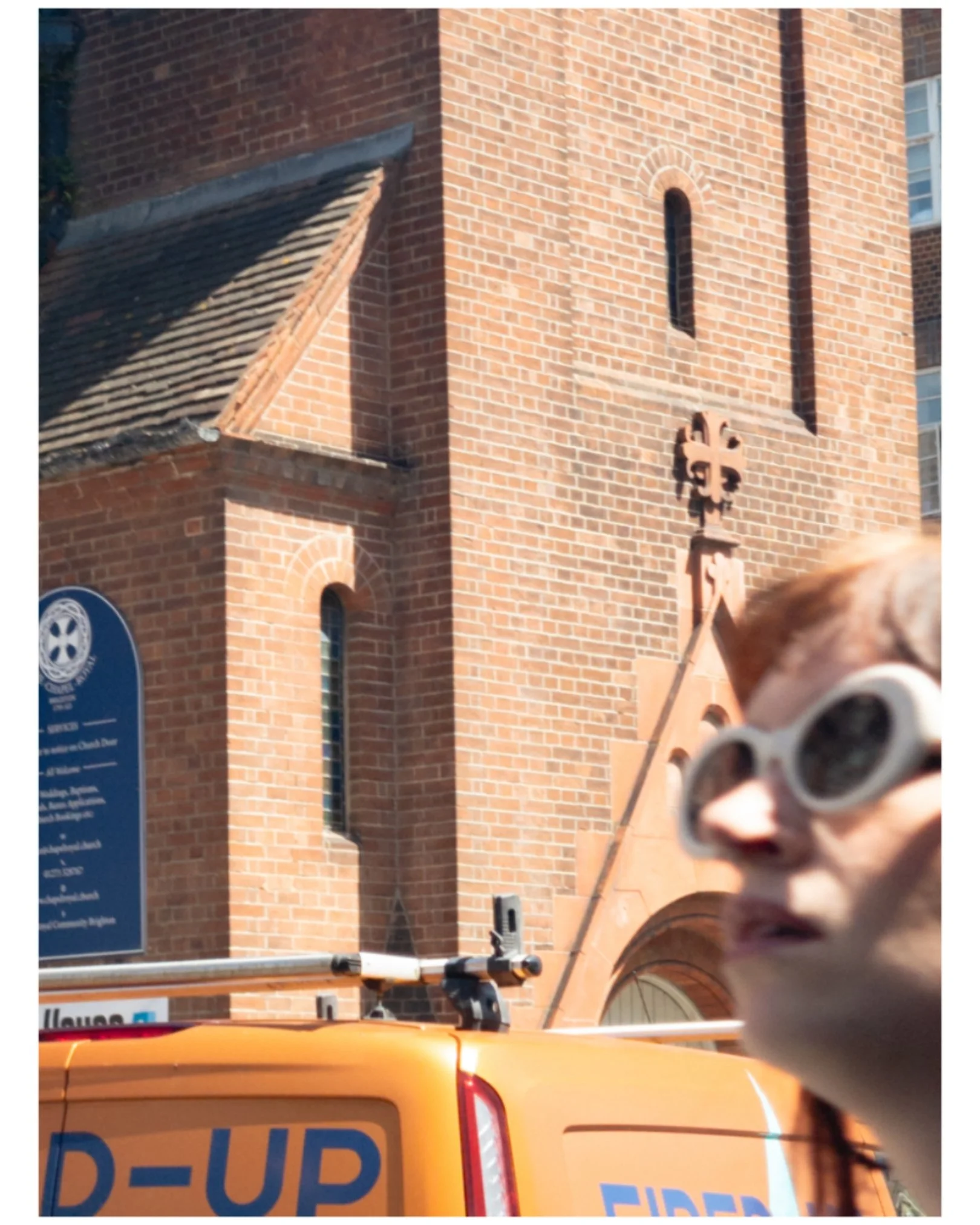
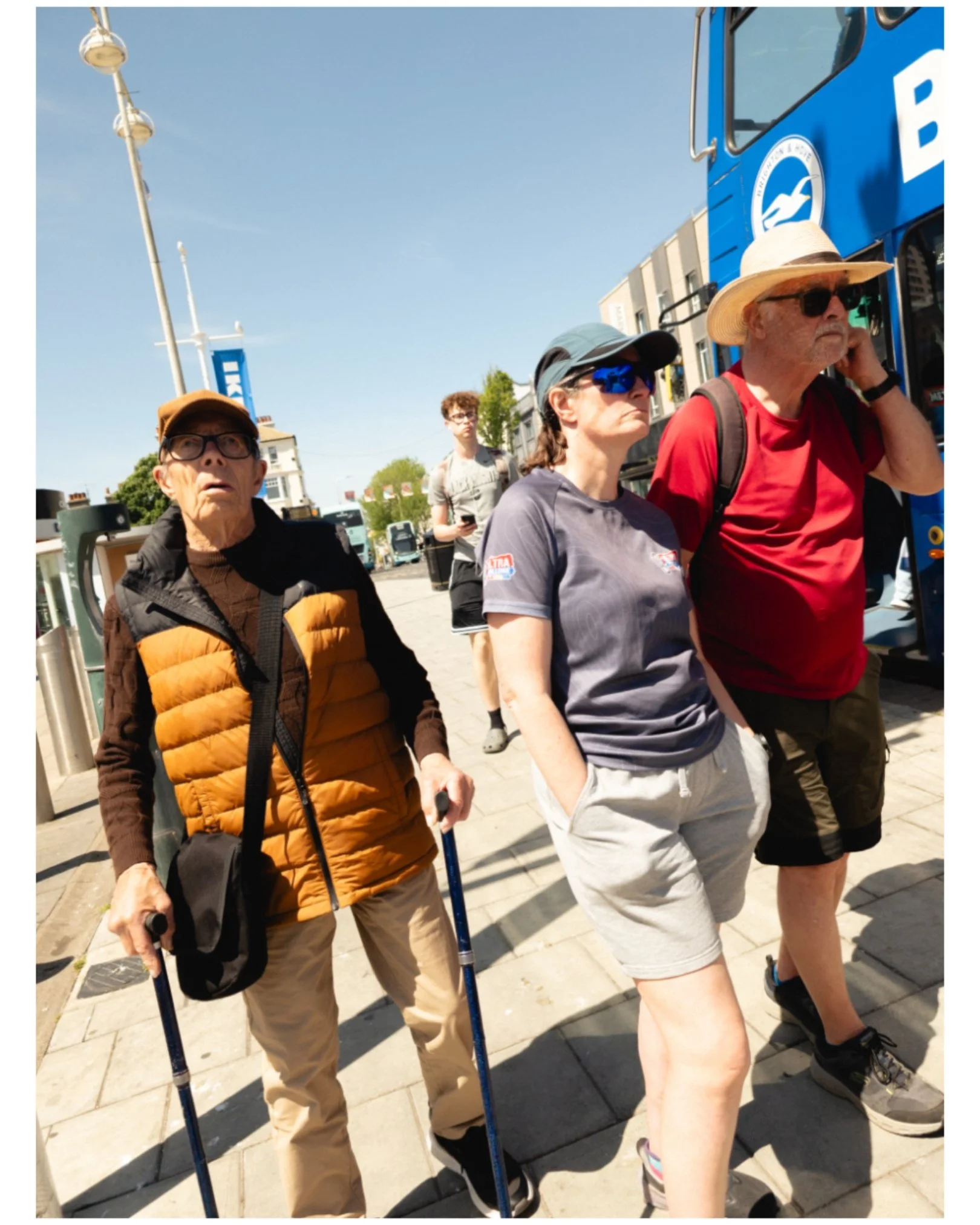
Ultimately, this walk proved exactly why a great smartphone is a street photographer's best weapon. It is entirely inconspicuous, incredibly fast, and keeps you light on your feet so you can focus on what matters most—observing the wonderful, fleeting poetry of everyday life.
Until next time, keep snapping
Two Sides of the Same Street
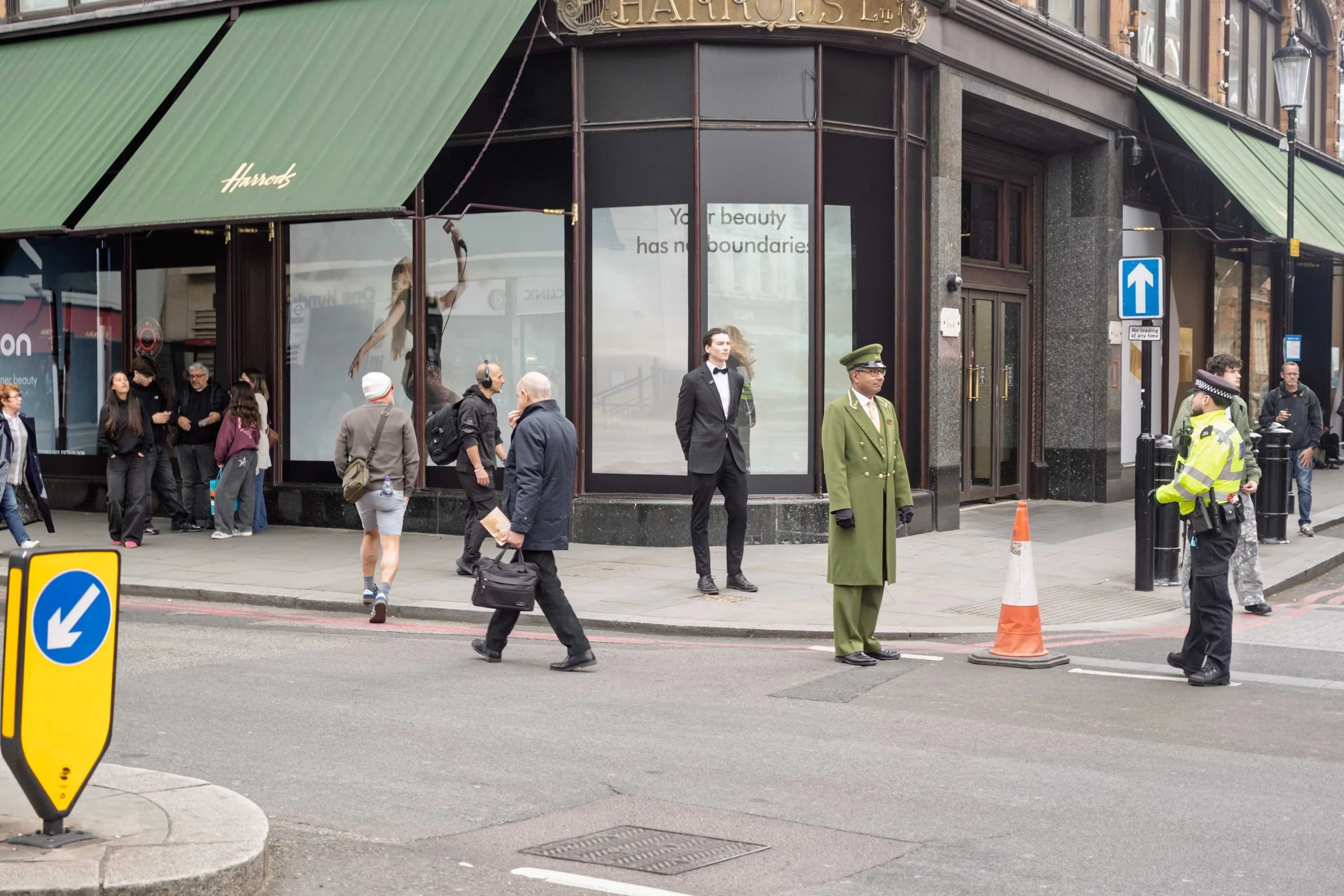
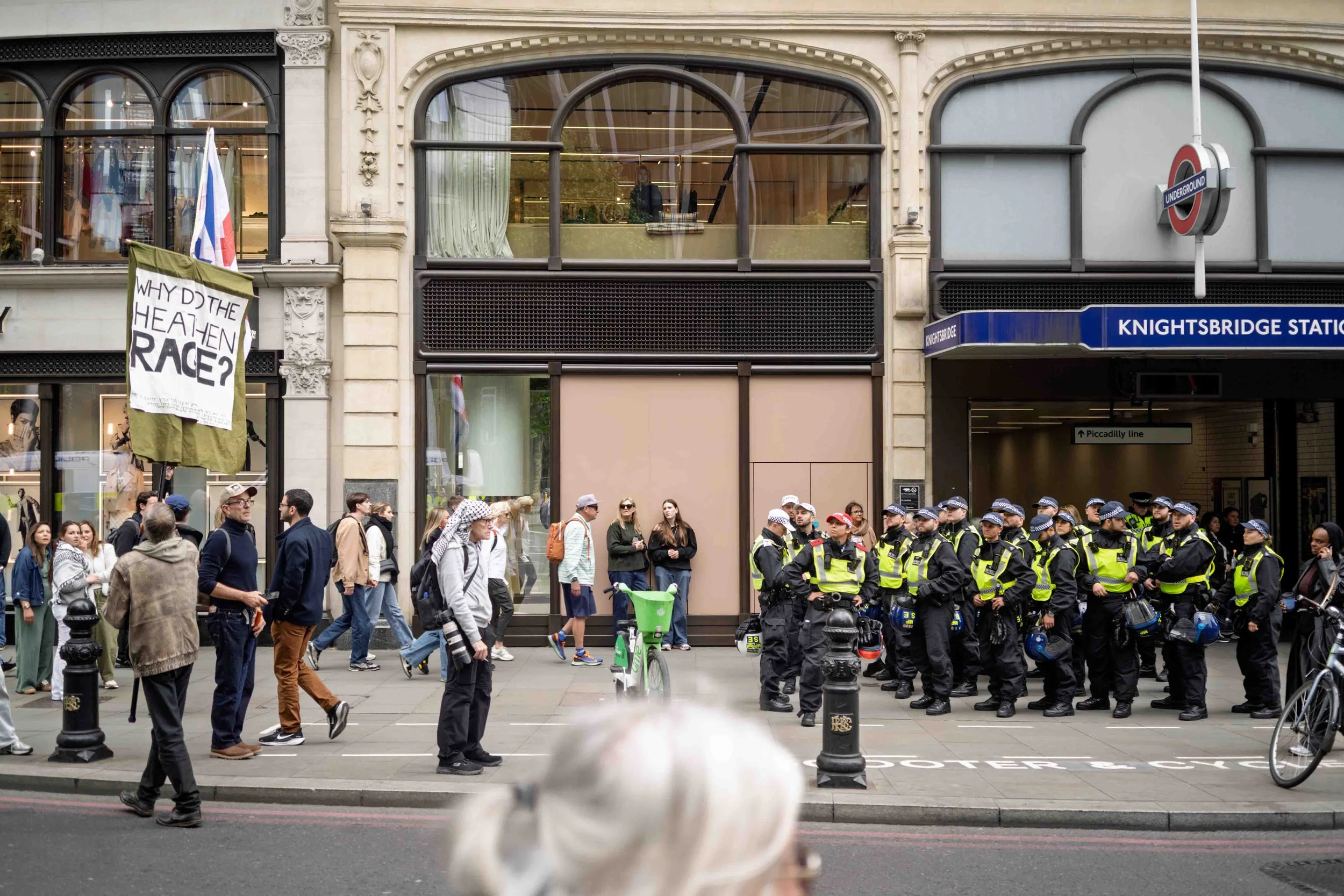
London on a grey Saturday has a particular energy. The streets fill early, the coffee shops run out of tables, and the city hums along in its usual organised chaos. But on 16 May 2026, there was something extra in the air — two separate marches, heading in different directions, each convinced they were speaking for the soul of the country.
On 16 May 2026, two very different versions of Britain took to the streets of London. I walked between them.
London on a grey Saturday has a particular energy. The streets fill early, the coffee shops run out of tables, and the city hums along in its usual organised chaos. But on 16 May 2026, there was something extra in the air — two separate marches, heading in different directions, each convinced they were speaking for the soul of the country.
I spent the day moving between both. Camera up, opinions mostly down. What I found was more complicated, and more human, than either side's loudest voices would suggest.
Nakba 78.
The Pro Palestine March, was a United front against Tommy Robinson & the far right. This had its own kind of plural — anti-racism groups, Palestine solidarity marchers, trade unionists, and a handful of people who looked like they'd wandered in from towns and cities across the UK (Bristol, Portsmouth was evident in Trade Union flags and I also met a photography Student from Barnseley. The energy was different: less of a march, more of a gathering, with people stopping to talk, to take photos, to debate gently amongst themselves.
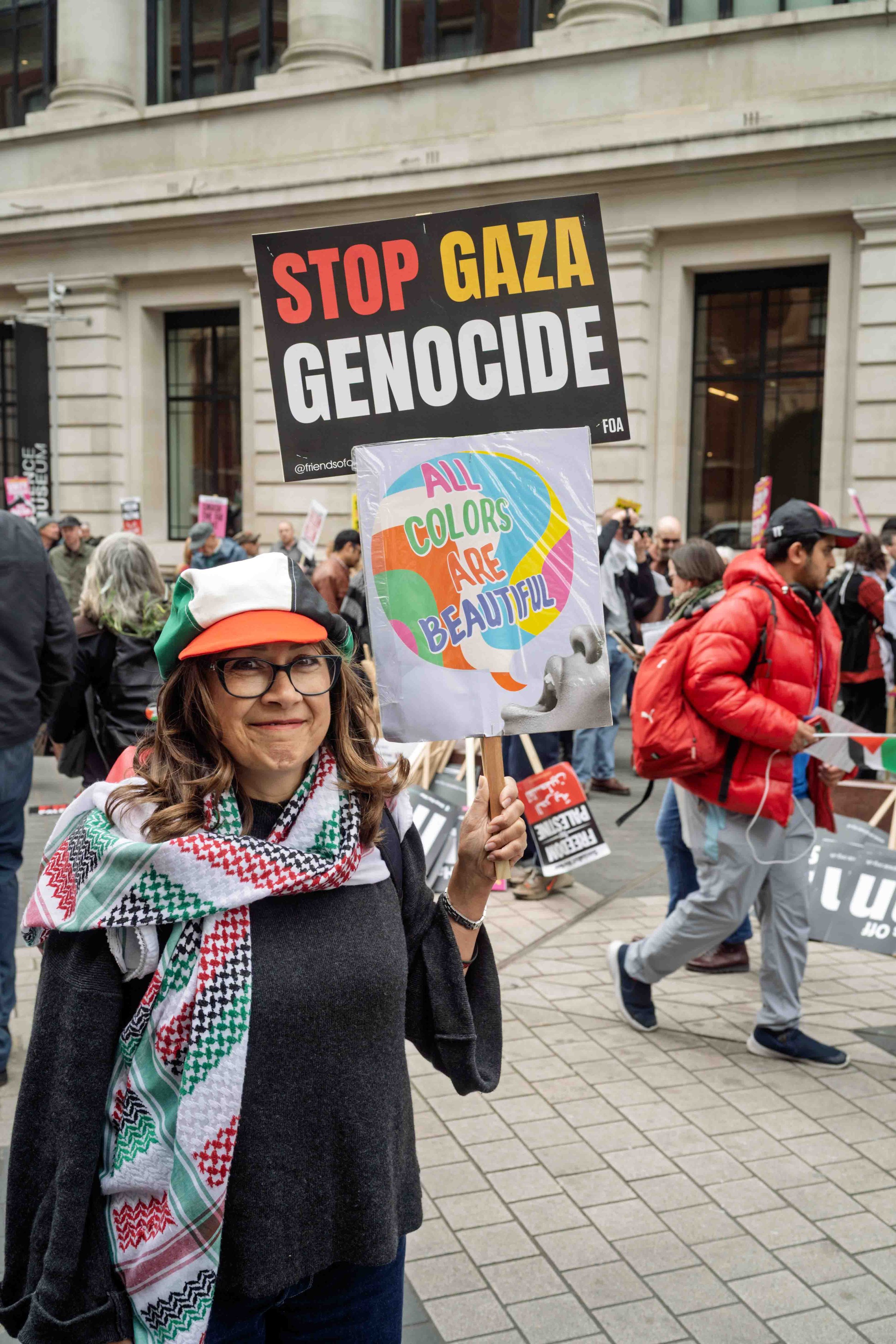
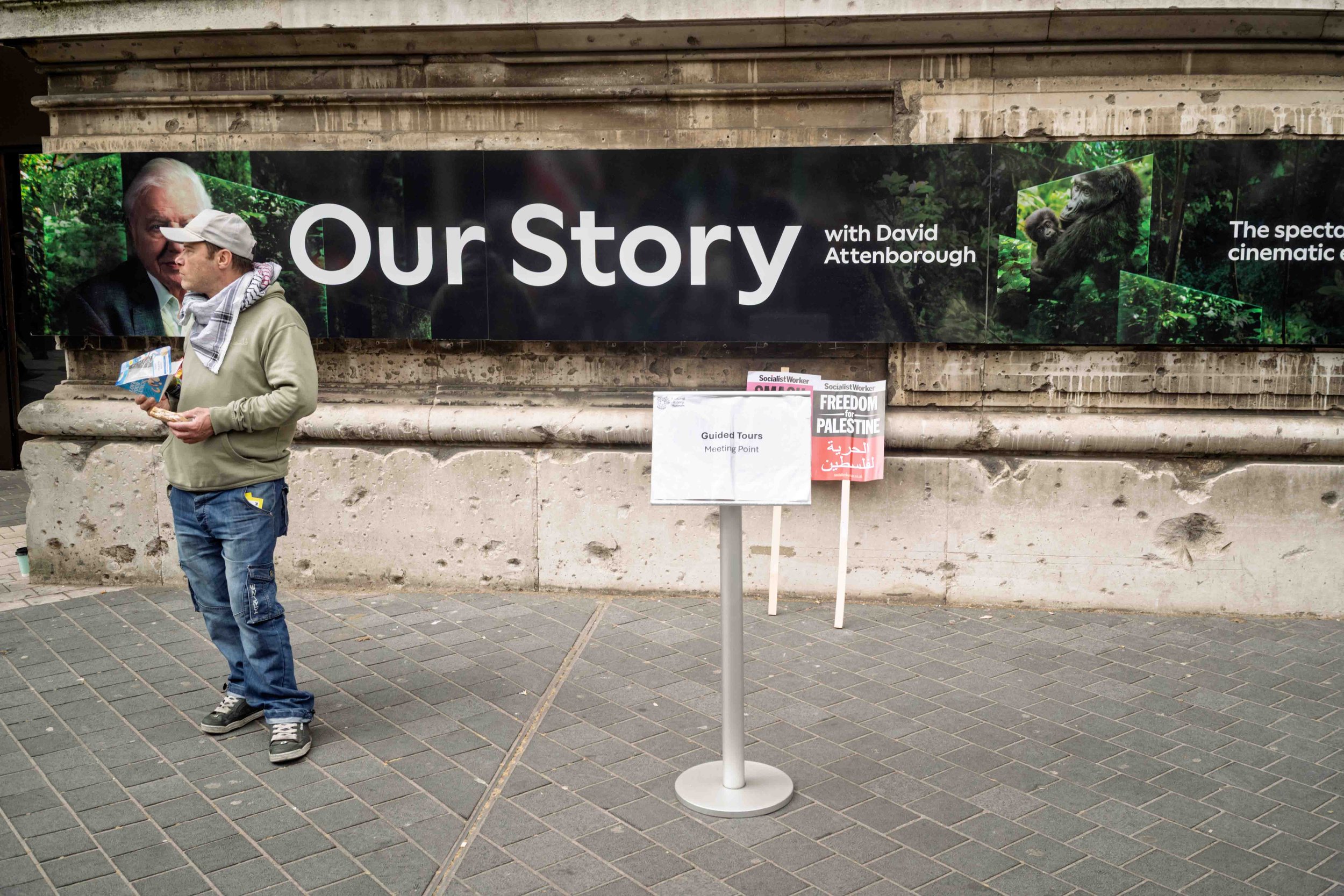
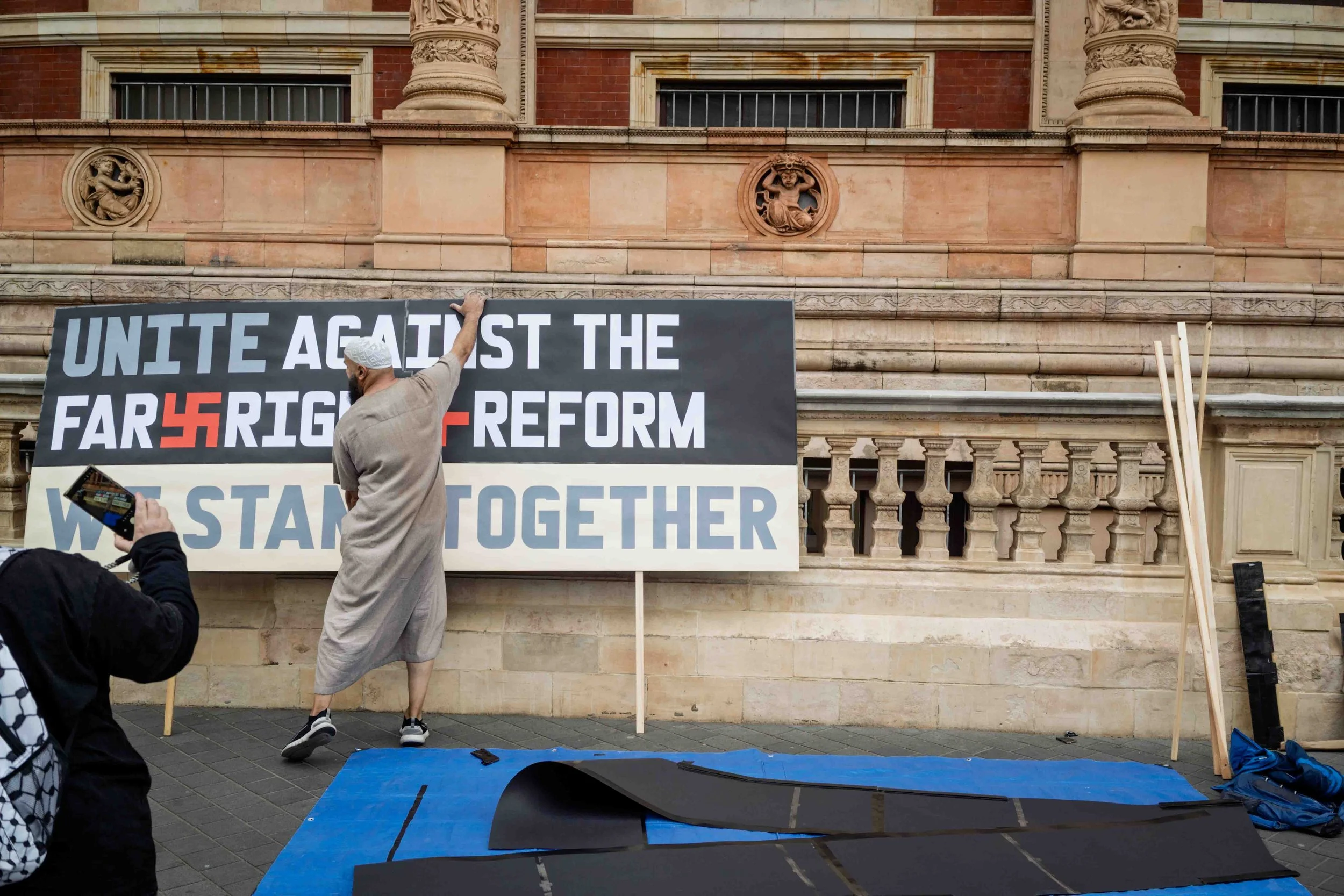
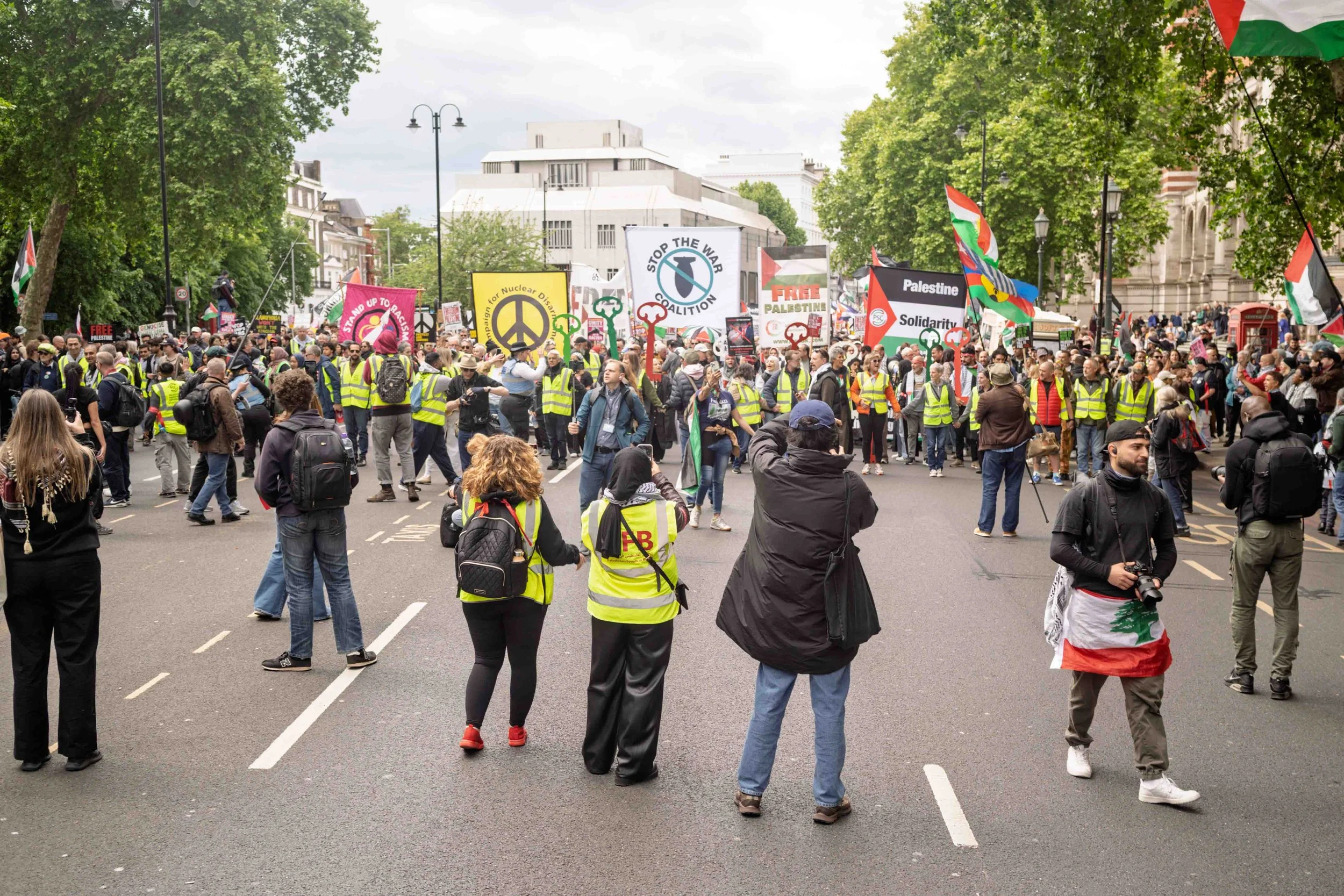
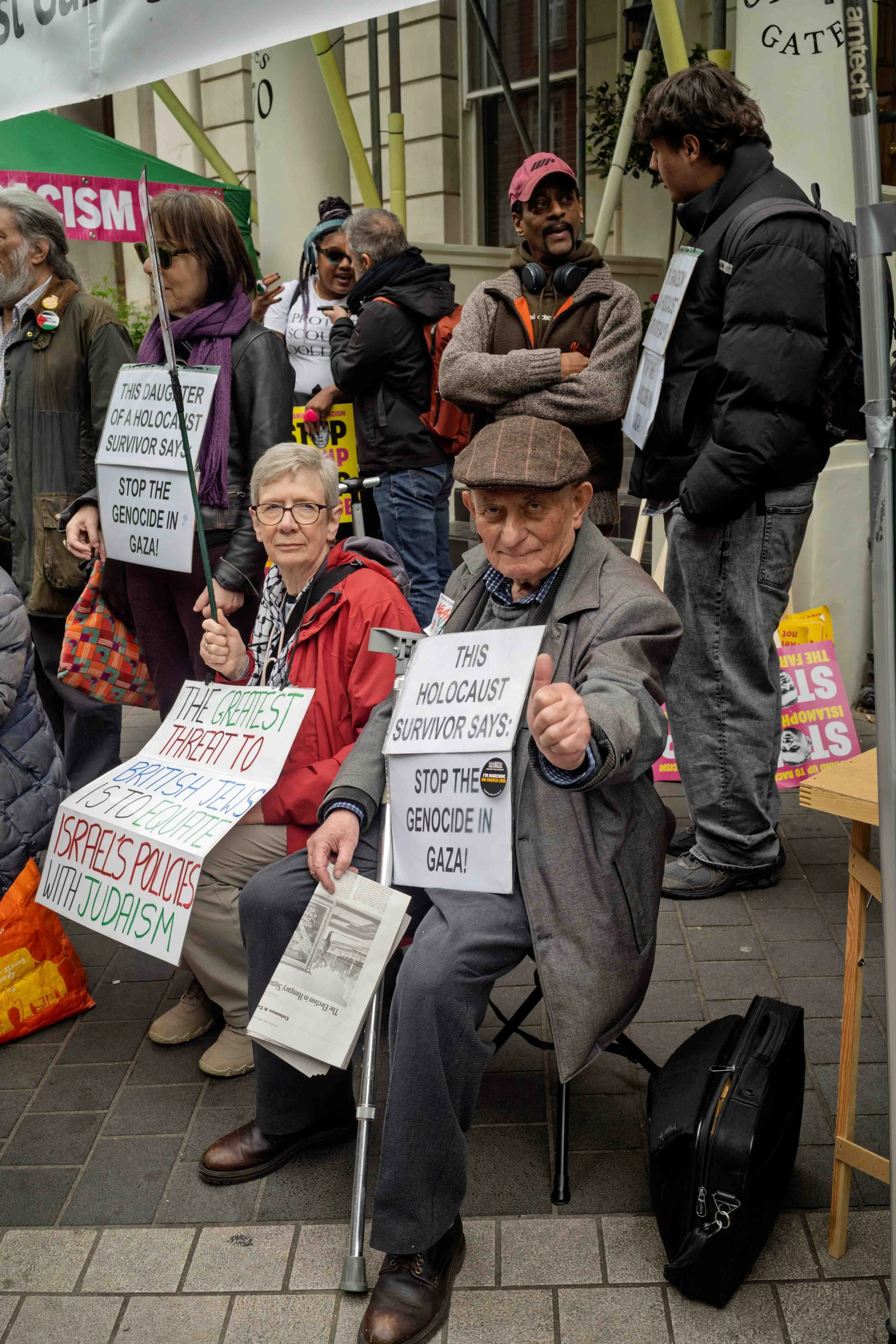
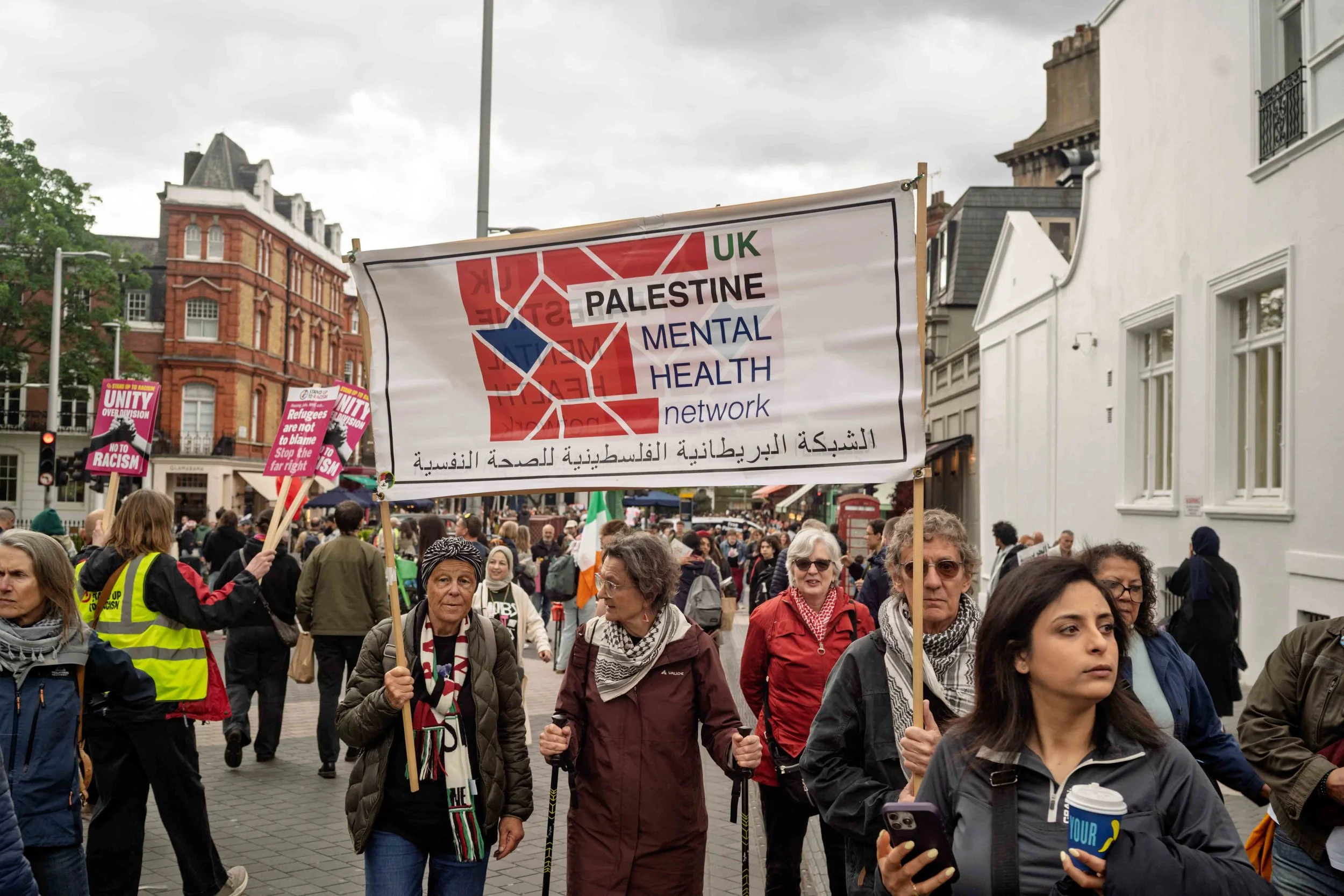
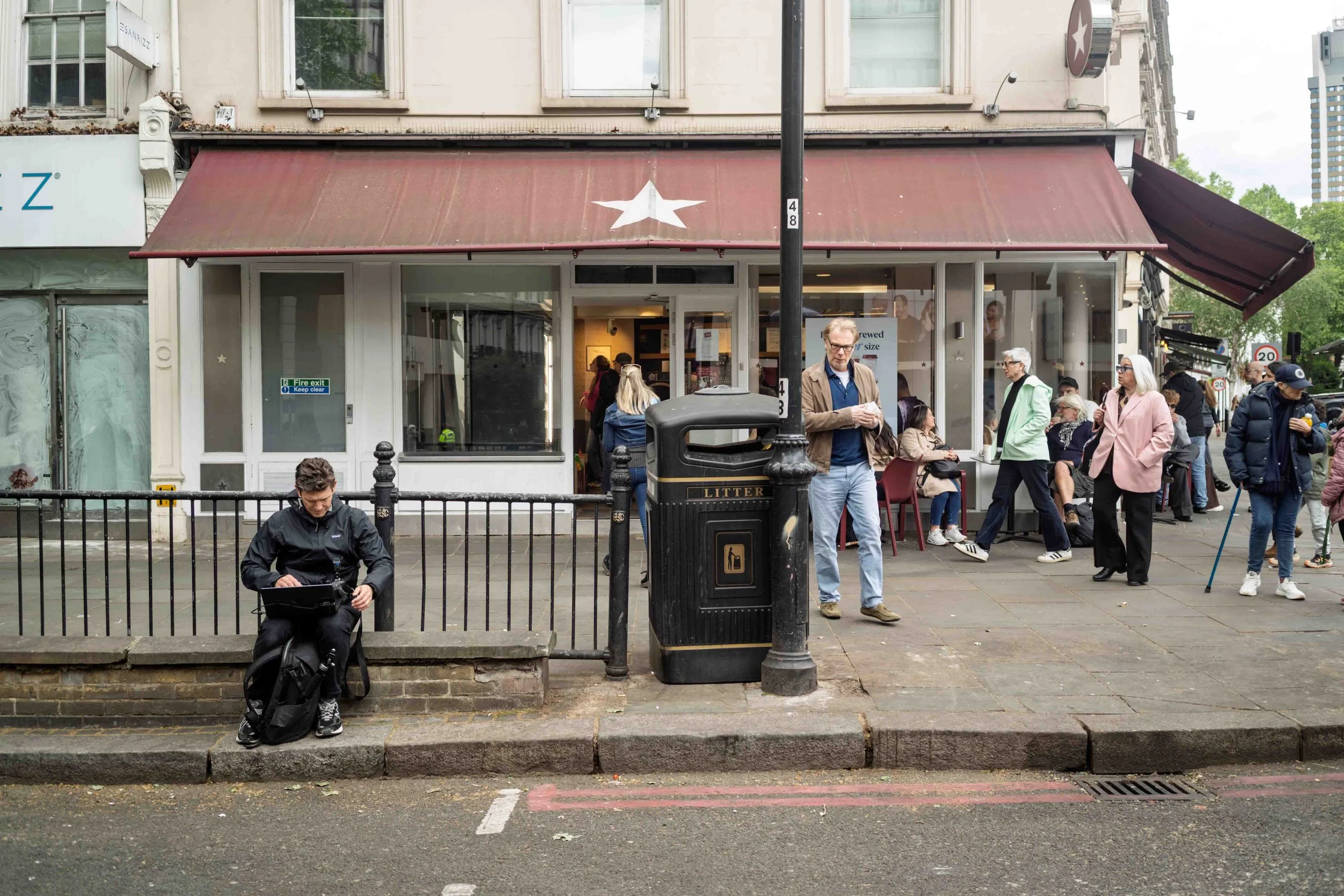
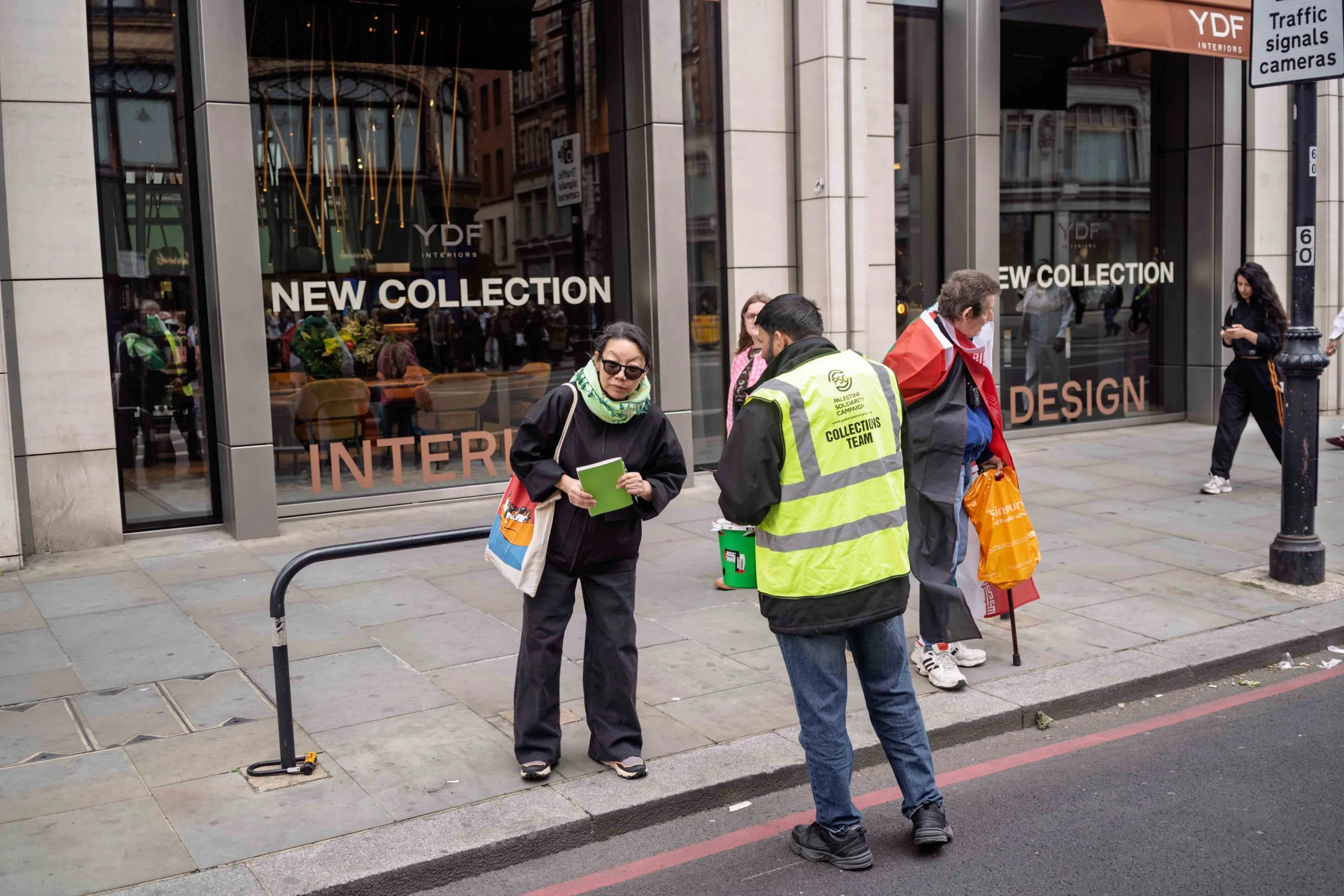
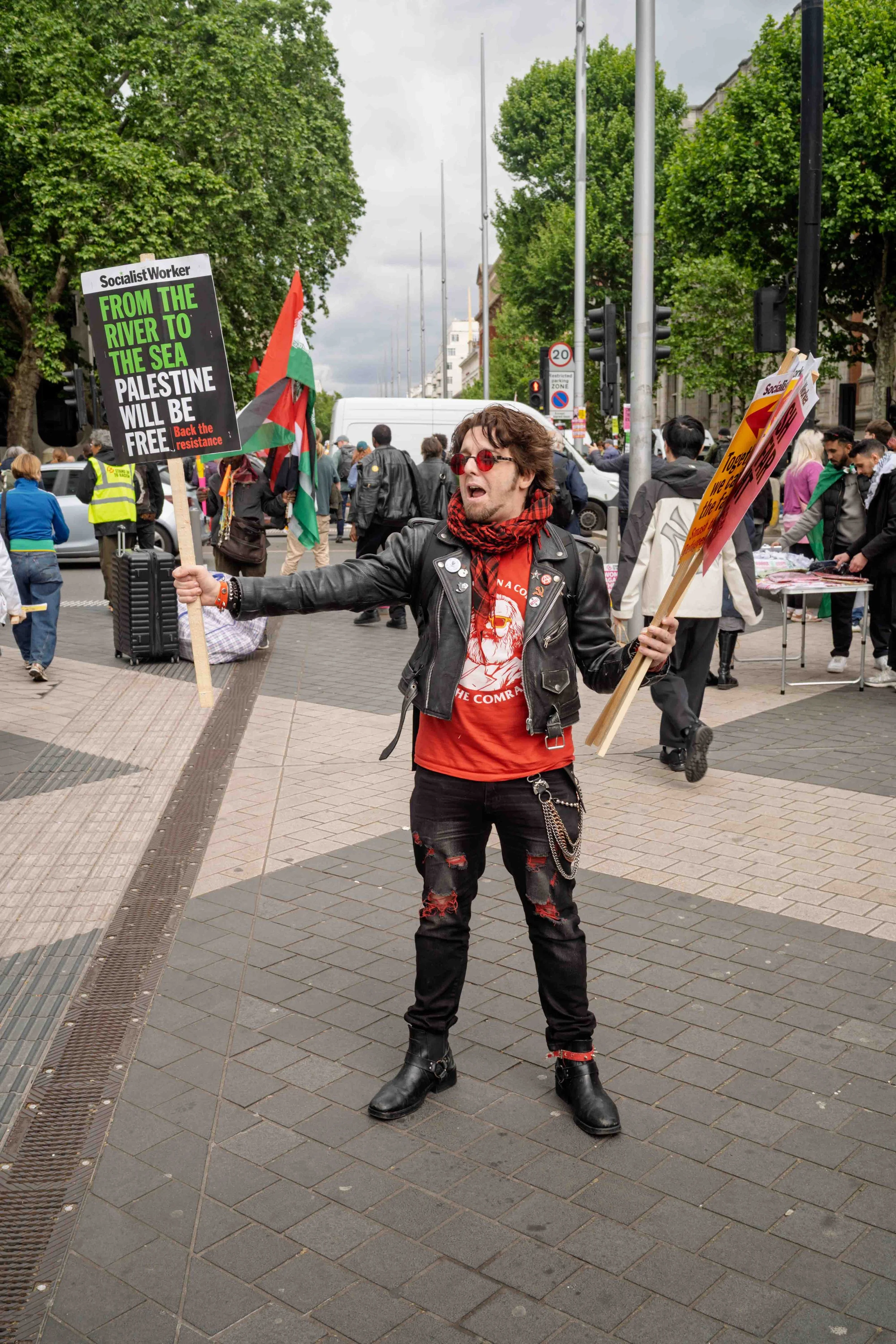
The signs here were varied. Some were polished and printed; others were handwritten on cardboard, the ink slightly smeared from the morning drizzle. A woman smiled at me holding a "Stop Gaza Genocide" sign in one hand and an "All Colors Are Beautiful" placard in the other — two very different registers of message, held by the same pair of hands, which felt like an accurate summary of the whole afternoon.
One moment stayed with me: two elderly people sitting quietly amid the noise — a Holocaust survivor with a thumbs-up and a calm smile, a woman beside him describing herself as a survivor's daughter. They weren't performing anything. They were just there, making their point in the most understated way possible.
Flags, Flags, Everywhere
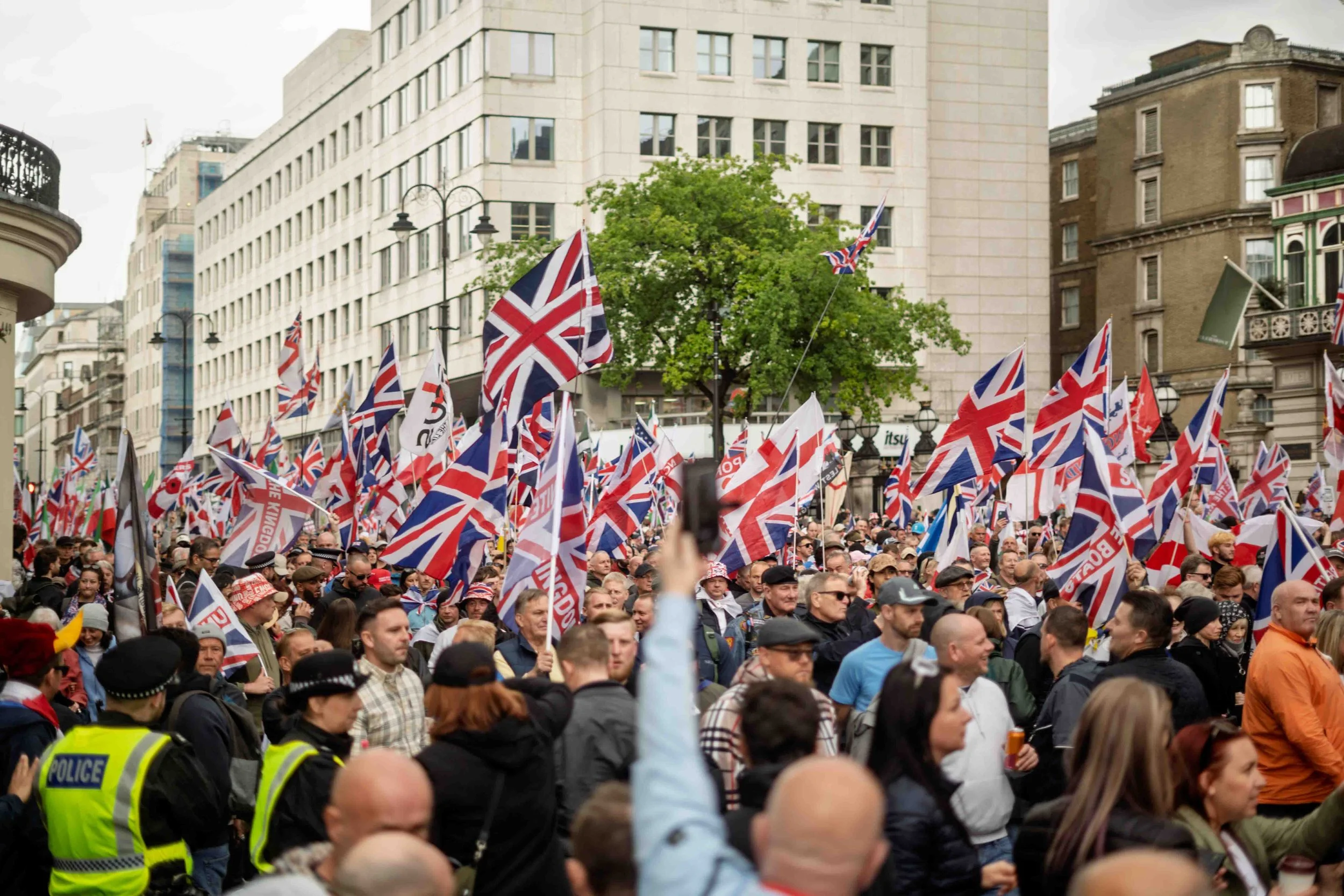
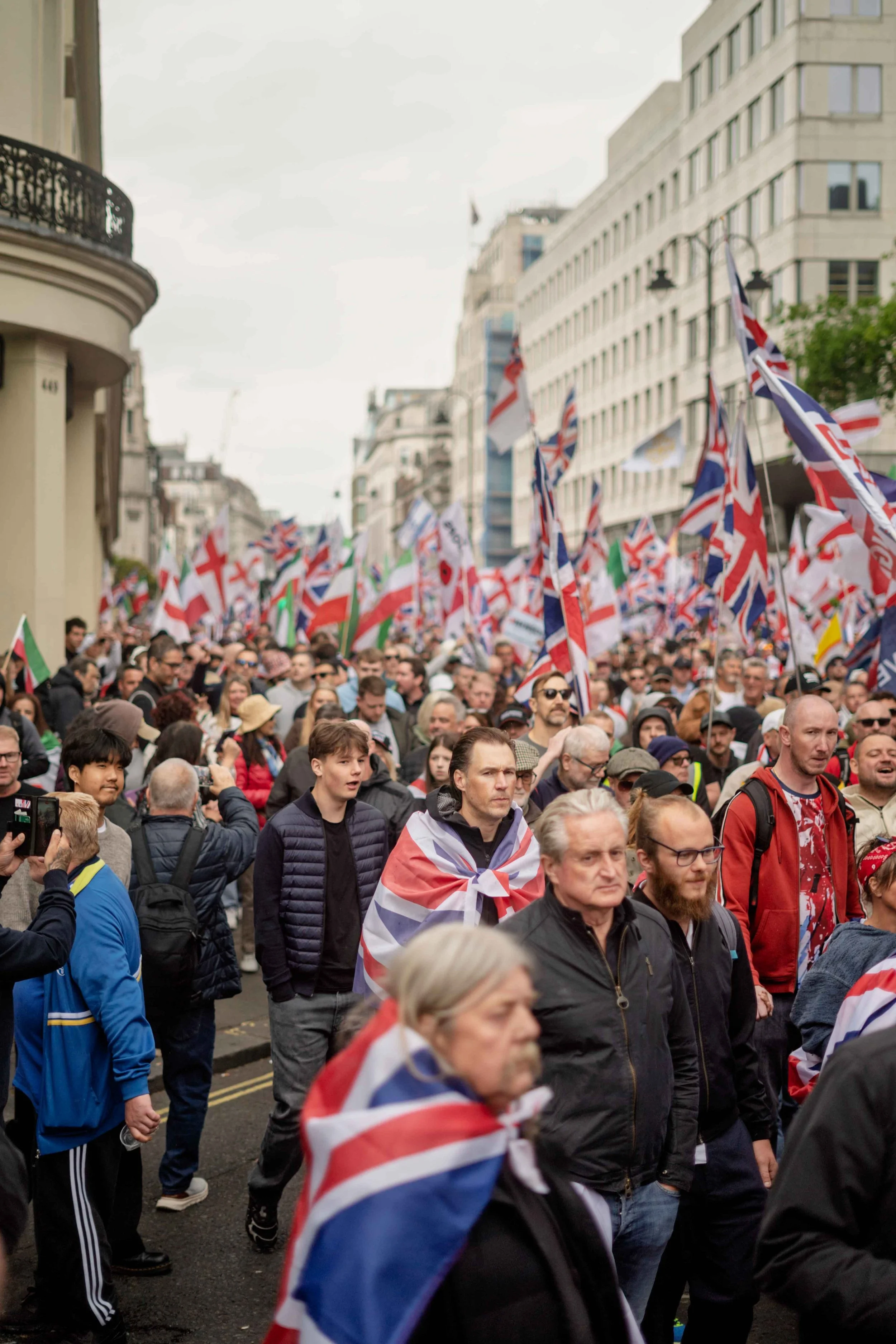
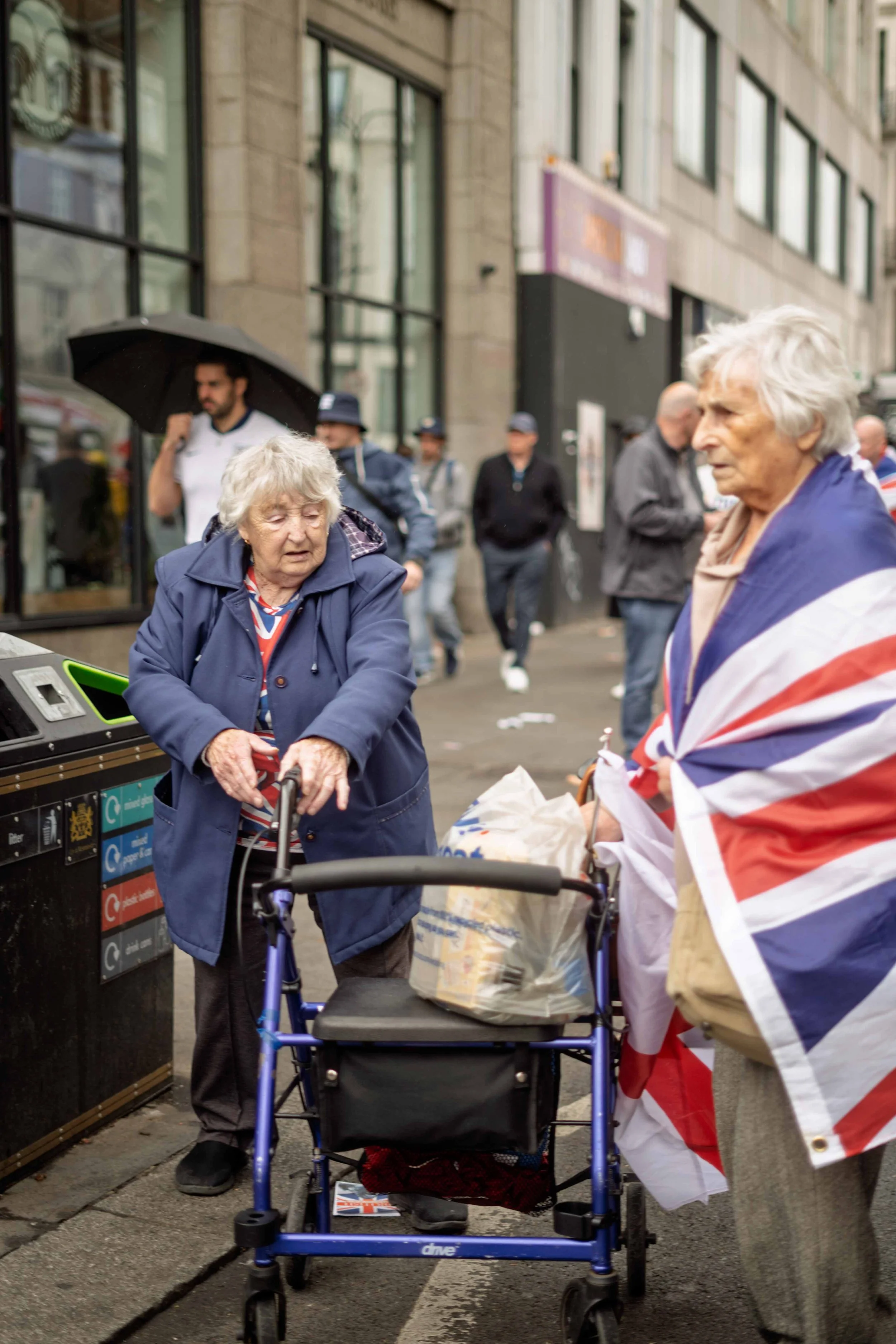
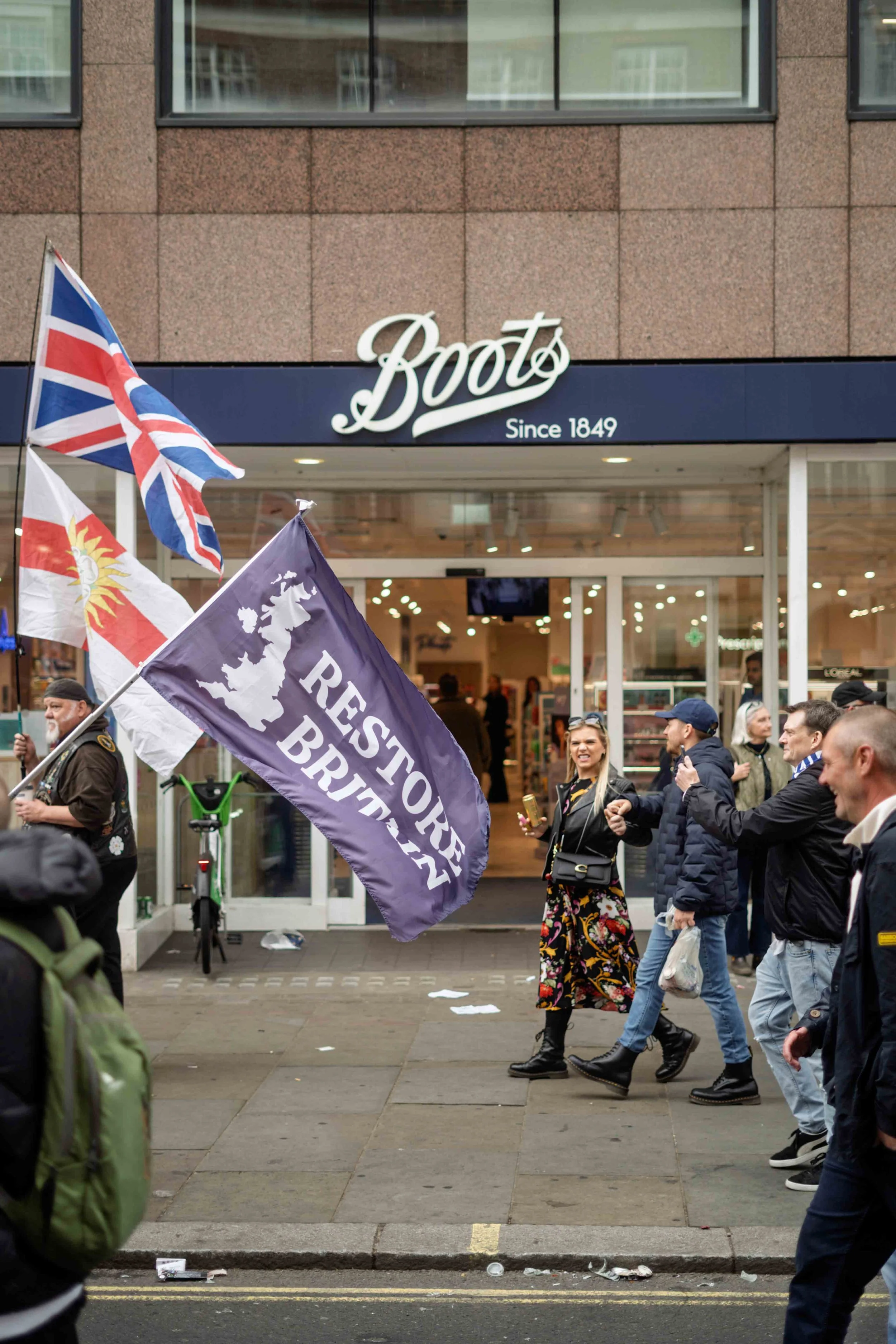
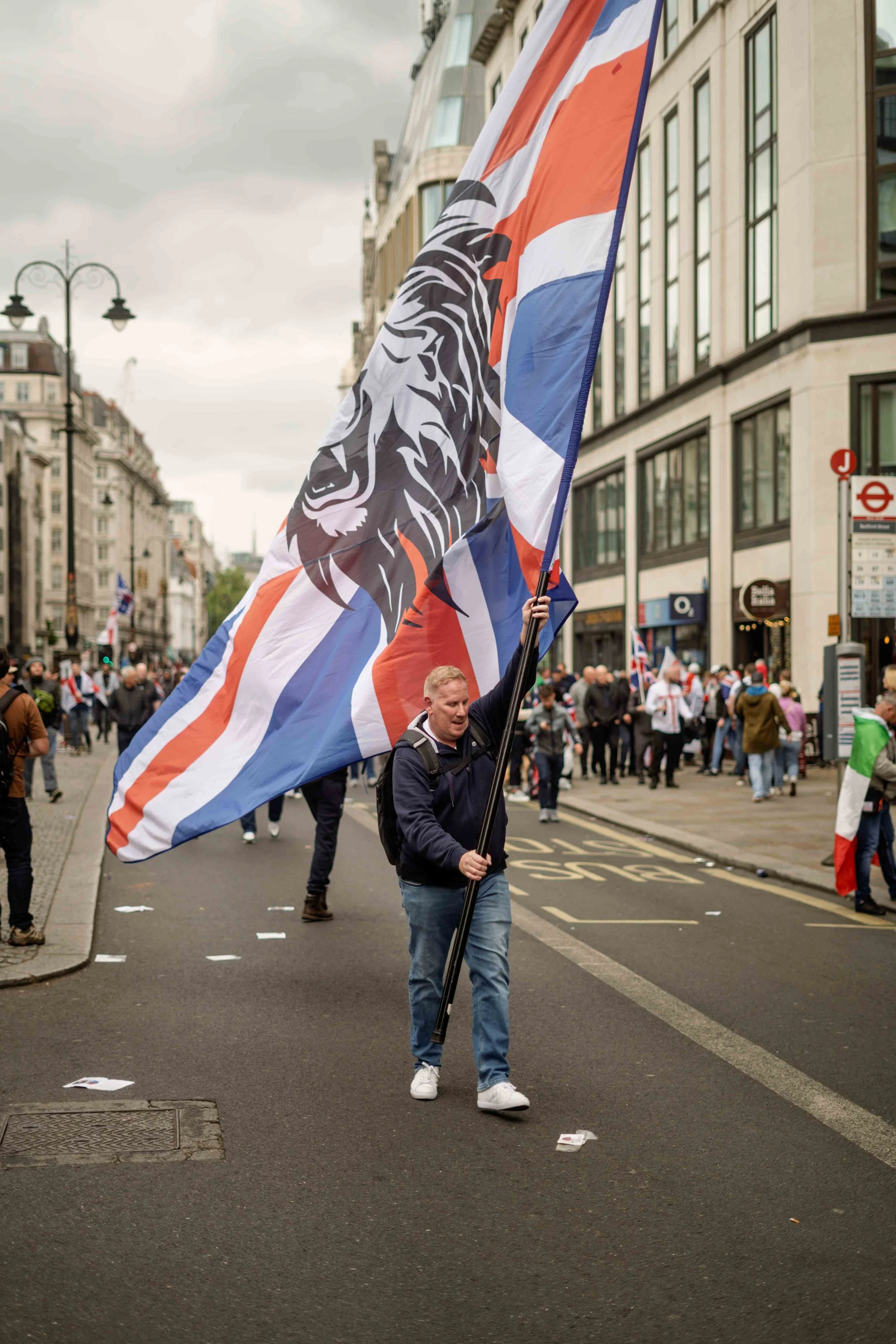
The Unite the Kingdom march was different. Union flags as far as you could see, filling The Strand from kerb to kerb. There was genuine energy here — people who were in attendance were locked like they hadn't been to a demonstration in decades, younger faces chanting alongside grandmothers draped in flags. Whatever you think of the politics, the turnout was real.
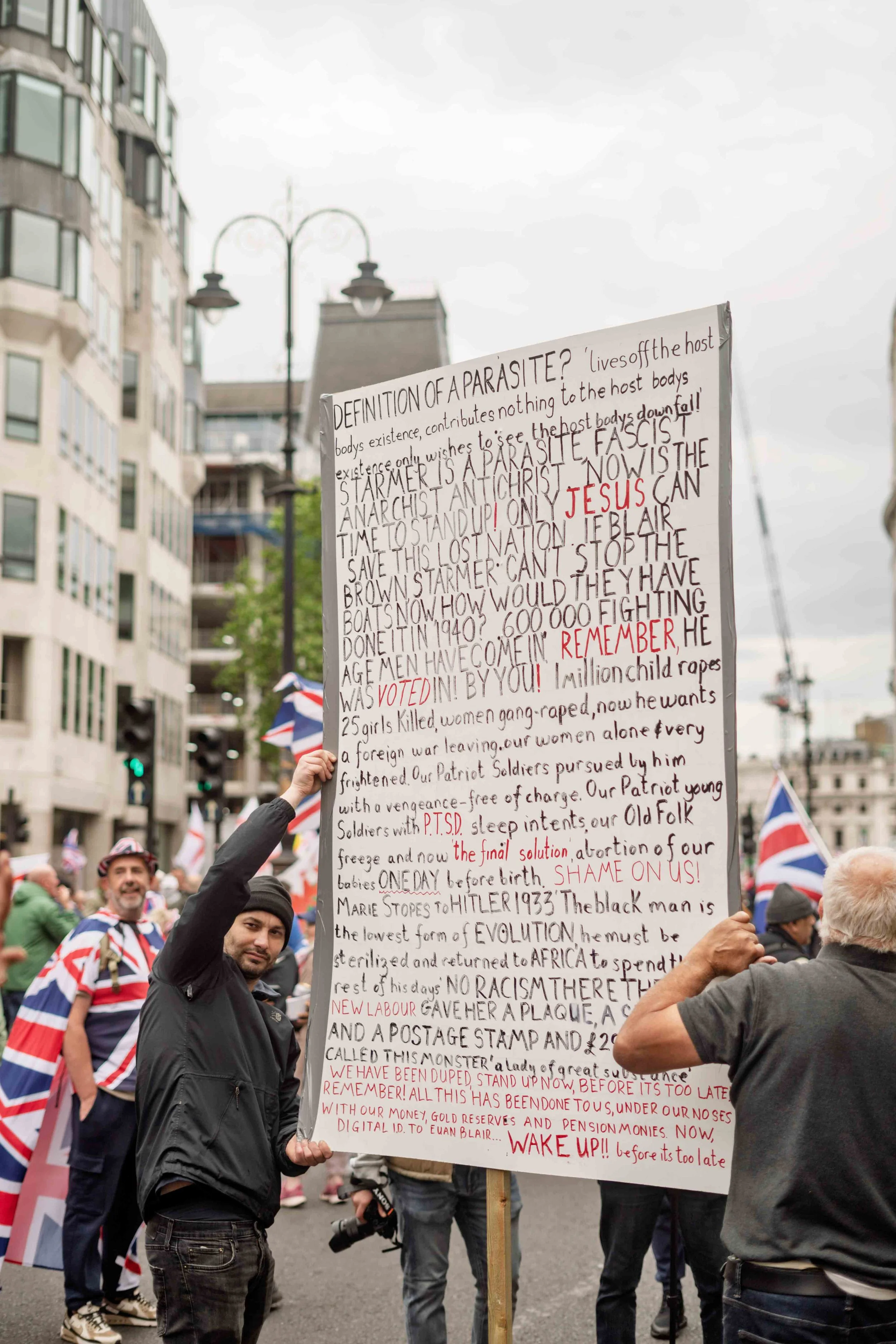
The mood ranged from festive to furious depending on where you stood. Near the front, people were singing. Further back, the signs got harder — some were the standard fare of any political march, slogans about sovereignty and borders; others veered somewhere darker. That's the honest picture: a crowd is never one thing, and this one wasn't either.
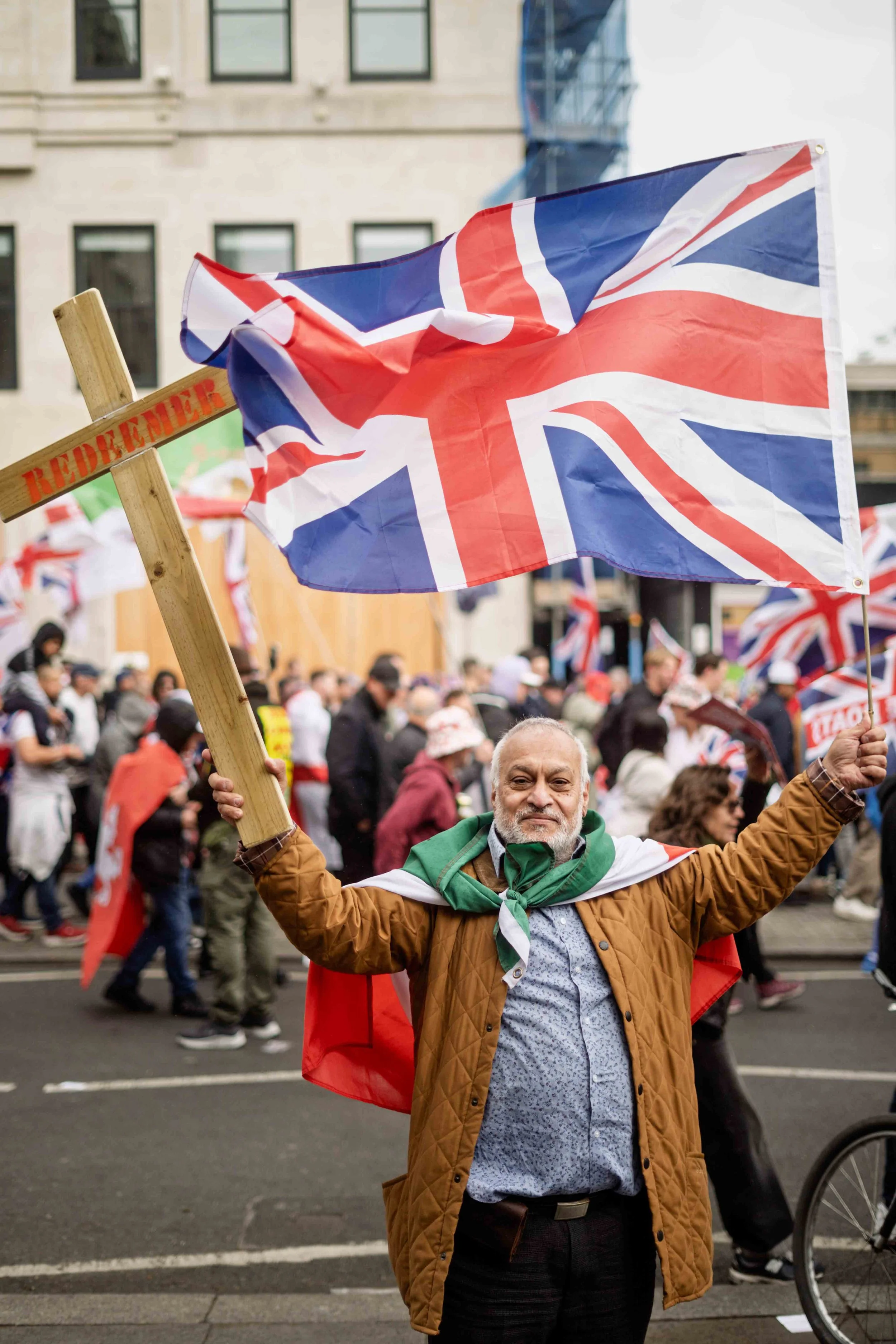
One image I kept coming back to: a man raising a wooden cross in one hand and a Union flag in the other, marching with real conviction.
Meanwhile, London Carried On
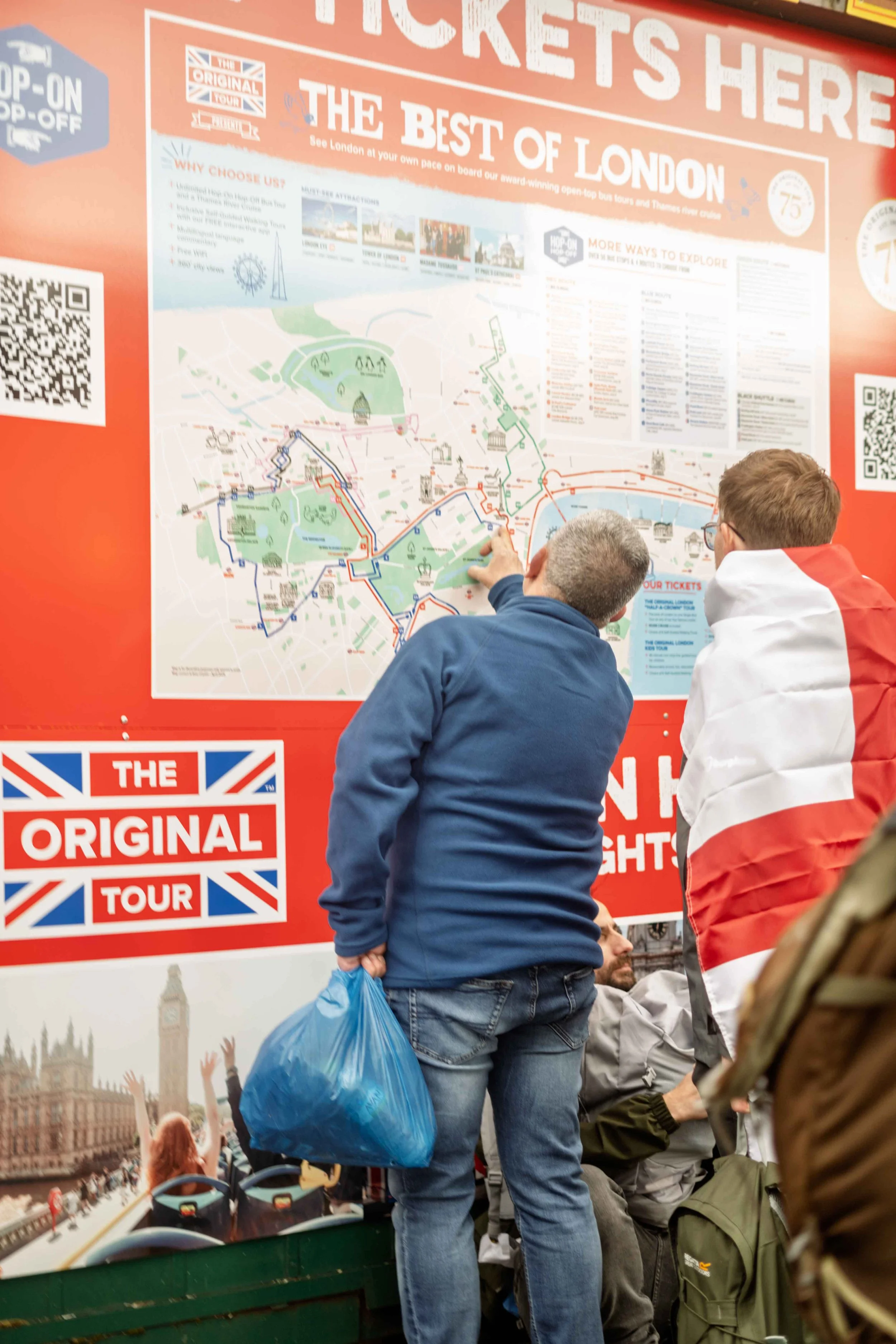
Here's the thing about London: it doesn't stop for its own arguments. Between the two marches, on the side streets and quieter stretches of pavement, the city was just getting on with it. A woman wrestled a pair of rose-gold number balloons around a corner, heading to someone's birthday. Two men in England flags squinted at a tourist map outside a hop-on hop-off bus stand. A photographer sat on a kerb outside a café editing on his laptop while a queue formed behind him.
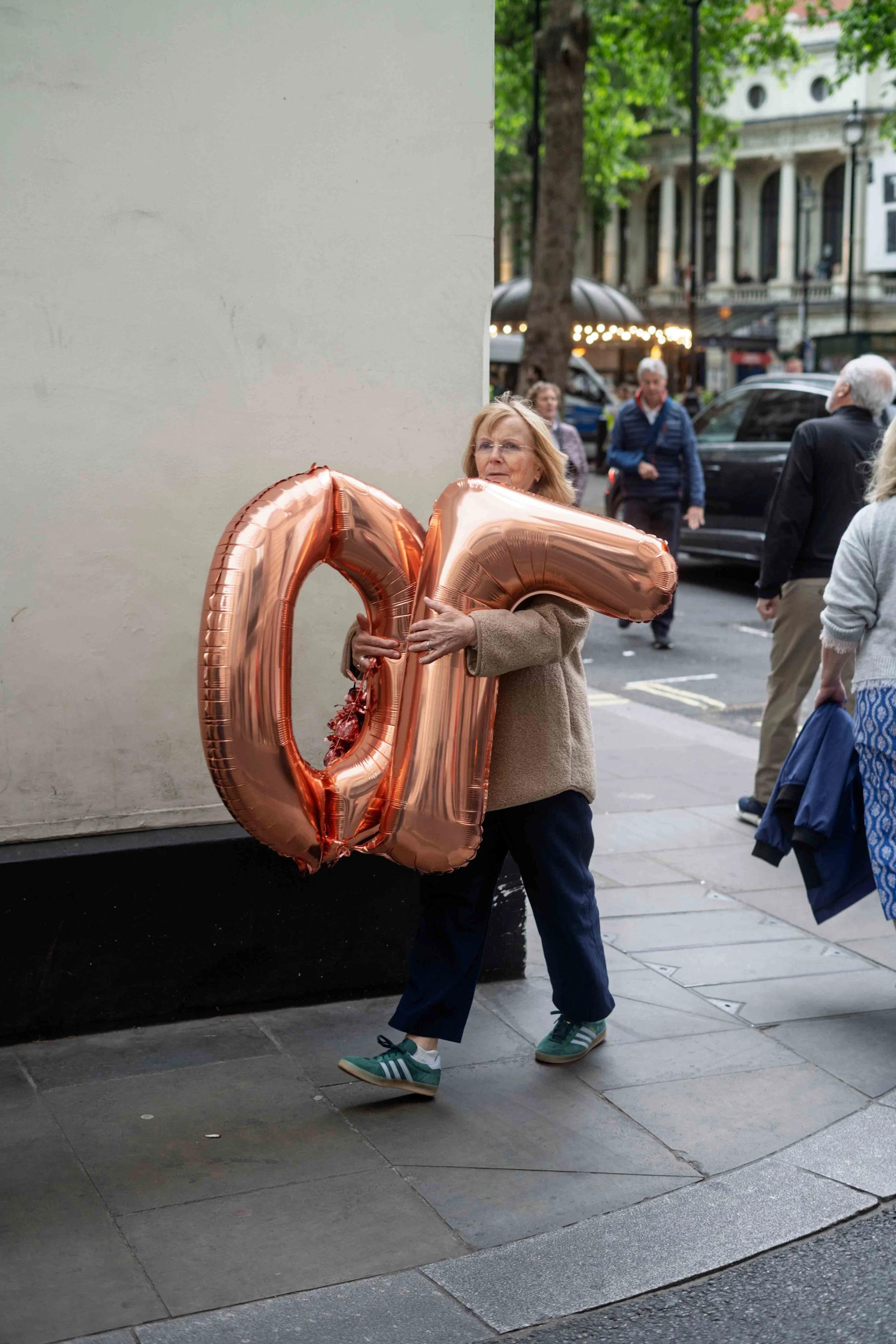
There was something grounding about that. The city has seen a lot of Saturdays like this one, and it will see more. The arguments change shape but they don't really change — who belongs, who gets to say so, whose version of Britain is the real one. And through all of it, London keeps absorbing, keeps changing, keeps being more complicated than any single march can capture.
The idea that London would be better off, more itself, by removing the people who have spent their lives building it is a harder argument to make when you're actually standing in the middle of it. This city has been shaped by wave after wave of people arriving from elsewhere, each generation initially viewed with suspicion, each eventually becoming the city itself. The cafés, the music, the NHS wards, the buses — that's all London too, and it didn't come from nowhere.
That doesn't mean there aren't real and complicated questions to have about immigration policy, community change, or what national identity means in 2026. There are. But those conversations happen in committee rooms and local council meetings and family kitchens — not really on the street, where the loudest voices tend to drown out the nuance on both sides.
I don't have a tidy conclusion to offer. These photographs are not an argument so much as a record — of a day, a city, a conversation that's been going on for a very long time and isn't close to finished. I hope they're worth sitting with.
Until next time, keep snapping.
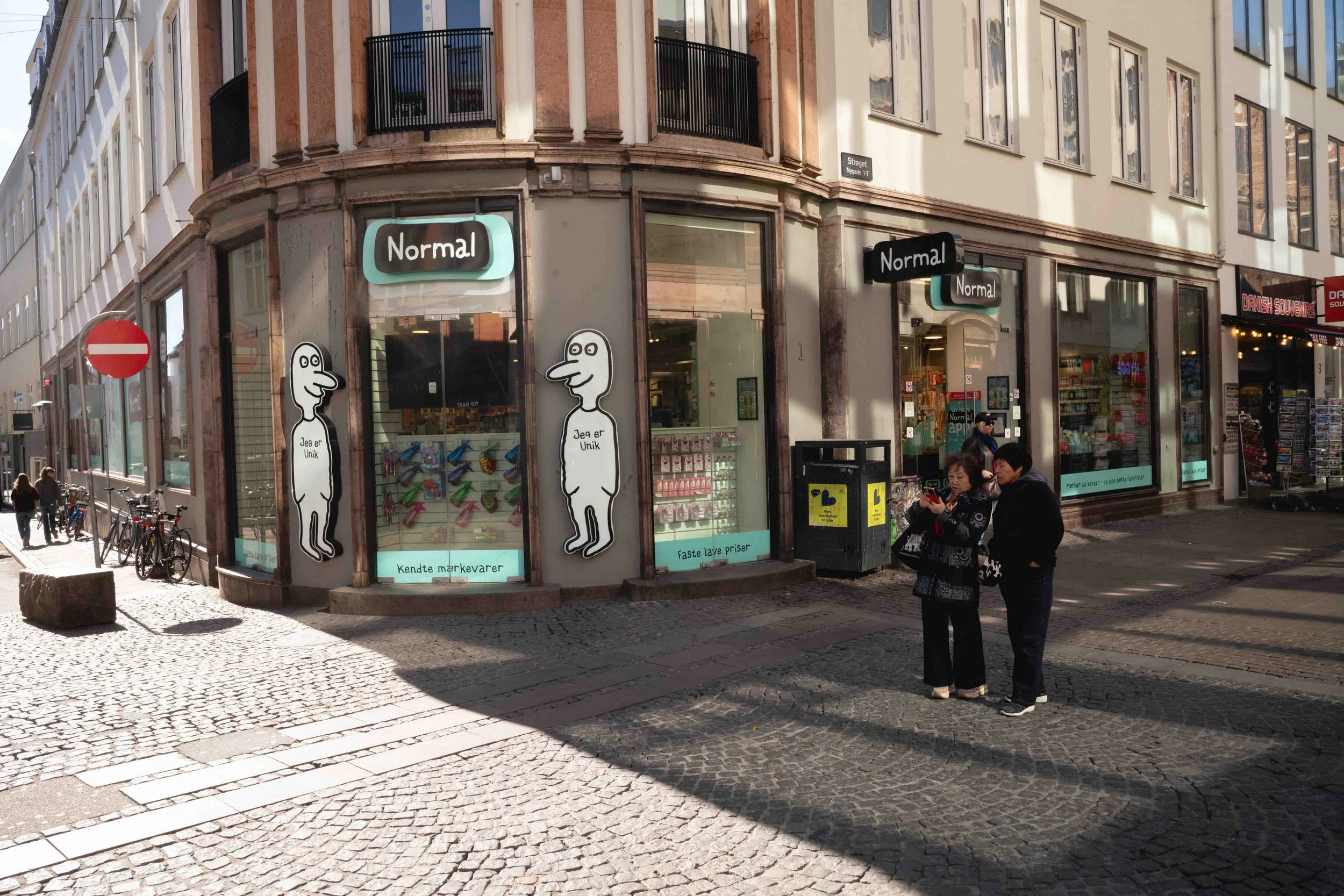
Lines, Layers, and Nordic Light: A 60 - Hour Street Photography Guide to Copenhagen
There is a strange irony in modern travel.
Three times a week, I spend three hours a day commuting just to get to work and back. Yet, in just 90 minutes from London Gatwick, I found myself stepping off a plane and into a completely different visual universe. It’s a powerful reminder that sometimes the best inspiration isn't found in a longer journey, but a smarter one.
There is a strange irony in modern travel.
Three times a week, I spend three hours a day commuting just to get to work and back. Yet, in just 90 minutes from London Gatwick, I found myself stepping off a plane and into a completely different visual universe. It’s a powerful reminder that sometimes the best inspiration isn't found in a longer journey, but a smarter one.
For this trip, I traveled solo, and I’ll be honest: I arrived with a touch of trepidation. As a street photographer, being alone in a foreign city can sometimes feel isolating, and I was initially concerned about how a solo traveler with a camera would be received. However, those worries evaporated the moment I hit the pavement. The famous openness of the Danes and the deep-rooted culture of Hygge welcomed me with open arms. I didn't feel like an outsider looking in; I felt like a guest invited to witness the rhythm of the city.
To understand the "why" behind the photos, you have to understand the city's bones. Copenhagen (or København—"Merchants' Harbor") has spent 800 years evolving from a tiny fishing village into a powerhouse of design. You see it in the architecture: the 17th-century Dutch Baroque houses of Christianshavn weren't just built for aesthetics; they were built as a fortified naval statement by King Christian IV. When you're walking through Nyboder — those iconic yellow naval barracks—you aren't just looking at a "pretty street." You’re looking at some of the world's first planned social housing, dating back to 1631. This history of care and community leads directly into the modern mindset of Hygge. We often think of it as a winter concept—candles and wool socks—but in the spring, it manifests as a communal openness.
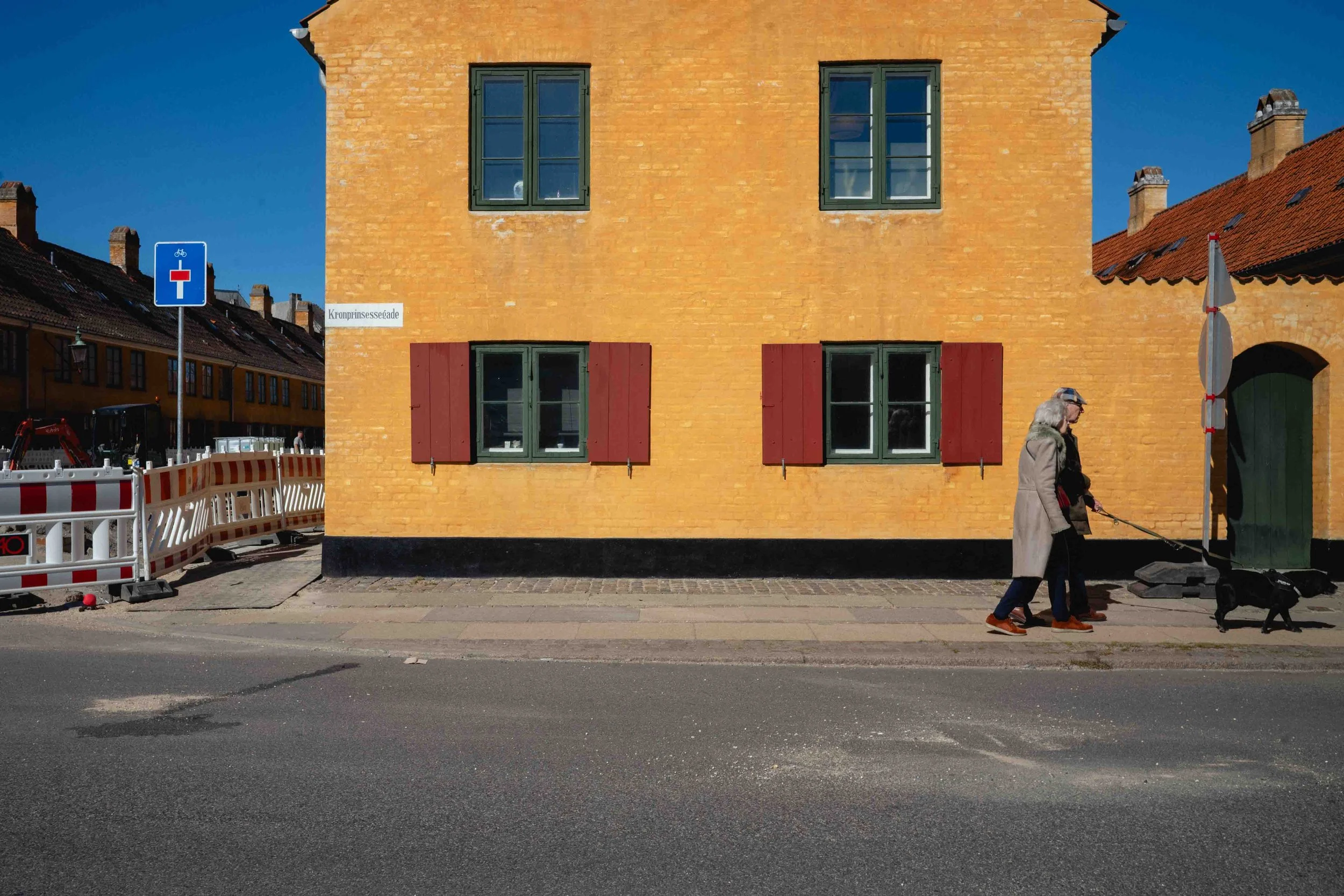
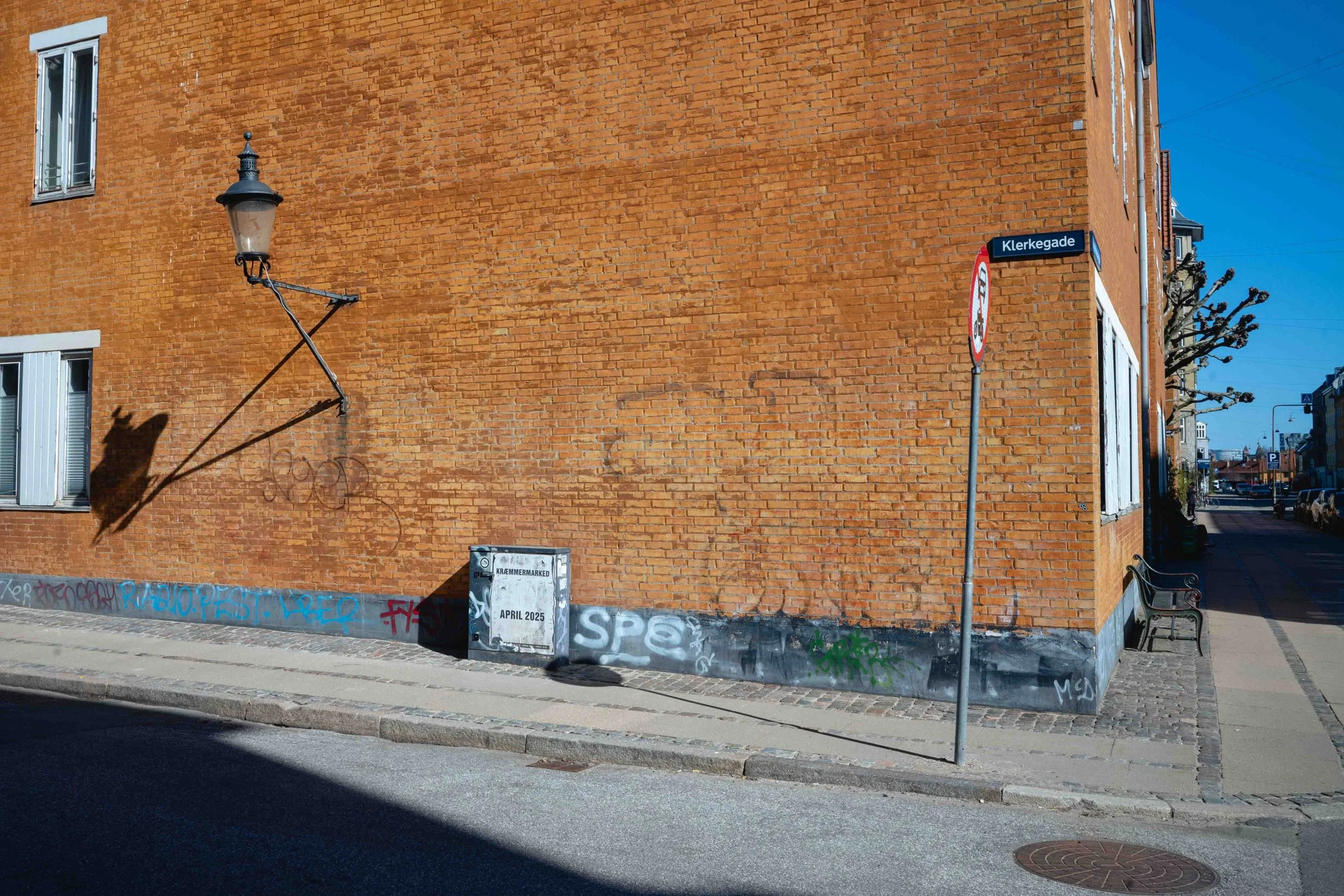
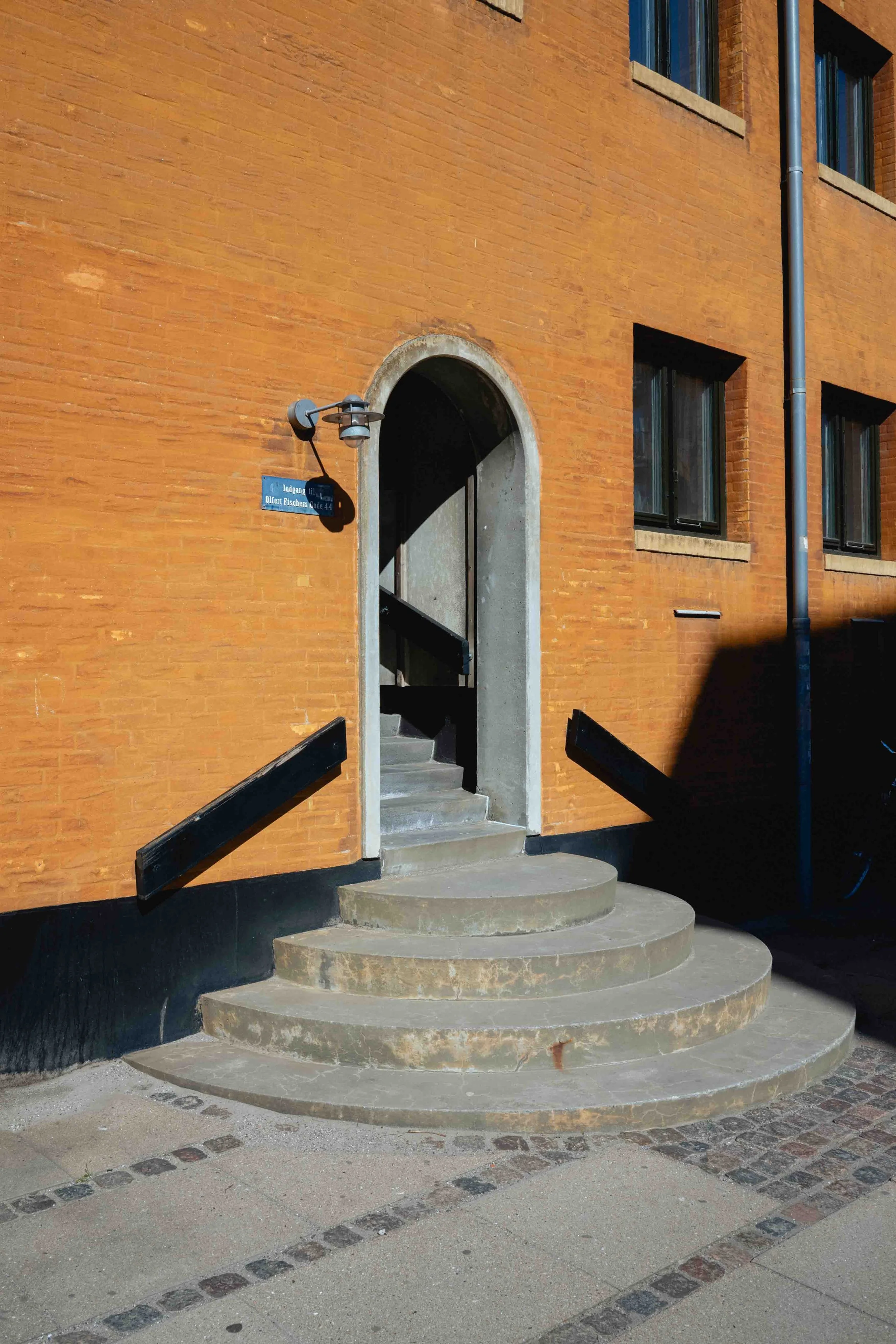
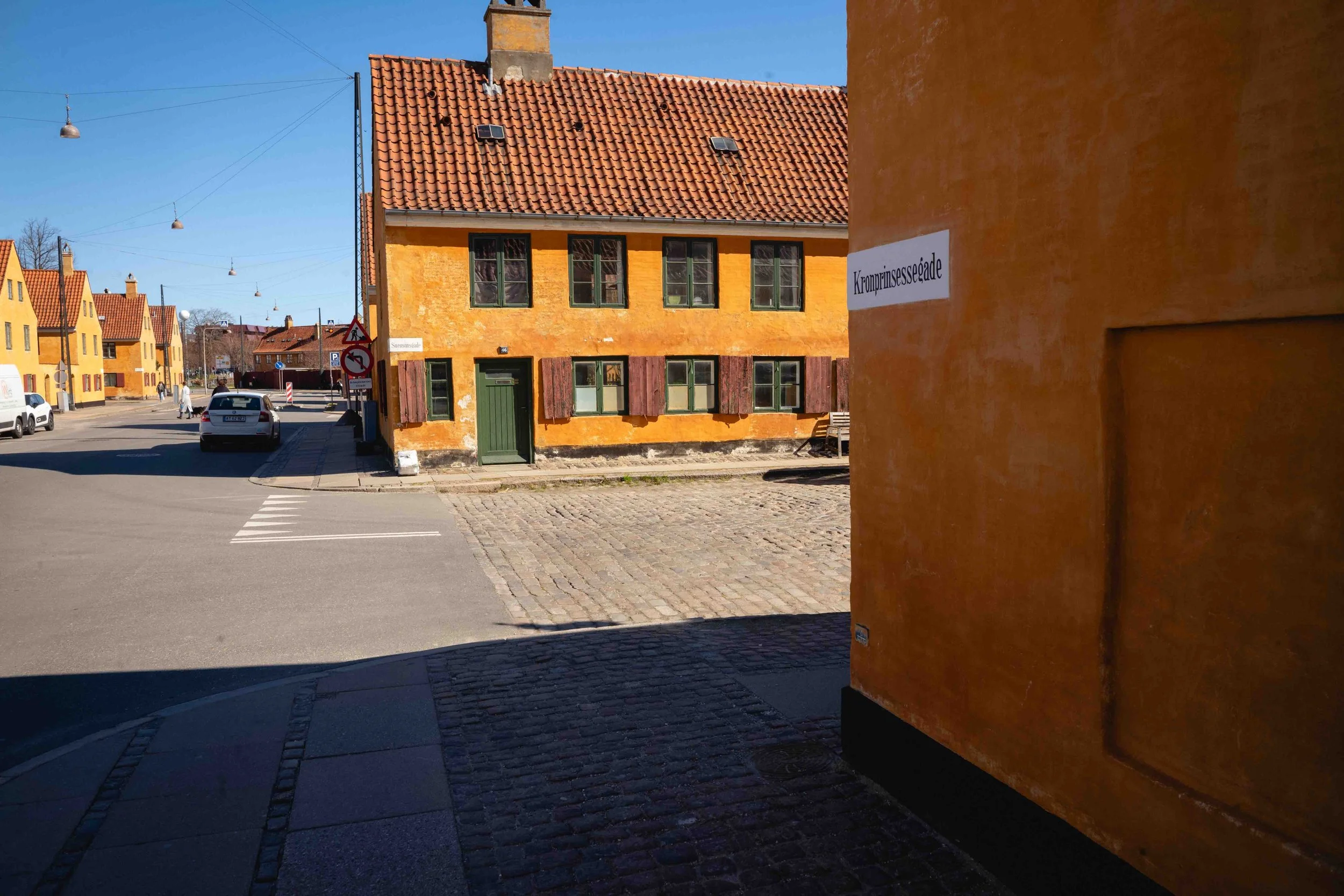
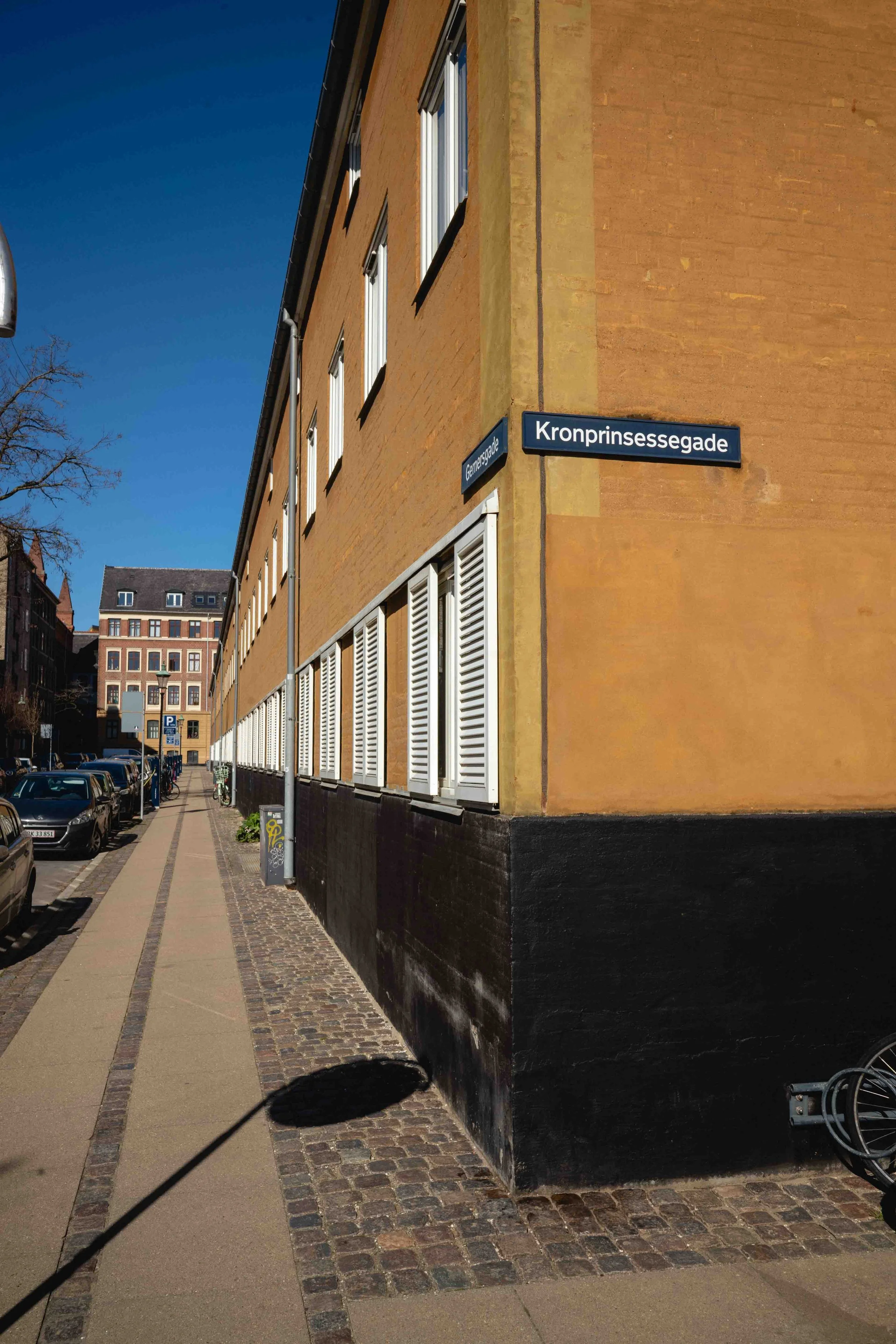
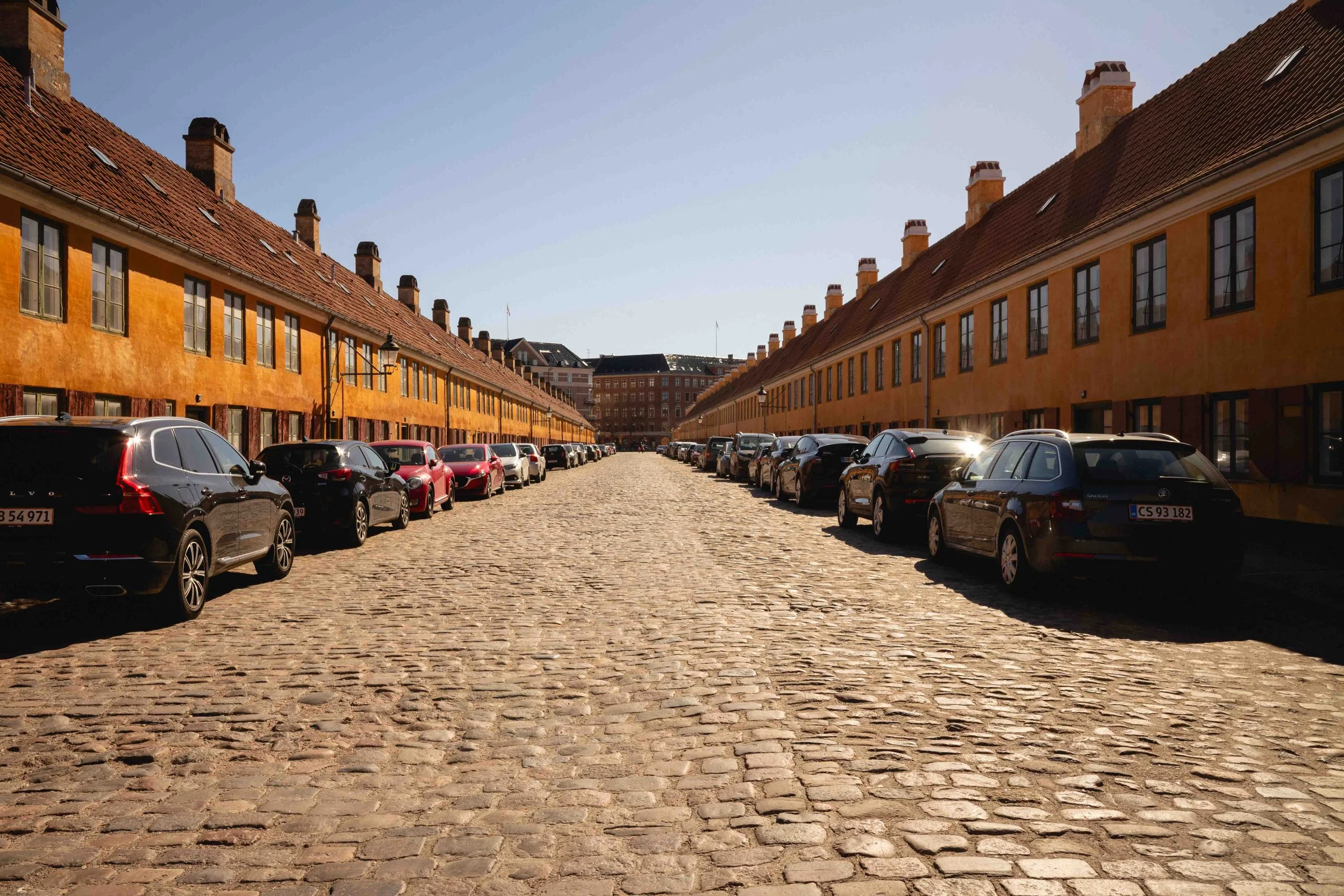
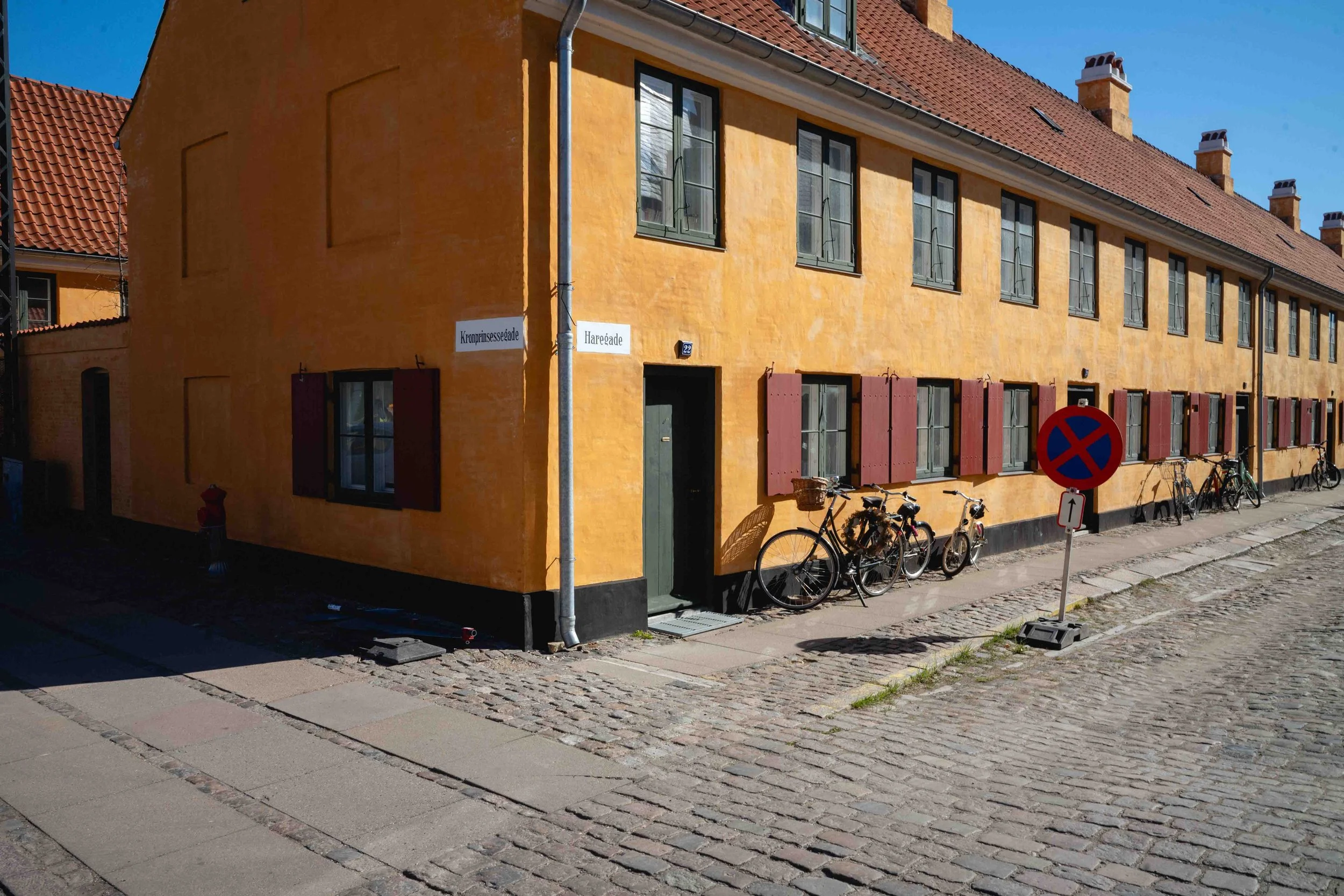
It’s the "urban hygge" of people sharing a coffee on the curbside in Jægersborggade or a craft beer in the Meatpacking District. As a solo photographer, this mindset is a gift. There is a sense of trust and "live and let live" here that makes you feel incredibly safe. The locals are remarkably open to being part of a frame; as long as you are respectful, the city feels like a collaborative studio. The light plays its part, too. The Northern latitude in April provides a "blue hour" that feels like it lasts for three, and a soft, diffused sun that makes even the grittiest alleyway in Nørrebro look cinematic.
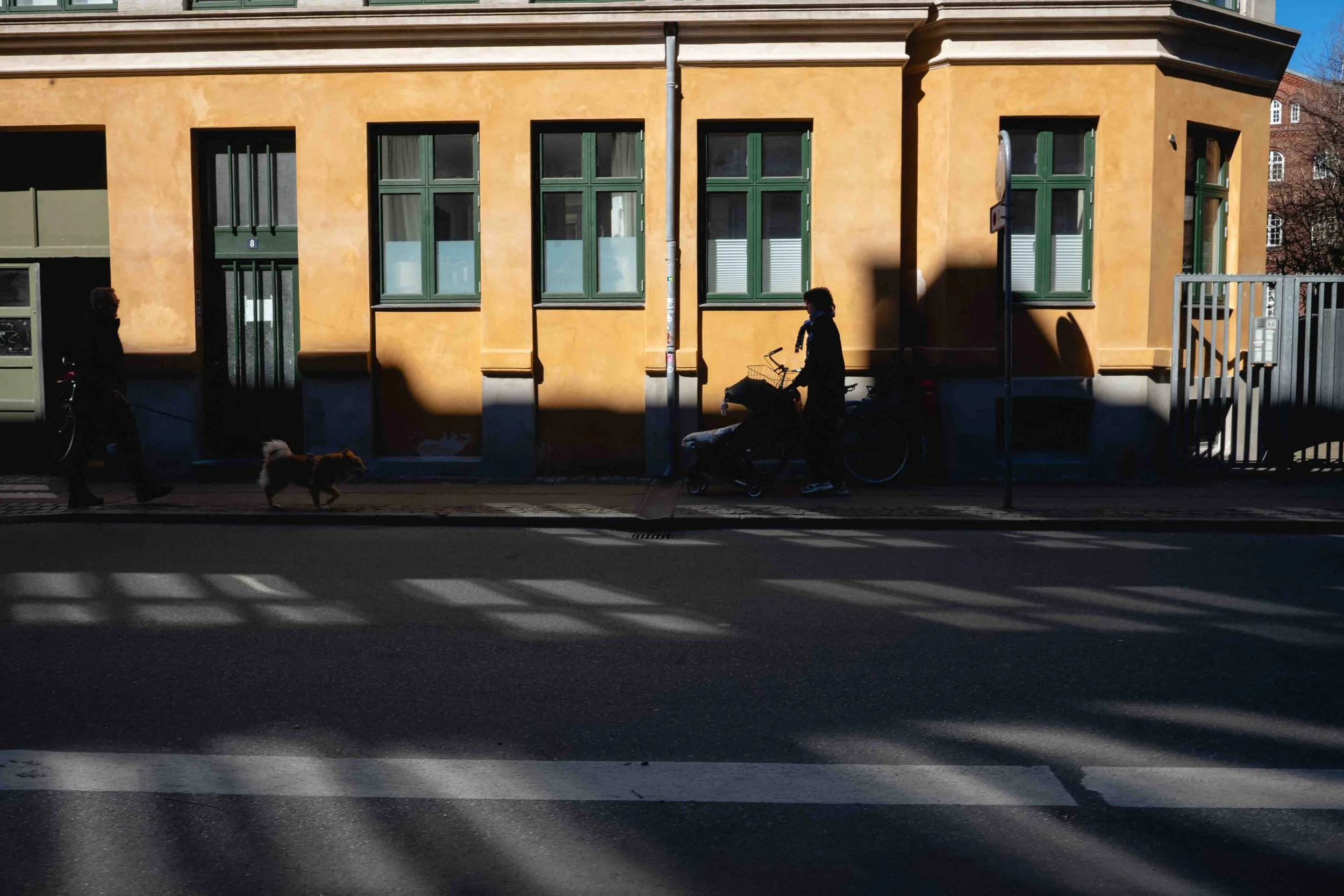
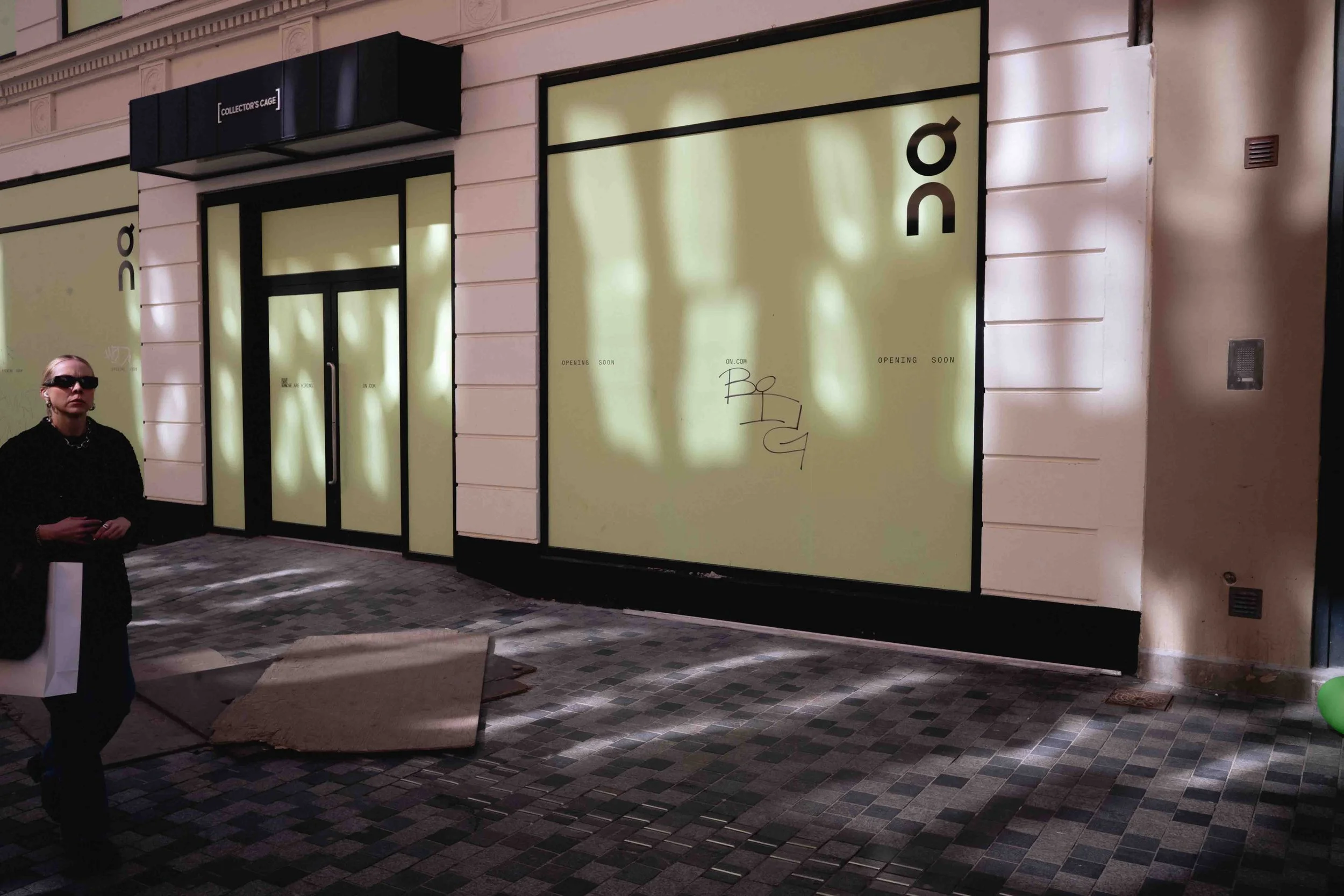
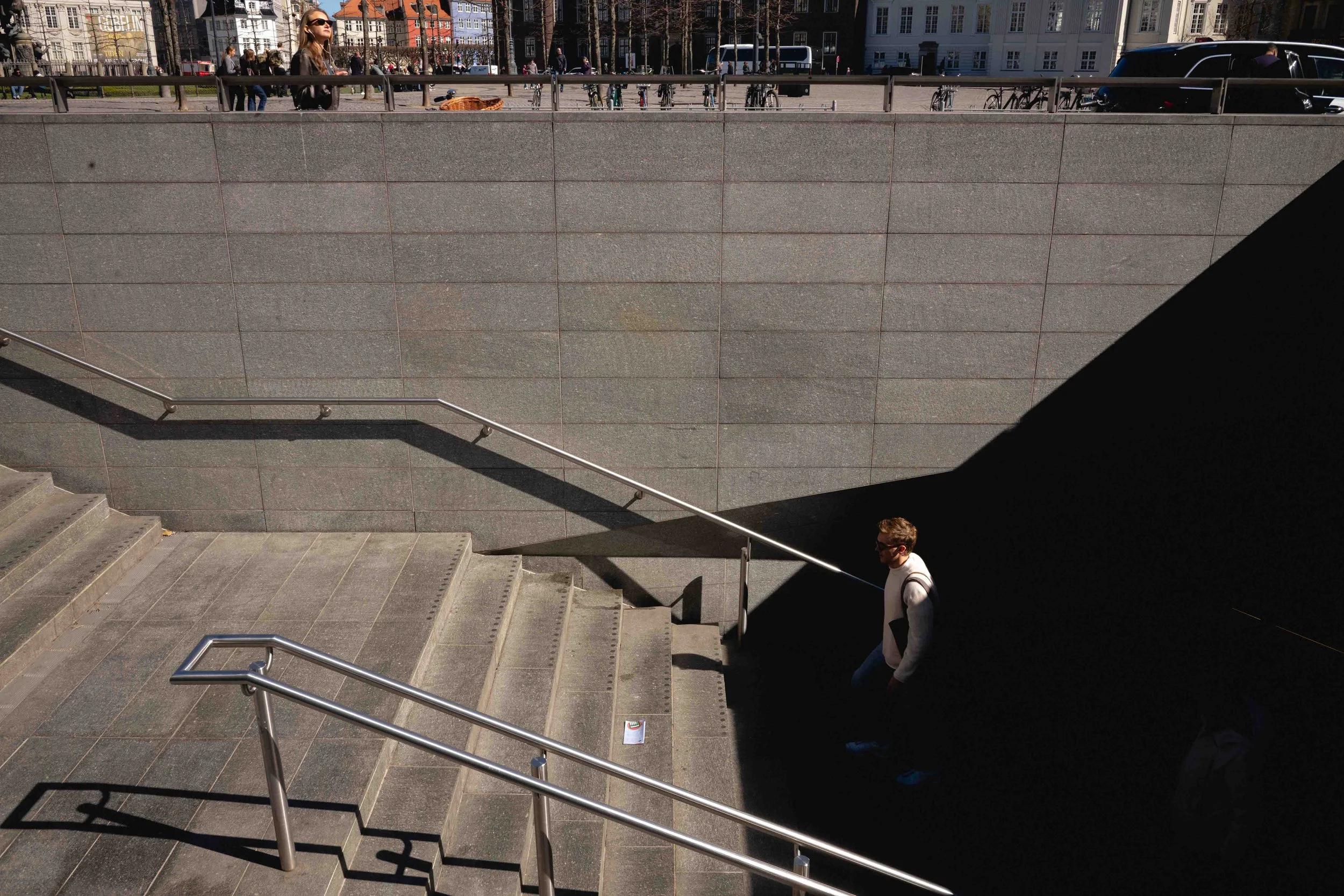
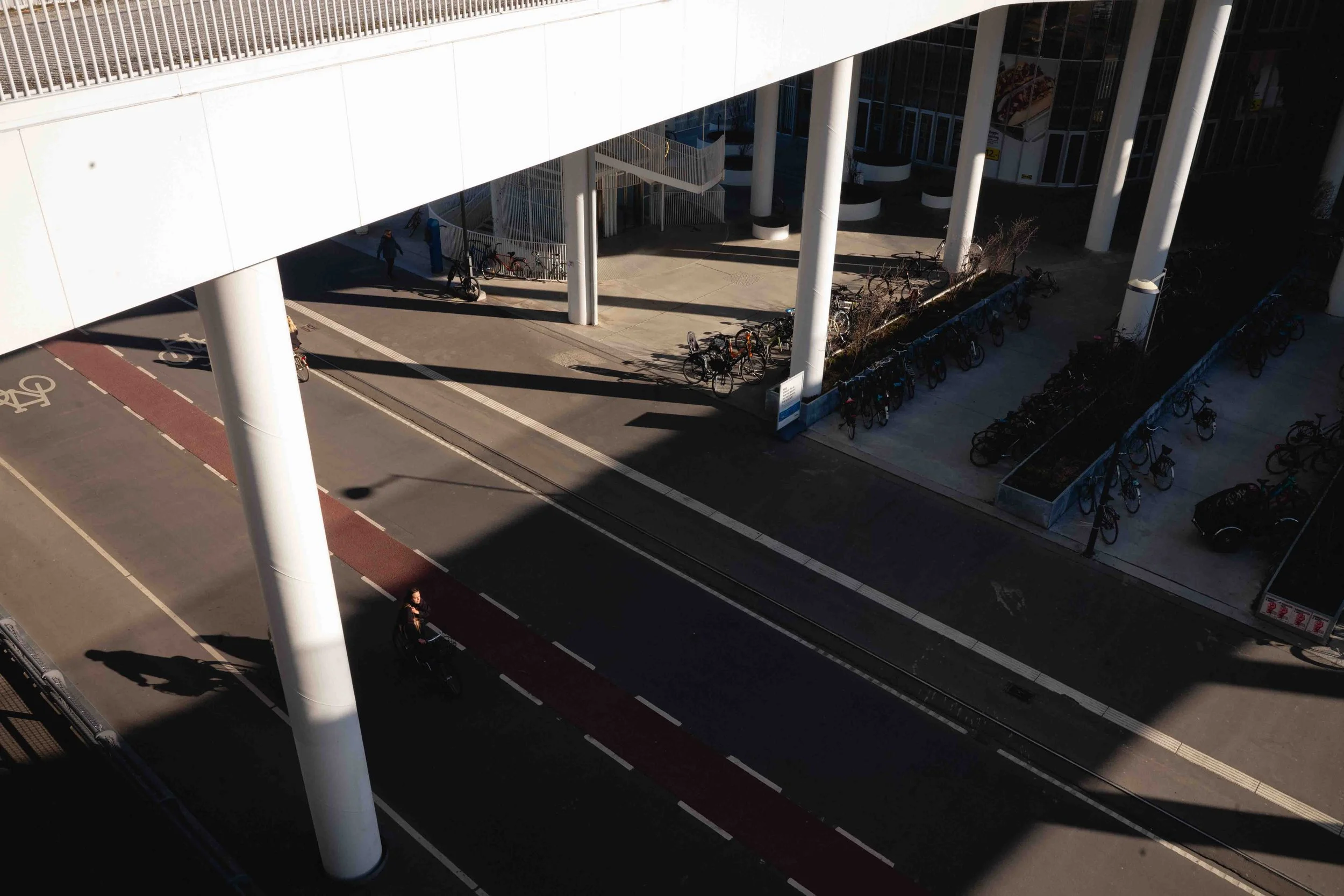
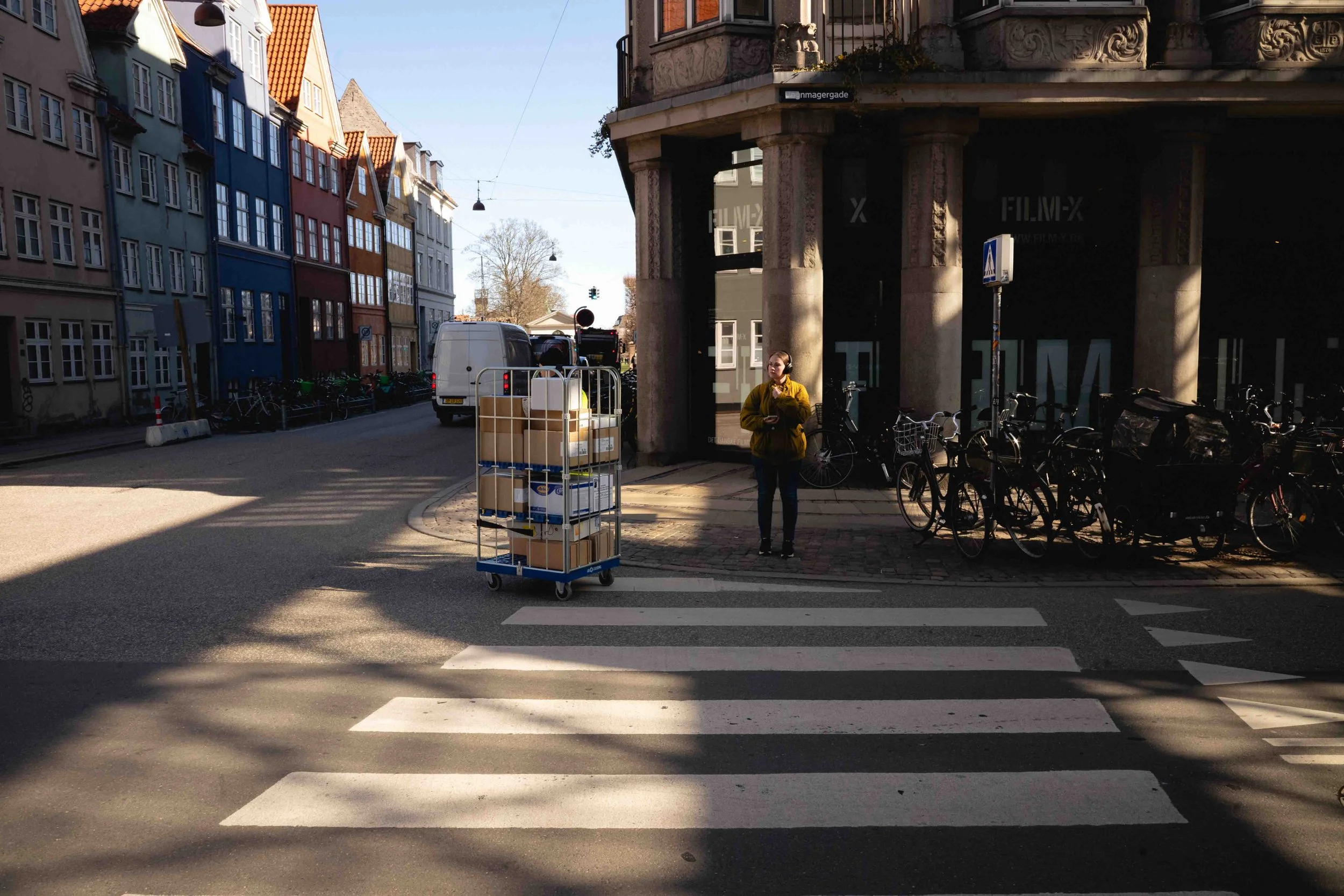
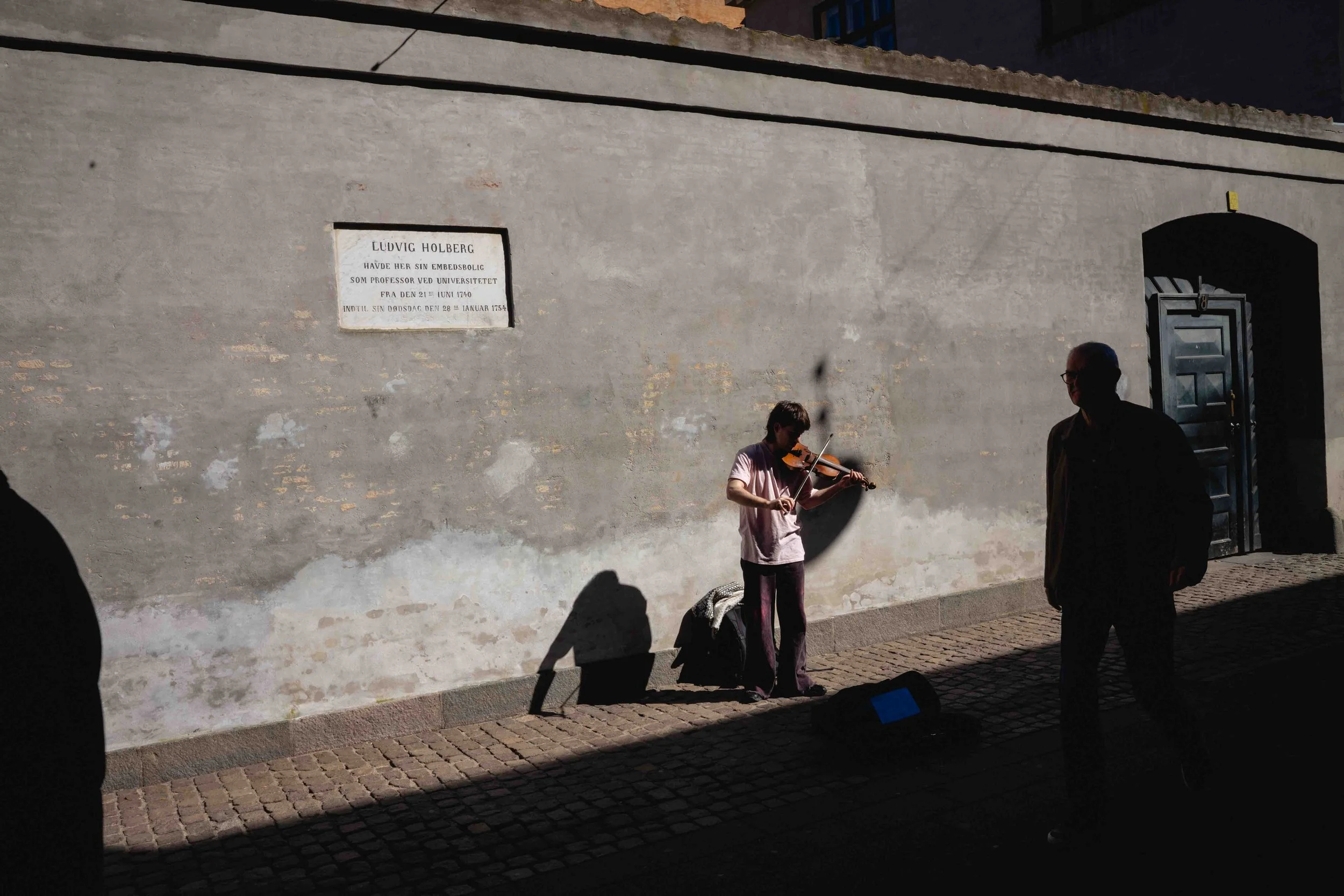
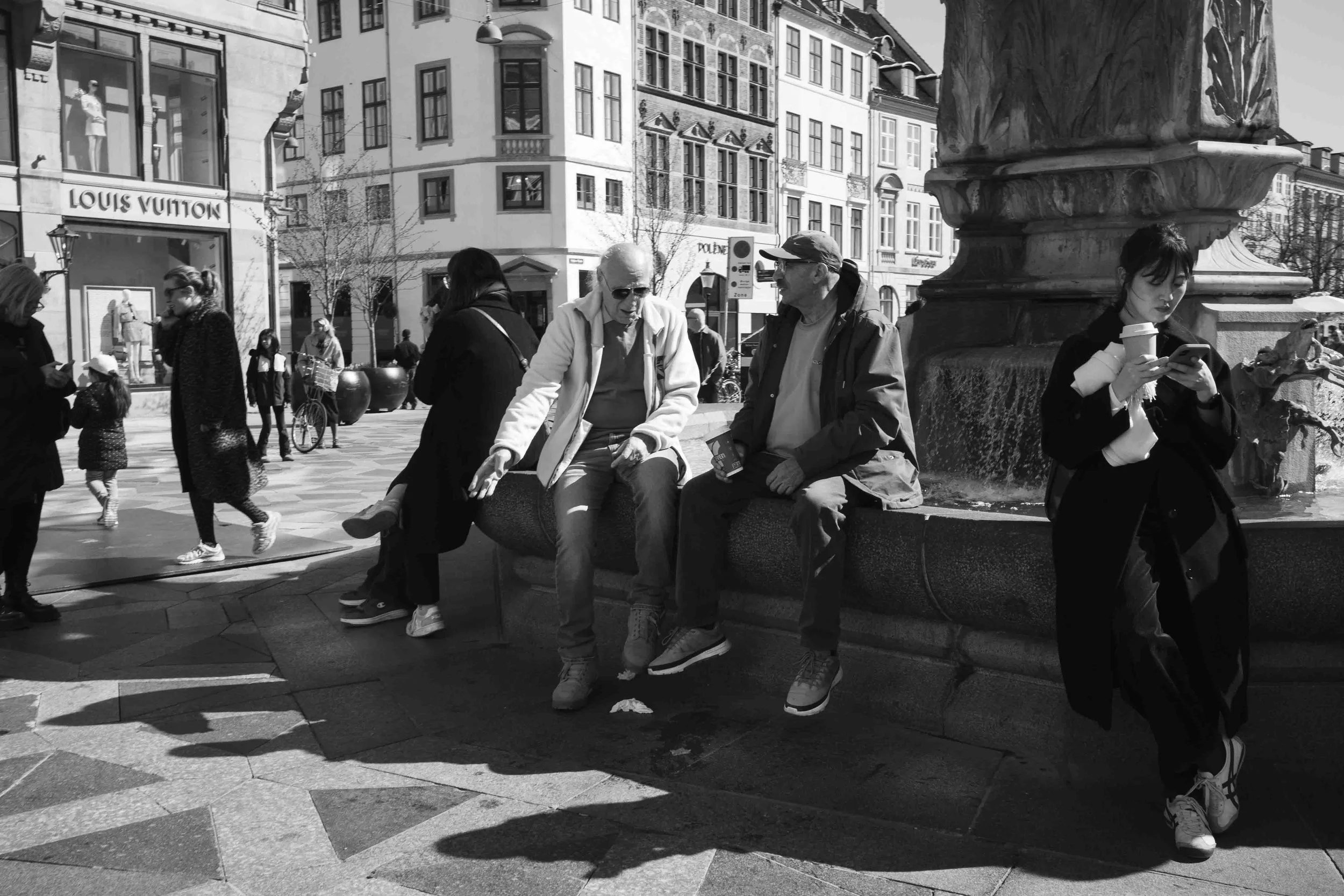
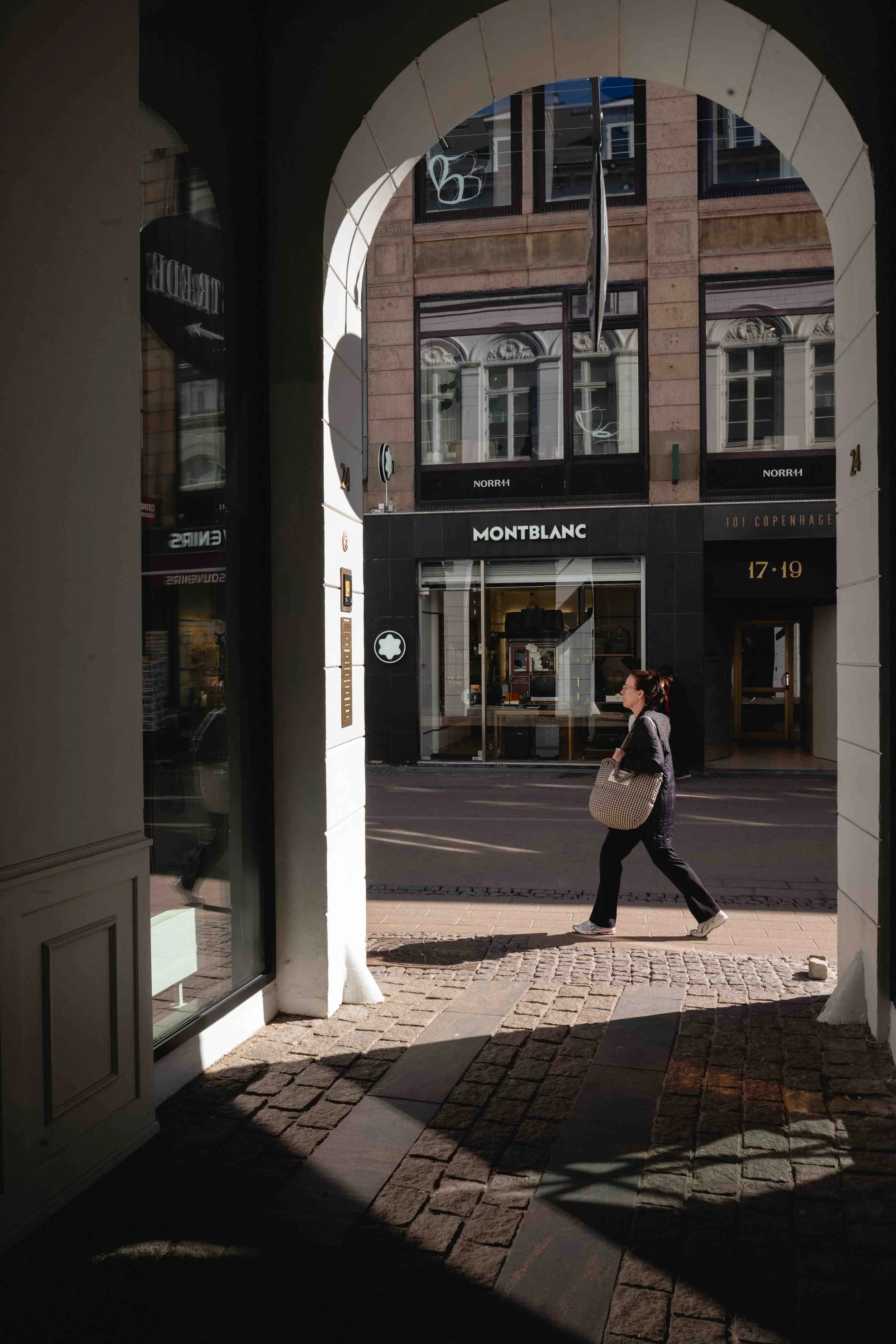
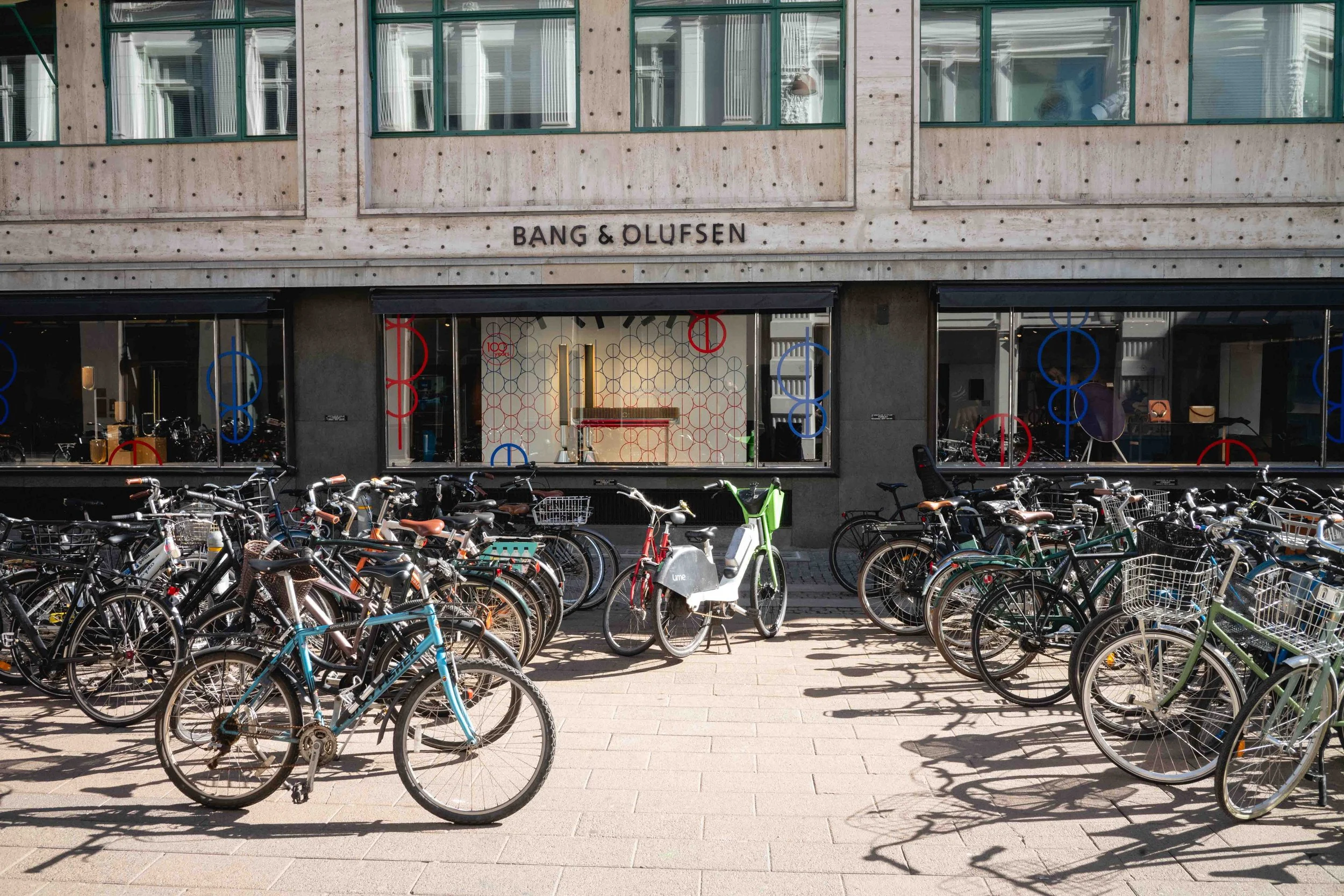
When it comes to navigating this photographer's playground, you generally have three options: walking, the seamless Metro, or joining the local masses with a bike hire. I elected mainly to walk, covering 22 miles of pavement on foot over two days. While biking is the Danish way, walking gives you the unique ability to see the "underbelly" of the city—the peeling posters in a Nørrebro side street or the way the light hits a specific doorway that you’d miss if you were whizzing past on two wheels. That said, accessibility is effortless here. I found the City Pass Small to be an excellent investment; it covers the Metro, buses, and harbor scouts perfectly, making the transit to and from the airport a total breeze.
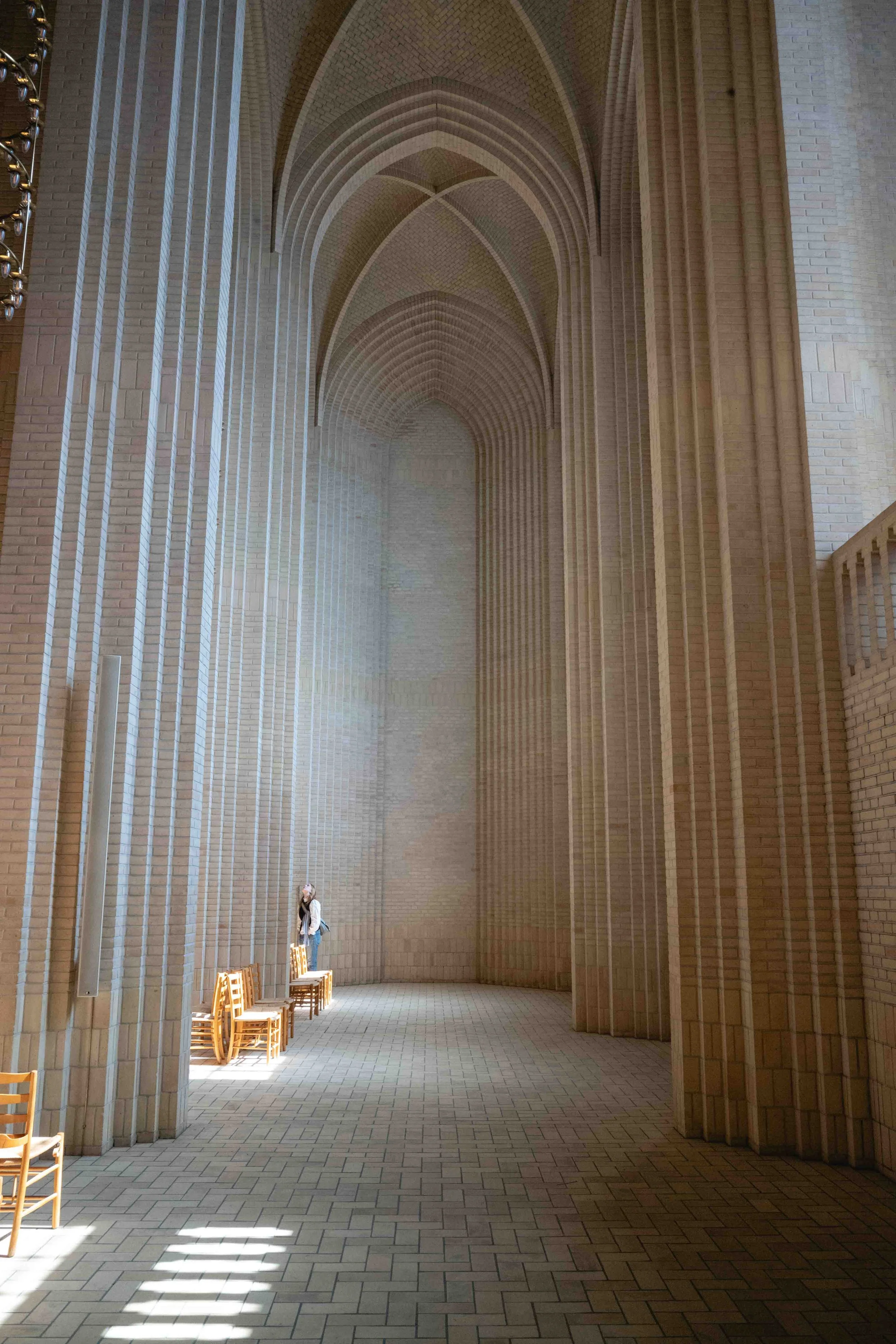
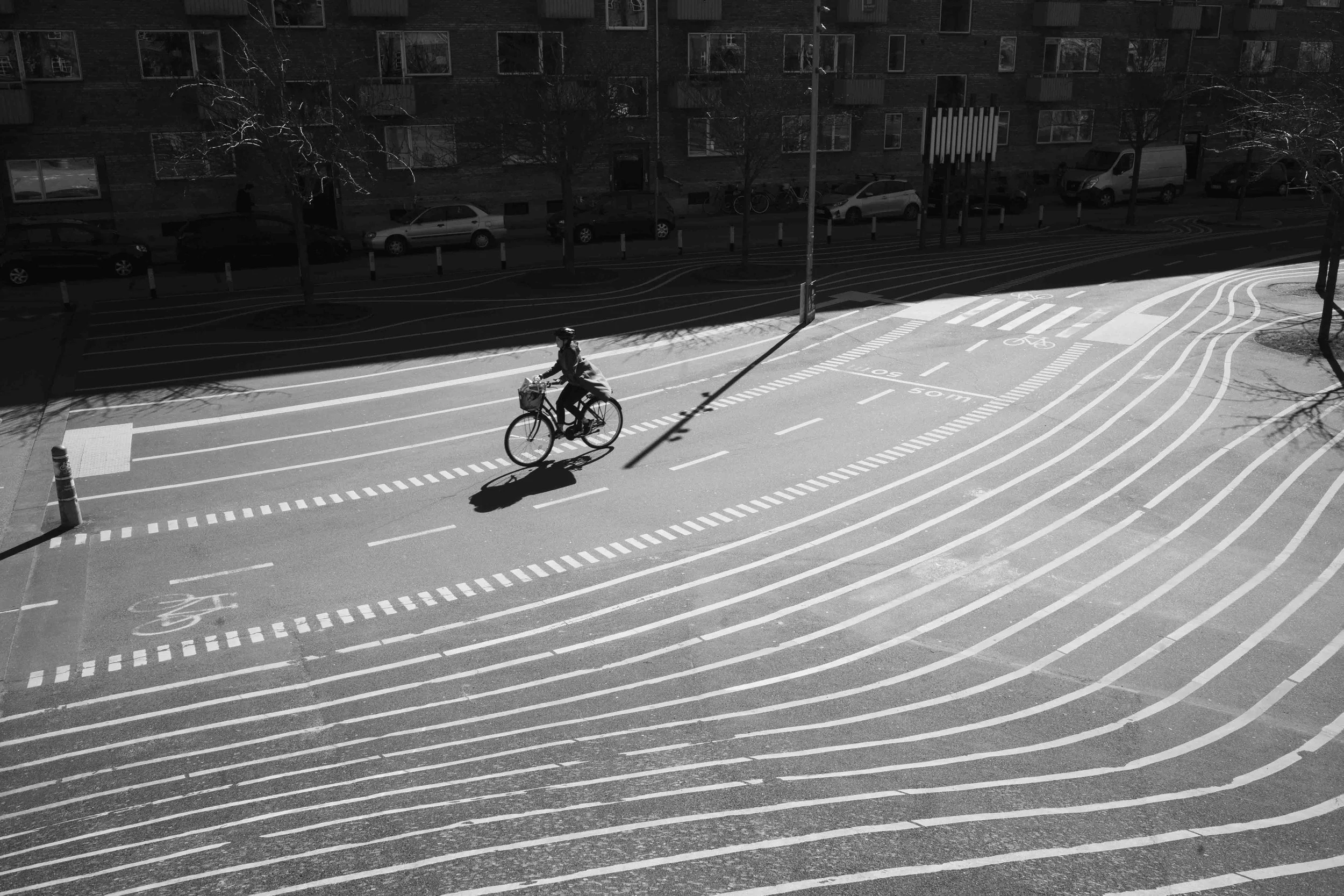
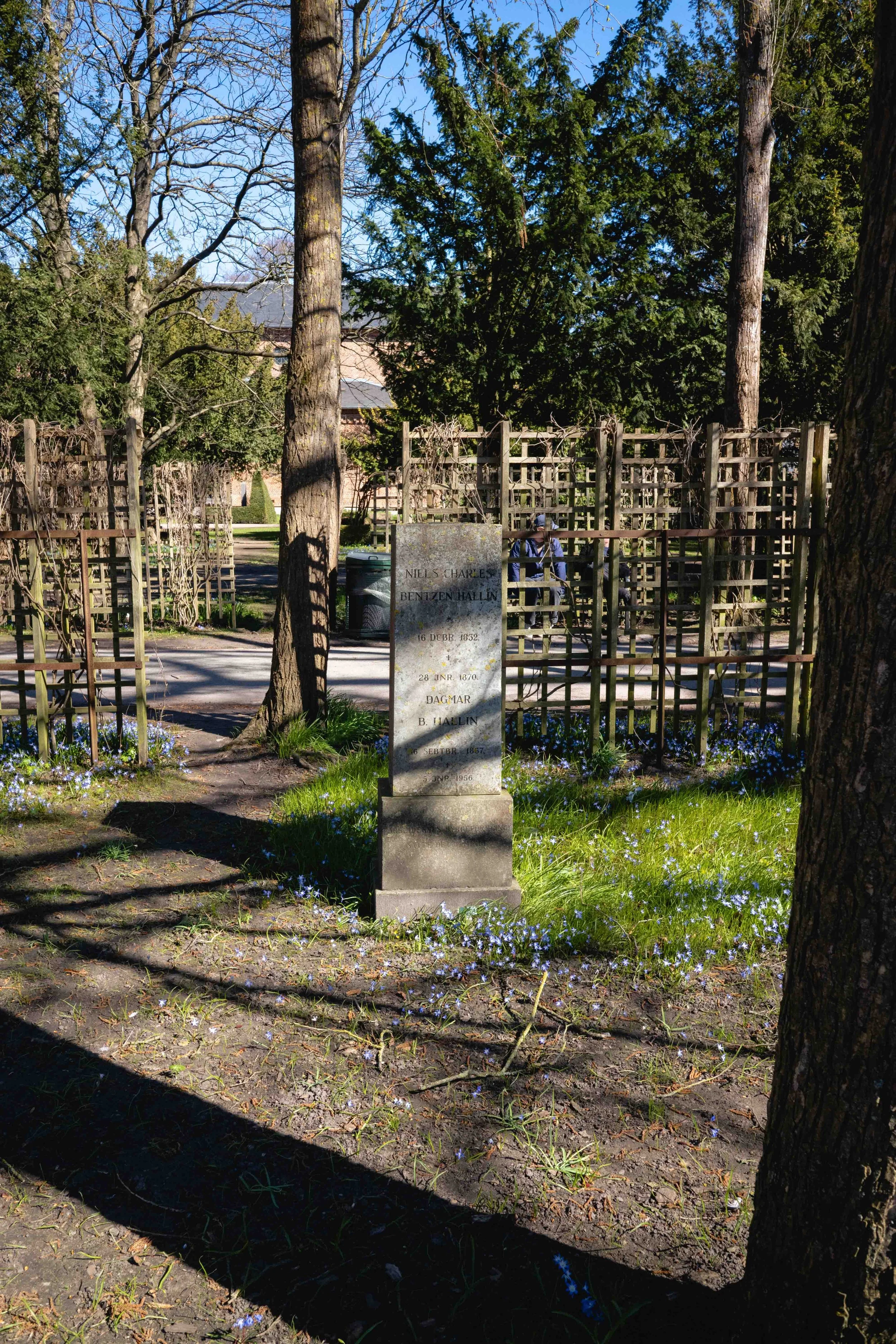
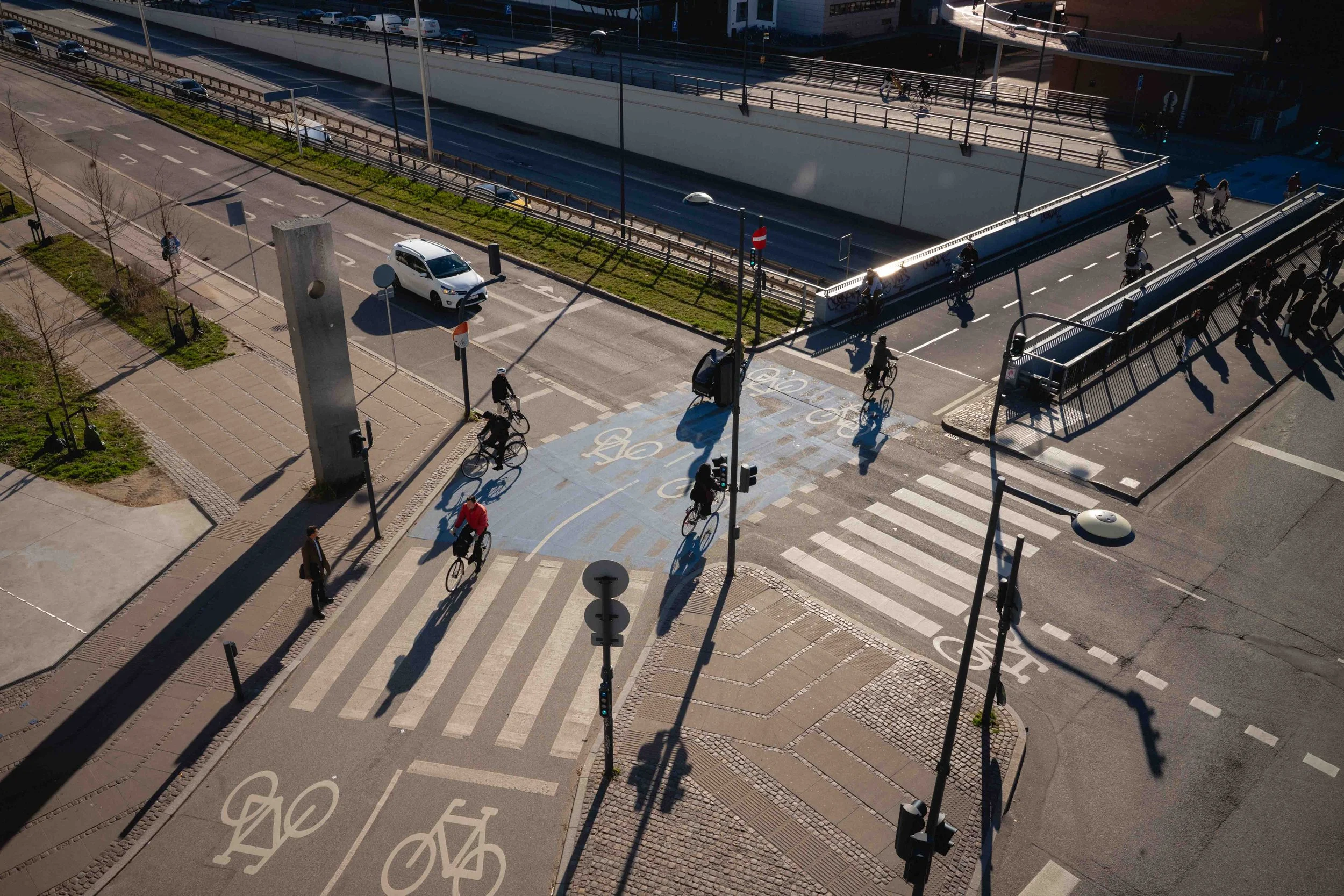
My first day focused on the transition from Nørrebro’s graphic textures to the harbor's edge. I started at Grundtvig’s Kirke, a masterclass in symmetry. Its towering yellow brickwork is a rare example of Expressionist architecture, feeling more like a giant pipe organ than a traditional church. From there, I transitioned into the vibrant, striped chaos of Superkilen Park, where the white "zebra" asphalt lines are a playground for composition. I spent the afternoon weaving through the quiet, dappled light of Assistens Cemetery (the final resting place of Hans Christian Andersen) and the boutique-heavy streets of Elmegade and Ravnsborggade. After grabbing some incredible street food at Hanoi Alley, I hit TorvehallerneKBH for some candid shots of the local food scene. I ended the daylight hours by climbing The Round Tower for a rooftop sprawl, before catching the dusk glow at Nyhavn and crossing the Inderhavnsbroen toward the Danish Architecture Center.
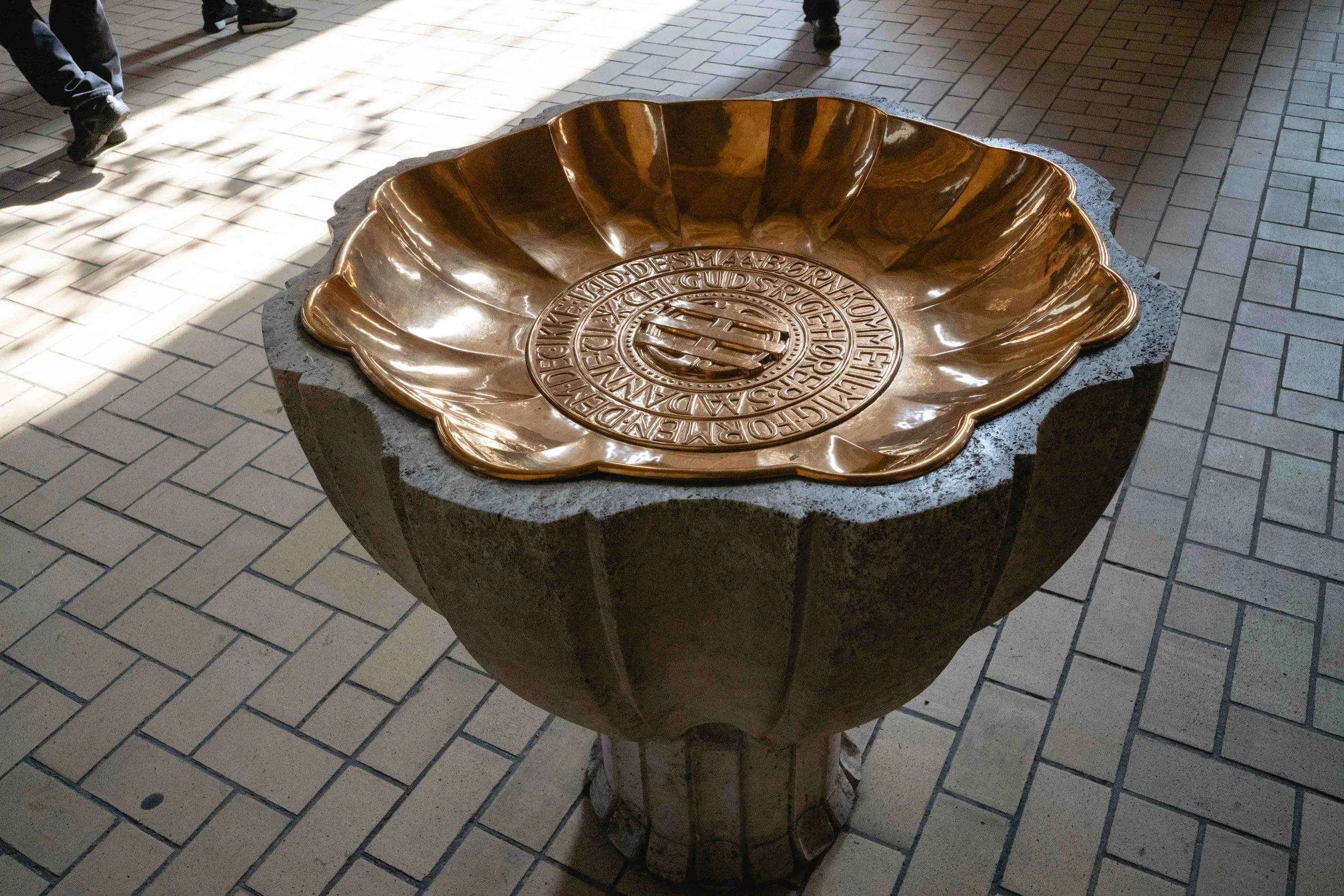
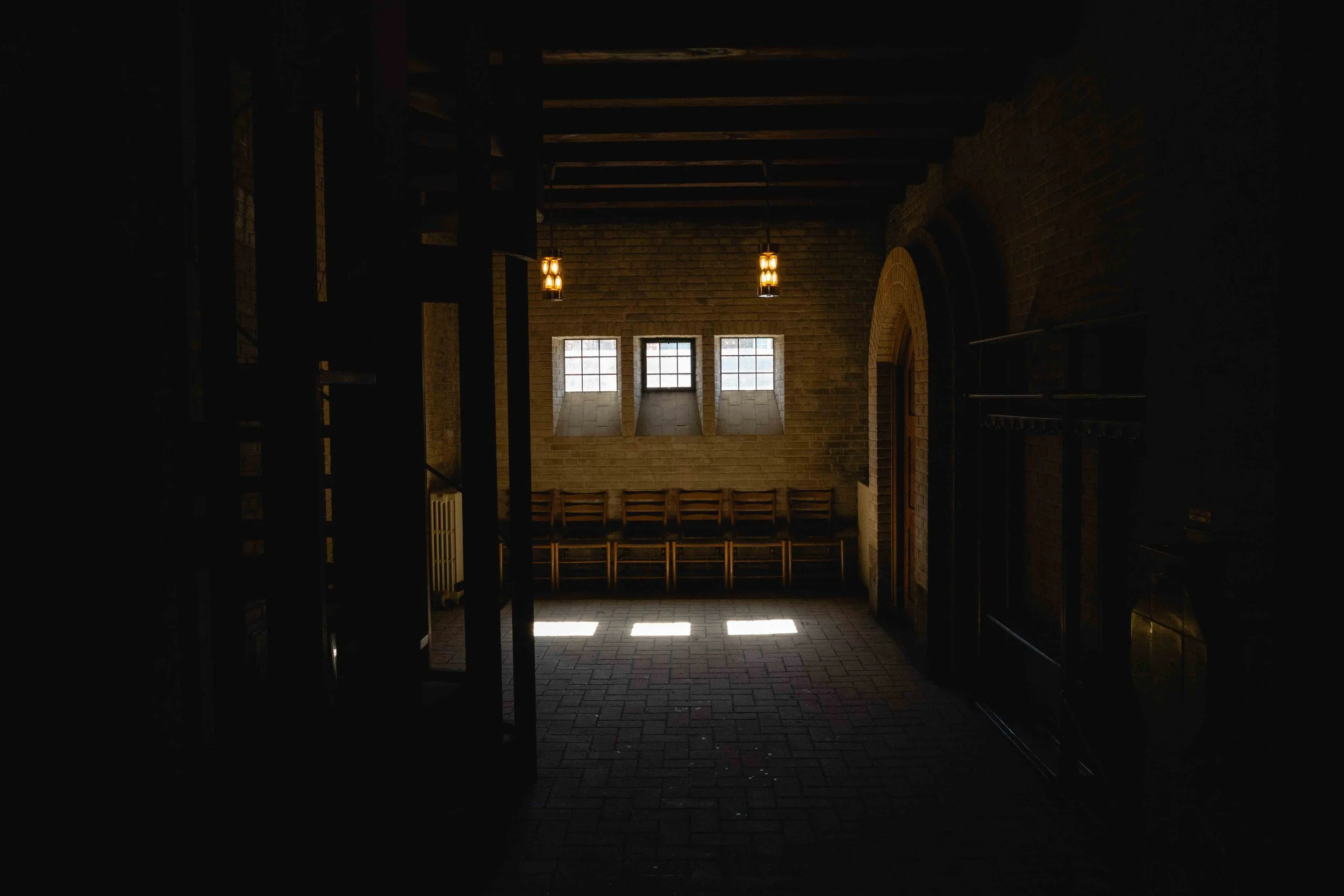
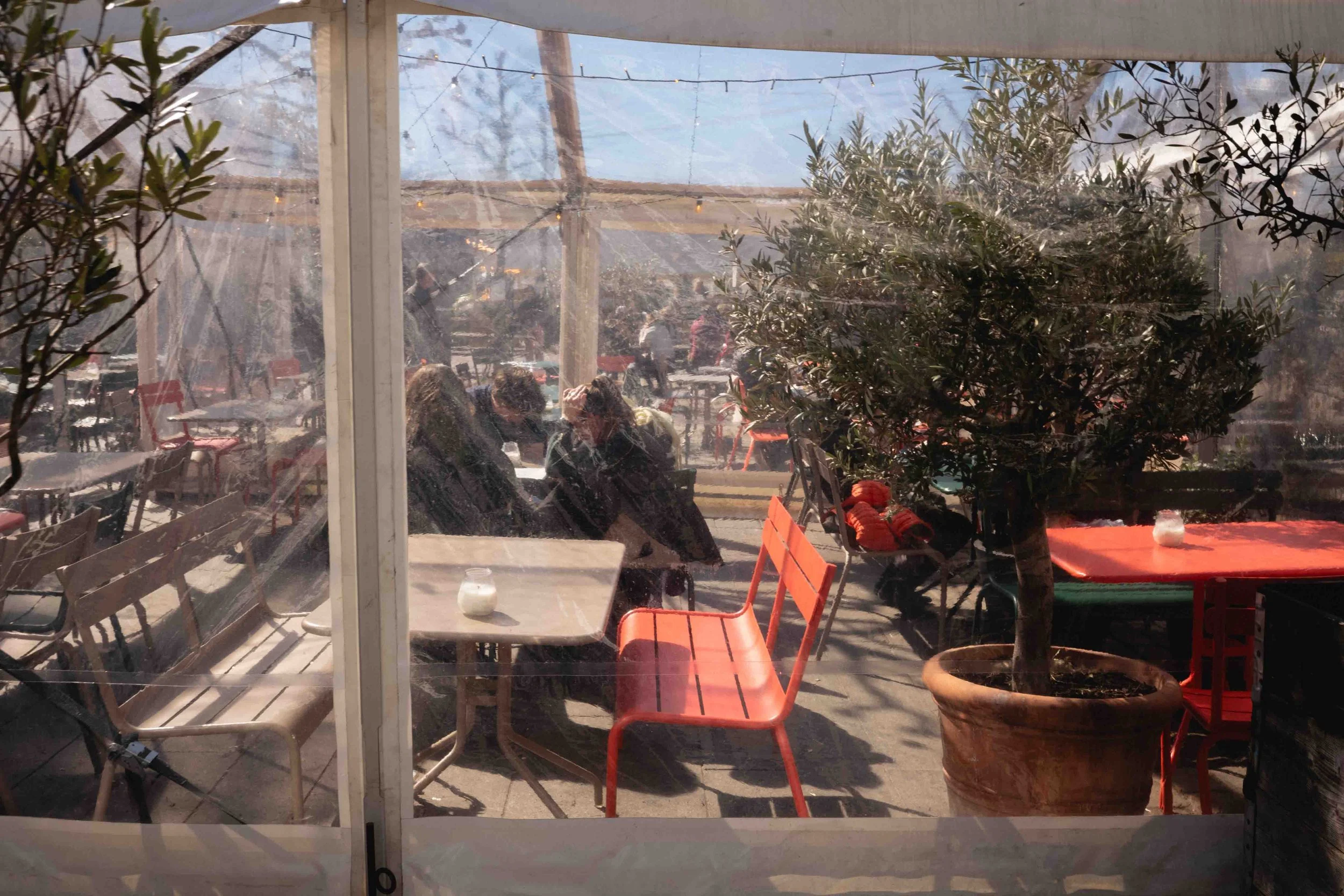
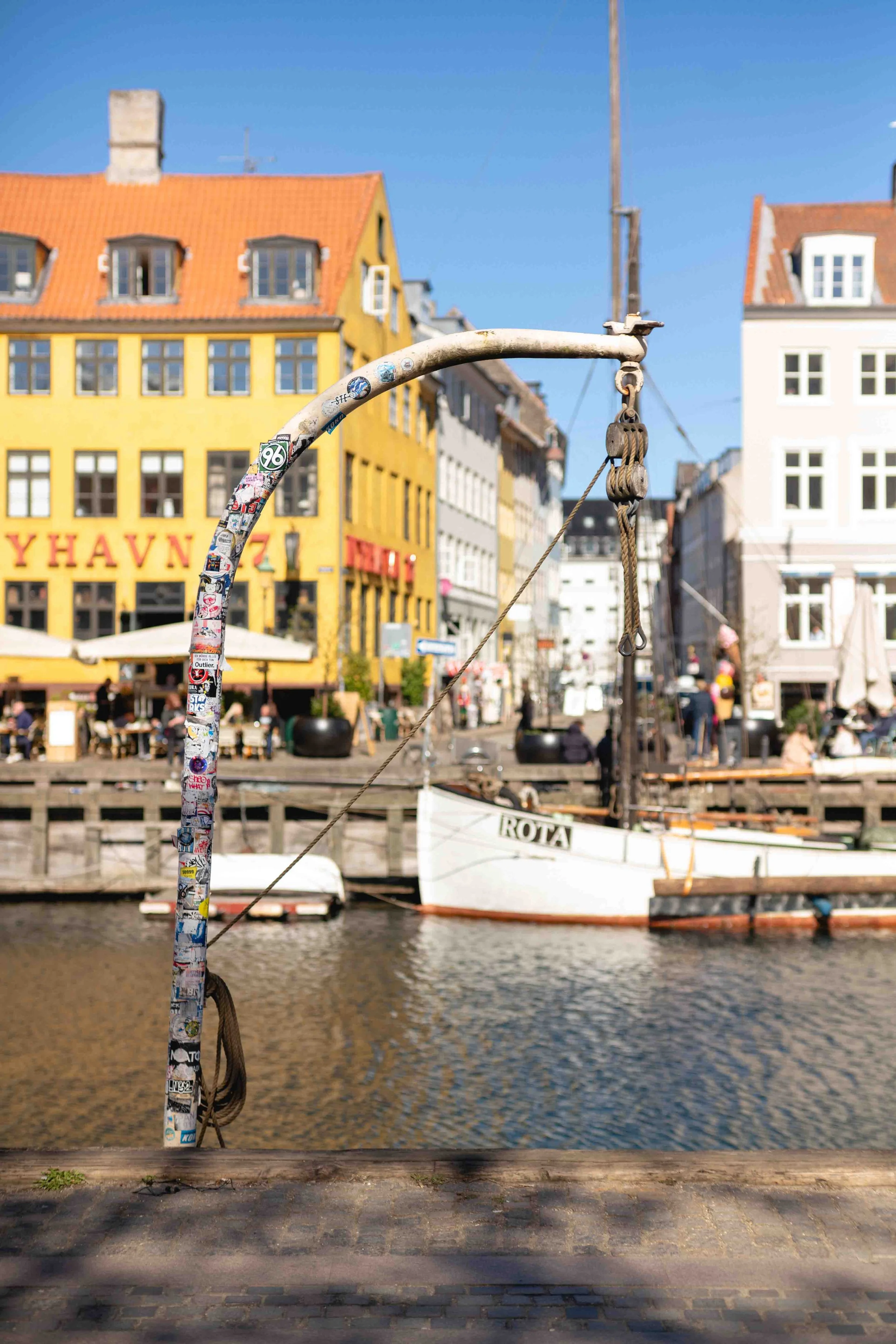
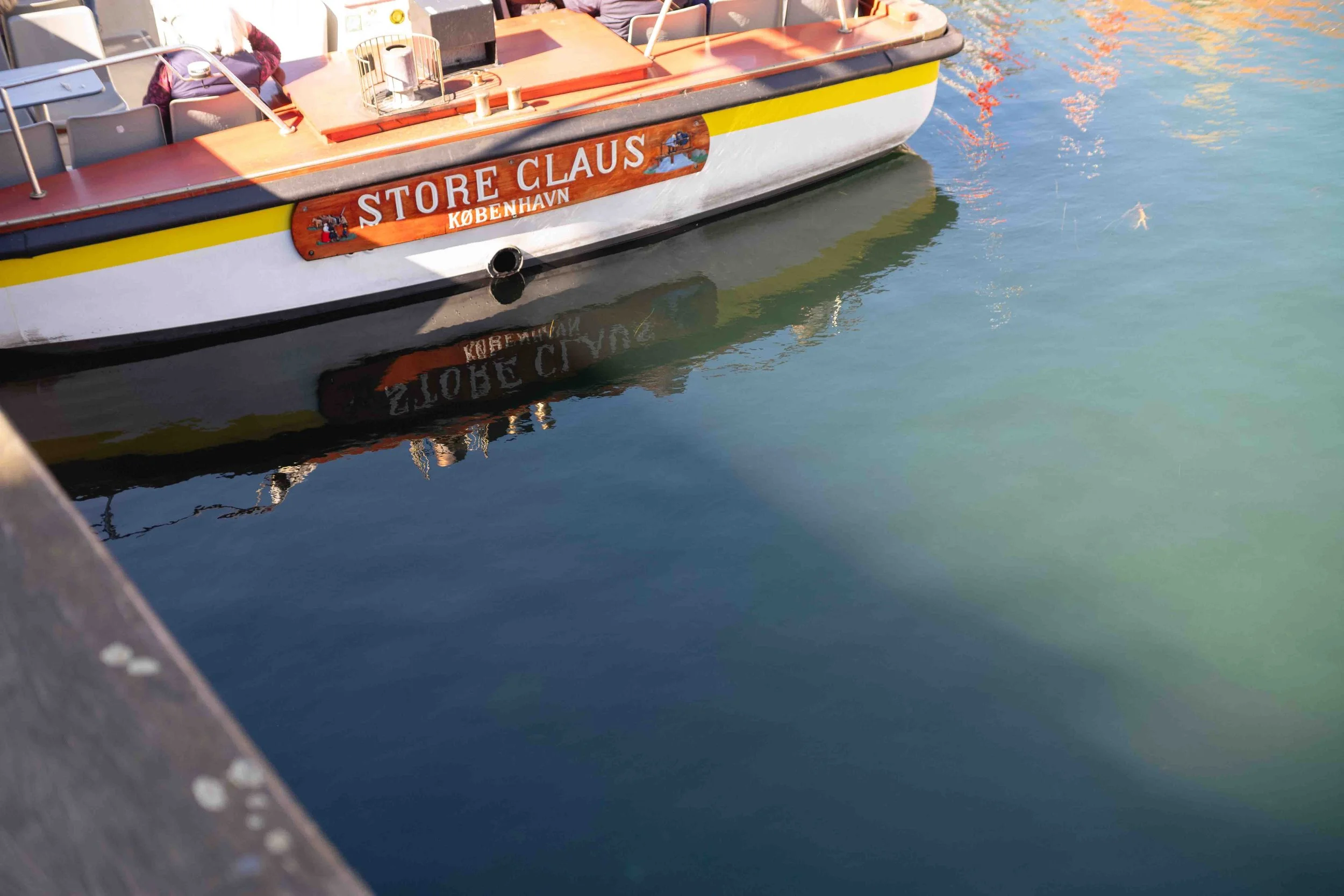
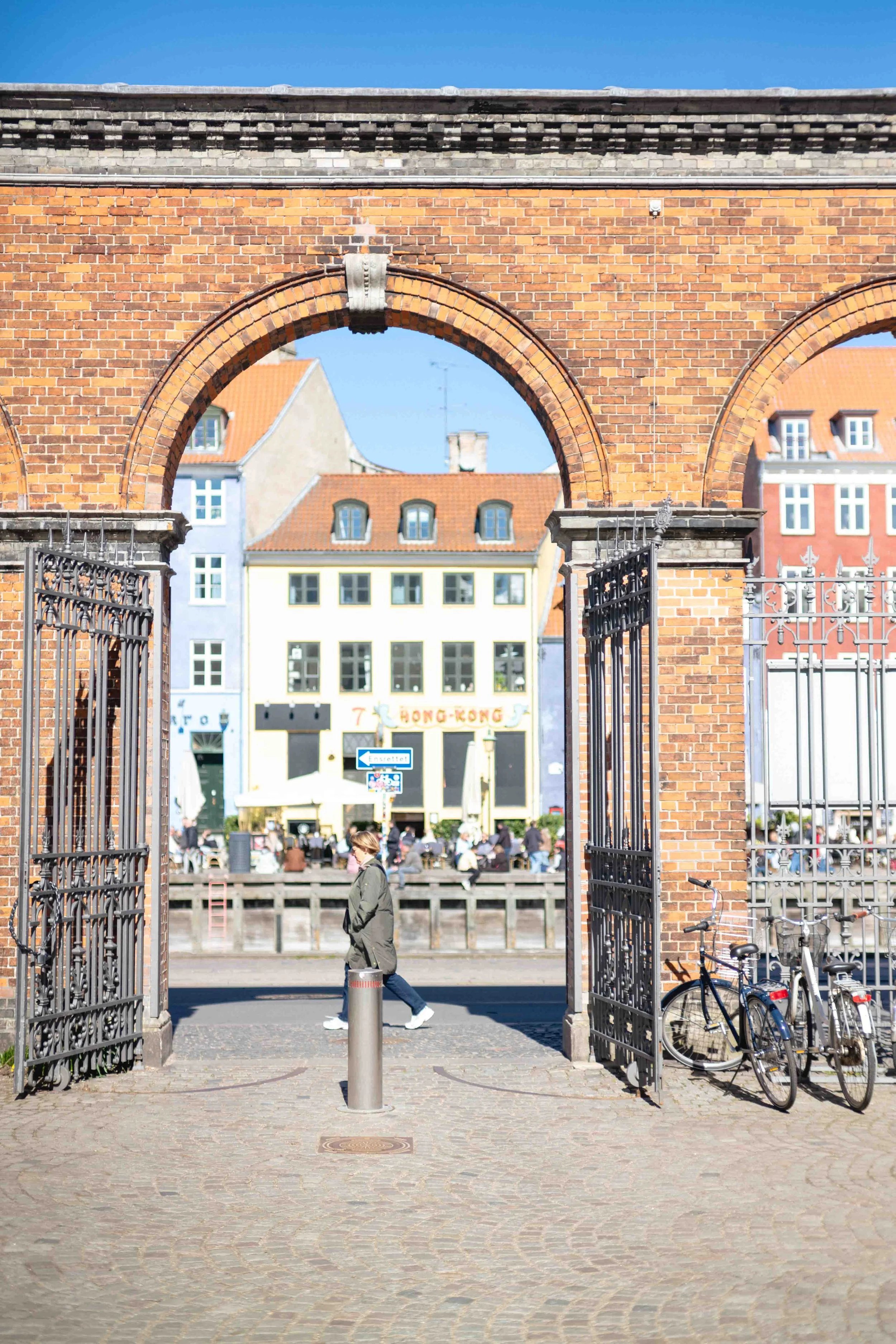
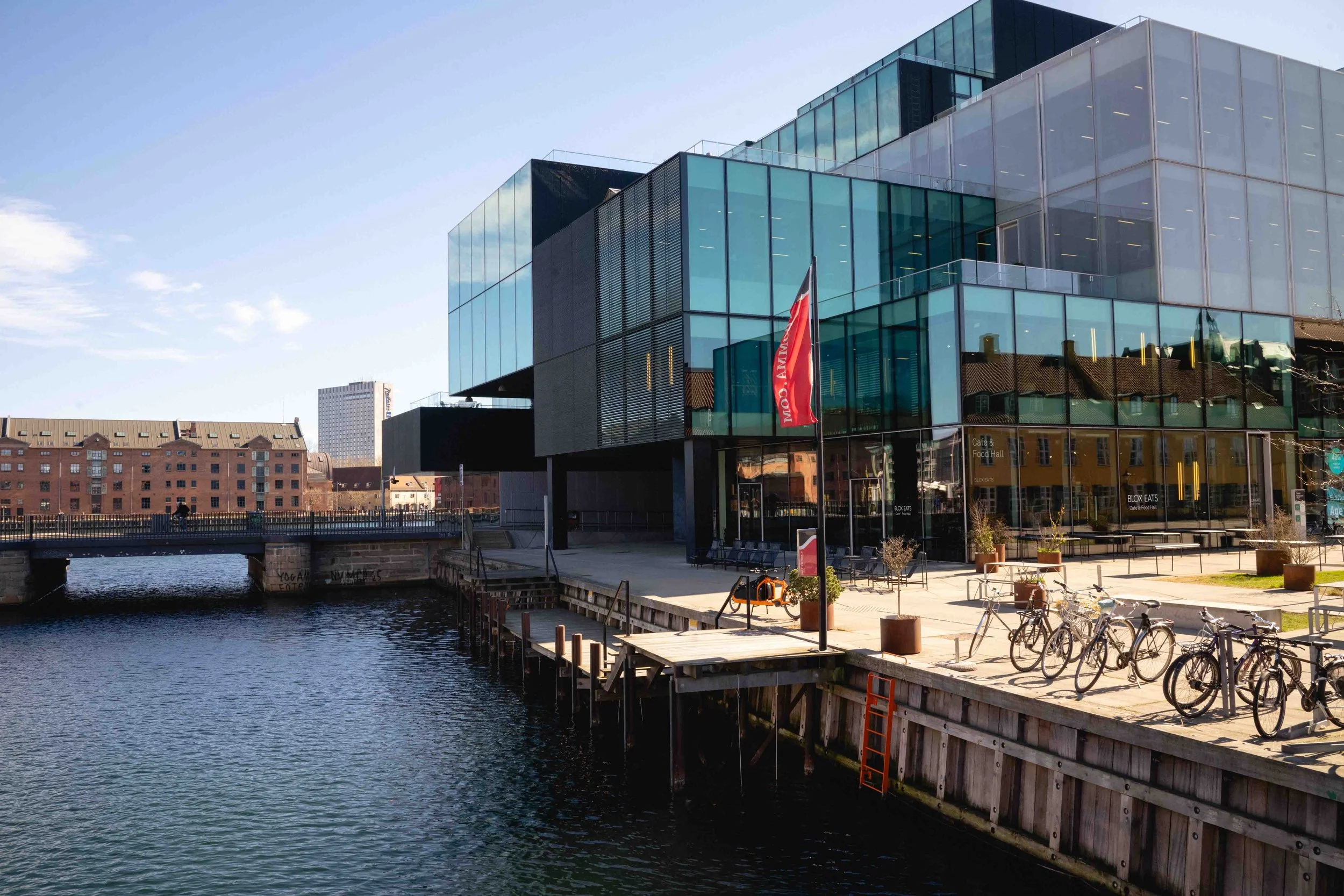
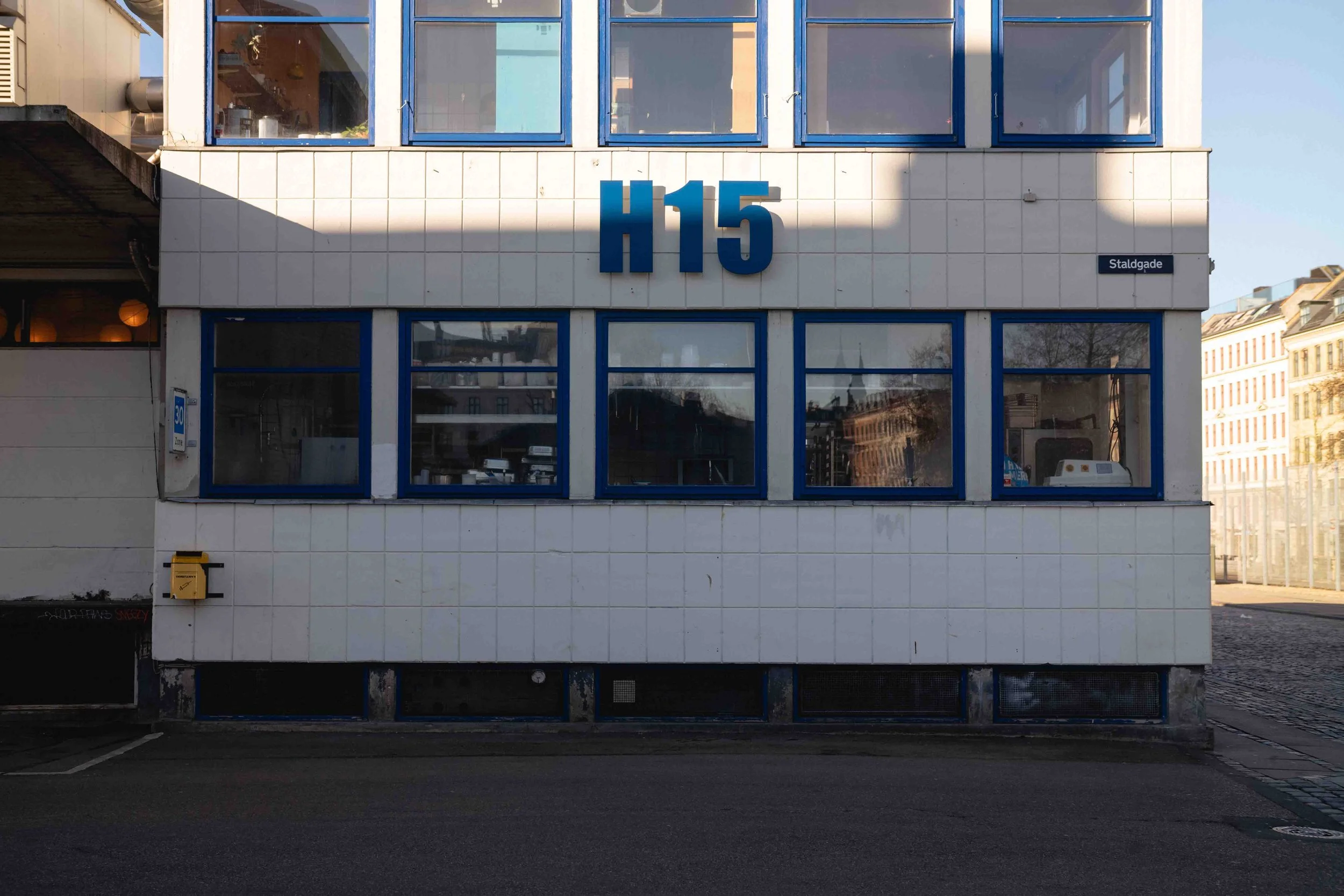
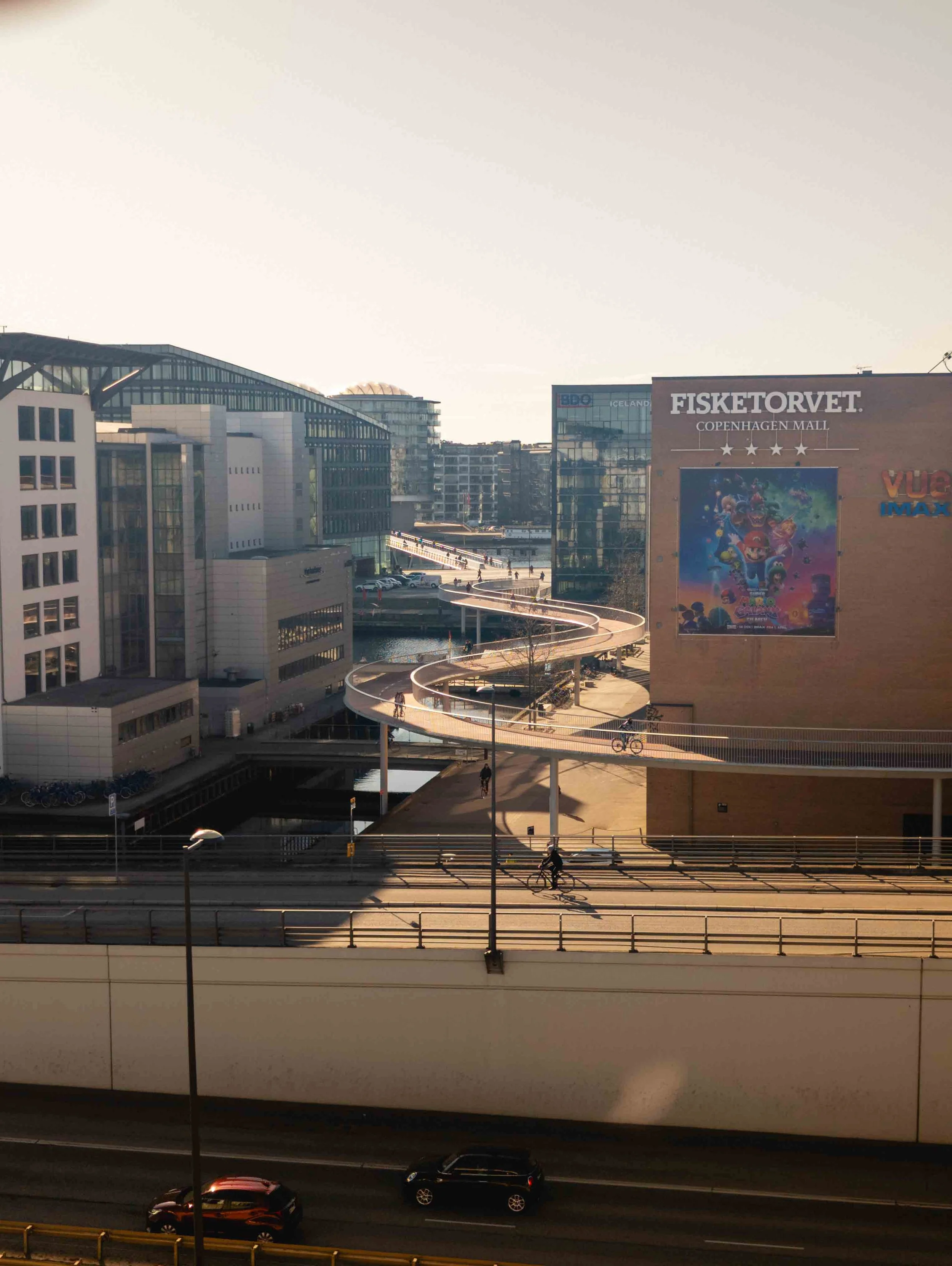
Day two was all about the evolution of the city. I kicked off in the Meatpacking District (Kødbyen), where the white industrial buildings and teal window frames offer a stark, minimalist aesthetic. The route then became a "greatest hits" of modern geometry: the jagged, brutalist balconies of the Kaktus Towers, the iconic orange-bottomed Cykelslangen (The Bicycle Snake) path. I rounded out the trip back in Christianshavn, climbing the corkscrew spire of the Church of Our Saviour for a 360-degree view, followed by a walk through the raw, DIY textures of Freetown Christiania, and finally the historic, rhythmic lines of the Nyboder district.
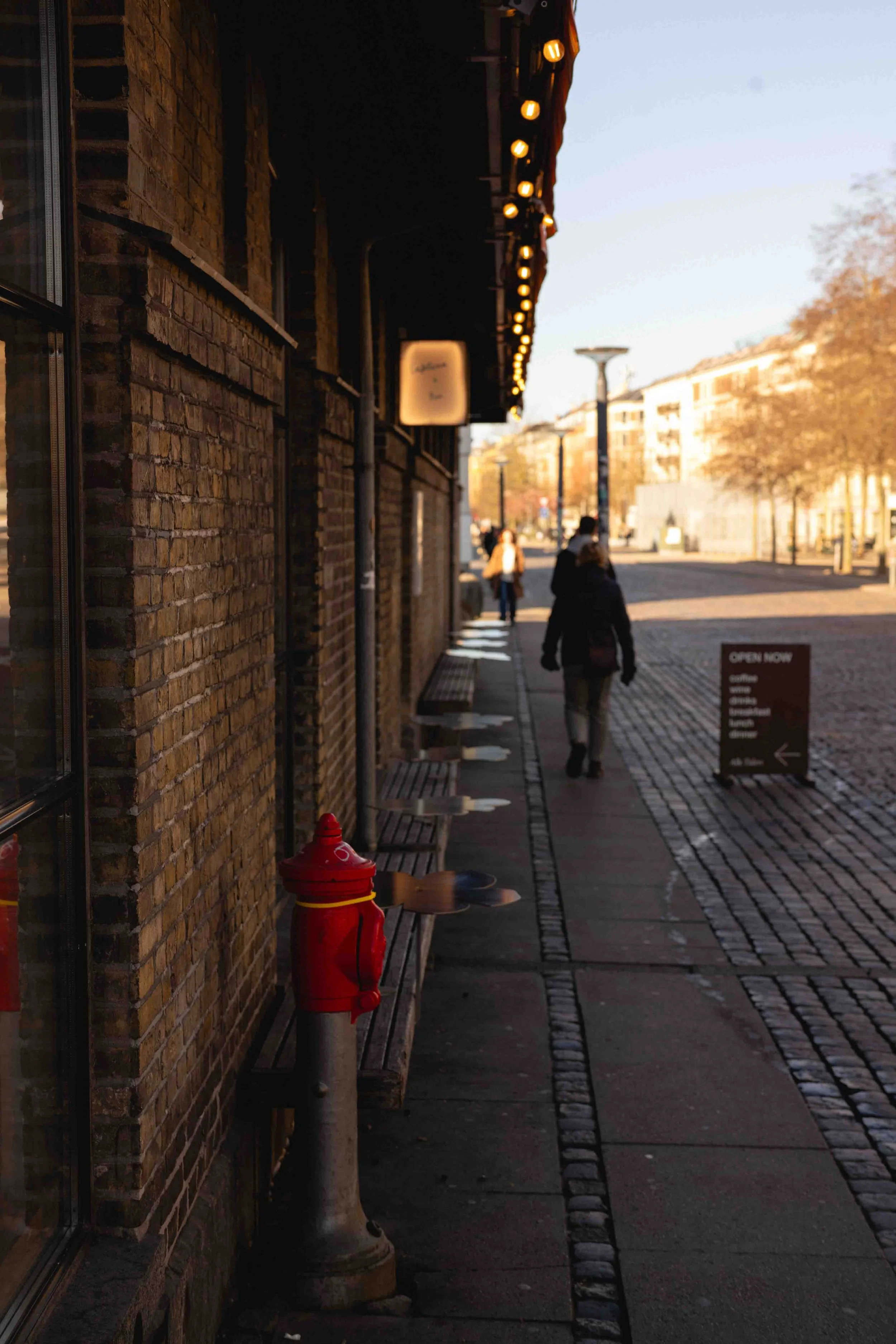
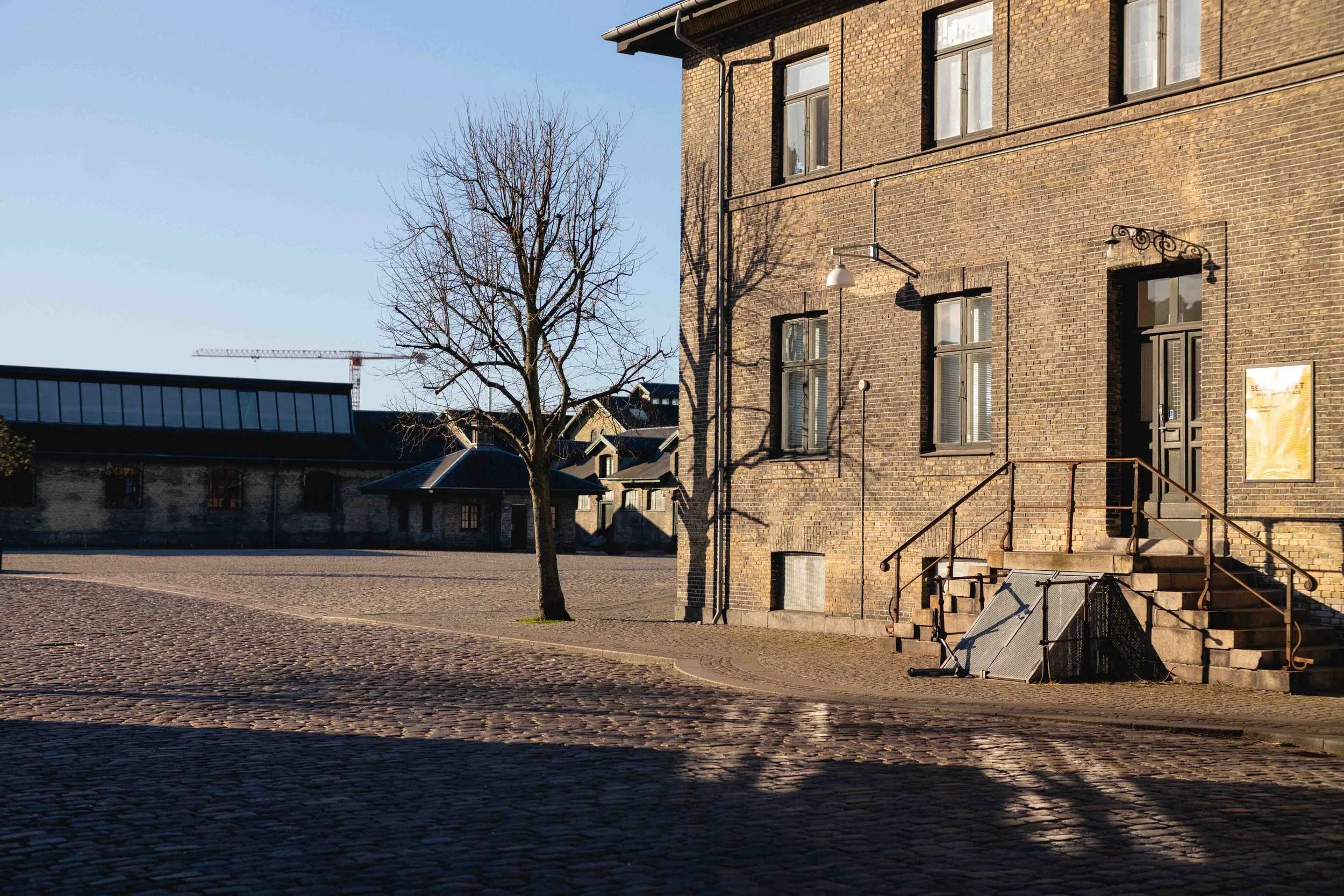
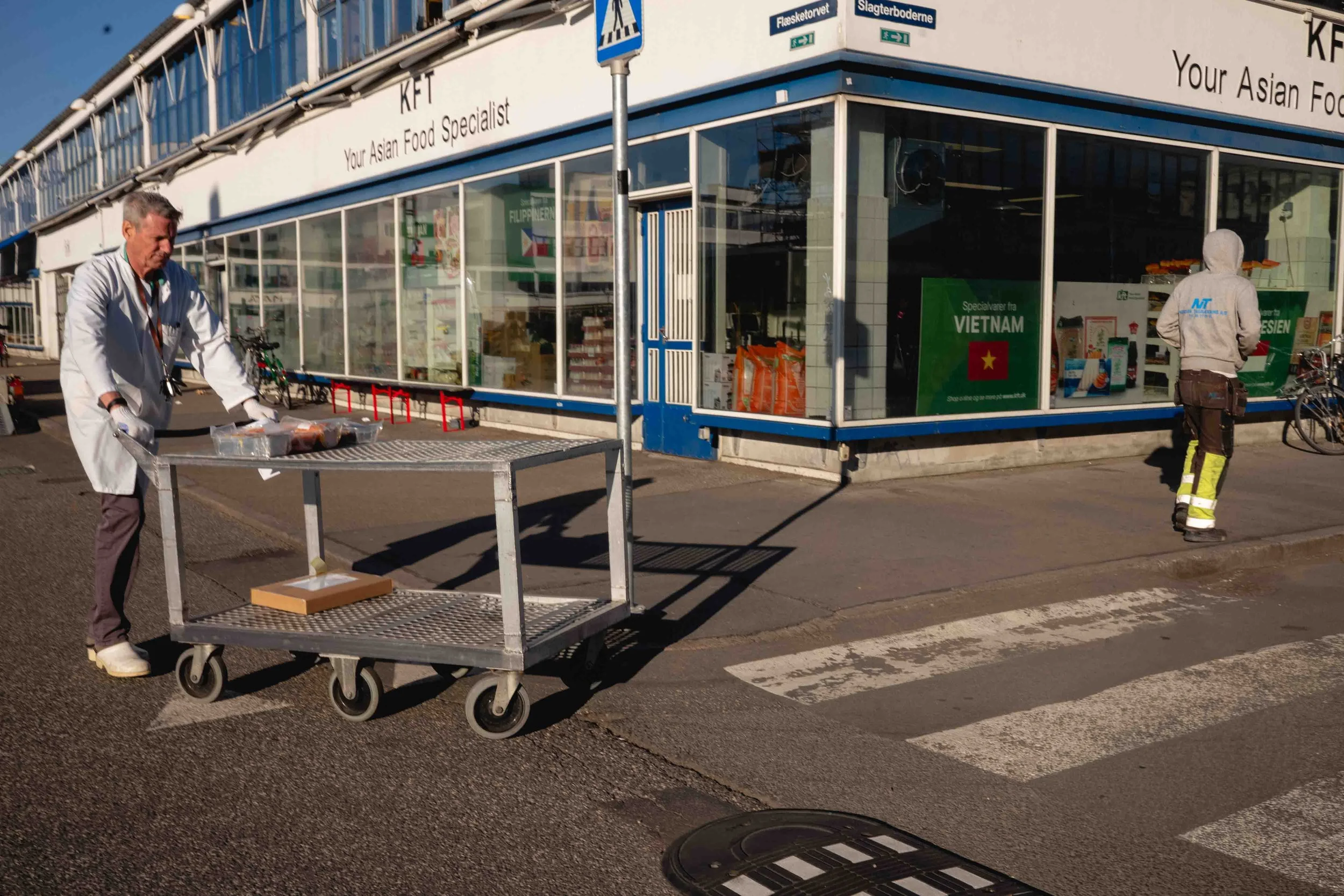
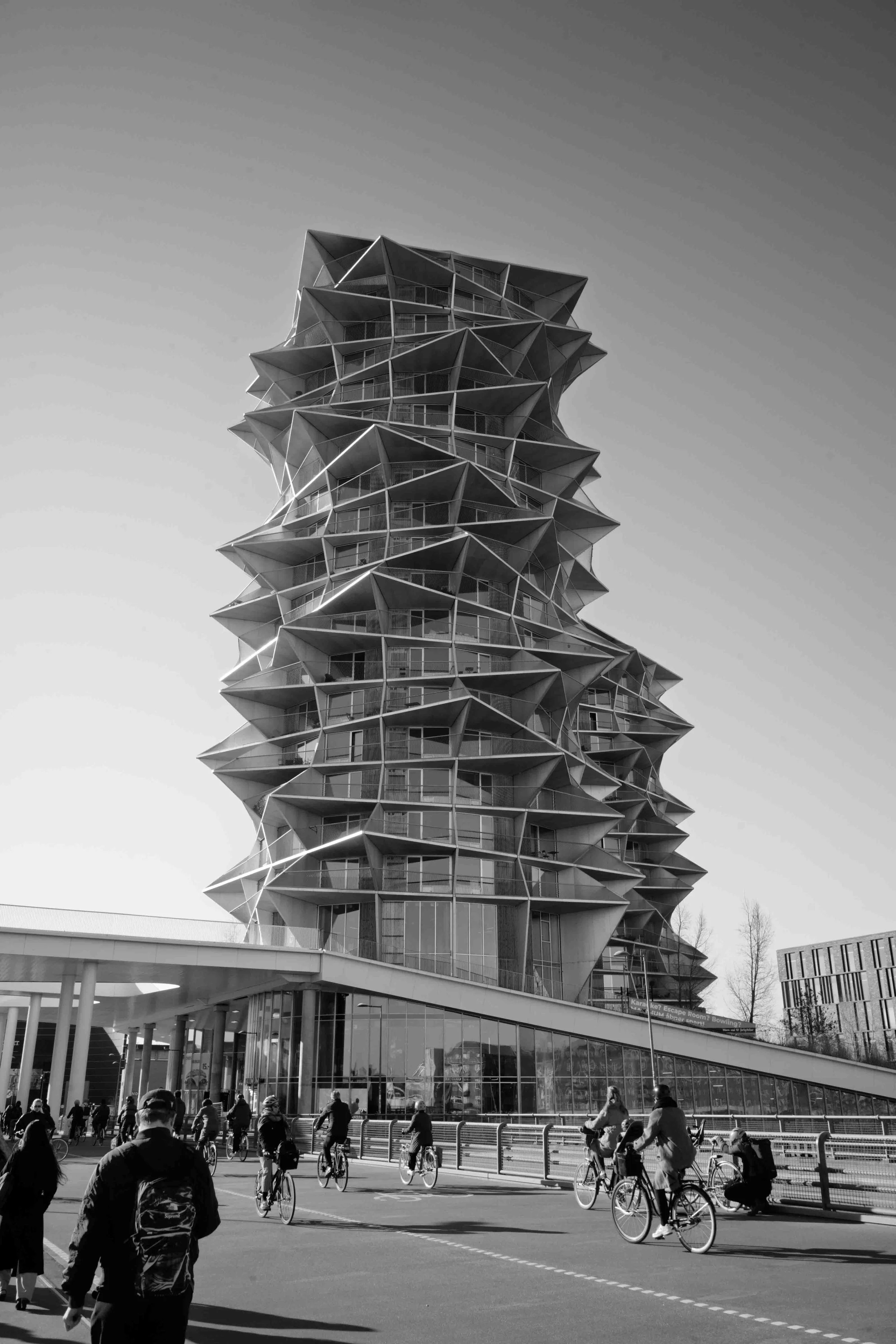
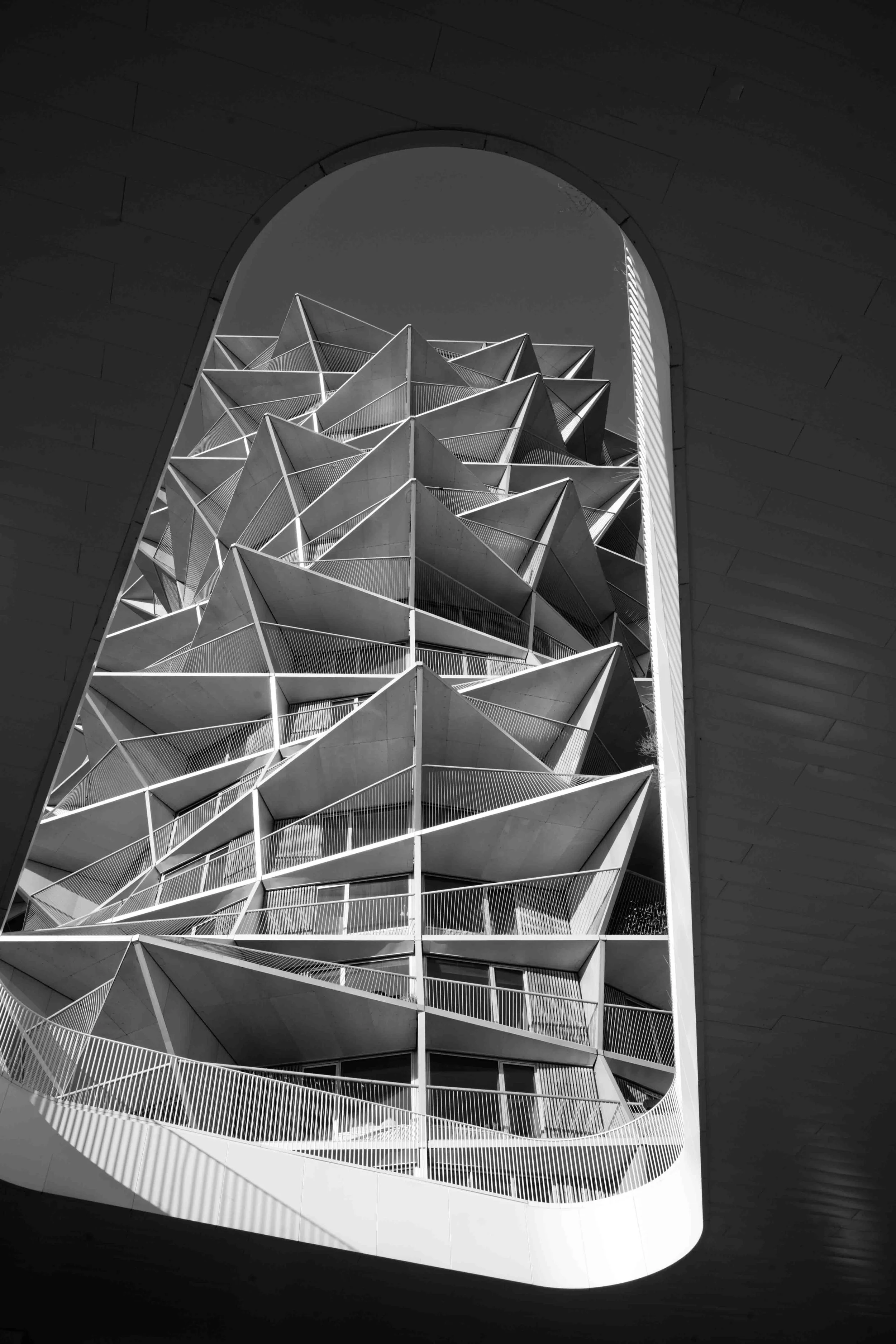
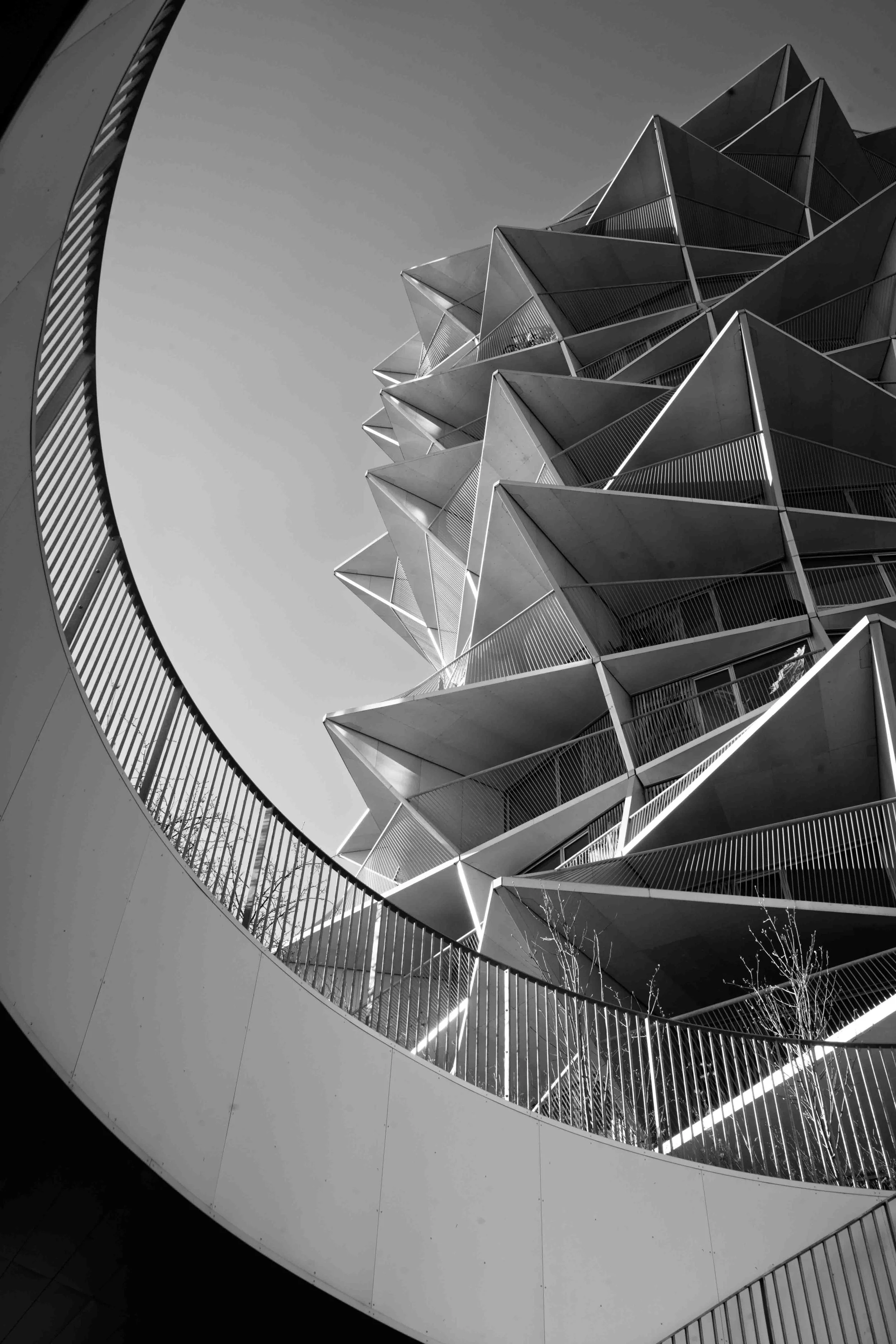
Before I went, everyone warned me about the cost. "Bring a second mortgage for a coffee," they said.
Honestly? It’s a myth. While you can spend a fortune in Michelin-starred spots, I found that if you eat like a local—hitting up spots like Hanoi Alley or grabbing a smørrebrød from a local deli—it’s no more expensive than a weekend in London or New York. In fact, because the city is so walkable and the public transport is flawless, I spent far less on "getting around" than I do on my daily three-hour commute back home. Copenhagen doesn't just ask to be photographed; it demands it. It’s a city that values the "small things"—and as photographers, that’s exactly what we’re looking for.
Want to see the full high-res set? Check out my latest prints in the shop or follow the journey on Instagram @frommylensphoto.
Until next time, keep snapping.
First Roll Loading Kodak Vision3 250D — and what Soho handed back
I've been shooting predominantly black and white for a period of time now of the 35mm film cameras. Years, really. Colour always felt like it needed a reason — a justification for the extra visual information it brings to a frame. Black and white strips a scene back to its essentials. Tone, texture, shadow, geometry. It's a clean way to work.
So loading up a roll of Kodak Vision3 250D AHU into the Nikon F80 felt like a deliberate step off familiar ground. This is a motion picture film stock — designed originally for cinema use in daylight conditions — and it's been building a serious following among still photographers. I'd read about it, seen other people's results, and kept putting it off. This time I just loaded it and went out.
I've been shooting predominantly black and white for a period of time now of the 35mm film cameras. Years, really. Colour always felt like it needed a reason — a justification for the extra visual information it brings to a frame. Black and white strips a scene back to its essentials. Tone, texture, shadow, geometry. It's a clean way to work.
So loading up a roll of Kodak Vision3 250D AHU into the Nikon F80 felt like a deliberate step off familiar ground. This is a motion picture film stock — designed originally for cinema use in daylight conditions — and it's been building a serious following among still photographers. I'd read about it, seen other people's results, and kept putting it off. This time I just loaded it and went out.
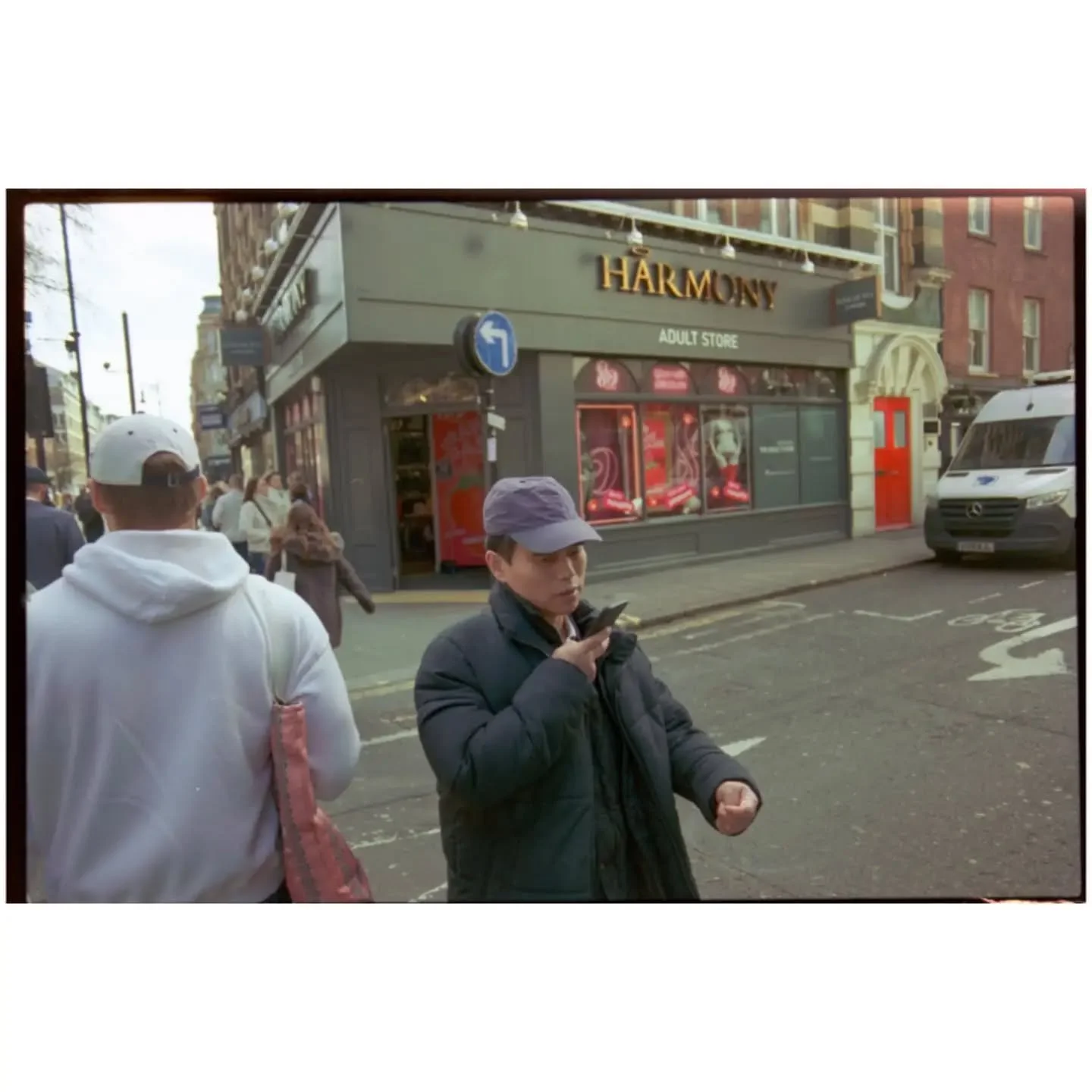
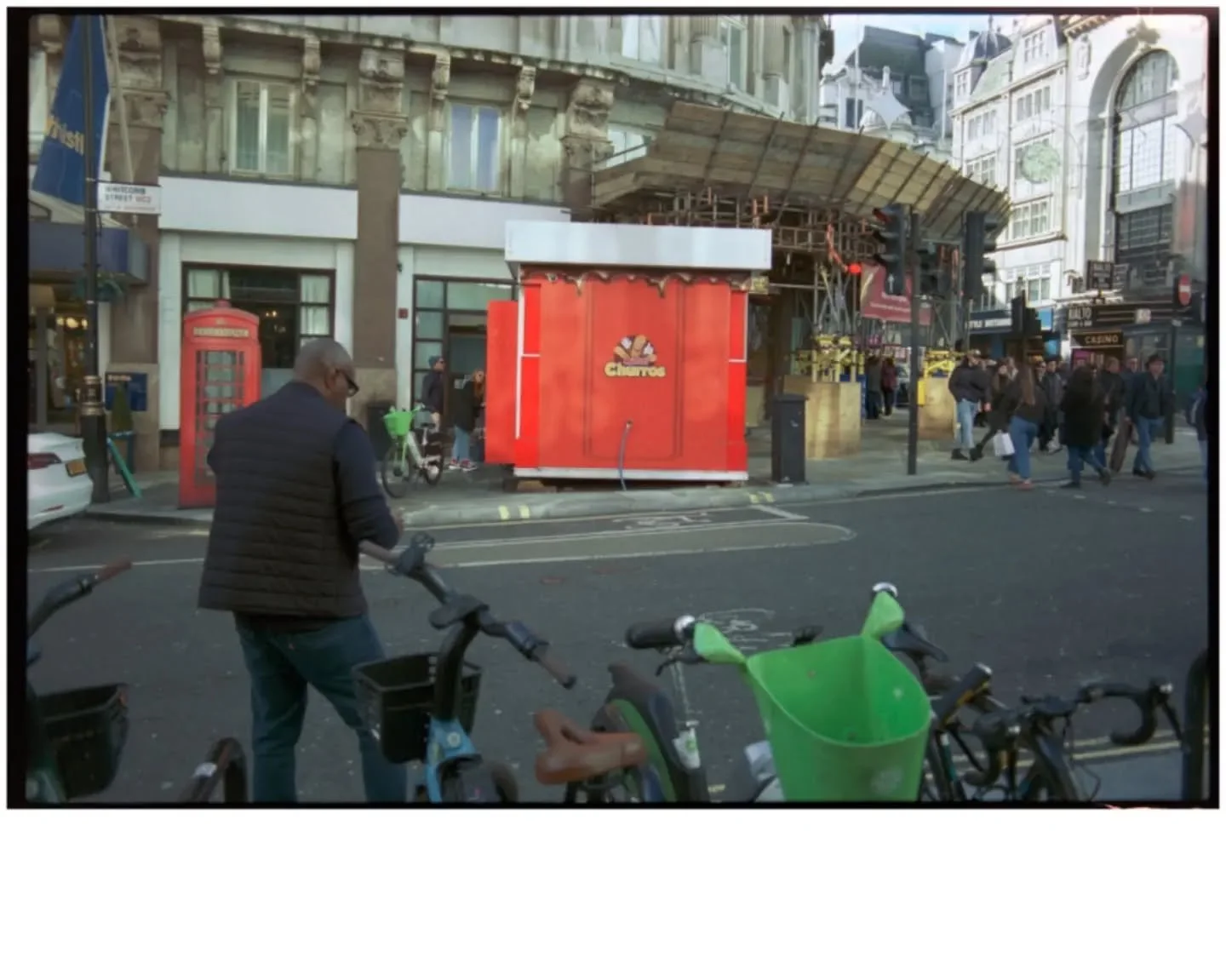
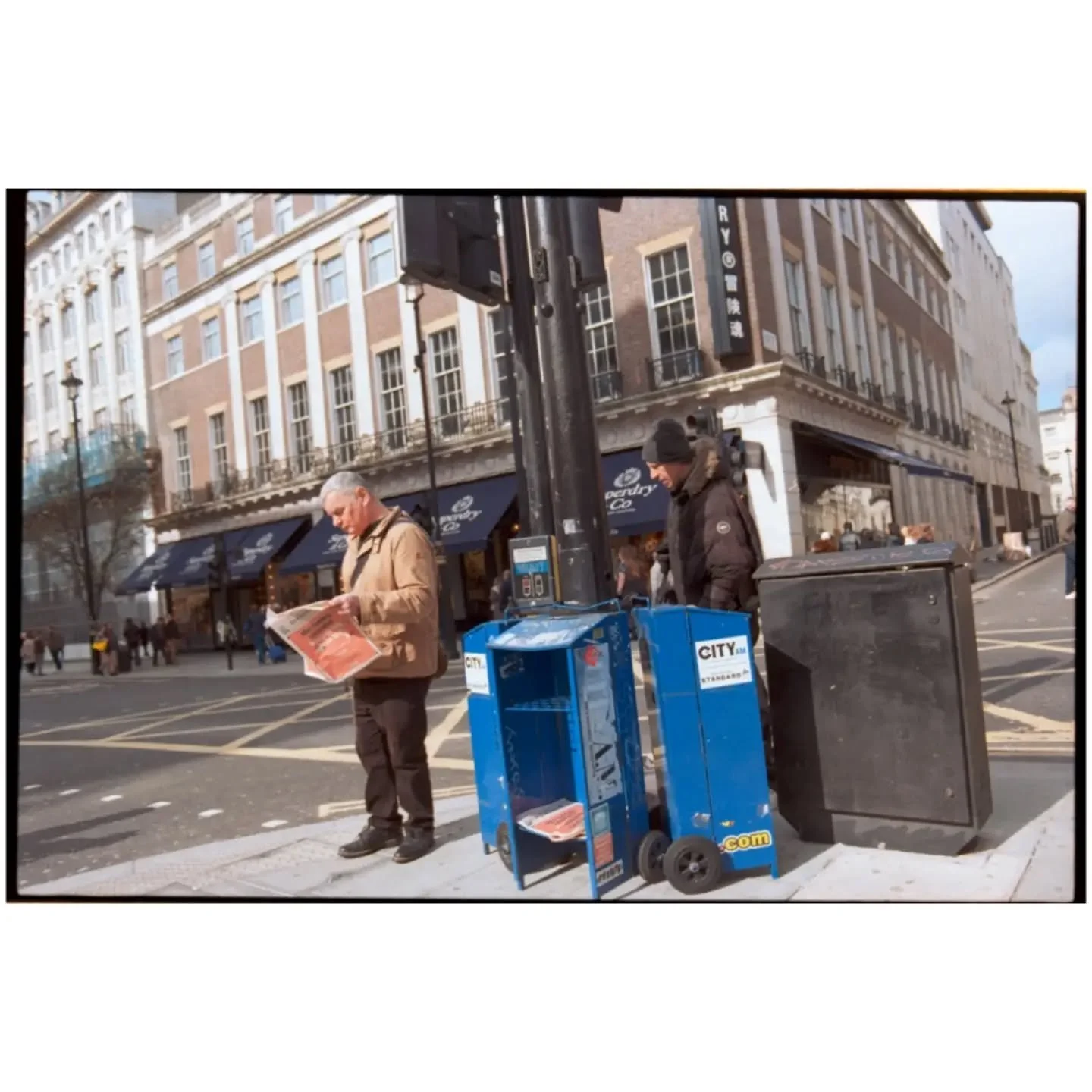
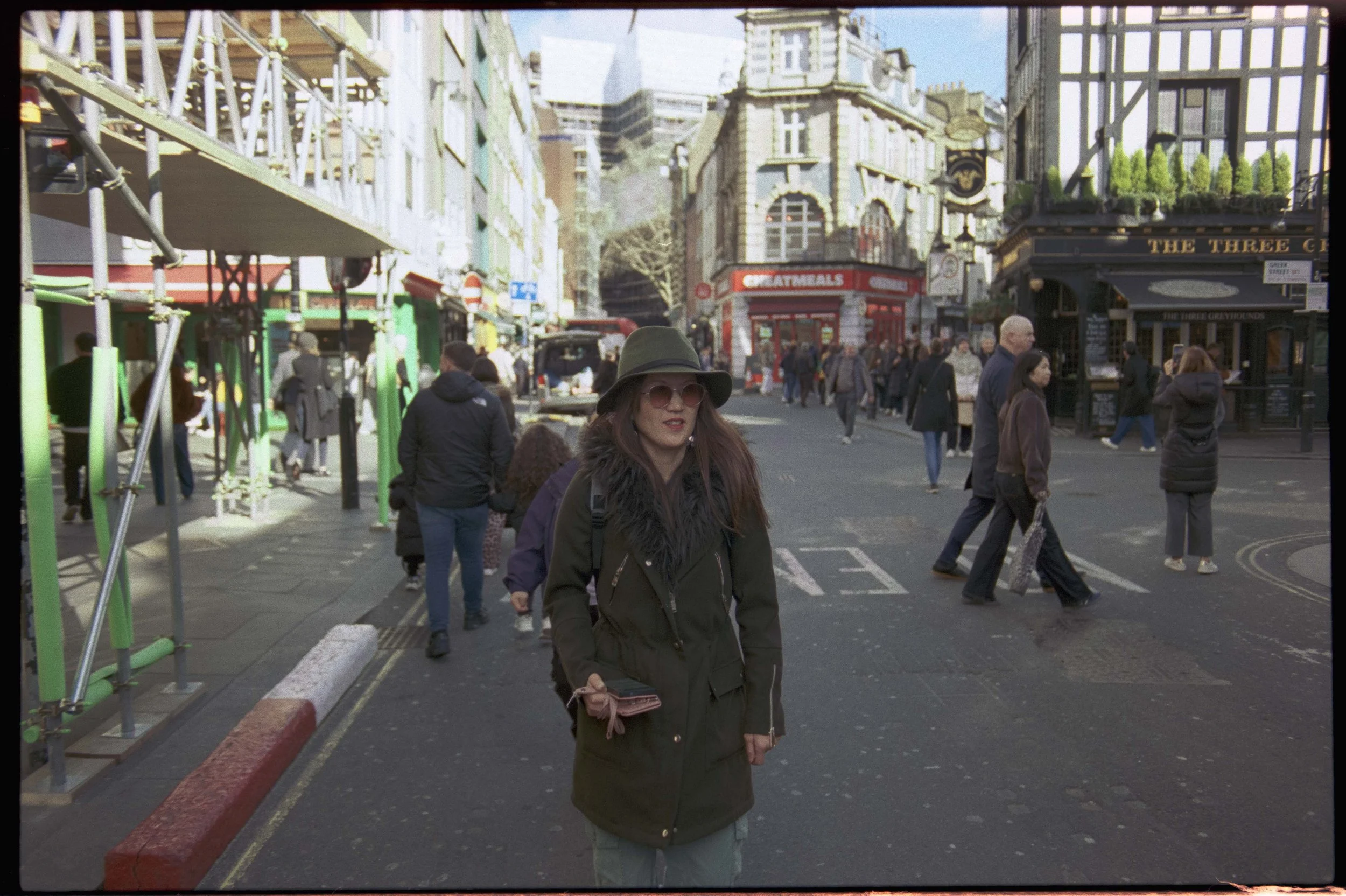
I headed into London a couple of weeks ago for an afternoon with no real plan beyond Soho and the West End. That's usually how the best days go. No agenda. Just walking, looking, reacting.
"I wasn't prepared for quite how warm it would be. Not warm in the pushed, processed way you can fake digitally — warm in the way afternoon light in London actually looks."
The film
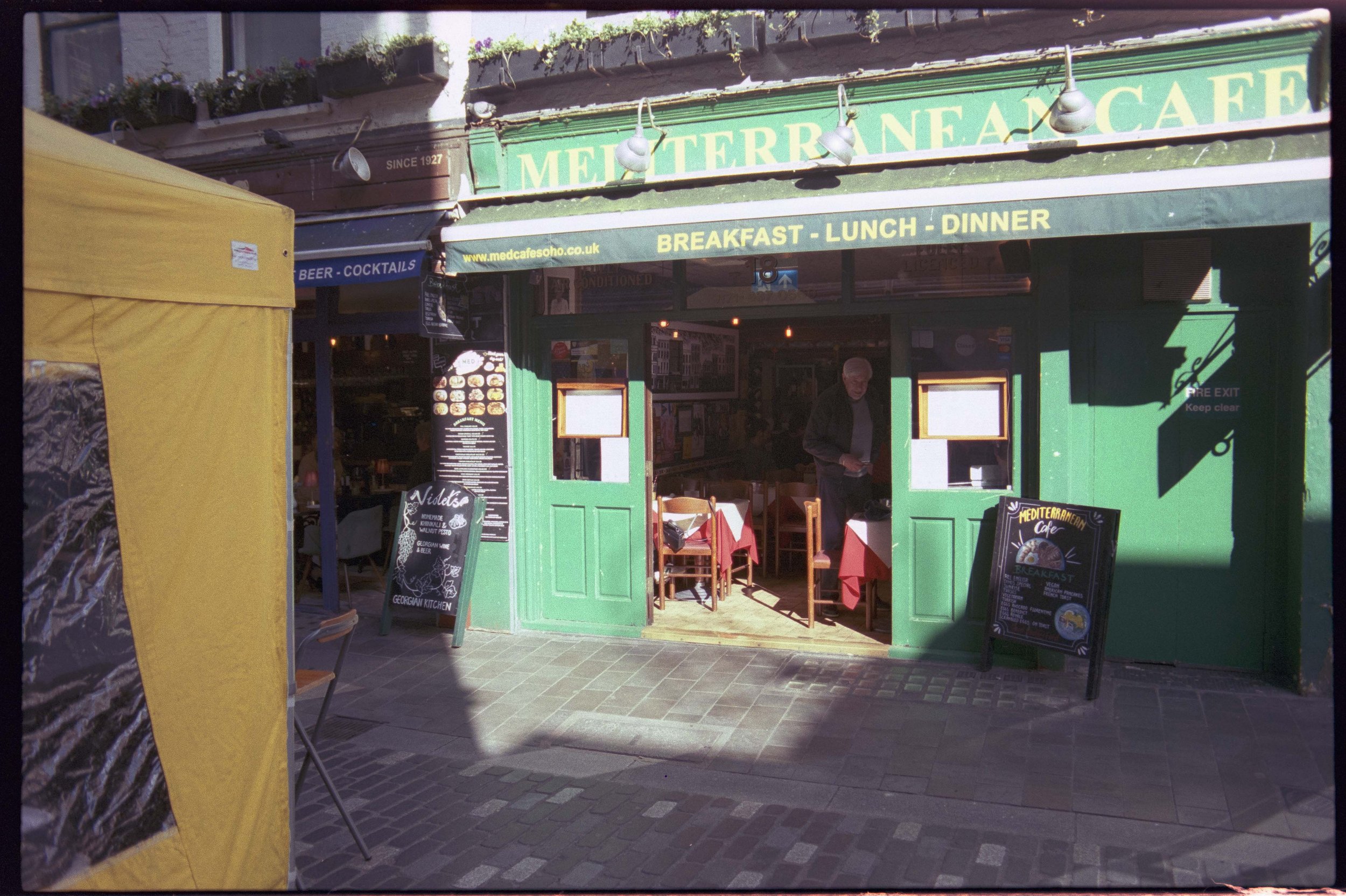
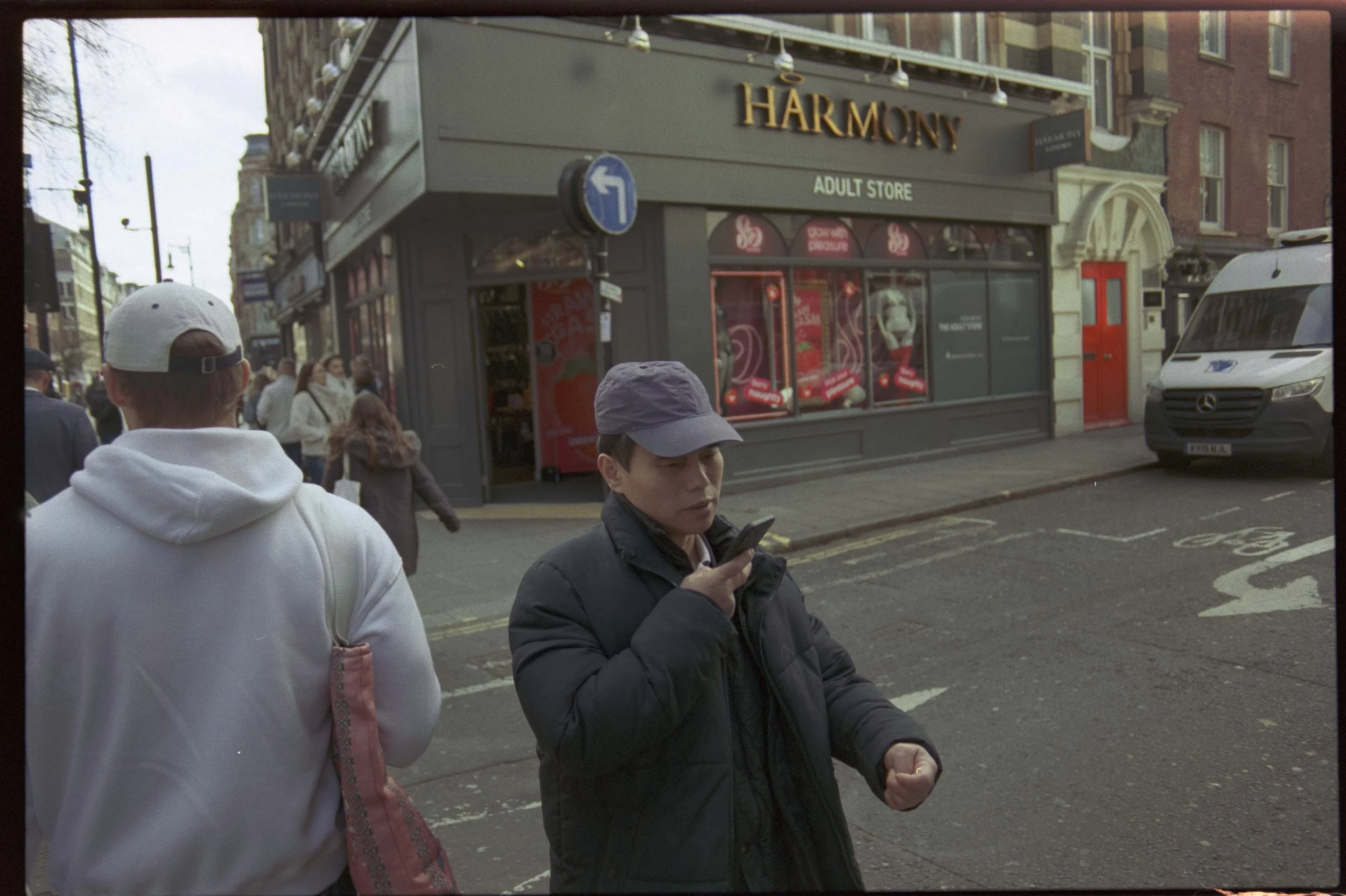
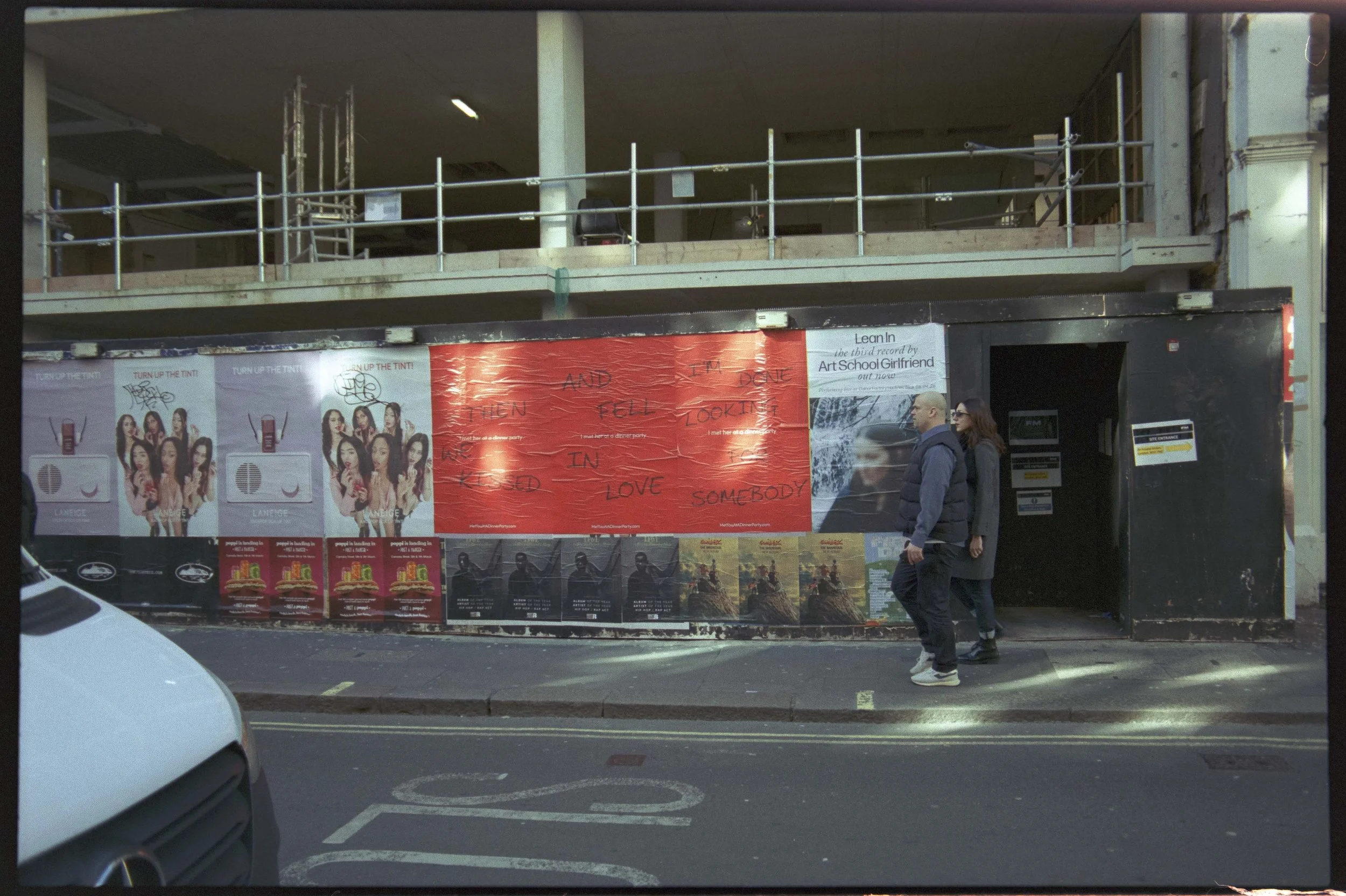
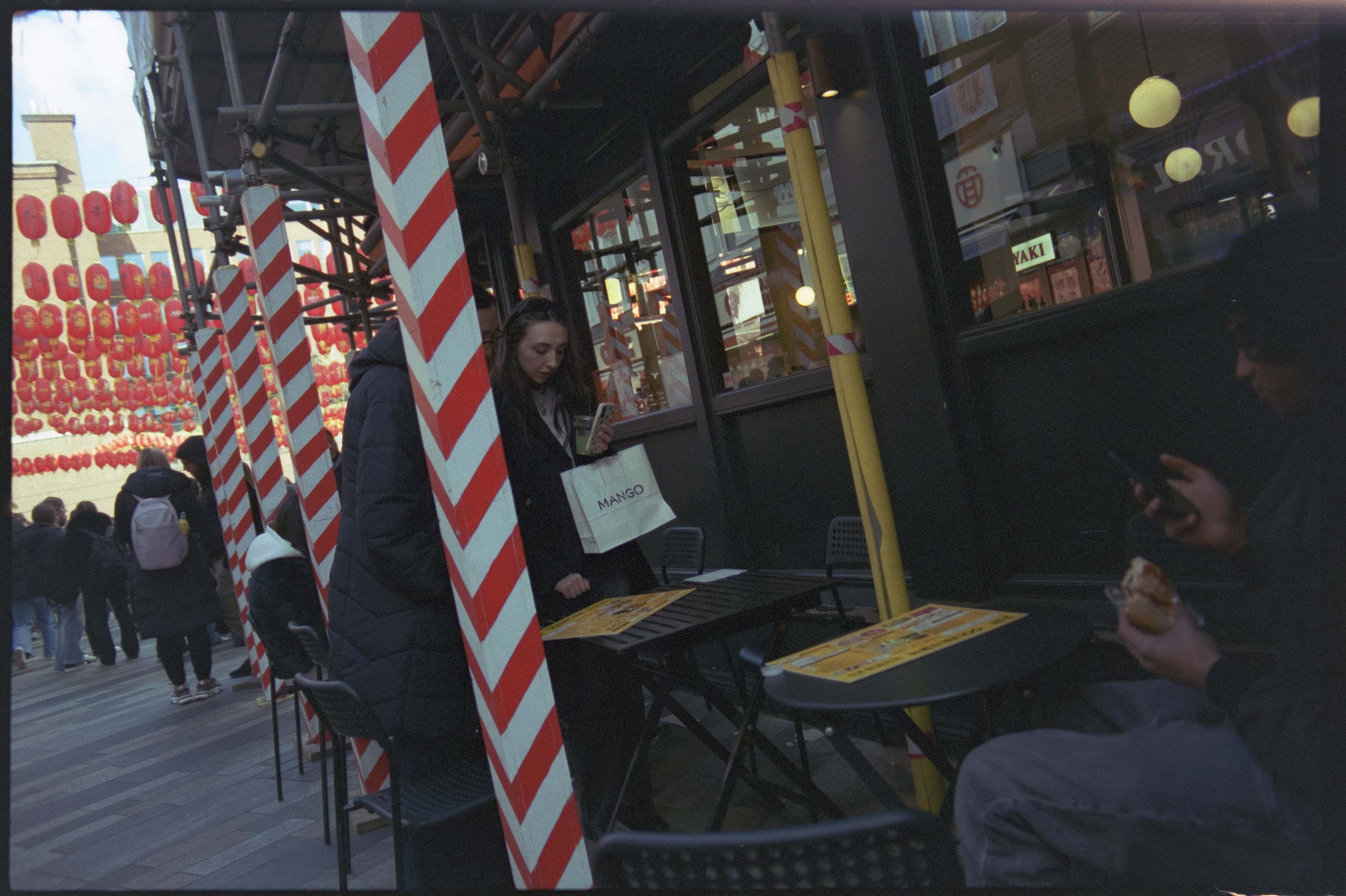
The warmth hit me the moment I got the processed film back. Vision3 250D AHU has a quality to its colour rendition that's difficult to articulate but immediately visible in the frames. It's not the oversaturated, high-contrast look of some colour negative stocks. It's quieter than that. More honest. The way light falls on a green café awning, or a pink coat, or an orange shopfront — it's rendered with a cinematic restraint that suits documentary street work perfectly.
The midtones are where it really earns its reputation. There's a richness in the middle of the tonal range that I haven't found in other stocks I've tried. Skin tones are warm without being ruddy. Shadows hold detail. Highlights — even in the direct afternoon sun I was shooting in — don't blow out catastrophically. For a daylight stock at ISO 250, it handles the contrast range of a busy London street remarkably well.
What Soho gave me
I started on the south end of Soho, working my way north through the afternoon. The Mediterranean Café on Old Compton Street stopped me almost immediately — a place that's been there since 1927, its deep green fascia catching the sun at an angle that Vision3 handled beautifully, the warm gold of the signage glowing against the paint. A man stood in the doorway, just watching the street. I got one frame and kept moving.
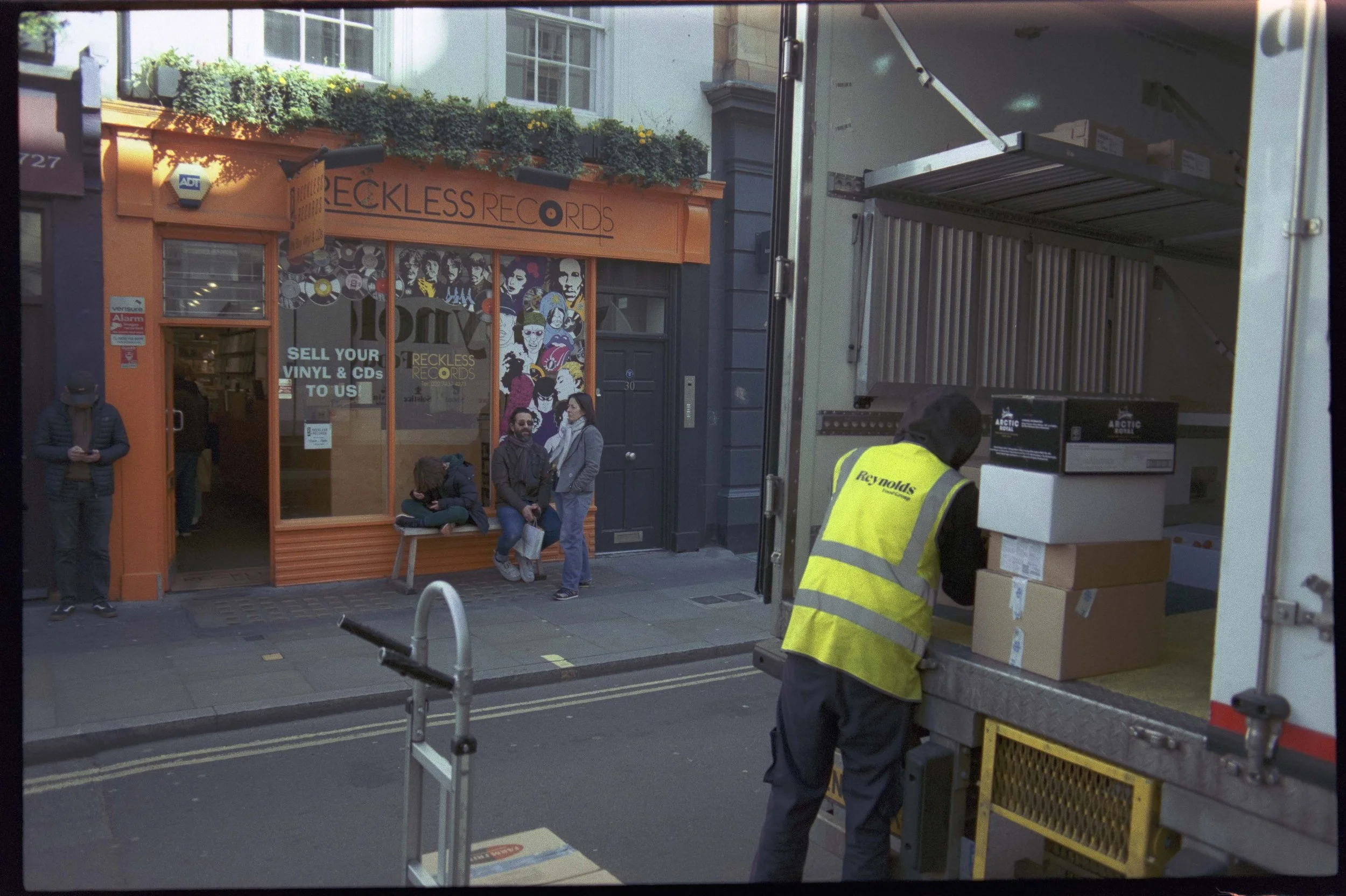
Around the corner, Reckless Records — that vivid orange shopfront with its illustrated window display of musicians — was being interrupted by a delivery driver in a hi-vis yellow jacket unloading boxes from a truck. The contrast of orange and yellow should have been too much. Vision3 made it work. That's one of its qualities: it handles colour density without letting things fight.
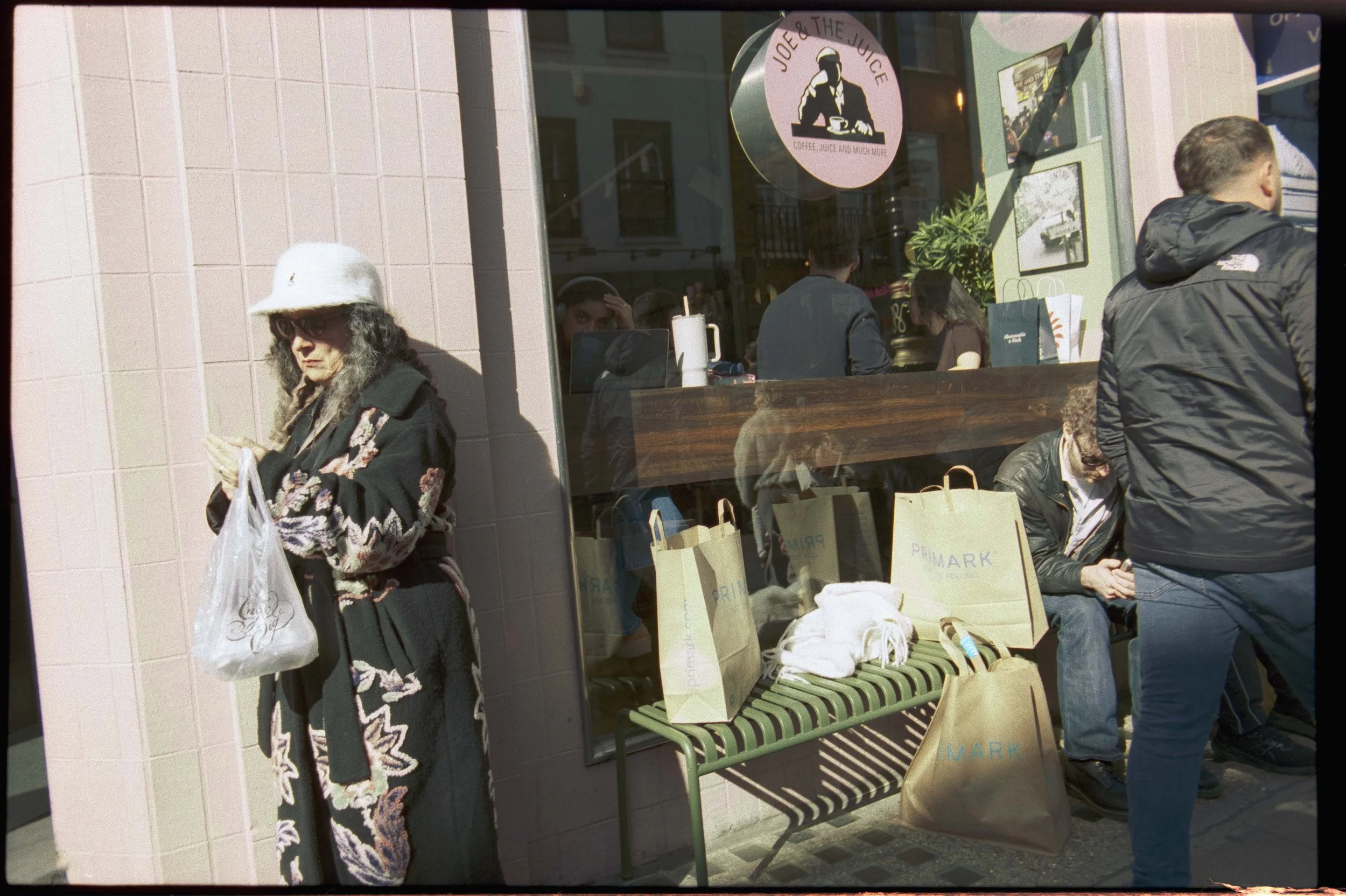
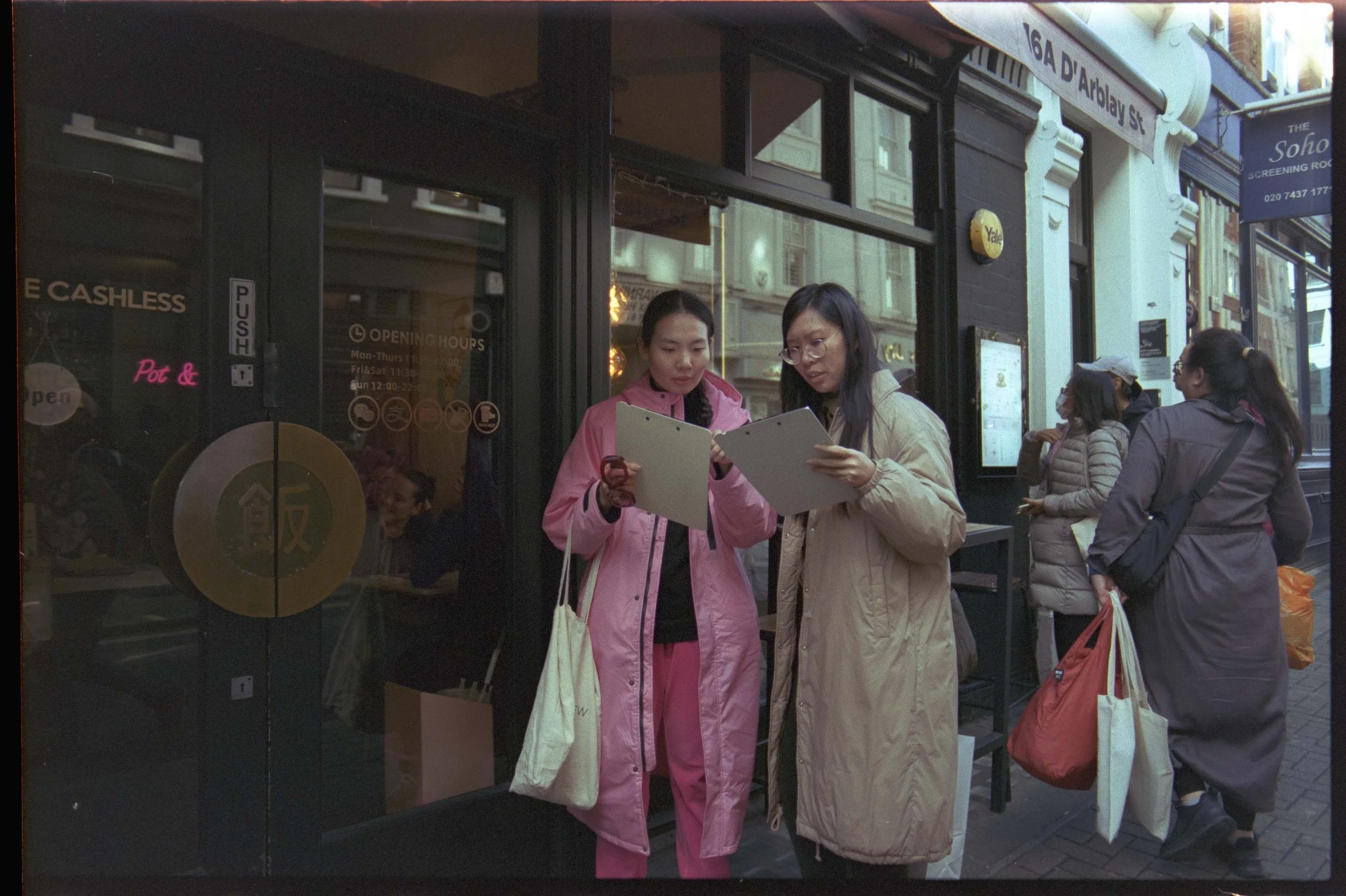
On D'Arblay Street I found two women in matching pink coats, both consulting clipboards outside a restaurant, deep in conversation. The warmth of those coats against the cooler tones of the street behind them is the kind of colour moment that simply doesn't exist in black and white. You don't get to choose that. The stock gives it to you.
"Vision3 250D handles colour density without letting things fight. That's one of its qualities — and Soho tests it constantly."
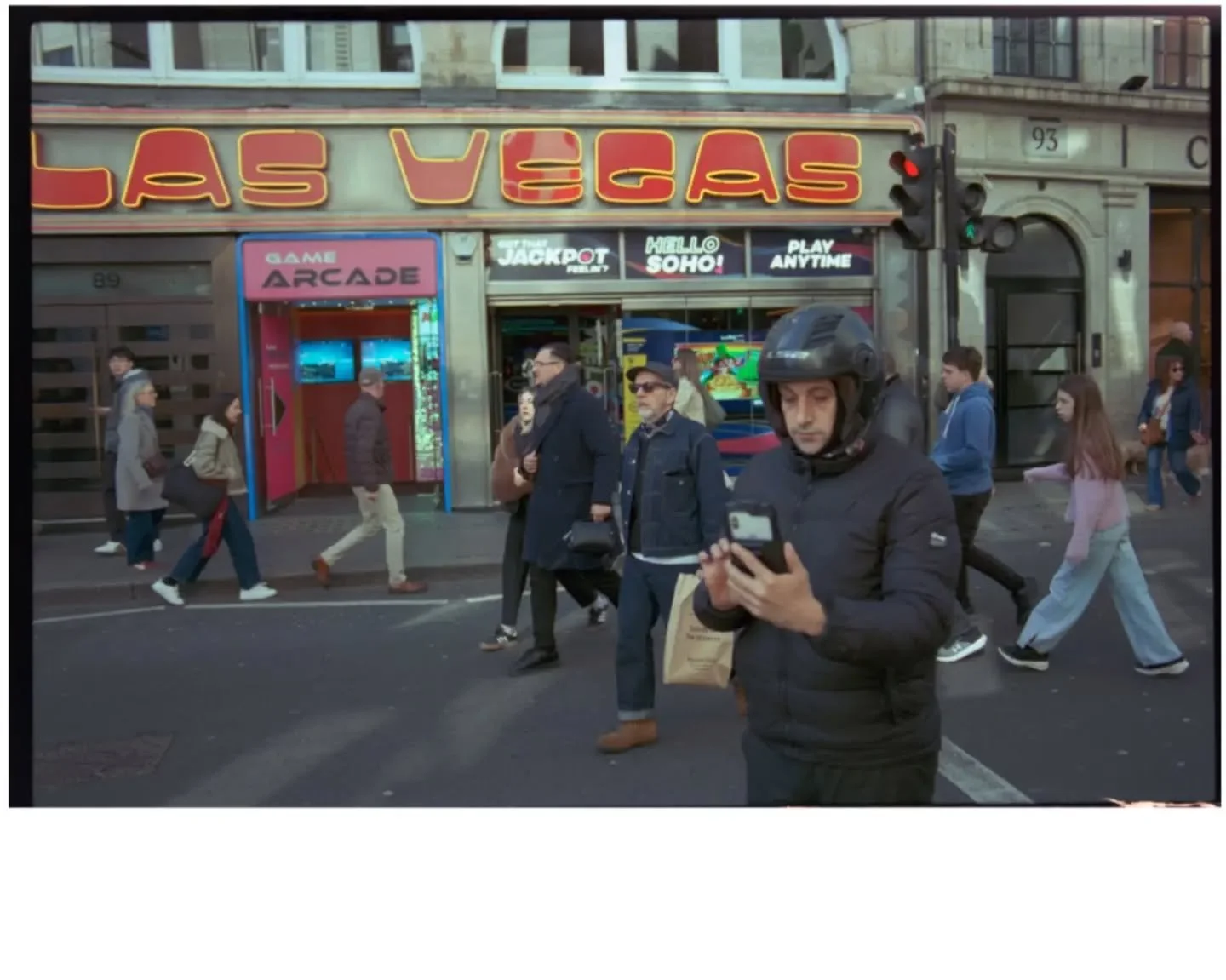
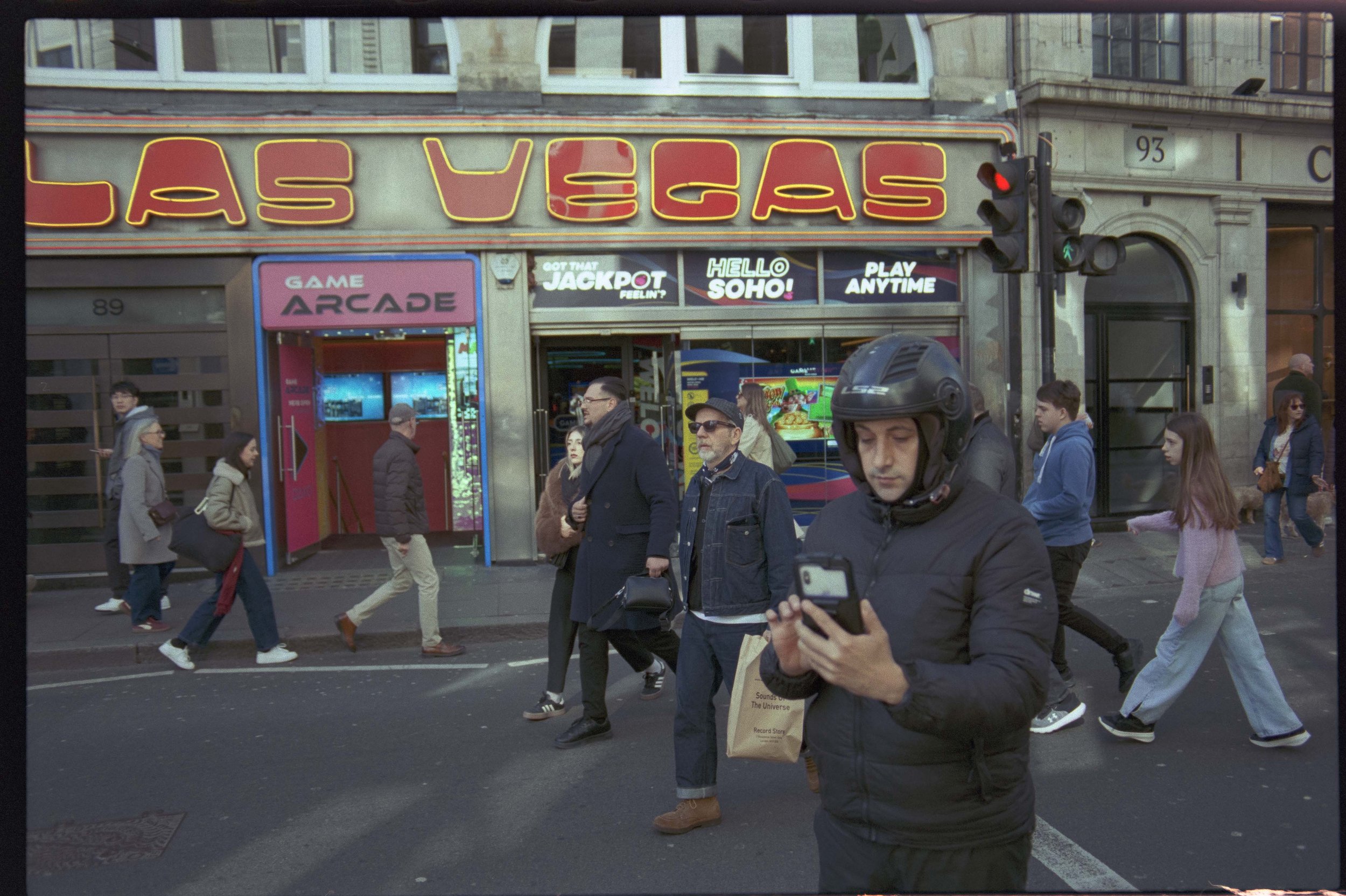
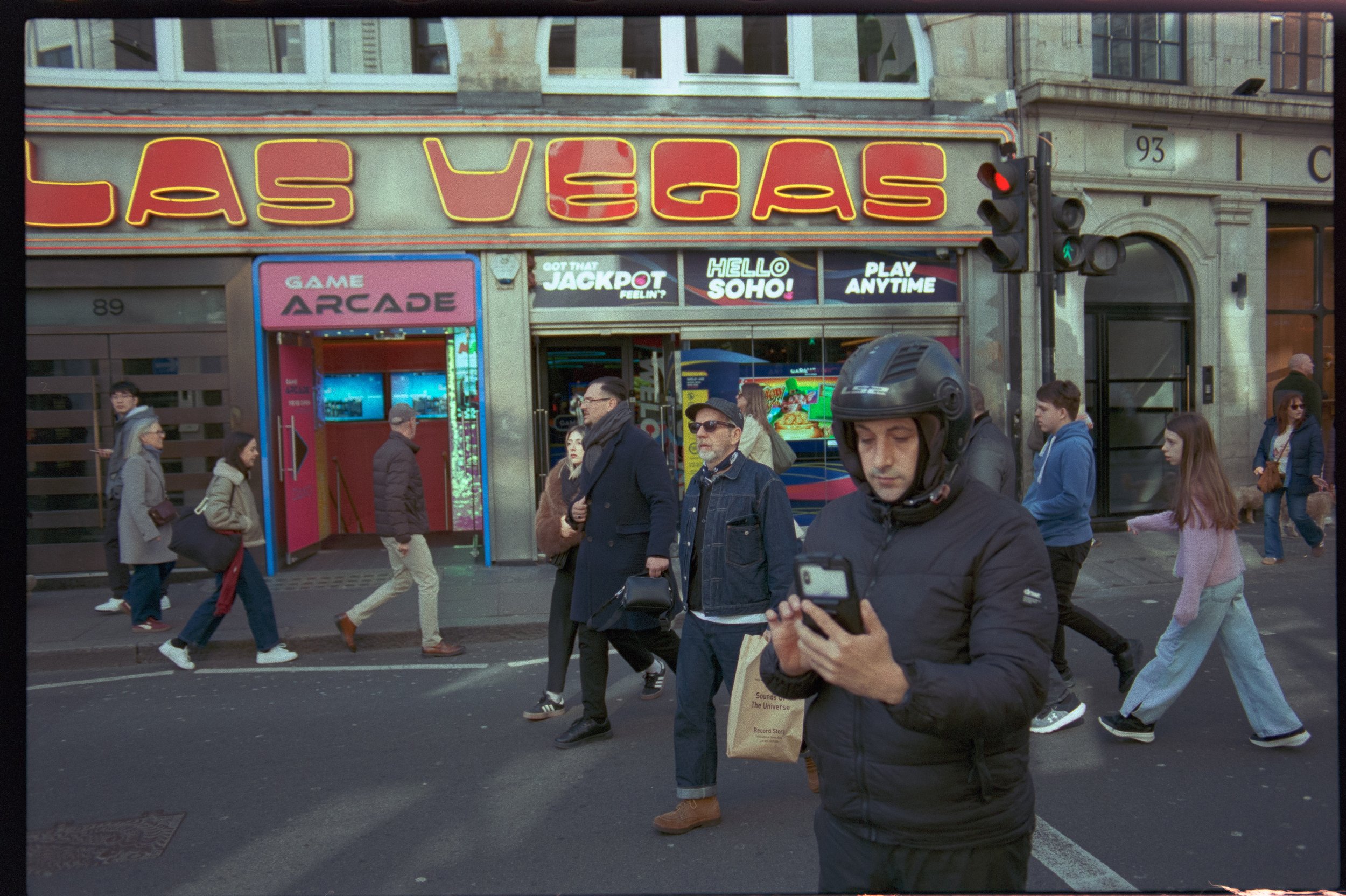
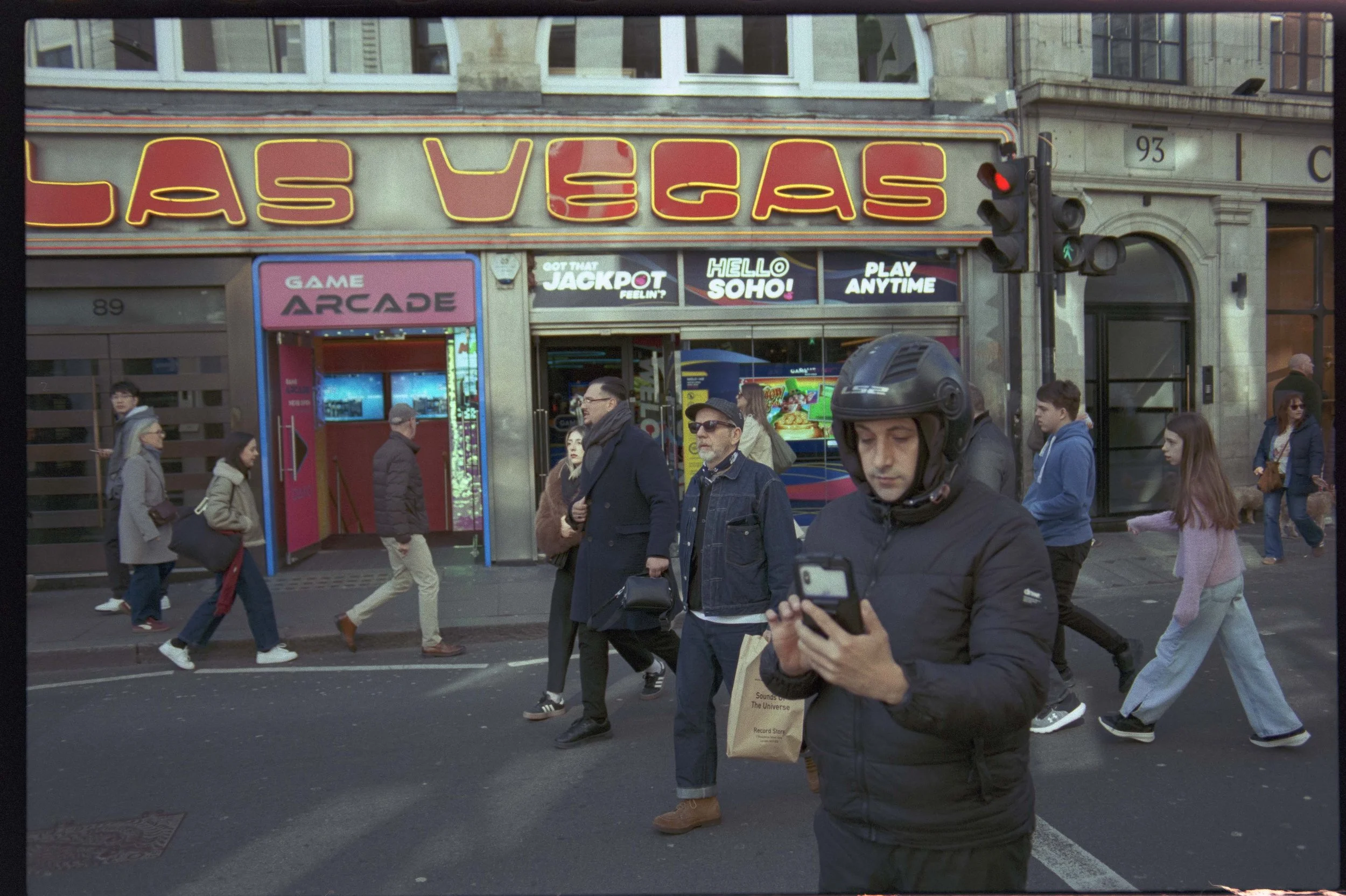
The Las Vegas arcade on what I think was Wardour Street gave me one of the more unexpected frames of the day — a motorcyclist in a full helmet standing at the crossing checking his phone, the enormous neon Las Vegas signage blazing behind him in red and gold, Hello Soho stencilled across the frontage. Vision3 renders neon brilliantly. The warmth of the sign, the cool blue of the afternoon sky in the upper corner of the frame — it's exactly what this stock was made for.
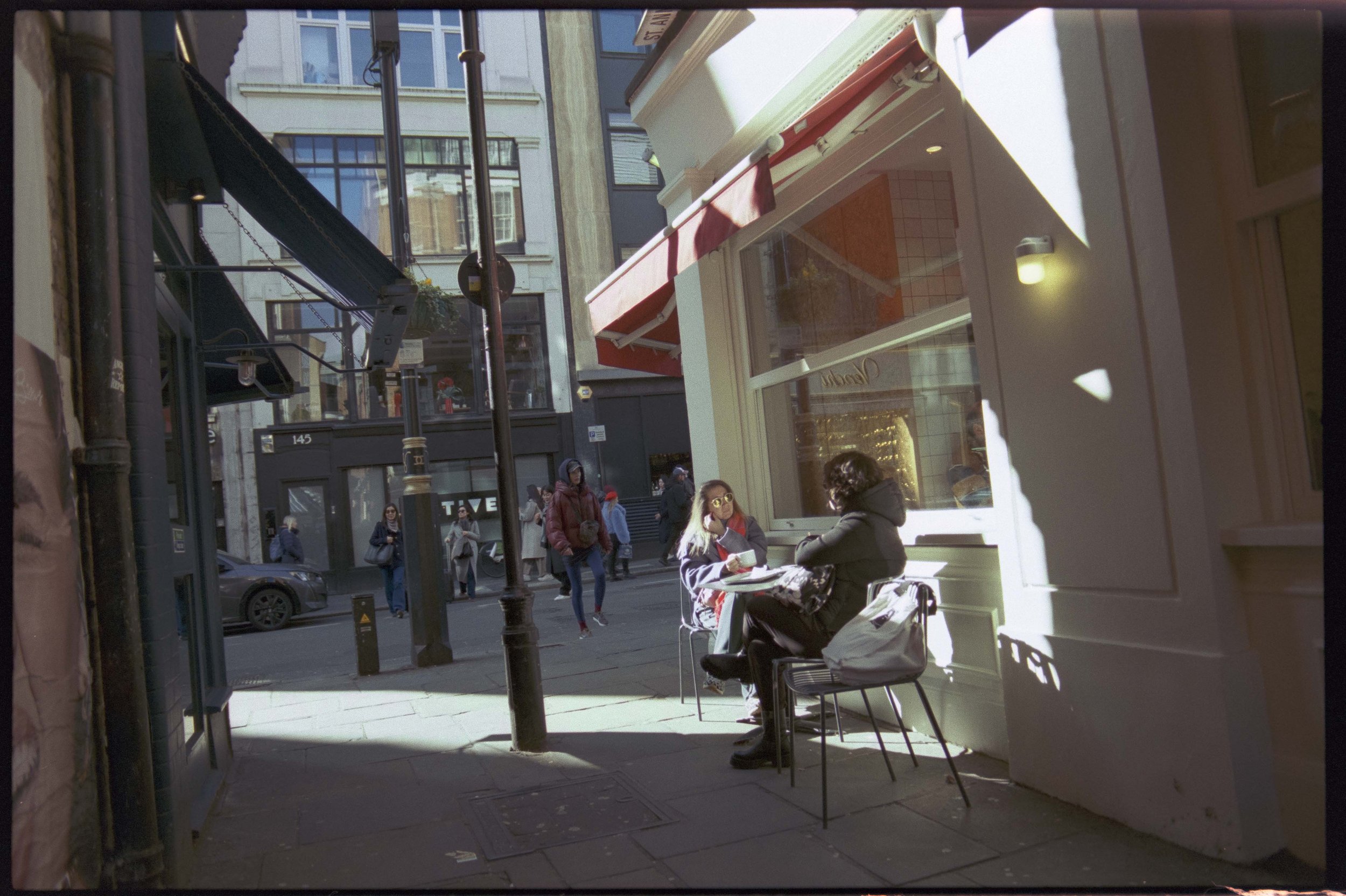
There was a quieter moment mid-roll that I keep coming back to: two women sitting outside a café in a narrow Soho alley, a red awning above them, dappled light falling across the table. No action. No joke. Just two people and an afternoon and the quality of light that Vision3 seems built to hold.
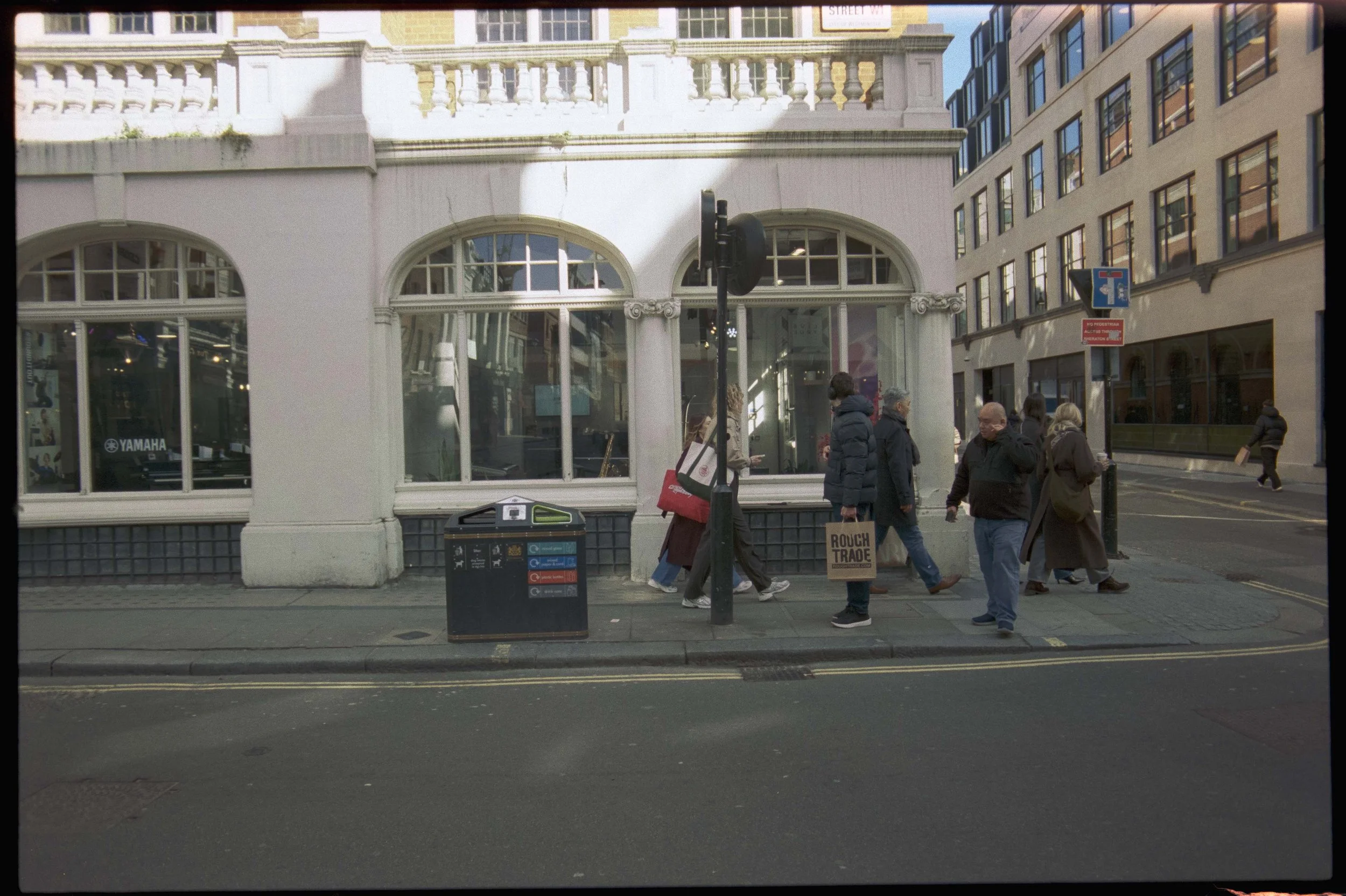
The three jokes
And then London started doing what London does.
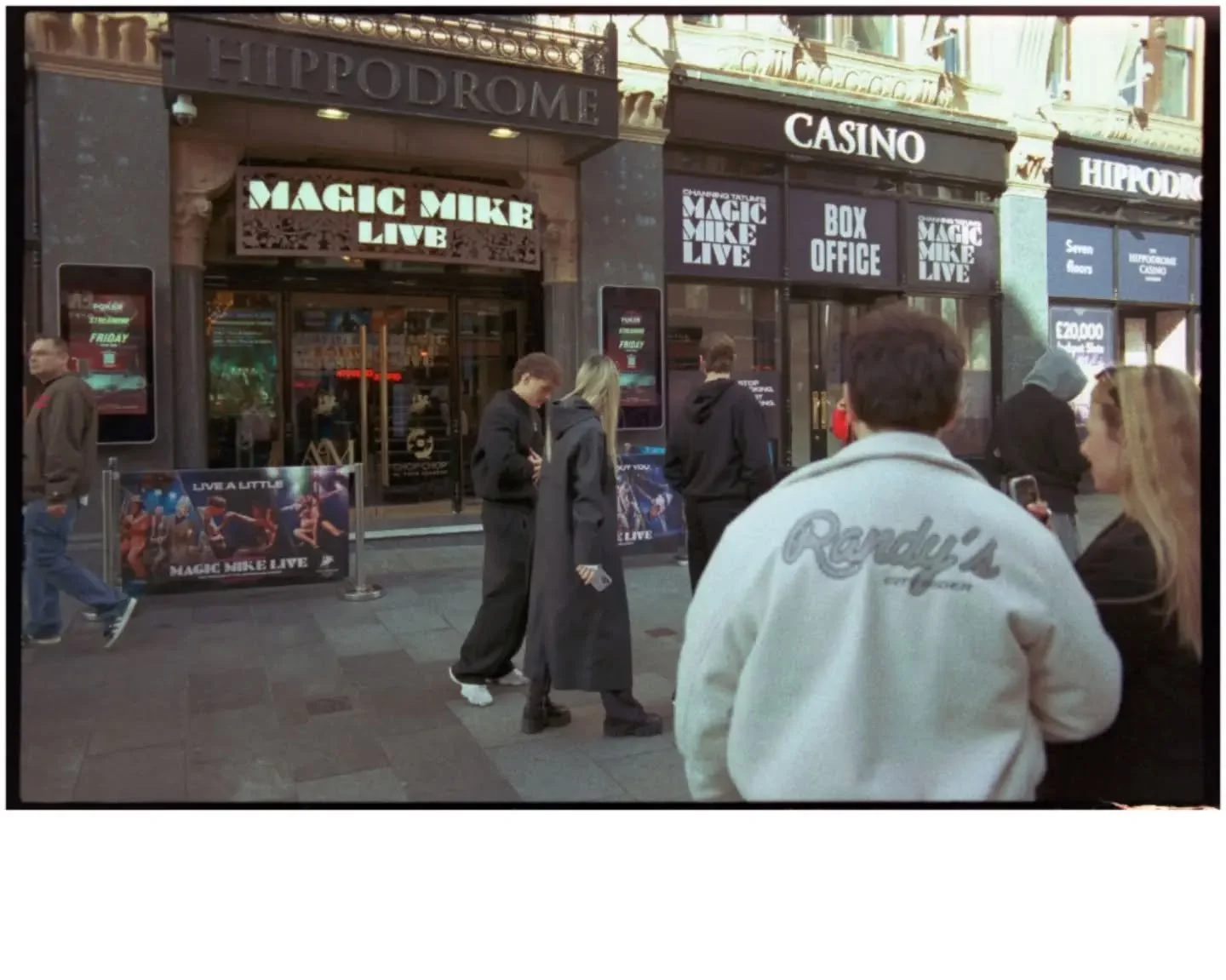
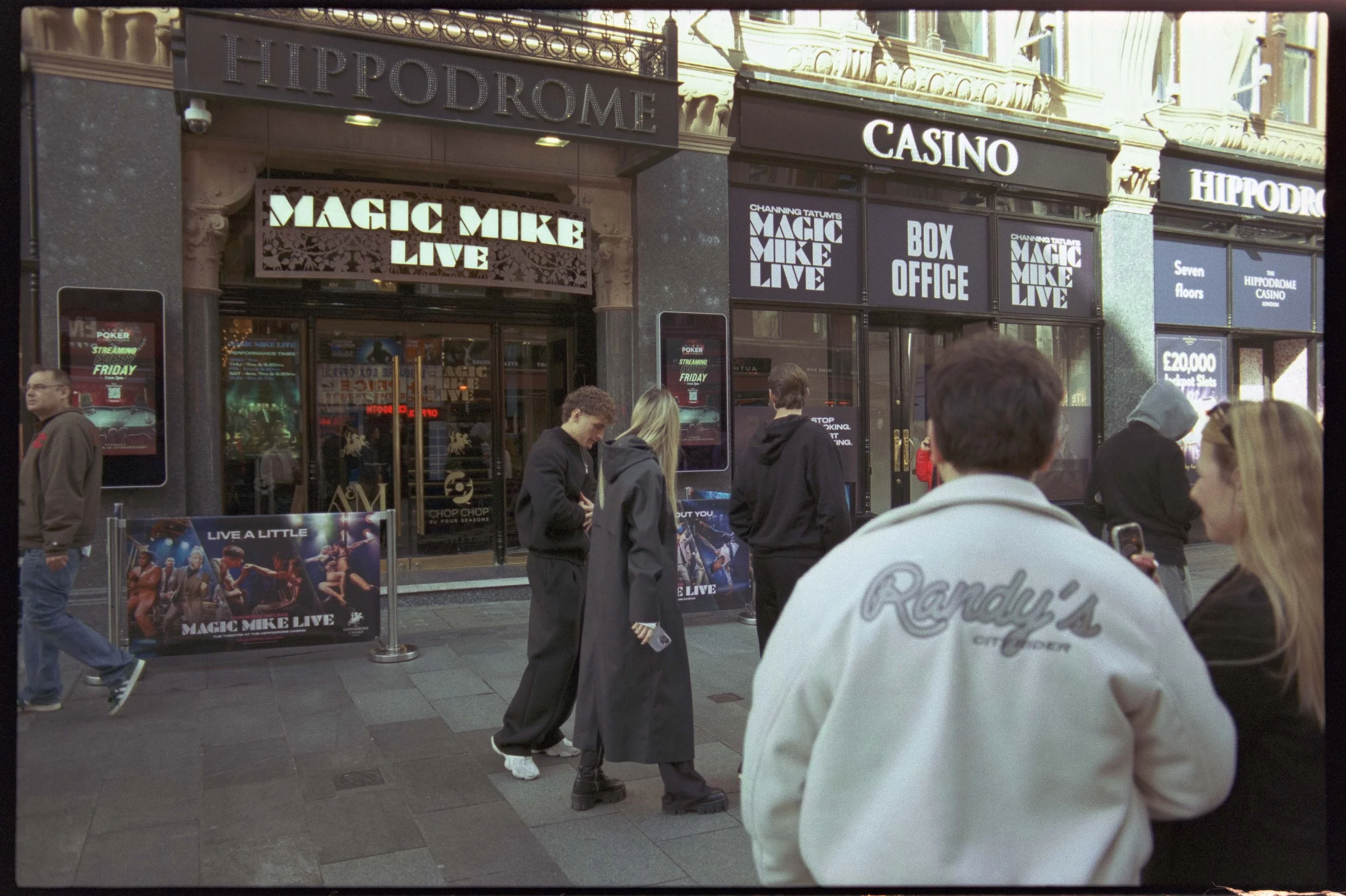
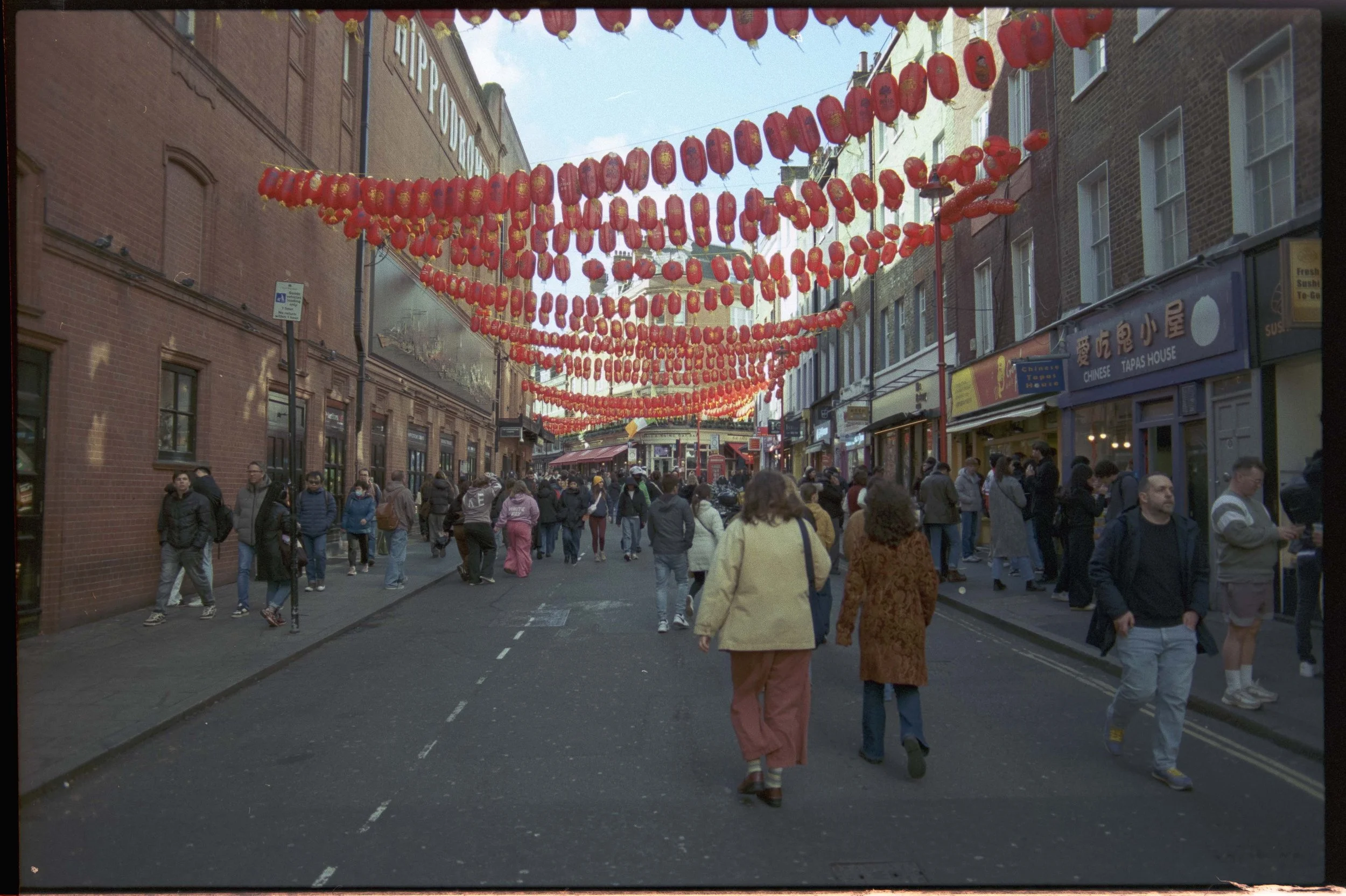
The first one I almost missed. I was walking past the Hippodrome on Cranbourn Street when I clocked it — a man standing on the pavement, back turned, the word Randy's written in large script across the back of his white jacket. Behind him, filling the entire frontage of the venue: Magic Mike Live. He had no idea. The street had assembled itself into a perfect joke and was waiting, with infinite patience, for someone to walk past with a camera.
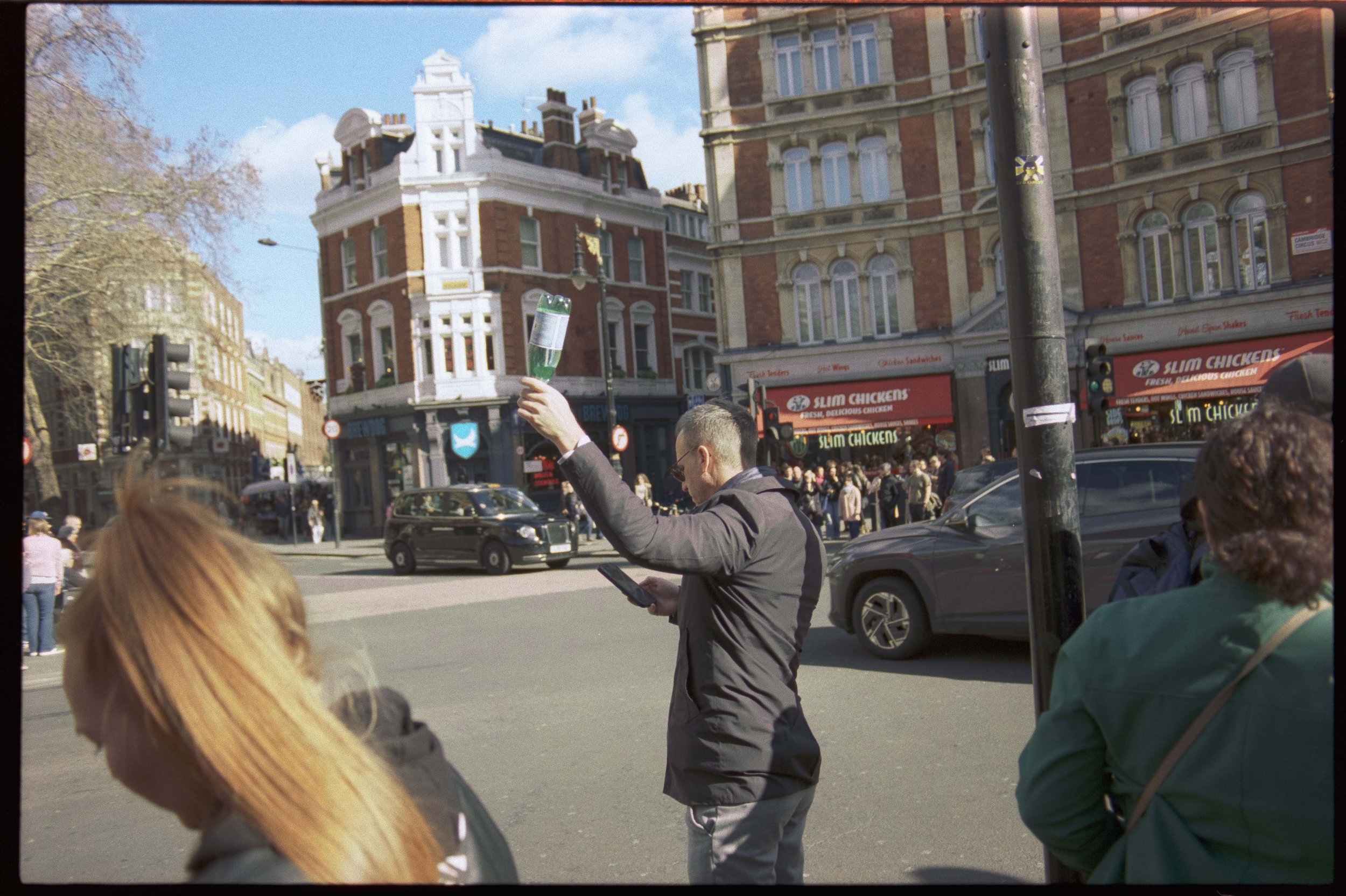
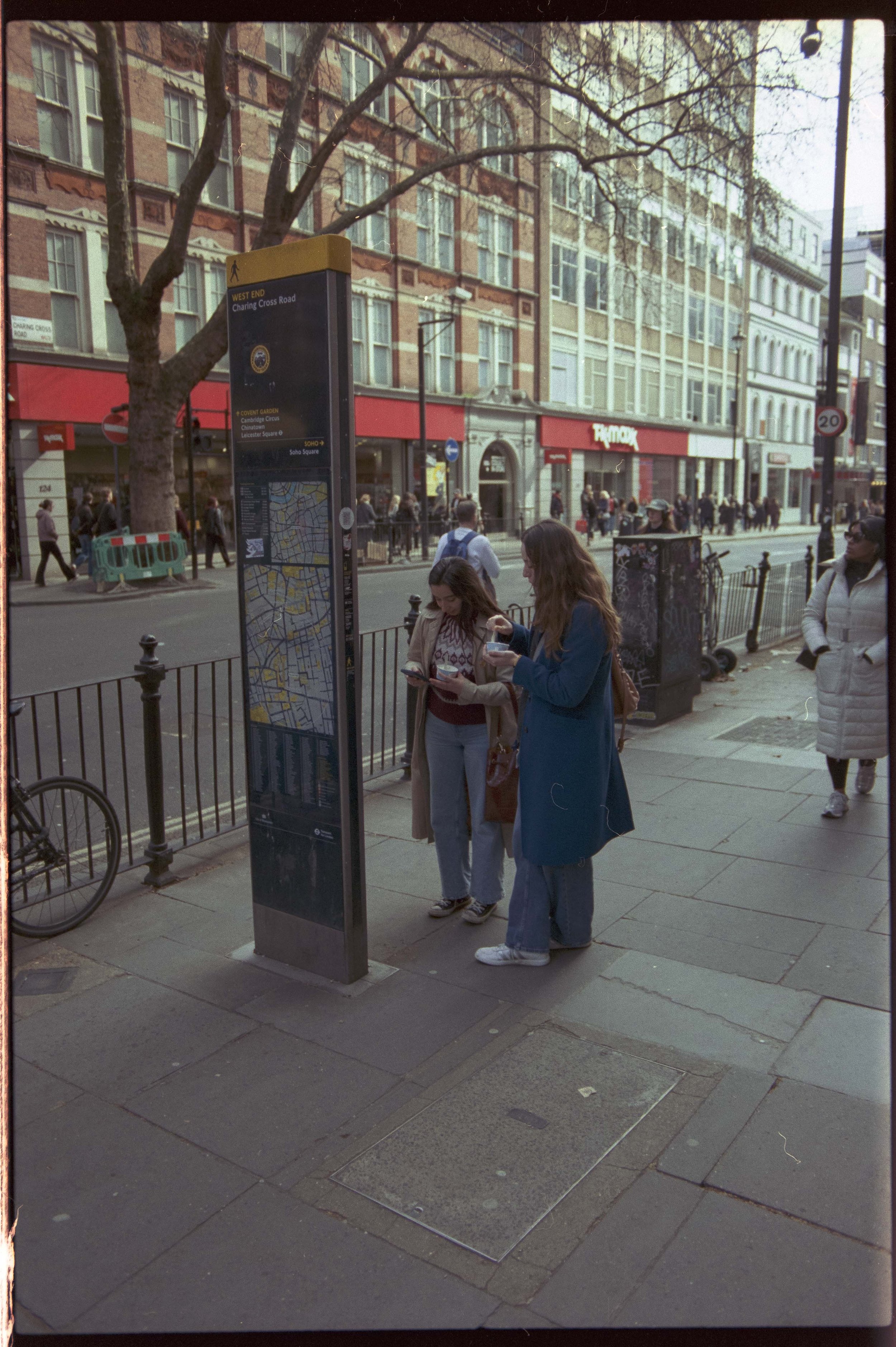
The second came at a crossing near the top of Charing Cross Road. A tour guide — grey hair, suit jacket, every inch the professional — was trying to marshal his group through the lunchtime traffic. His technique was to hold a green bottle above his head like a torch, a beacon for anyone who'd wandered off. He was checking his phone with the other hand. I pressed the shutter at the exact moment his arm went up. He was, without any doubt, leading them to the pub.
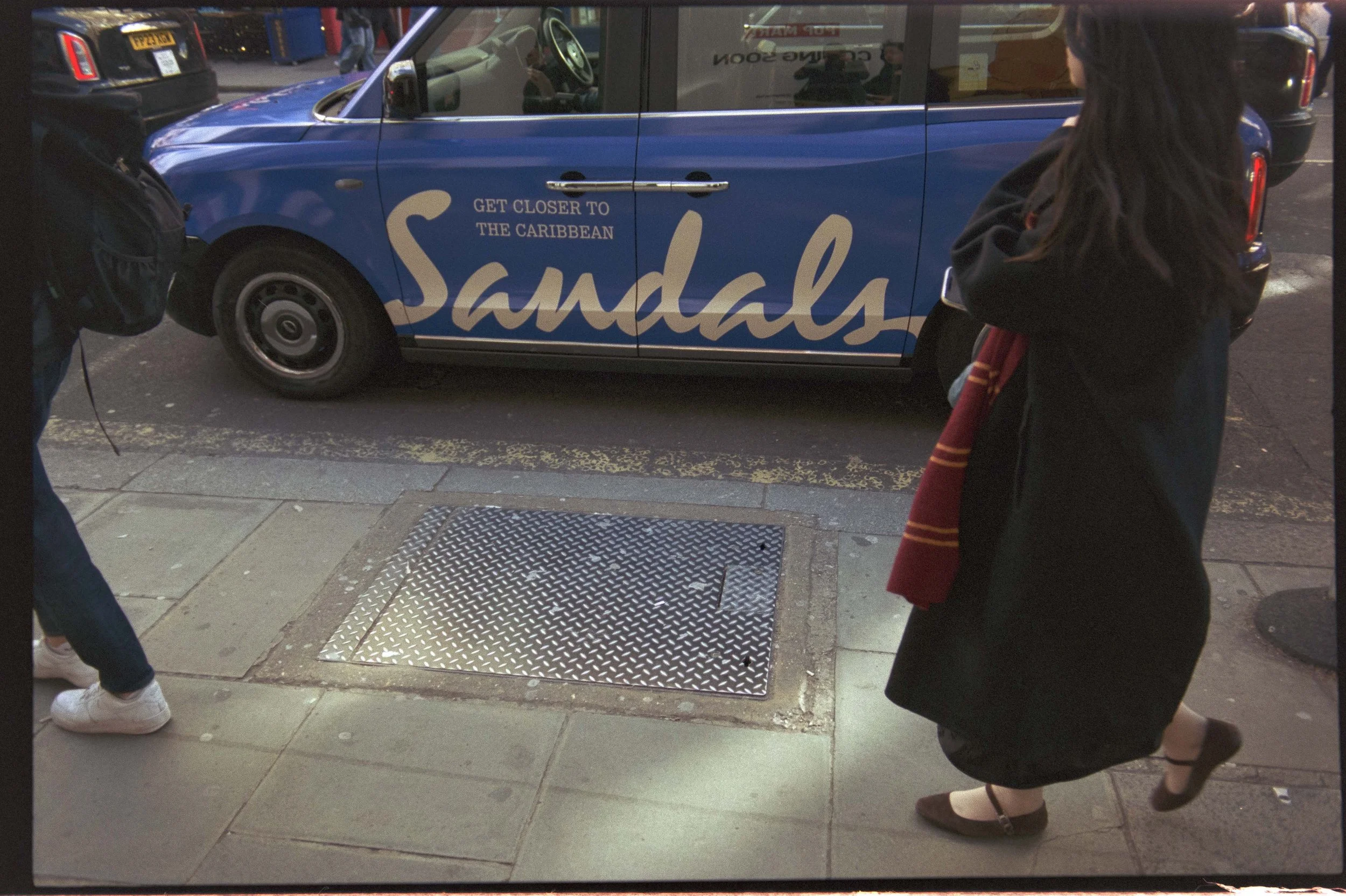
The third was the one I'm most pleased with. A London black cab, completely wrapped in the Sandals Caribbean holiday livery — blue bodywork, the Sandals script in cream, Get Closer to the Caribbean. Passing directly in front of it at that exact moment: a woman in a full Hogwarts Gryffindor robe, red and gold striped scarf trailing behind her. On her feet: sandals. She was heading somewhere else entirely, completely unbothered.
Three found jokes on one roll. Colour made all of them better. Black and white would have served the geometry. Vision3 gave you the blue cab and the red scarf and the warm pavement and the whole absurd London afternoon.
What comes next
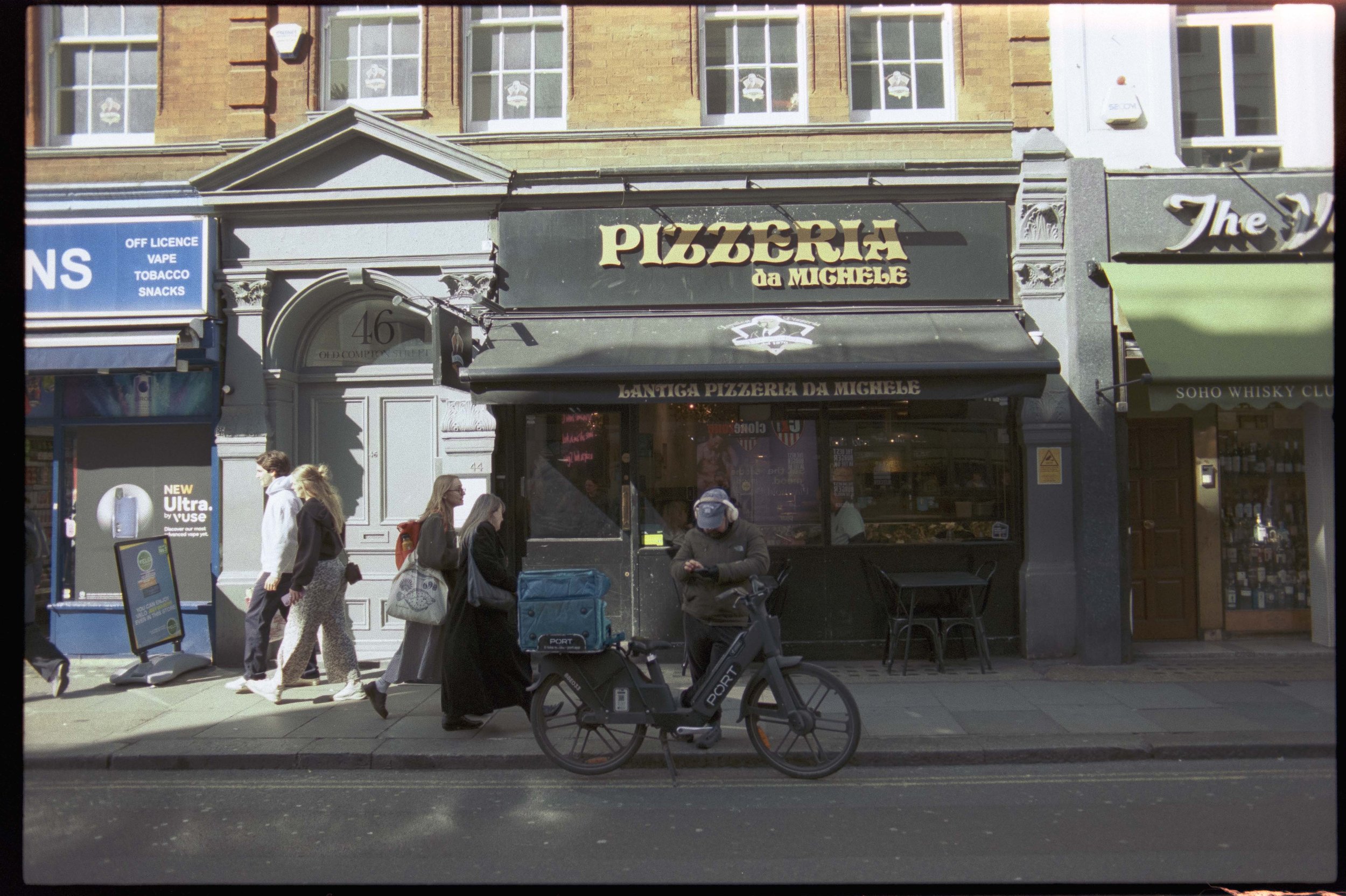
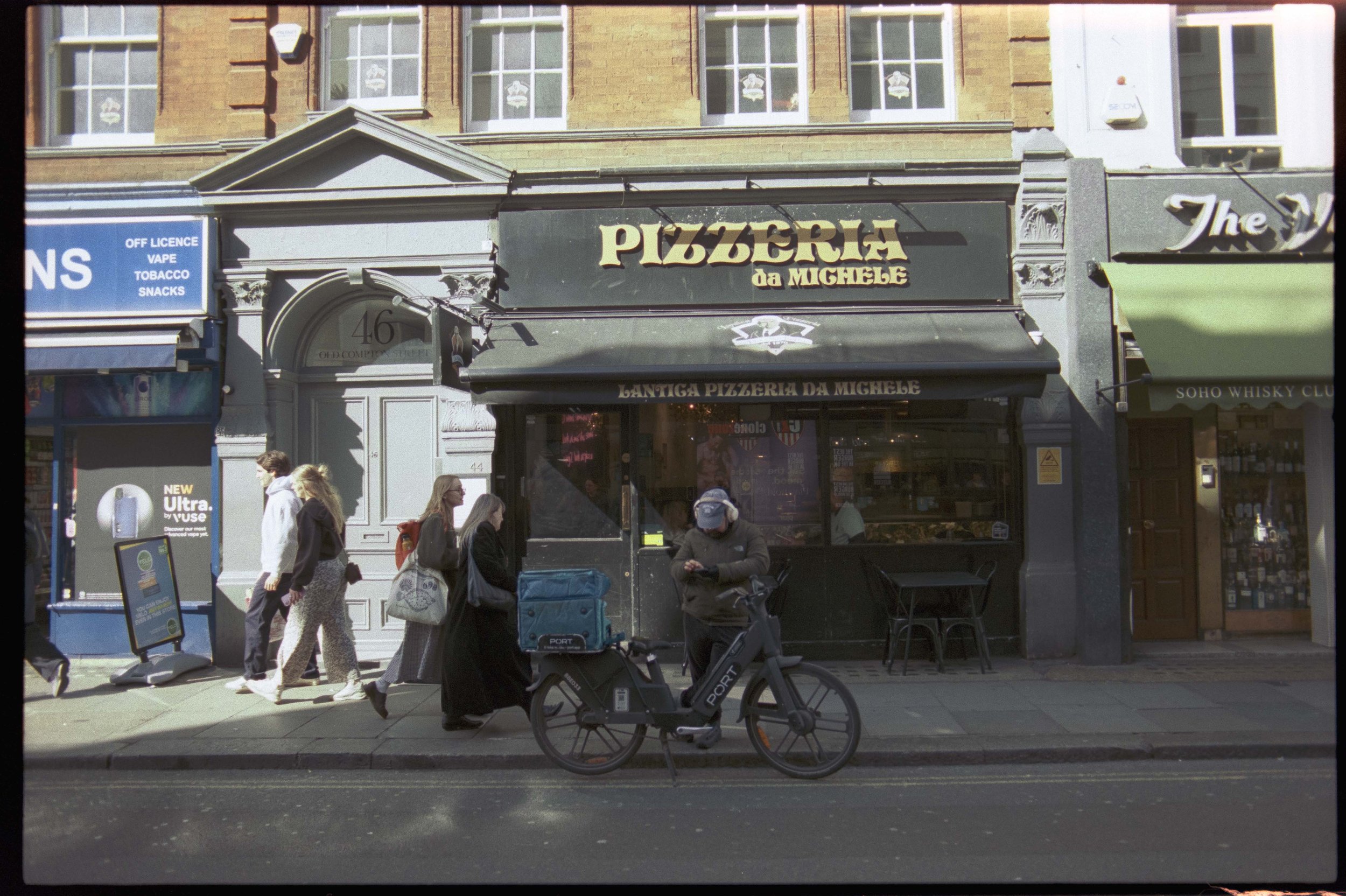
I finished the roll on Old Compton Street — a delivery rider on a PORT bike outside Pizzeria da Michele, checking his phone in the late afternoon light, the gold lettering of the restaurant sign warm above him. A good closer. Unhurried. The sort of frame that makes sense at the end of a day's shooting.
One roll is not enough to draw firm conclusions about a film stock. But it is enough to know whether you want to shoot another one, and the answer here is unambiguously yes. Vision3 250D asks you to work with colour rather than despite it — to look for the moments where the warmth of a late winter afternoon in London becomes part of the story rather than just the backdrop.
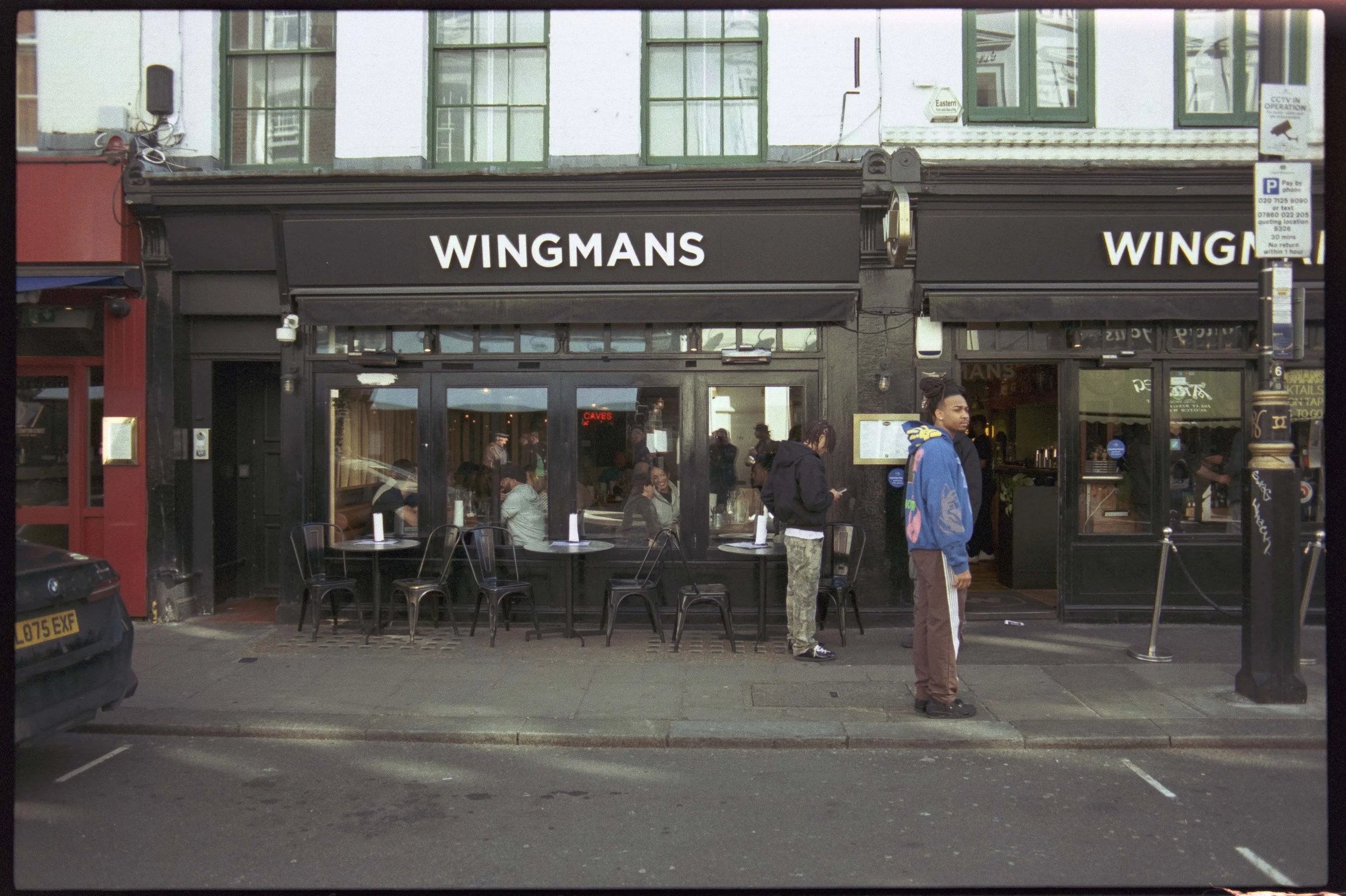
After years of reaching for black and white by default, that's a different kind of seeing. I'd been missing it without quite realising.
I've already ordered more rolls. Spring is coming, the light is getting longer, and the streets are filling up again. If the first outing with Vision3 250D is any indication, it's going to be a busy few months.
Black and white isn't going anywhere. But colour just made a very strong case for sharing the bag.
Until next time, keep snapping
Little England - A day in Weymouth with the Leica M10
Originating from a small Midlands town and subsequently moving down south and now to the south coast in Brighton, there is a natural allure for me for the traditional British seaside town.
I actually remember going to Weymouth from the Midlands with the family when I was a wee lad.
There's a version of England that still exists in places like our seaside towns. Not the version that gets argued about online, or invoked on political platforms, or turned into a slogan. The quieter version. The one that just gets on with it.
Originating from a small Midlands town and subsequently moving down south and now to the south coast in Brighton, there is a natural allure for me for the traditional British seaside town.
I actually remember going to Weymouth from the Midlands with the family when I was a wee lad.
There's a version of England that still exists in places like our seaside towns. Not the version that gets argued about online, or invoked on political platforms, or turned into a slogan. The quieter version. The one that just gets on with it.
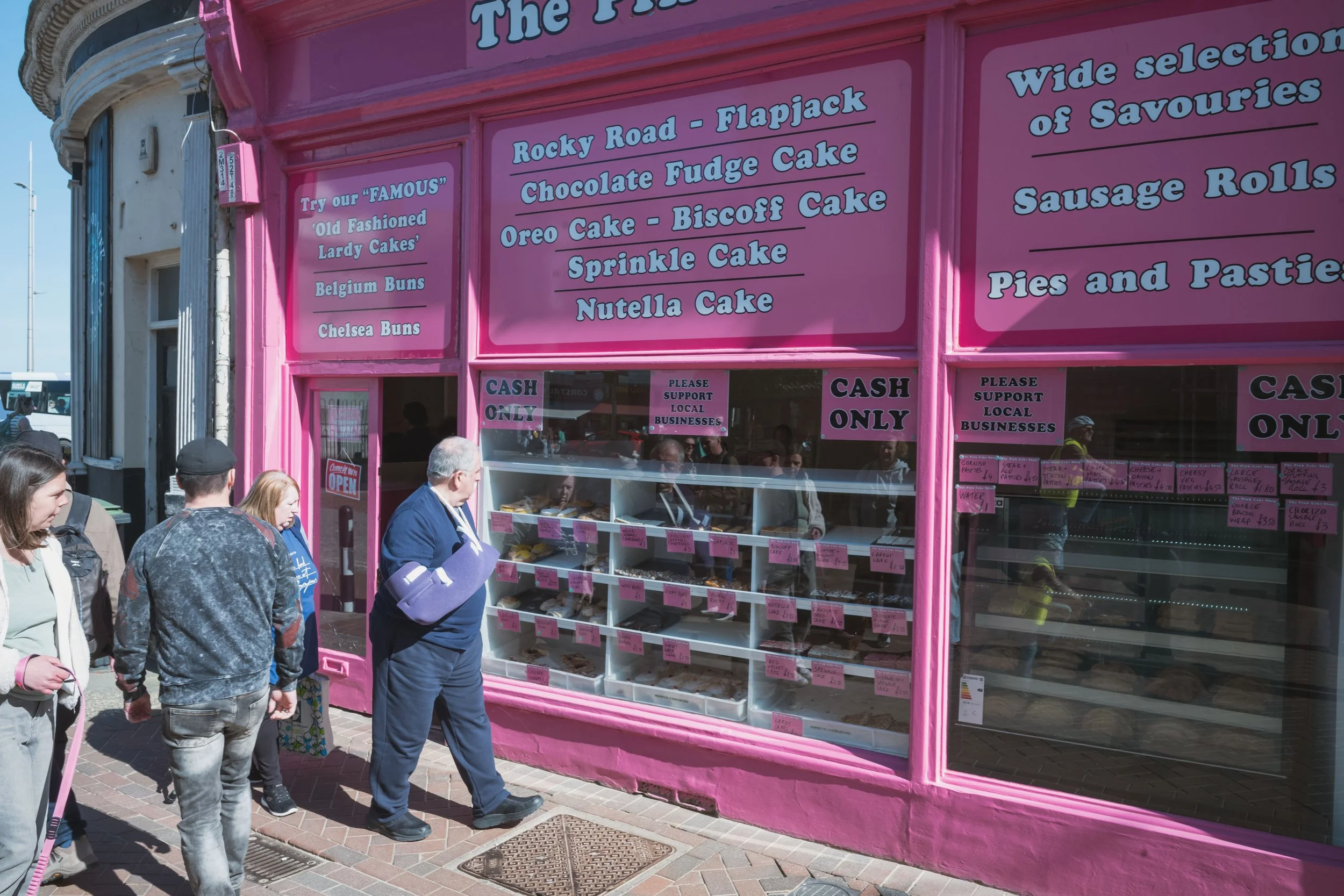
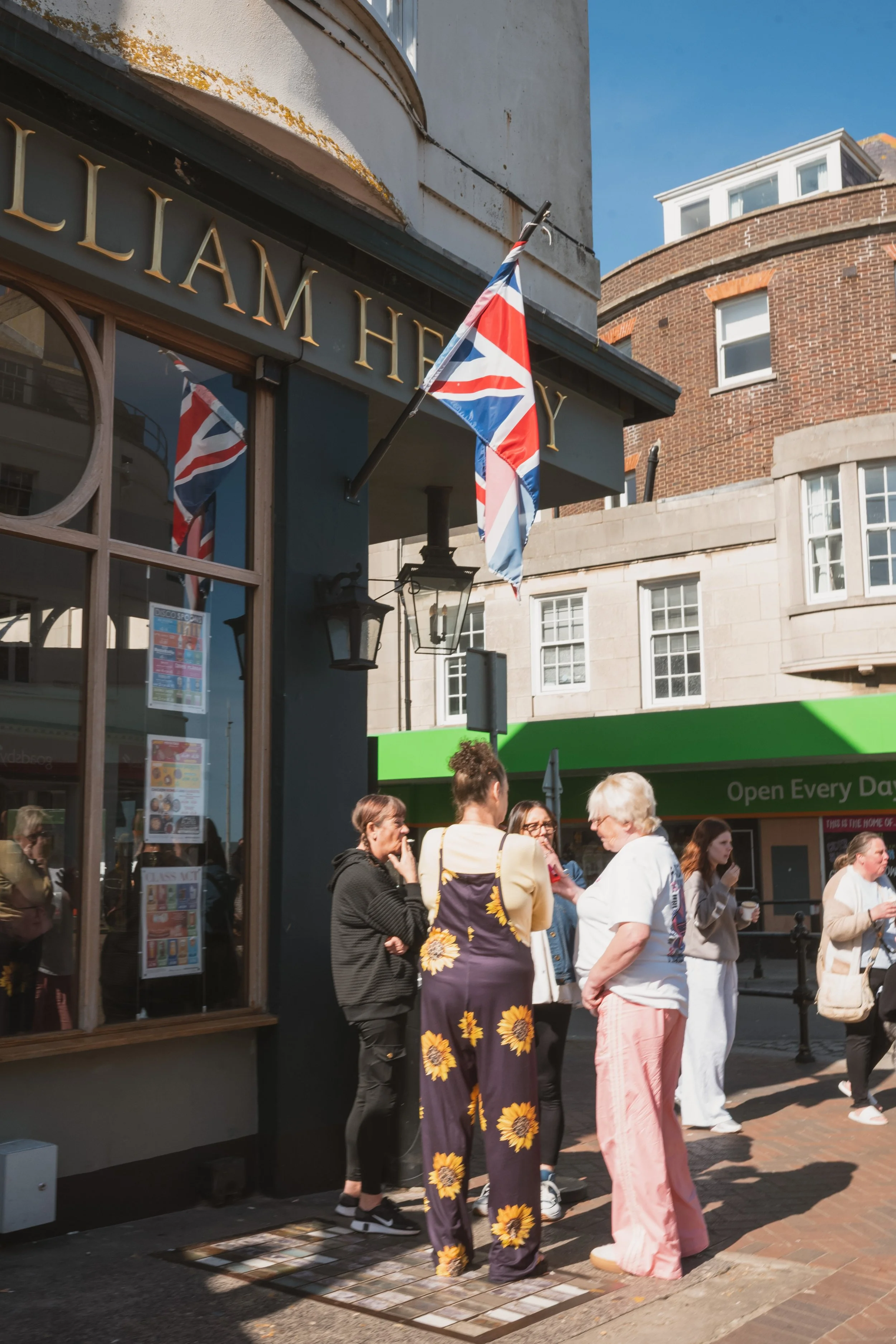
I drove down to Weymouth yesterday morning, with the Leica M10 and no real agenda beyond walking and seeing what the town had to say, as Spring 2026 has opened its eyes. Weymouth is a proper south coast seaside town — the kind with a working harbour, Georgian terraces starting to show their age, a pink cake shop that takes cash only, and Union Jacks outside the pub.
"This blog post isn't a political statement, it's an observation. The flags are just there — unremarkable to the people who live under them, which is precisely what makes them worth photographing."
I've been thinking about this project for a while. There's something I keep noticing in the English seaside towns I shoot — a particular kind of texture that's hard to name but immediately recognisable. Old shopfronts that haven't been rebranded. Red postboxes with knitted toppers. Phone boxes repurposed into book exchanges. Ghost signs on brick walls advertising things that no longer exist. All of it quietly persisting, not out of defiance, just out of habit.
Weymouth has it in abundance.
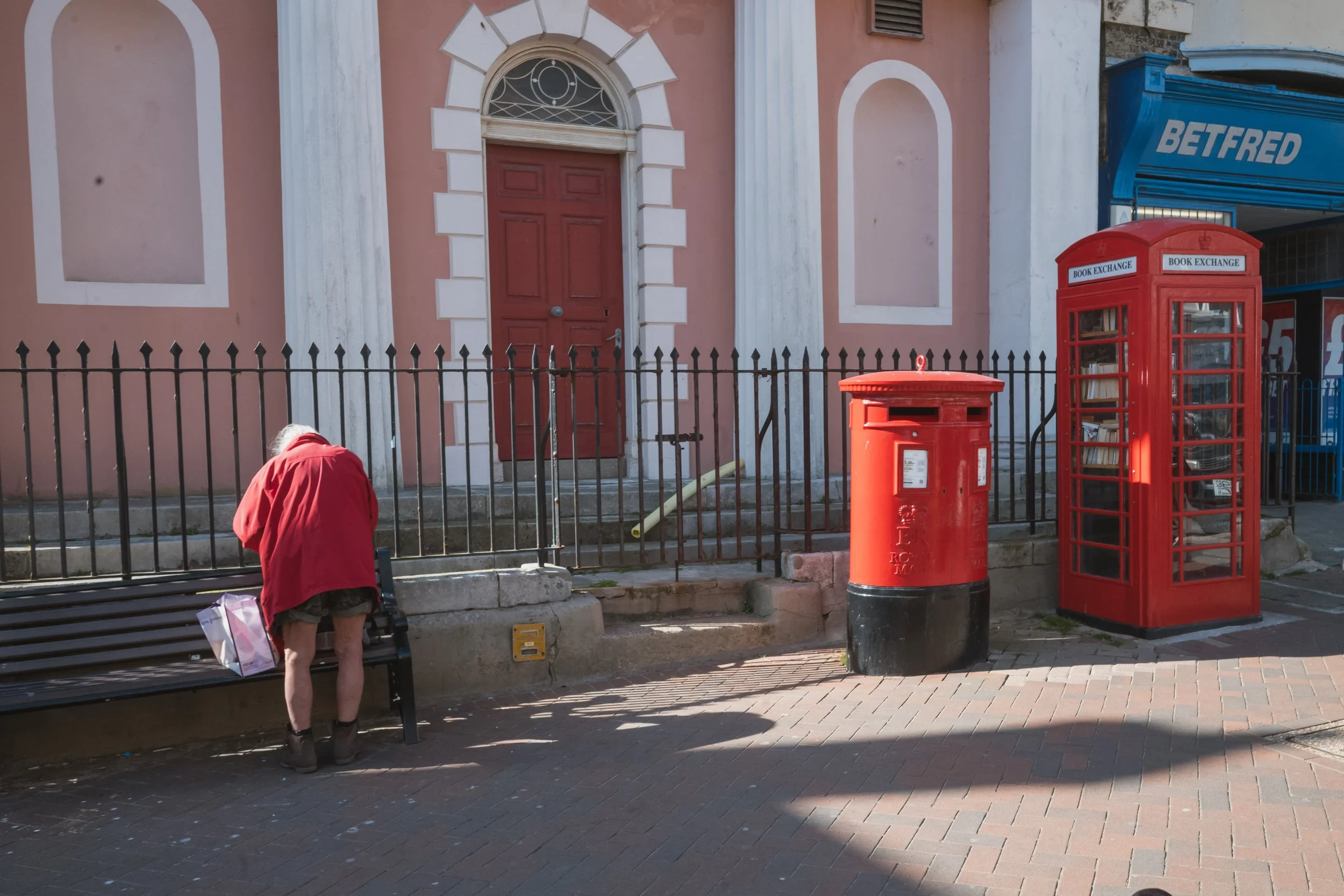
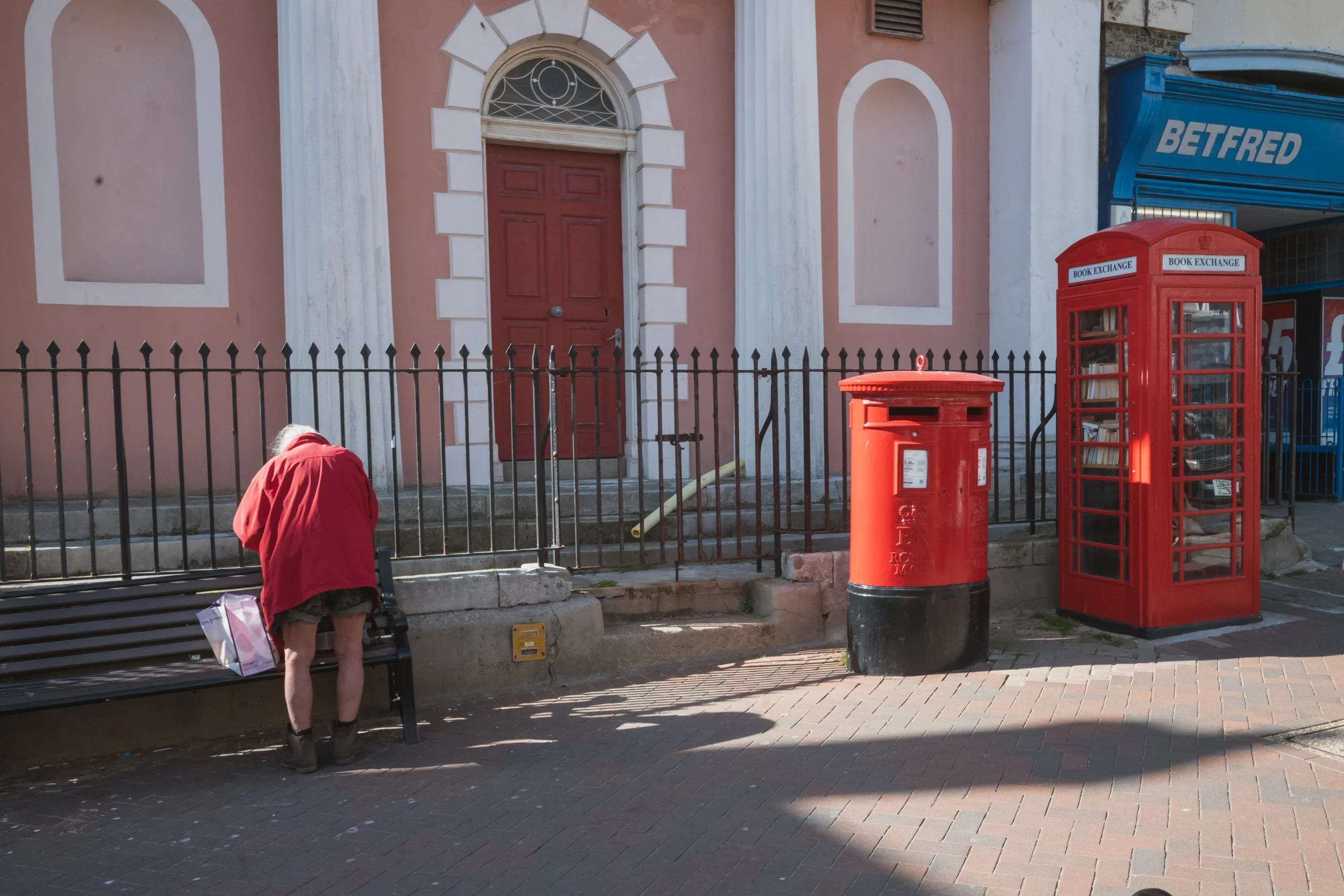
I started on the high street. The first image that stopped me was almost too on-the-nose: a red figure hunched on a bench beside a red postbox and a red phone box — now a book exchange — with Betfred blazing blue in the background. Three reds and a betting shop. England in a single frame.
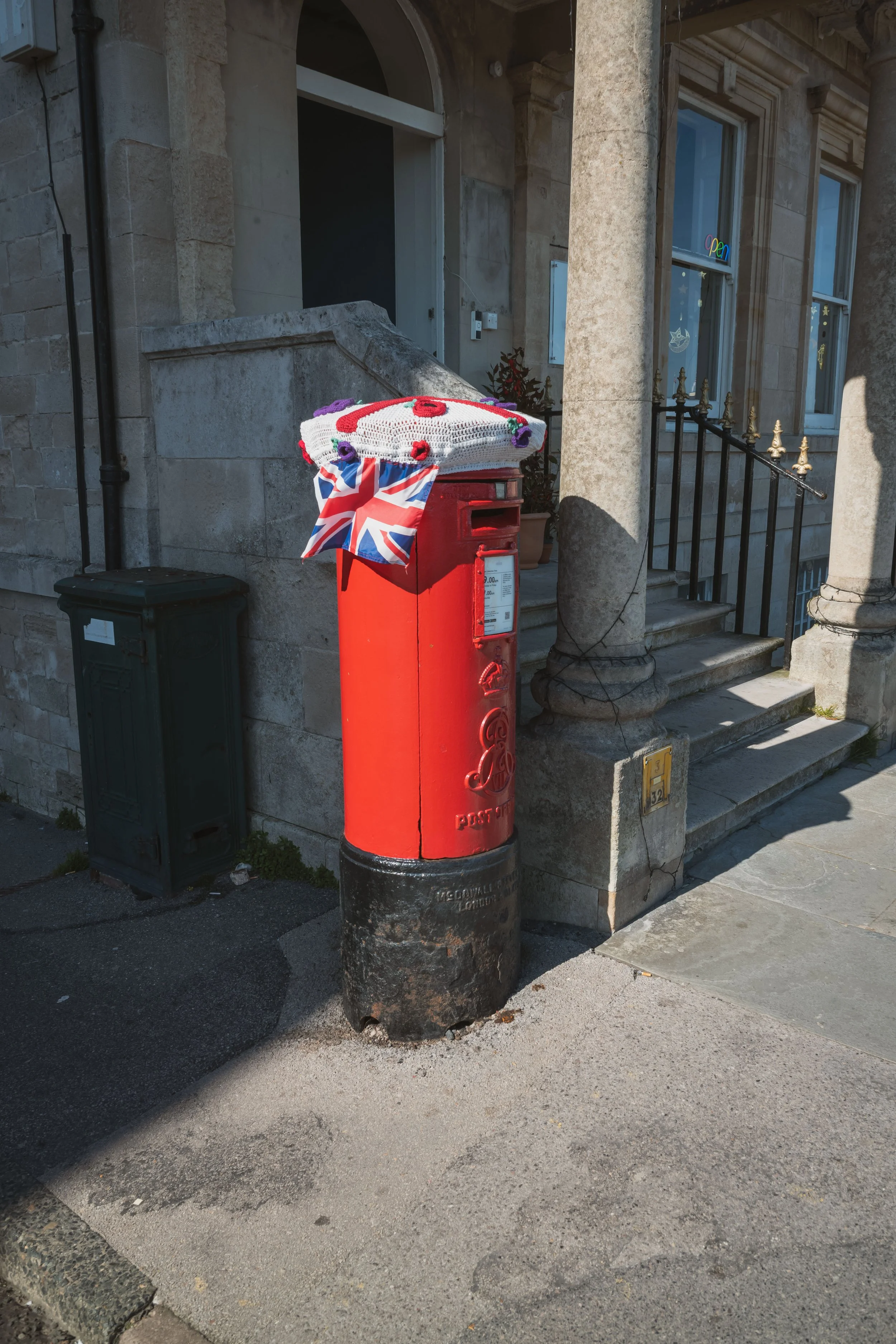
A few streets away I found the postbox with the knitted Union Jack draped over its top — someone had crocheted a topper decorated with poppies and the flag, placed it there quietly, and moved on. It was the most tender thing I photographed all day. There's a whole tradition of this in small British towns — anonymous acts of civic affection that never make the news and probably shouldn't.
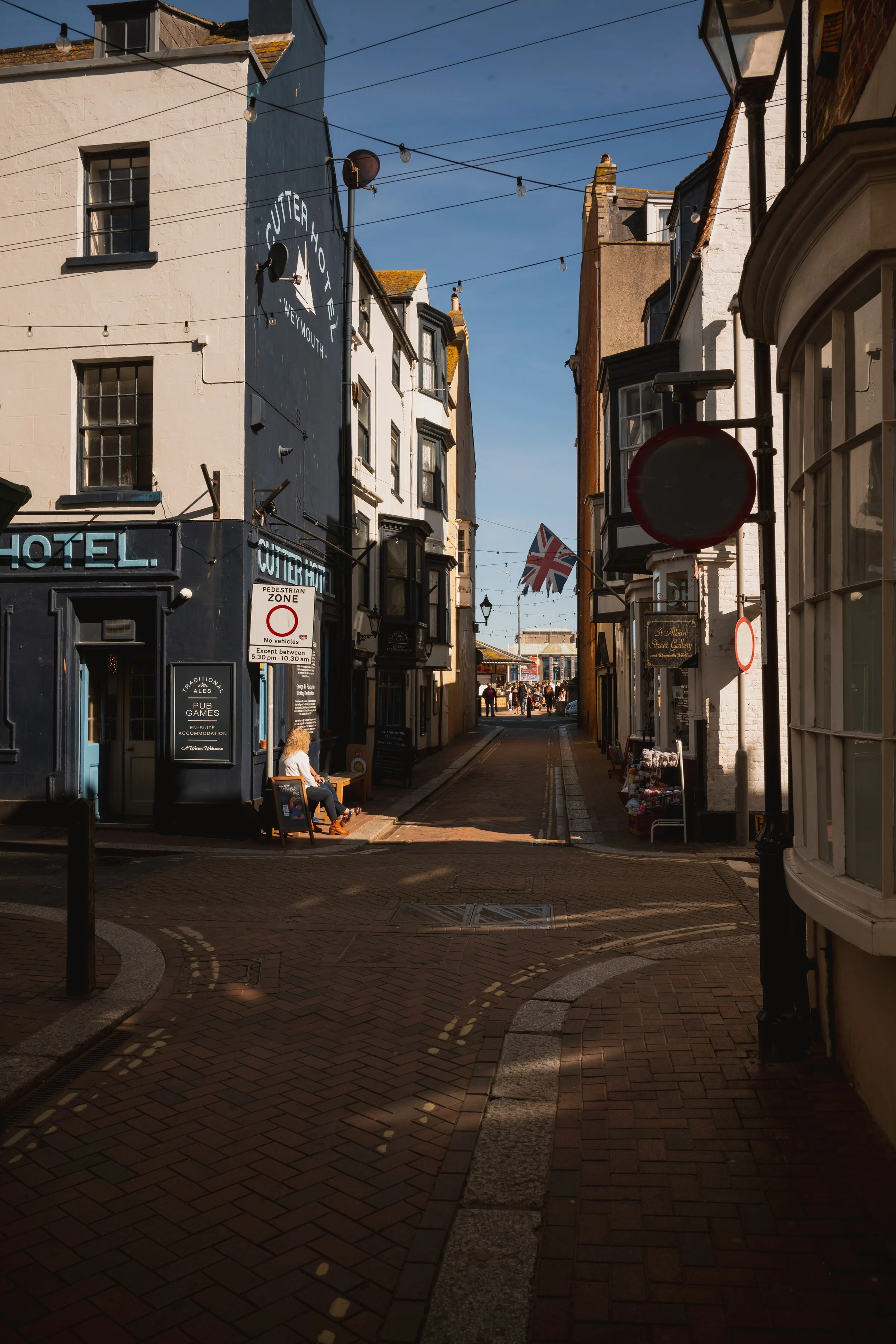
The cobbled lane down toward the harbour was one of those streets that photographs itself. Late morning light, deep shadows on one side, a Union Jack snapping at the far end where the sea opens up, a woman sitting alone outside the pub with a coffee. I stood at the top of it for a while before I pressed the shutter, waiting for it to settle into itself.
"There's a whole tradition of anonymous acts of civic affection in small British towns that never make the news and probably shouldn't."
The pink cake shop — I later found out it's called The Pink — was doing serious business. Cash only, Lardy Cakes, Chelsea Buns, Flapjack, Pies and Pasties. The window was covered in handwritten labels. Outside, a small crowd had gathered. Dogs, prams, people craning to see the shelves. Beside it, a teal gift shop. The high street as pure, unapologetic colour.
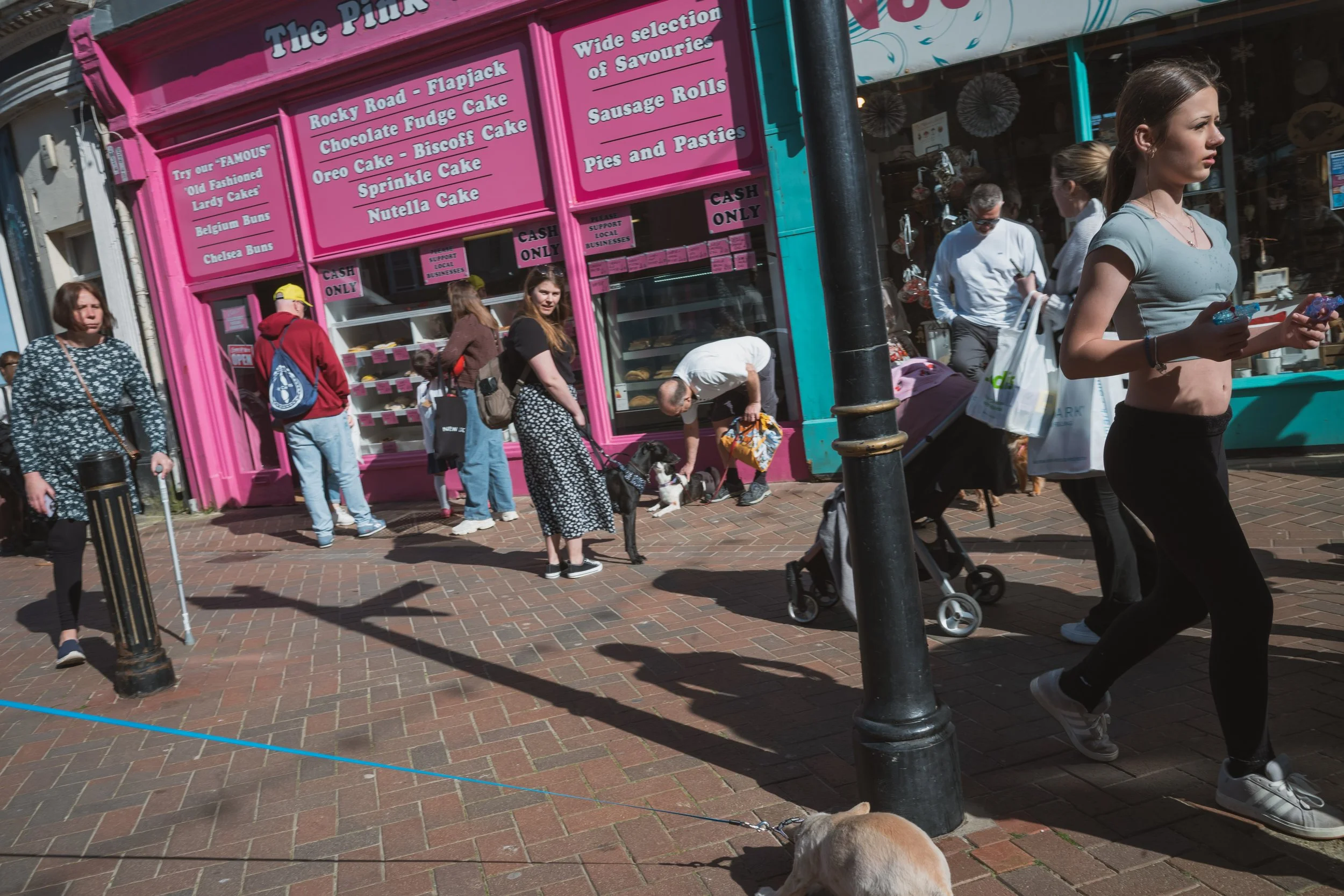
But for all the bunting and bakeries, Weymouth isn't performing anything. It's just getting on with being itself — which includes the parts that aren't picturesque.
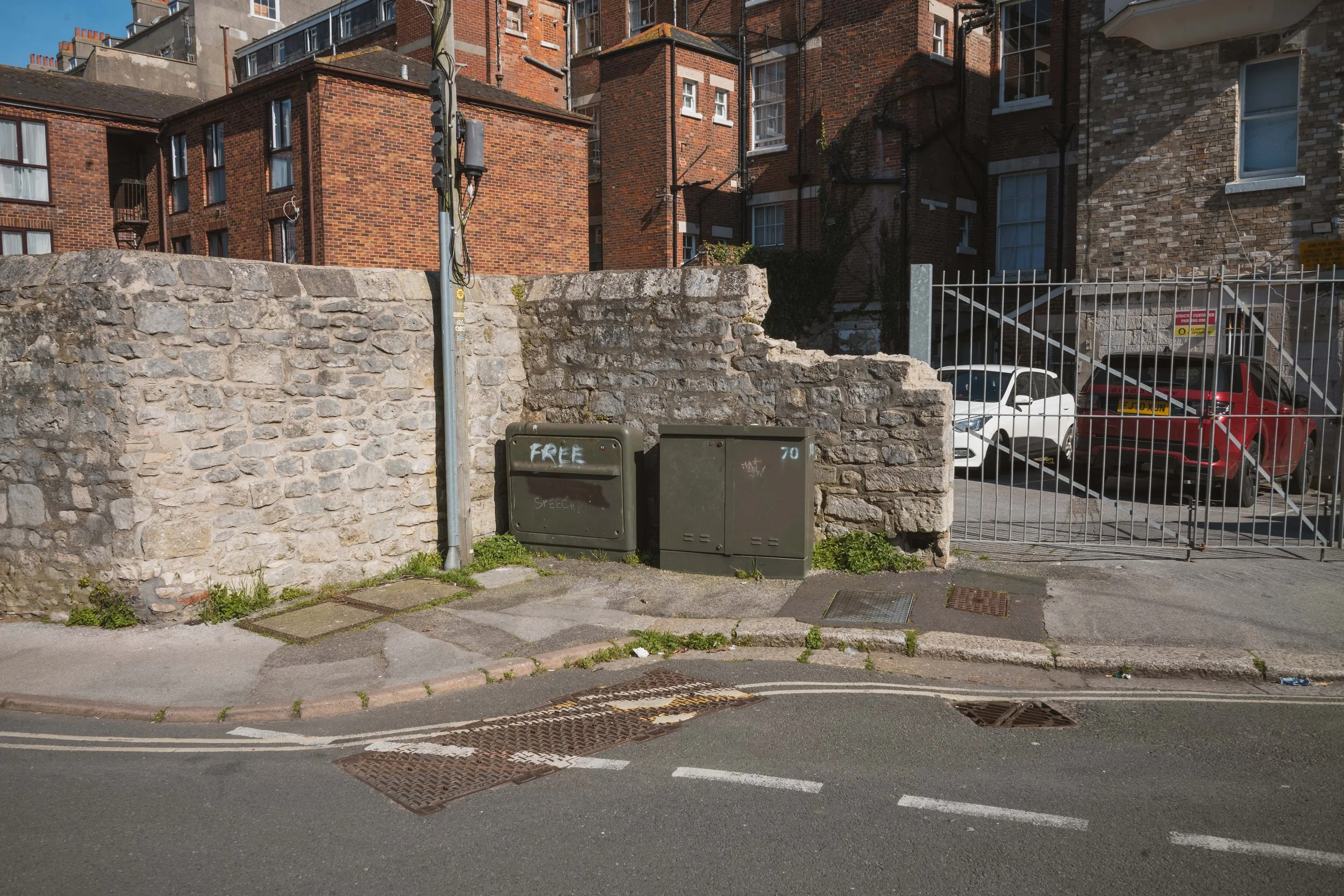
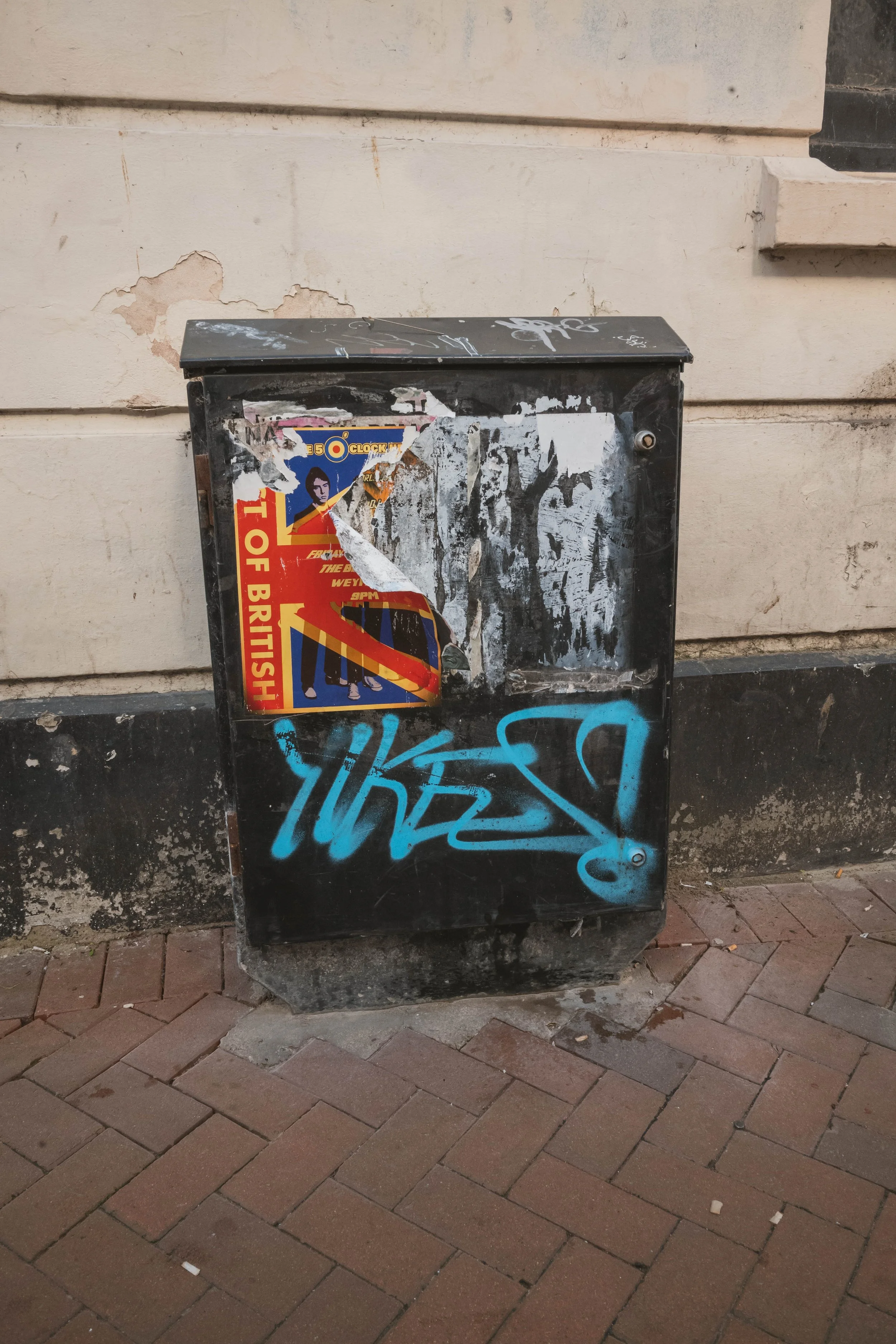
On a back street I found a junction box with FREE sprayed on it in white paint, set against a crumbling stone wall. Two streets over, a black utility box covered in peeling stickers, one of them a torn Union Jack with the words "of British" still legible. Whatever the full message was, only those two words remained. I stared at it for a long time.
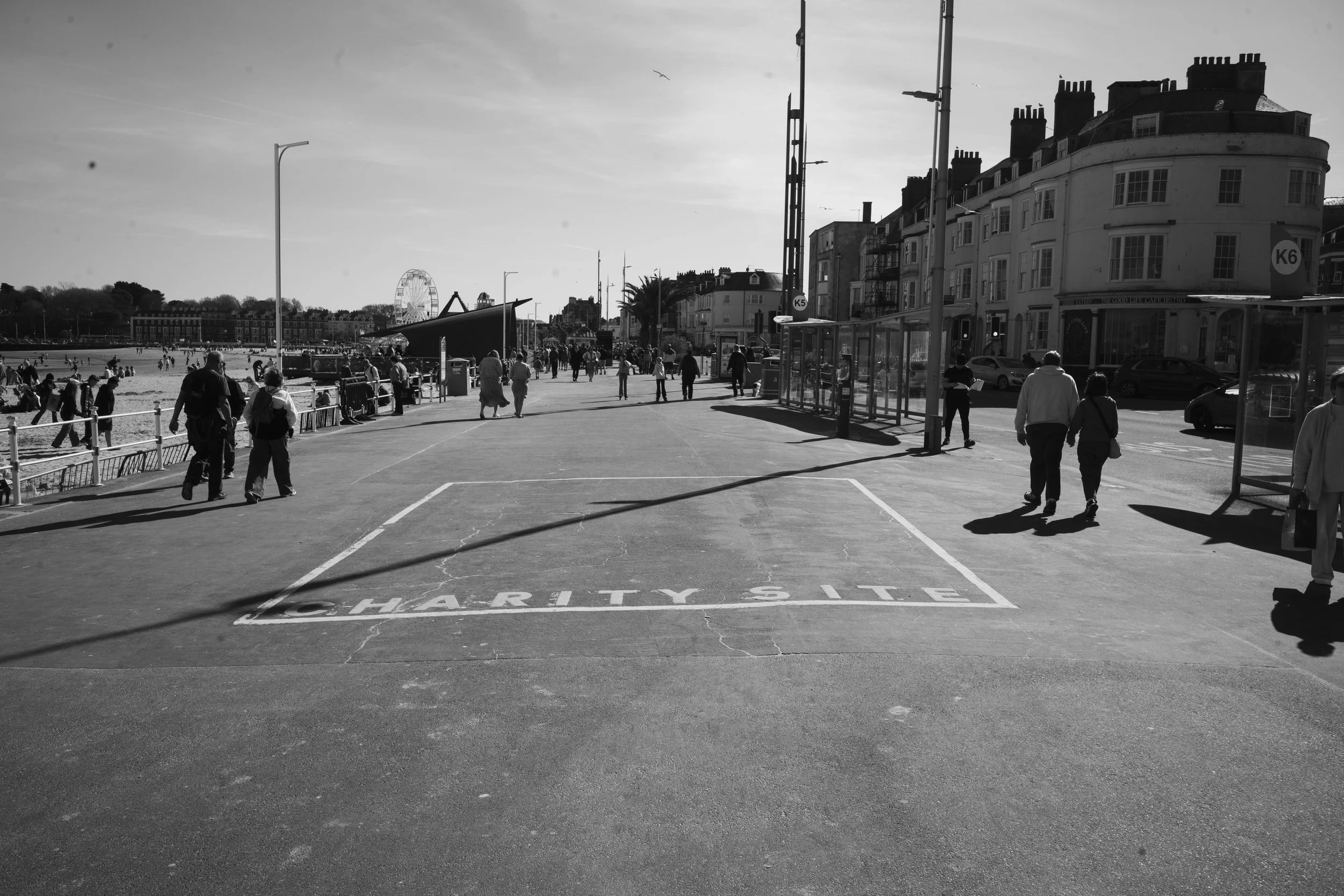
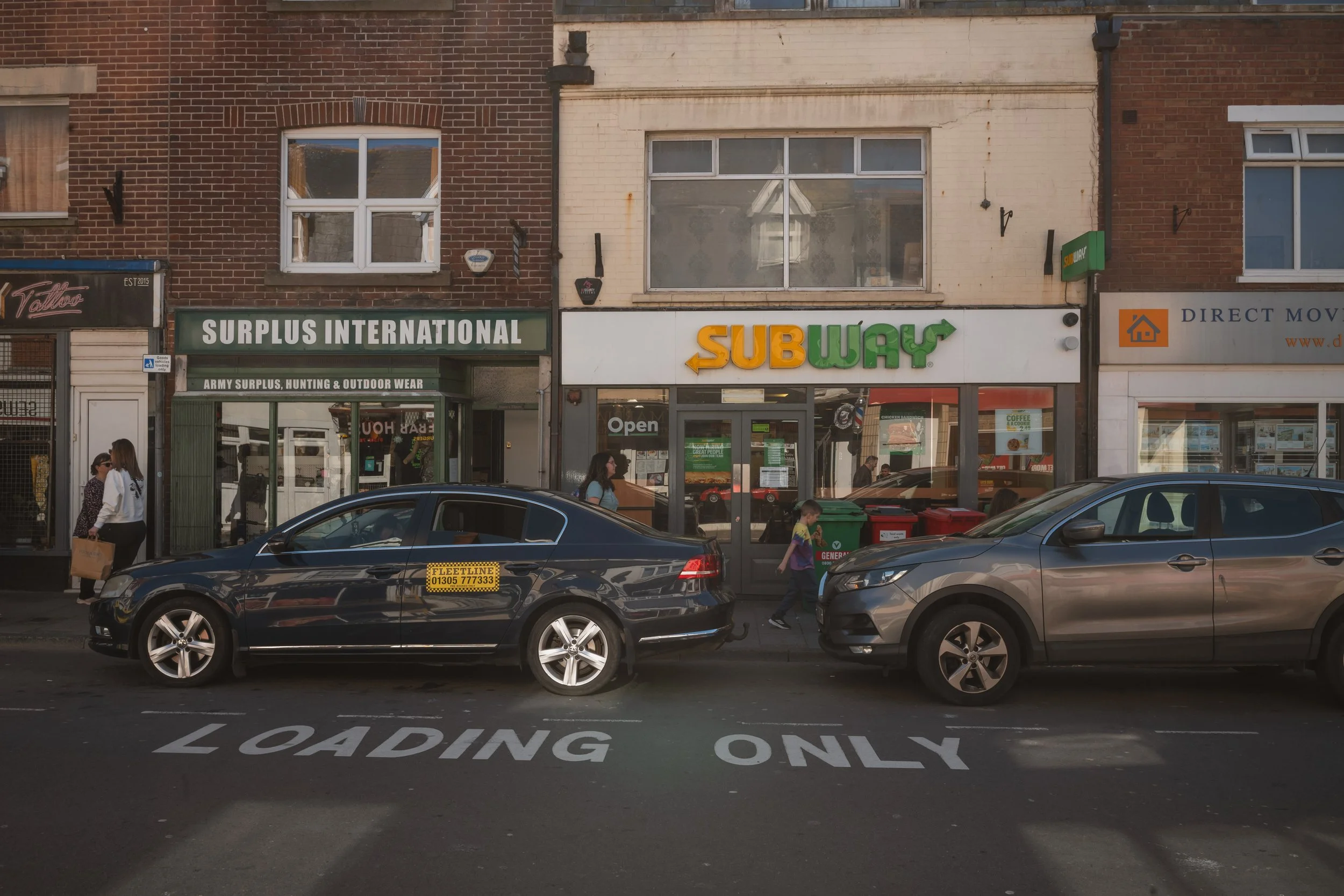
Surplus International next to Subway. A "Loading Only" bay that cars were parked in. Charity Site painted in white letters on the seafront tarmac, a Ferris wheel beyond it. The ordinary machinery of a British seaside town, indifferent to whether anyone's photographing it.
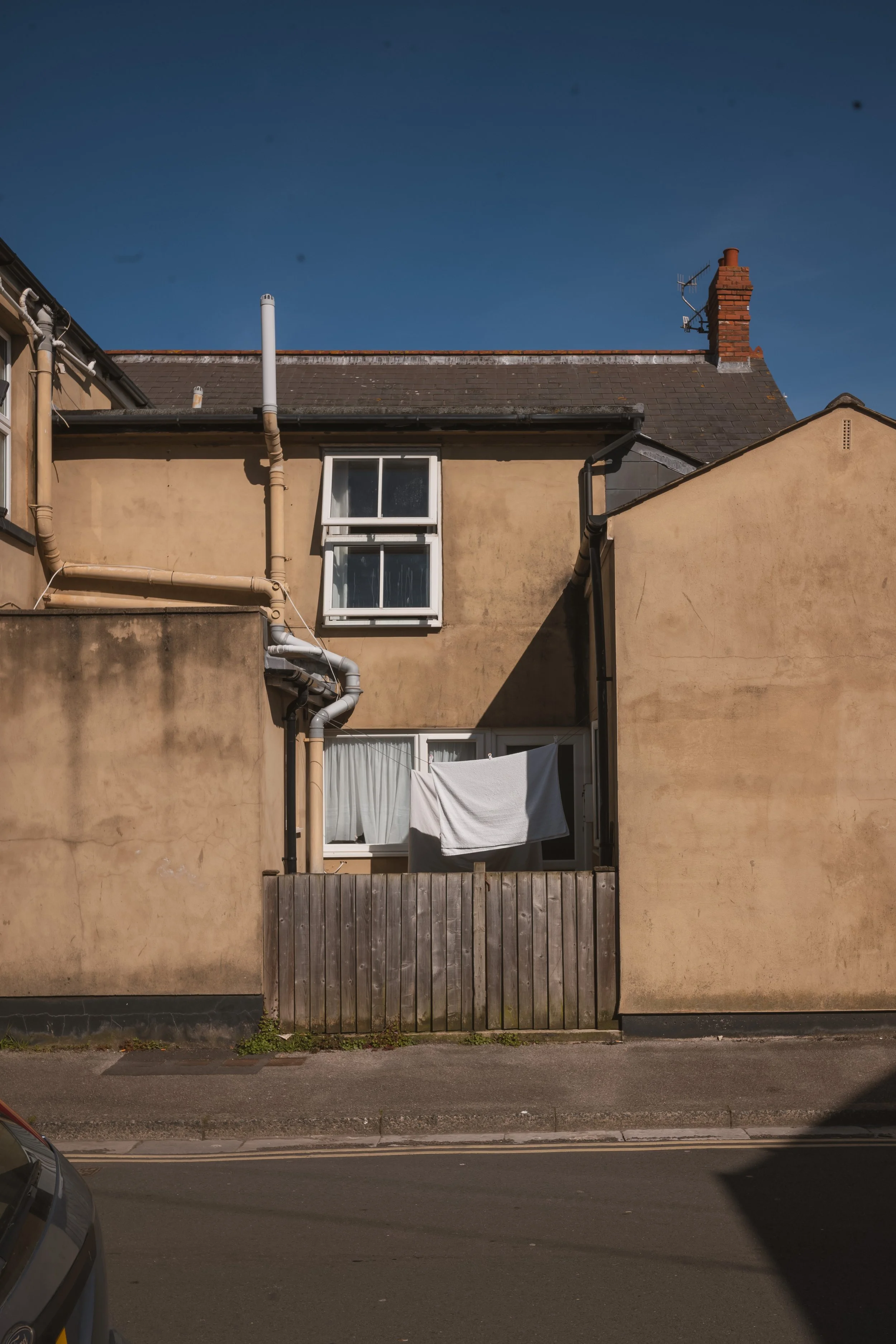
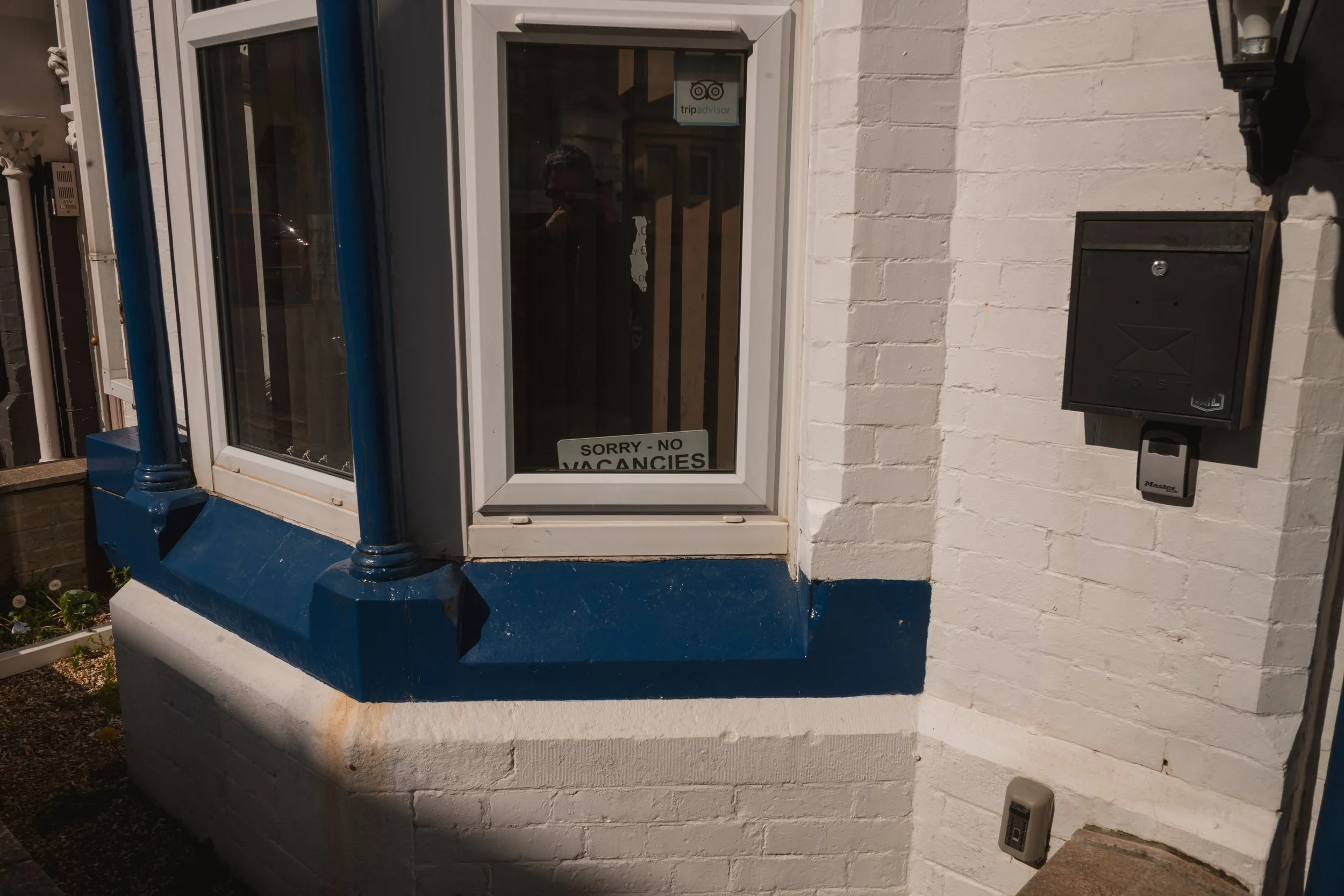
The B&B with "Sorry — No Vacancies" in the window stopped me partly for the message and partly because I could see my own reflection in the glass above the sign. That felt right. The photographer making himself part of the scene he's trying to document.
The human moments were the ones I kept coming back to when I reviewed the day's shoot.
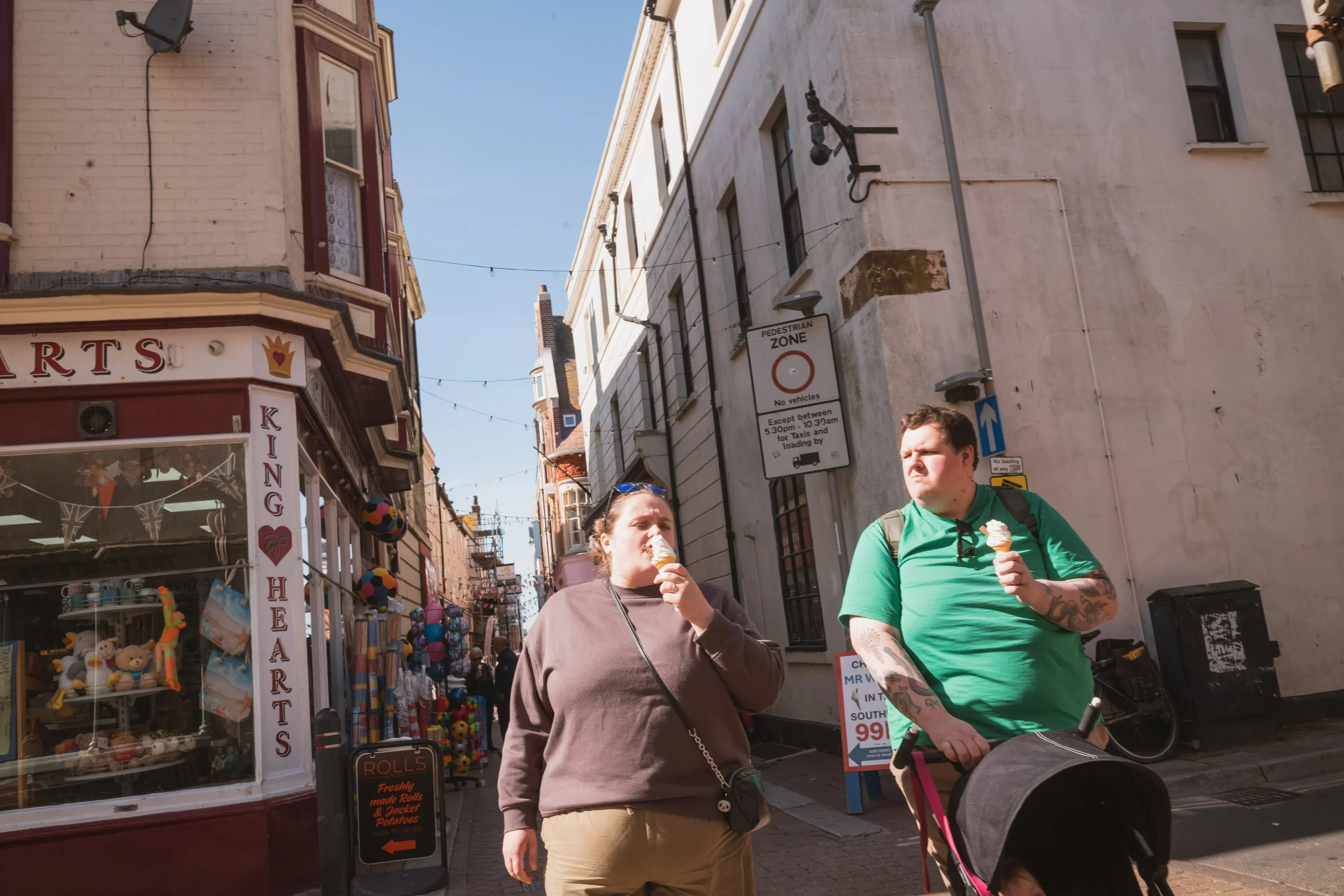
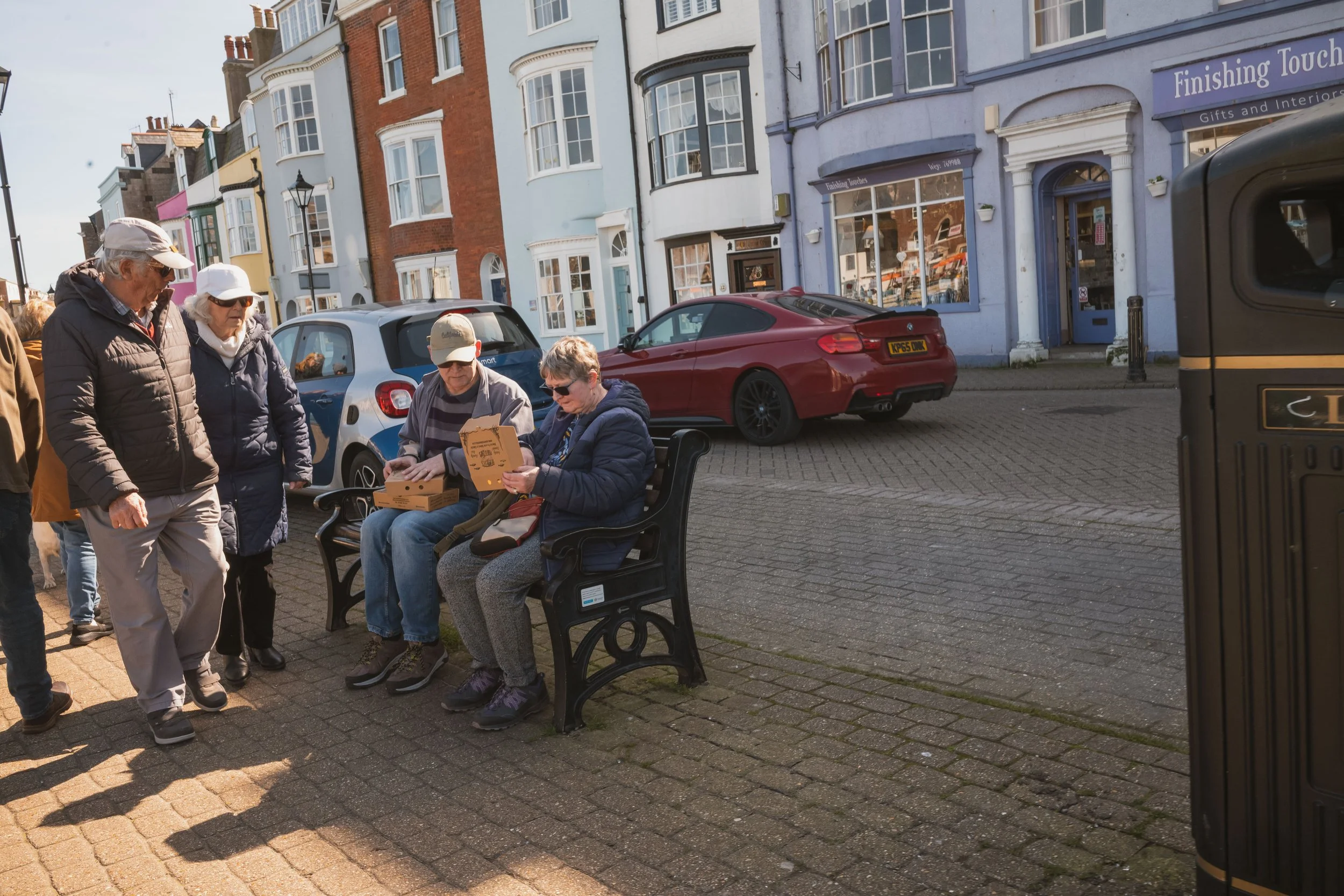
A group of retirees on a bench by the waterfront sharing a box of chips in the sun, the coloured townhouses of the old harbour stacked behind them. A cluster of people in hats at an outdoor café, coffee cups and conversation, nobody looking at a phone. Two people eating 99 ice creams down a pedestrian lane, the King of Hearts gift shop sign above them, a pushchair between them.
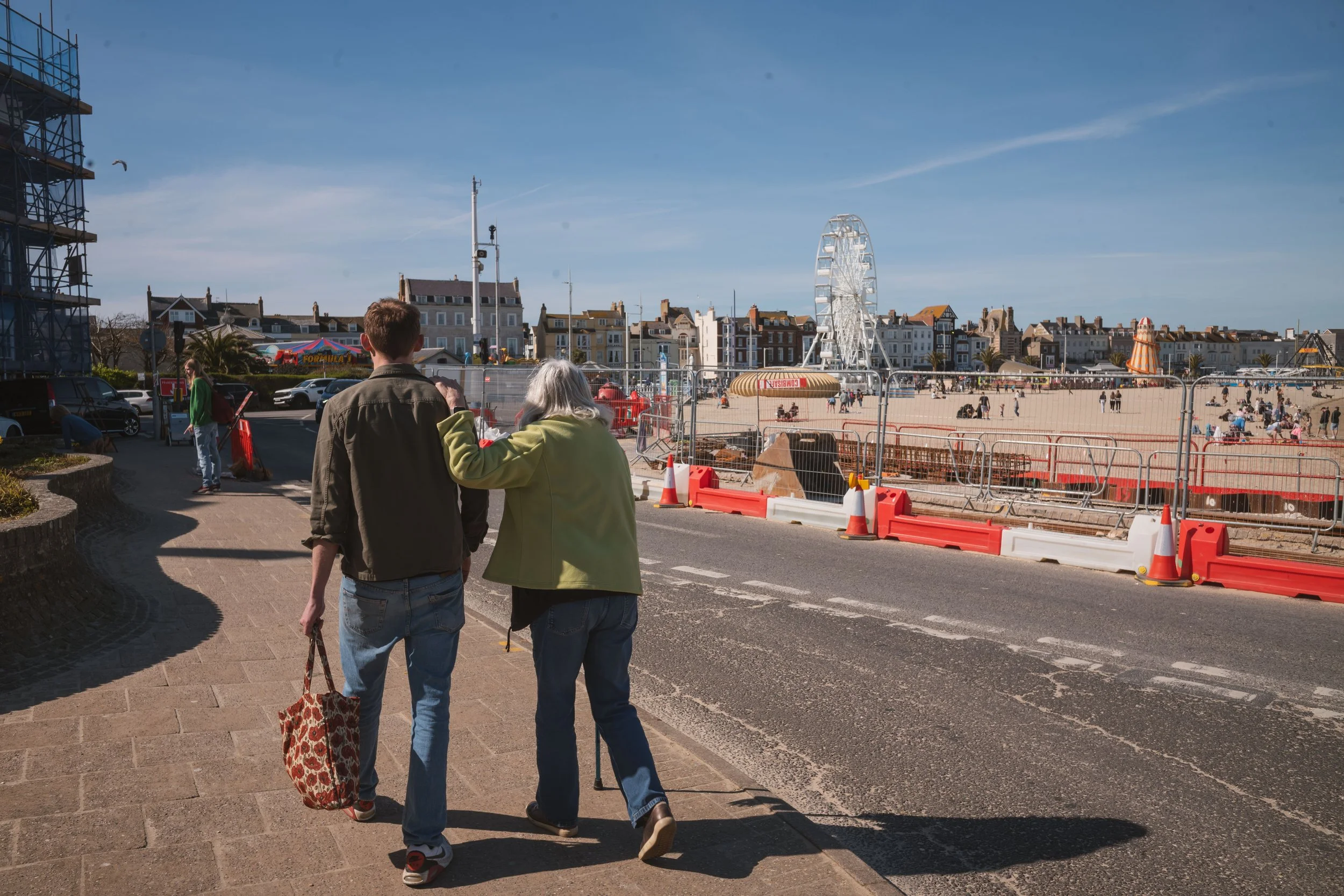
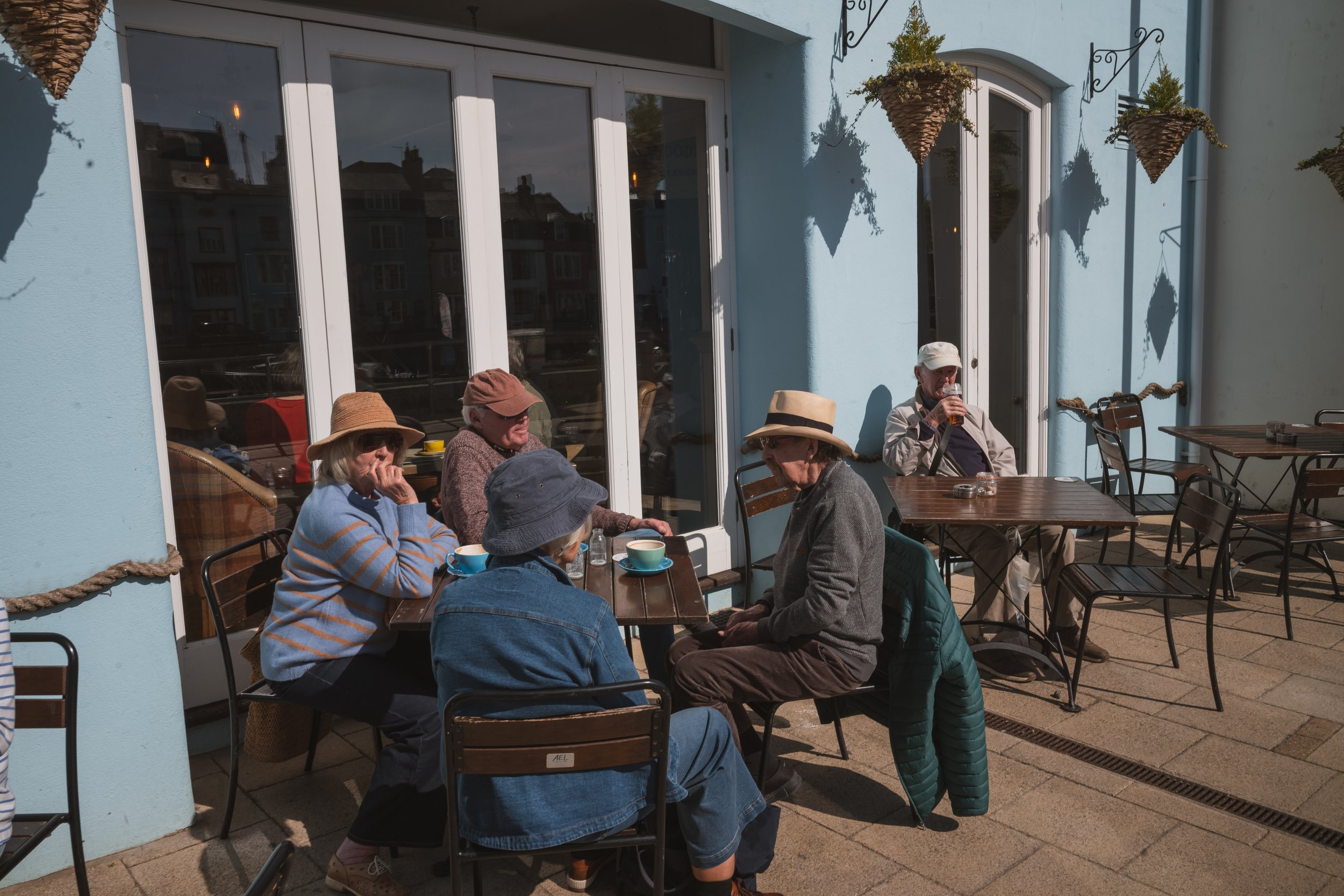
And then the closer. Walking back along the seafront toward the car, I saw a younger man and an older woman — son and mother, I think, though I don't know — walking arm in arm toward the beach. She had her hand through his elbow. He was carrying the bag. The Ferris wheel turned slowly in the distance. I raised the camera, got one frame, and kept walking.
"This is what Little England actually looks like when you put down the argument and just walk around with a camera."
I'm not sure whether places like Weymouth represent something to mourn or something to hold onto. Probably both — which is usually the honest answer. What I do know is that they're worth photographing carefully, without an agenda, while they still look like this.
The Leica M10 rendered the light beautifully all day — that particular quality of south coast light in early spring, where the sun is bright but thin, the shadows hard-edged, the colour palette running from Georgian cream to pub red to sea-blue. I shot everything at f/8, kept the ISO low, and let the camera do what it does.
More from this series to follow. I'll be returning to Weymouth, and to towns like it, throughout the year.
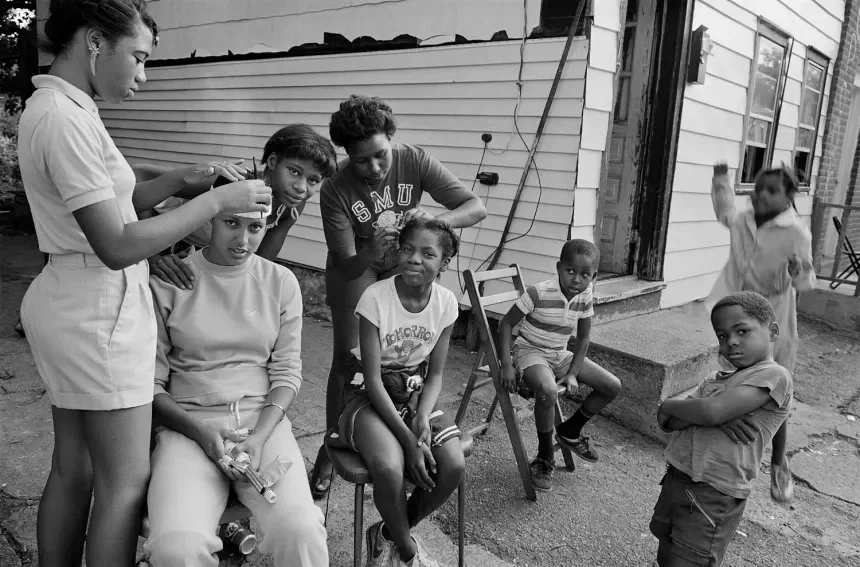
Modern Masters 3: Sage Sohier: The Quiet Observer Who Changed American Photography
On this International Women's Day, we turn our Modern Masters lens onto one of the most quietly radical voices in American documentary photography — a woman who, armed with a wide-angle lens and a warm curiosity, captured the hidden heart of a nation.
A Woman with a Camera and a Question
There are photographers who shout, and there are those who whisper. Sage Sohier has always whispered — and yet her work echoes across decades. Born in Washington D.C. in 1954, Sohier spent the late 1970s and 1980s wandering the working-class neighbourhoods of America, knocking on strangers' doors, gaining their trust, and producing some of the most affecting environmental portraits ever made. She photographed gay couples at the height of the AIDS crisis. She photographed her fashion-model mother growing old. She photographed children playing in the street before the internet arrived to pull them indoors. Her work is, above all, an act of witness.
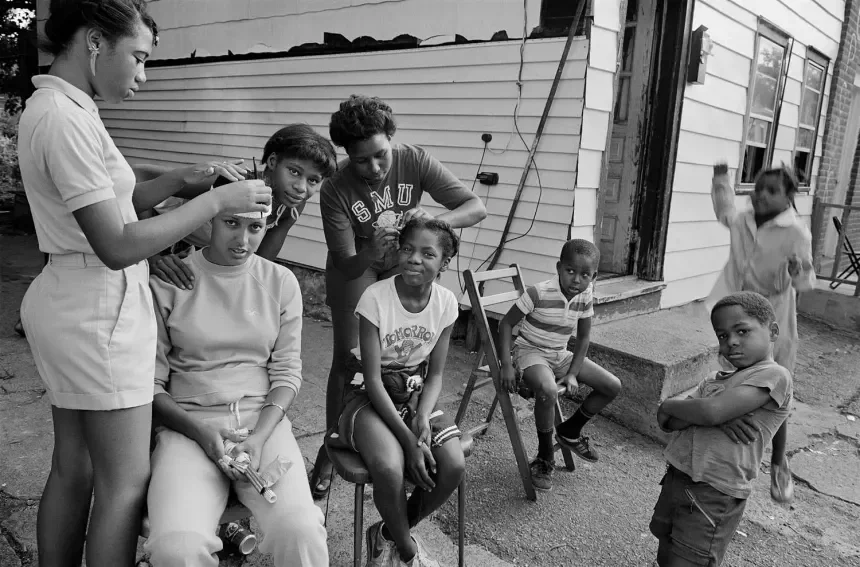
On this International Women's Day, we turn our Modern Masters lens onto one of the most quietly radical voices in American documentary photography — a woman who, armed with a wide-angle lens and a warm curiosity, captured the hidden heart of a nation.
A Woman with a Camera and a Question
There are photographers who shout, and there are those who whisper. Sage Sohier has always whispered — and yet her work echoes across decades. Born in Washington D.C. in 1954, Sohier spent the late 1970s and 1980s wandering the working-class neighbourhoods of America, knocking on strangers' doors, gaining their trust, and producing some of the most affecting environmental portraits ever made. She photographed gay couples at the height of the AIDS crisis. She photographed her fashion-model mother growing old. She photographed children playing in the street before the internet arrived to pull them indoors. Her work is, above all, an act of witness.
Today, on International Women's Day 2026, we celebrate Sage Sohier: a Harvard-educated, Guggenheim-awarded, MoMA-collected artist who never sought the spotlight — and who, perhaps for that reason, is finally getting the recognition she has long deserved.
Origins: Washington D.C. to Harvard Yard
Sage Sohier was born in Washington D.C. in 1954. Growing up, she was drawn to language and narrative — she arrived at Harvard University intending to major in English and, she has said, imagined she might become a writer. But she was restless, ill-suited to sitting alone in front of a typewriter for hours.
Everything changed in her sophomore year when she took her first photography class. As she later told The Photographers' Gallery in London:
"When I took my first photography class as a sophomore, I learned about fine art photography and realised that the medium had narrative possibilities as powerful as fiction writing. I was hooked."
Photography gave her what writing couldn't: a reason to be out in the world, in conversation with strangers, alive to the unexpected. She graduated from Harvard with her B.A. and never looked back.
The Big Break: Tod Papageorge and the East Coast Scene
If there was a single moment that set Sohier's course, it was meeting photographer Tod Papageorge, who visited Harvard as a senior-year artist-in-residence. The encounter was, by her own account, transformative:
"Tod was incredibly eloquent about the medium, and he somehow made me feel not only that I wanted to become a photographer, but also that it was possible for me."
Boston in the 1970s was a fertile environment for a young photographer. Sohier found herself moving in circles that included Nick Nixon, Lee Friedlander, and Garry Winogrand — giants of American documentary photography who would shape her eye and ambition. She was also deeply influenced by Diane Arbus, whose ability to produce psychologically acute portraits she spent years trying to understand, and by Chauncey Hare's book Interior America (Aperture, 1978), which showed her the documentary possibilities within ordinary domestic spaces.
Her early career blossomed quickly. She received a Massachusetts Artists Foundation photography fellowship in 1979, followed by a National Endowment for the Arts photography fellowship in 1980–81. The Guggenheim Fellowship came in 1984–85 — one of the most prestigious awards in American arts — cementing her reputation as a serious artistic voice.
Style: Close, Sharp, and Full of Life
Sohier's photographic style is immediately recognisable: wide-angle lenses, deep depth of field, everything rendered tack-sharp from foreground to background. She favoured apertures of f/11 or f/16, used on-camera flash frequently to fill her frames with even light even in low-light conditions, and shot primarily in black and white during her most celebrated early work. The effect is almost theatrical — a 'picture on a wall' quality, as one critic described it, where the entire stage of life is visible and in focus.
She has spoken candidly about her technique:
"Back in the 70s, most photographers still worked in black and white. I fell in love with wide-angle lenses — I liked how they made the foreground large and the background recede and how playing with scale created stories. I also liked to use on-camera flash, so that I could still shoot with apertures of f16 or f11 and render everything sharp even at dusk."
What makes Sohier's work distinctive is not just technical precision but the quality of presence she achieves. She was never a candid, covert photographer. She approached people directly, explained her project, asked permission, and stayed long enough for the self-consciousness to dissolve. Her subjects — working-class families, teenagers on stoops, gay couples in their living rooms — have a relaxed, unguarded quality that is the product of genuine human connection.
"Approaching people politely and with energy and enthusiasm is key. Intruding on people's personal space could feel awkward, and was never easy to do, but most of the time it seemed that my enthusiasm was contagious and people were able to relax and be themselves."
Later in her career she shifted away from the blunt on-camera flash aesthetic of her 1980s work:
"I don't shoot that way anymore, though I do still use flash a lot. I prefer more of a natural-light effect now."
Equipment: What She Used and What She Didn't
Sohier's technical choices were always in service of her vision. Her kit during the signature years of the 1980s was deliberately unglamorous:
Wide-angle lenses — her primary tool, giving her images their characteristic sense of depth and environment
Small apertures (f/11 and f/16) — ensuring everything in the frame was sharply rendered
On-camera flash — not for drama, but for control, allowing her to shoot in varied light conditions while maintaining sharpness
Medium format cameras — chosen for their exceptional detail and tonal range, which rewarded slow, deliberate composition
Black and white film — the standard of serious documentary work in that era, and a material she fell deeply in love with
What she avoided, by temperament if not always by rule, was anything that created distance between herself and her subjects. She was not a telephoto photographer. She did not hide. She was not interested in bokeh, in dreamy soft focus, in separating subject from environment. She once noted simply: "Back then I wanted everything to be sharp and visible."
She also kept her workflow deliberate and human-paced. The medium format camera required more time and intention than a 35mm point-and-shoot — and that slower rhythm, she has suggested, actually aided her relationships with subjects, giving conversations time to breathe before the shutter clicked.
The Major Series: A Body of Work Like No Other
Sohier has spent her career in long-form documentary projects, returning to the same themes — American identity, domestic life, the nature of love — across decades. Here are the series that define her legacy:
Americans Seen (late 1970s–1980s)
Her foundational body of work, shot across the American landscape from New England to Florida to the rural Midwest. Sohier would load her car and drive south in winter, seeking out strangers in working-class neighbourhoods and asking if she could photograph them. The resulting images — published by Nazraeli Press in 2017 and reissued in a remastered edition in 2024 — are among the finest environmental portraits in American photography. They document a pre-digital, pre-internet America with warmth, clarity, and wit.
At Home With Themselves: Same-Sex Couples in 1980s America (mid-1980s)
This project is arguably Sohier's most historically significant. Begun in 1986, at the height of the AIDS crisis, it was motivated in part by her desire to understand her father, who had left the family when she was a toddler and whom she later discovered was gay. She photographed committed gay and lesbian couples in their homes across America, creating intimate portraits that stood in deliberate contrast to the sensationalised media portrayal of gay life at the time. As she has said:
"I was interested in how, as a culture, we weren't used to looking at two men touching, and was struck by the visual novelty yet total ordinariness of these same-sex relationships."
The series was so culturally ahead of its time that it found no publisher for nearly 30 years. It was finally released by Spotted Books in 2014 — just before the Supreme Court's landmark Obergefell v. Hodges ruling on marriage equality — and was immediately recognised as an essential historical document.
Animals (1980s–1990s)
A black-and-white series depicting people with their pets — companion animals that reveal, Sohier believes, something uninhibited and true about their human owners:
"There is more spontaneity, less self-consciousness, and more chaos when humans and other animals coexist. Love is unconditional, grief is uncomplicated though deeply felt, and life is richer, more vivid, more comical."
Published by Stanley/Barker in 2019, the series became one of her most celebrated books.
Witness to Beauty (2016)
A deeply personal project in which Sohier trained her camera on her own mother — a former fashion model photographed by such legends as Irving Penn and Richard Avedon. Sohier describes herself as the 'foil' to her mother's beauty, always behind the camera rather than in front of it. The book, published by Kehrer Verlag, is a meditation on age, femininity, and the complexity of the mother-daughter relationship.
Passing Time (2023) and Easy Days (2025)
Revisiting her archive during the pandemic, Sohier uncovered a wealth of unpublished images from the late 1970s and early 1980s. Passing Time — awarded Best Book at Paris Photo Week 2023 by Vanity Fair — presents 57 images of young people at leisure in pre-digital America. Easy Days, published by Nazraeli Press in 2025, completes a trilogy of her 1980s work and was the subject of a major solo exhibition at the Center for Photographic Art in Carmel, California.
Iconic Images: Photographs to Look For
Sohier does not have single 'famous' images in the way Cartier-Bresson has his decisive moments — her power is cumulative, architectural, built across series and bodies of work.
Rise to Recognition: Long Overdue
Sohier's path to wide recognition was, by any measure, a long one. She spent the 1980s building her archive while simultaneously teaching — at Harvard (as Lecturer on Visual and Environmental Studies, 1991–2003), Wellesley College (as Assistant Professor, 1997–99), the Massachusetts College of Art, the Rhode Island School of Design, and the School of the Boston Museum of Fine Arts. She was, in many ways, a photographer's photographer: deeply respected within the field, with her work collected by MoMA, the Brooklyn Museum, the San Francisco Museum of Modern Art, the Cleveland Museum of Art, the Nelson-Atkins, and the Portland Art Museum — but not yet broadly famous.
The turning point came with a cluster of major publications and exhibitions from 2012 onward. About Face (Columbia College Chicago Press, 2012), At Home With Themselves (2014), Witness to Beauty (2016), and Americans Seen (2017) established her, finally, as a photographer of genuine historical importance. MoMA's 2010–11 group exhibition 'Pictures by Women: A History of Modern Photography' placed her work in its proper canonical context.
The second act — Passing Time's Paris Photo acclaim in 2023, the remastered Americans Seen in 2024, and Easy Days in 2025 — has introduced her work to a new generation of photographers who find in her images both a technical mastery and a humanity they aspire to.
"I fell in love with photography in college and knew that that's what I had to spend my life doing. It's a kind of addiction, and my life doesn't feel complete unless I have a project or two that I'm working on and excited about."
What Her Peers Say
The photography world has been increasingly vocal about Sohier's importance. Here is what those who know the field best have said:
Alex Webb and Rebecca Norris Webb selected Passing Time as one of their Best Photobooks of 2023 at Photobookstore.co.uk — a significant endorsement from two of the most celebrated names in contemporary colour photography.
Ed Templeton, the skateboarder turned photographer and cult photobook connoisseur, also named Passing Time among the best books of 2023 — a mark of the book's cross-generational appeal.
Vanity Fair designated Passing Time one of the Best Books at Paris Photo Week 2023, the world's most prestigious photography fair.
Shana Lopes, curator of photography at the San Francisco Museum of Modern Art (SFMOMA), appeared in conversation with Sohier at the Center for Photographic Art in 2025, a gesture of institutional validation from one of America's most important photography collections.
What Will You Remember, the photography criticism publication, wrote of At Home With Themselves: "Sohier's ability to amplify the nuance of each relationship is uncanny. Her triumph: encapsulating the touching universality and individuality of our human connections."
Lenscratch, one of the most influential photography platforms online, has described her as "indefatigable" — a photographer with a "long legacy of documenting the human (and animal) condition close to home and on the streets."
Photo Resources:
Use these links to source images for the blog post (always check licensing and credit requirements before embedding):
Sage Sohier's official website — full portfolios organised by series (Easy Days, Americans Seen, Animals, Peaceable Kingdom, At Home With Themselves, Witness to Beauty and more)
The Photographers' Gallery Print Sales — overview with images
YouTube Video Resources
Search for these on YouTube to find embeddable video content:
Essential Photobooks
Sohier has published nine monographs — a body of book work that is itself remarkable for its consistency and range. Here are the essential titles:
Easy Days (Nazraeli Press, 2025) — the final volume in her 1980s trilogy, completing a definitive document of pre-digital American life
Passing Time (Nazraeli Press, 2023) — voted Best Book at Paris Photo Week by Vanity Fair; 57 images of youth and leisure in 1979–85 America; printed on Japanese Kasadaka art paper
Peaceable Kingdom (Kehrer Verlag, 2021) — with an essay by writer Sy Montgomery; her most expansive exploration of the human-animal bond
Animals (Stanley/Barker, 2019) — black-and-white portraits of people with their pets; one of the most charming and psychologically astute books in her catalogue
Americans Seen (Nazraeli Press, 2017; remastered edition 2024) — the cornerstone of her reputation; environmental portraits of working-class America in the 1980s
Witness to Beauty (Kehrer Verlag, 2016) — her intimate, humorous, and moving portrait of her ex-fashion-model mother
At Home With Themselves: Same-Sex Couples in 1980s America (Spotted Books, 2014) — the groundbreaking document of gay domestic life that waited 30 years to find a publisher; now recognised as a civil rights landmark
About Face (Columbia College Chicago Press, 2012) — a study in portraiture and facial expression
Perfectible Worlds (Photolucida, 2007) — her earliest monograph; the beginning of a long conversation with the American domestic landscape
A Final Thought
Sage Sohier once described what drew her to people's lives:
"In my twenties, I began to see the world and understand more about people from a variety of different backgrounds. Meeting people (in order to photograph them) was thrilling, and it changed me. Being a photographer has been a wonderful excuse to wander and to be inquisitive about others' lives and experiences. I will always be grateful to the people pictured here — not just for allowing me to spend time making pictures of them — but also for how these interactions informed and enriched my life."
On International Women's Day 2026, we are grateful in turn to Sage Sohier — for her curiosity, her warmth, her courage to knock on strangers' doors, and her extraordinary eye. She has given us a portrait of America that feels, across every decade, like something essential and true.
Explore her full body of work at sagesohier.com.
Until next time, keep snapping
Yes please, keep me posted when there’s a new blog
Instagram - Film